
What is a multivitamin?
A multivitamin is a product with many vitamins and, usually, minerals. There is no legal definition of what it must contain or how much. The maker decides. A basic once-daily multivitamin has most vitamins and minerals at about 100 percent of the Daily Value (the label's reference amount), and some products called "multivitamin" are something else.
Each nutrient in it has its own recommended amount and, for many, an upper limit: the most per day considered safe, counting supplements (and, for some nutrients, food).
What a multivitamin reliably does is raise intake when food falls short. In two large trials, it did not prevent heart disease. One trial found slightly fewer cancers and the other did not. Memory results also split between the trials.
The short version
A basic multivitamin is one daily serving with most nutrients near 100 percent of the Daily Value. Read every nutrient separately in milligrams (mg) or micrograms (mcg), then add any single supplements you also take. Compare those totals with the target and upper limit in the official NIH nutrient fact sheet[1] for that ingredient, or review the stack with a pharmacist.
It makes the most sense when a limited diet leaves several likely gaps. Skip B-50 products sold as multivitamins, high-potency packs that cross nutrient upper limits, and unneeded iron. Smokers and former smokers should avoid beta-carotene supplements.
Why do people take multivitamins?
| Claimed benefit | Dose / form studied | Research verdict | Evidence strength |
|---|---|---|---|
| Preventing cardiovascular disease | Daily basic multivitamin formula; older adults followed for 3.6 years in COSMOS and men aged 50+ for 11.2 years in PHS II. | Neither large trial found fewer major cardiovascular events. | Moderate |
| Preventing cancer | Same daily basic formulas and follow-up periods; not high-potency B-complex products. | PHS II found a small reduction in total cancer; COSMOS did not. | Limited |
| Preserving memory with age | Daily basic formula; COSMOS cognitive studies lasted 2–3 years, while PHS II cognition followed older men for up to 12 years. | Small COSMOS test-score gains contrast with the PHS II null result. | Limited |
| Reducing cataract risk | Daily historical Centrum Silver in older male physicians for about 11 years. | A modest reduction in that trial; another trial found opposing effects on cataract types. | Limited, but promising |
| Preventing fractures | Daily Centrum Silver in older adults for a median 3.6 years. | No reduction in fractures; fractures were slightly more frequent with the multi; earlier findings used a different formula and population. | Limited |
| Slowing biological aging | Daily Centrum Silver for two years in a selected older-adult subgroup. | Two of five DNA-based aging markers changed slightly; clinical benefit remains uncertain. | Limited |
A multivitamin is insurance for a diet that falls short. A study of more than 90,000 adults aged 45 and older estimated how often intake was adequate across 17 nutrients. Comparing nonusers with multivitamin users, the average food-only adequacy estimate was 74 versus 76 percent for men and 72 versus 75 percent for women. Including multivitamins raised the estimate to about 84 percent for men and 83 percent for women. These were estimates from reported intake, not diagnoses of deficiency. Some users also exceeded nutrient upper limits, so the same product can fill one gap while adding too much of another. [2]
People most likely to benefit include those on low-calorie diets, strict vegetarians and vegans, and people who eat a narrow range of foods. The Food and Nutrition Board of the National Academies advises adults over 50 to get vitamin B12 from fortified foods or supplements, because absorption from food falls with age. Multivitamin users tend to eat better than non-users already, and the groups most at risk of shortfalls are the least likely to take one.
When to ask a doctor before taking a multivitamin
- You take warfarin. Most multivitamins contain vitamin K, which works against warfarin; your prescriber sets the dose with your vitamin K intake in mind.
- You smoke or used to smoke. Avoid beta-carotene supplements.
- You already take single vitamins or minerals. Add up the totals first; that is how most people go over upper limits.
- You have a condition that affects digestion or absorption. A doctor may prescribe a specific formula.
Common dosage
Each nutrient has its own intake target and, in many cases, an upper limit. Chemical forms can also differ in absorption and side effects, so the dose of each ingredient matters more than the number of tablets.
A more practical risk is stacking: combining a multivitamin with single nutrients or fortified products until one ingredient crosses its own upper limit. Taking the tablet with a meal can reduce stomach upset from ingredients such as iron or zinc. On top of that, if your personal diet leans heavily into some foods, you might be deficient in one or several elements of a multivitamin, but get too much of the other components.
For example, in a hypothetical adult day, 320 mcg folic acid from enriched foods and cereal plus 400 mcg from a multivitamin totals 720 mcg. Adding a separate 400 mcg folic-acid tablet raises it to 1,120 mcg, above the US adult 1,000 mcg limit for folic acid from fortified foods and supplements.
How can I tell if I'm low on vitamins or minerals?
There is no blood test for "multivitamin". Tests exist for single nutrients, such as vitamin B12, vitamin D, and iron stores (ferritin), as well as blood test panels for vitamins, minerals, micronutrients and other combinations depending on your lab testing provider. If you suspect a gap, the useful step is to test that nutrient or look at what your diet is missing, then decide whether a multivitamin or a single supplement fits.
A broad nutrient panel cannot confirm that every nutrient is adequate: blood magnesium poorly reflects tissue stores, and an uncertain B12 result may need a follow-up test called methylmalonic acid, or MMA. The useful test depends on the suspected gap. NIH explains the magnesium limitation[3] and B12 follow-up[4]
Preparing for a test if you take supplements
Read the ingredients and ask whether your ordered test requires a pause. There is no single interval for every blood test. For example, Mayo’s vitamin B6 test (pyridoxal 5-phosphate, or PLP) requires 24 hours without vitamin supplements[5], while its whole-blood B1 test uses 12 hours. Tell the lab the full product and dose so it can also check biotin interference and any iron-related instructions. If the multivitamin is a prescribed prenatal or replacement treatment, have the prescriber agree to a pause. A brief hold does not undo months of supplementation.
What you can buy
Multivitamins come as once-daily tablets, packs of several pills, and gummies, and the table shows how common listings compare with the trials.
A few multivitamin formats at a glance
| Listing | What it contains | Compared with trials |
|---|---|---|
| Basic once-daily tablet | Most vitamins and minerals near the Daily Value | The type of product the trials tested |
| "50+" formula | Little or no iron; more vitamin D and B12 | Similar product type to the trial formula; smokers and former smokers still need to screen for beta-carotene |
| Women's formula | Often 18 mg iron | Describes the label, not a universal need; choose iron from diet, life stage, and test results |
| High-potency pack | Some nutrients well above the Daily Value; often plant extracts | Not tested in the trials; more risk of going over limits |
| B-50 | 50 mg each of several B vitamins; no minerals | Not a multivitamin; niacin over the upper limit |
| Gummies | Varies by product; check the minerals and sugar lines | Not tested in the trials |
Look up the ingredients in your multivitamin
Use these guides to check the individual ingredients on a label. They explain amounts, forms and safety questions.
| Ingredient on the label | Our guides and comparisons | What to check |
|---|---|---|
| Vitamin A | Vitamin A | Retinol and retinyl esters versus beta-carotene; amounts and pregnancy considerations. |
| Vitamin B1 | Thiamin (B1) | Thiamin names, dietary needs and supplemental forms. |
| Vitamin B2 | Riboflavin (B2) | What riboflavin supplies and how much is needed. |
| Vitamin B3 | Niacin (B3) | Nicotinic acid versus niacinamide and why the form matters. |
| Vitamin B5 | Pantothenic acid (B5) | Daily needs and the forms used on labels. |
| Vitamin B6 | Vitamin B6 | Pyridoxine and P5P; the total across products and nerve-related safety concerns. |
| Vitamin B7 | Biotin (B7) | Amounts, hair claims and interference with blood tests. |
| Folate / B9 | Folate; methylfolate vs folic acid | Dietary folate equivalents, the ingredient amount and the differences between forms. |
| Vitamin B12 | Vitamin B12; methylcobalamin vs cyanocobalamin | Dietary gaps, absorption problems and what an “active” form claim establishes. |
| Vitamin C | Vitamin C | Daily needs, larger amounts and digestive tolerance. |
| Vitamin D | Vitamin D, including D3 vs D2 | Micrograms and IU, blood tests and the evidence comparing the forms. |
| Vitamin E | Vitamin E | The declared form, amount and safety considerations. |
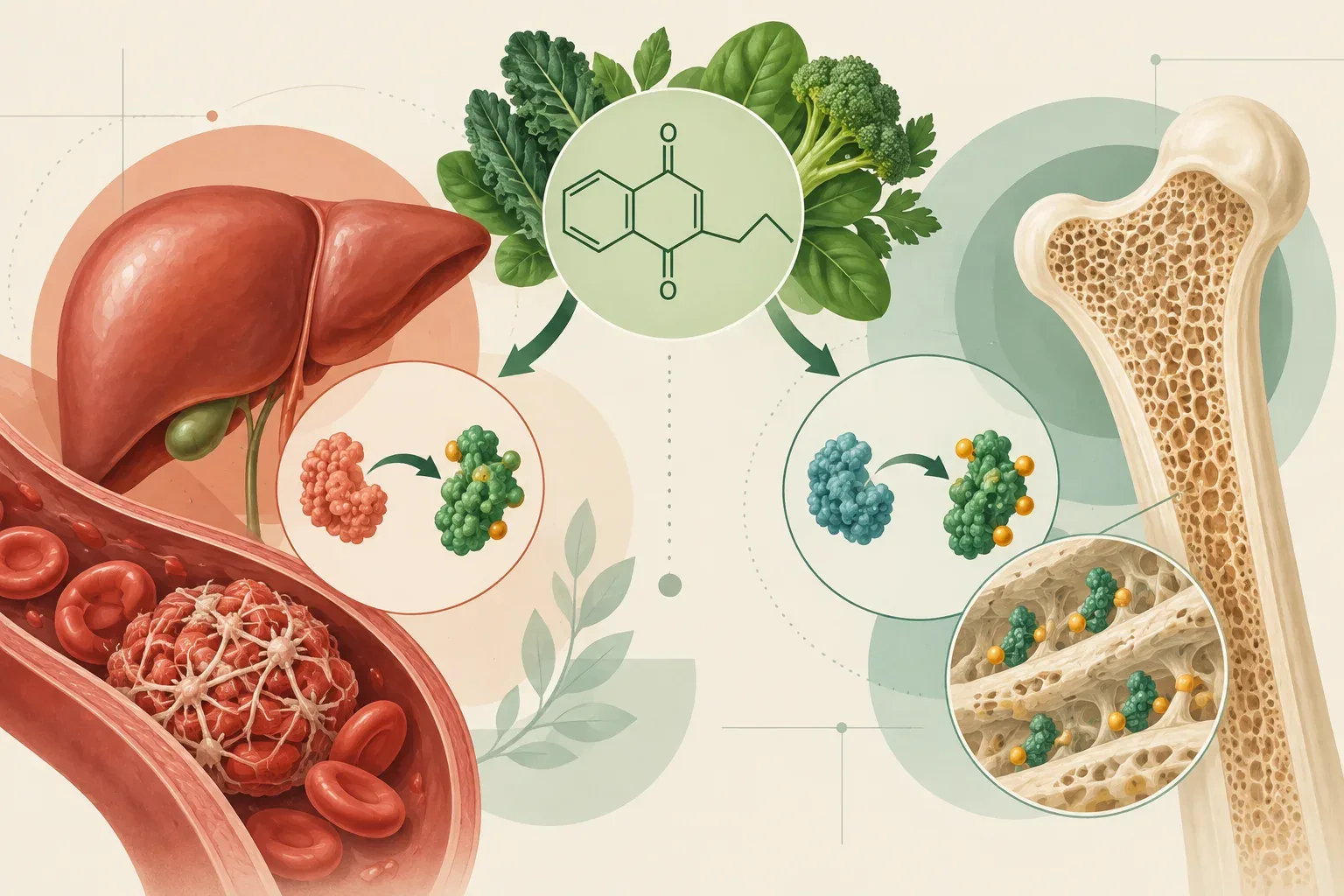
| Vitamin K | Vitamin K, including MK-7 vs MK-4 | K1/K2 named forms, amounts and warfarin considerations. |
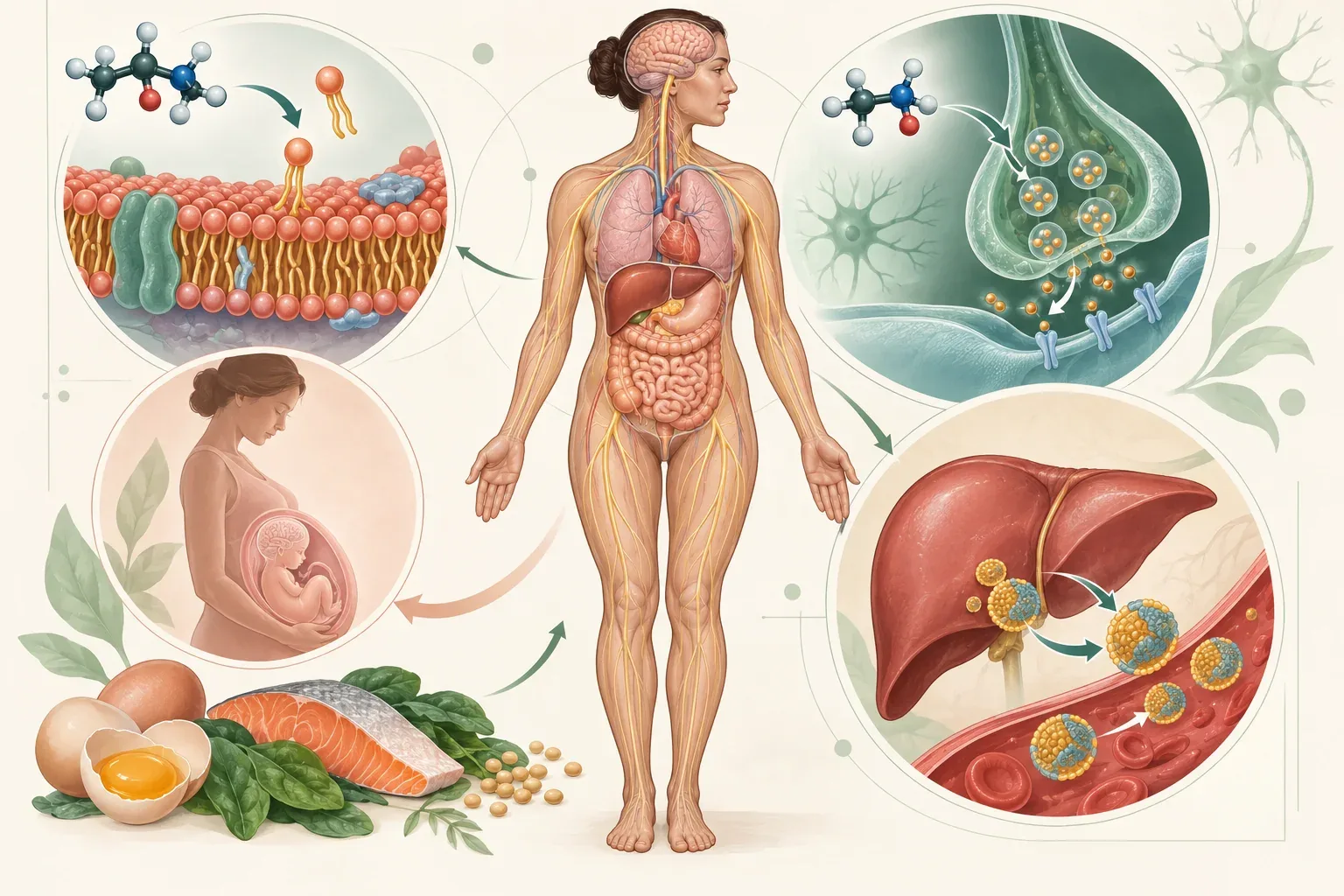
| Choline | Choline | Whether it is present and how the declared amount compares with dietary needs. |
| Calcium and magnesium | Calcium; magnesium; glycinate vs citrate; oxide vs glycinate | Elemental amounts, compound names and differences between magnesium forms. |
| Iron | Iron forms compared | Elemental iron, tolerance and choosing a form for an established need. |
| Zinc and copper | Zinc; copper | Amounts across products and how higher zinc intake can affect copper. |
| Iodine and selenium | Iodine; selenium | Dietary needs, thyroid-related claims and the total from all sources. |
Multivitamin + products: what the extras change
“Plus” can mean minerals, a larger amount of one nutrient, or an entirely different ingredient. It does not describe a standard formula. NIH groups multivitamins into basic, high-potency and specialized products[6]; the actual ingredient list matters more than the category name.
Multivitamin + mineral complex
Many ordinary multivitamins already contain minerals, so “plus minerals” does not necessarily distinguish a more complete product. Check which minerals are included and the amounts in the full daily serving. Calcium, magnesium and potassium are often present in small amounts even when trace minerals have substantial amounts. A long ingredient list does not show that the product covers your dietary gaps.
Our multivitamin-with-minerals guide and magnesium in multivitamins and nutrient complexes explain those comparisons in more detail. A mineral-only complex is a different product: it does not supply the vitamin part of a multivitamin. For mineral-only options, compare the trace-mineral complex guide and calcium–magnesium–zinc complex guide.
Multivitamin + iron
An iron-containing multivitamin can make sense when someone has several dietary gaps to fill and also needs supplemental iron. It can combine those jobs in one routine. Iron is already included in some multivitamins and deliberately omitted from others, so “with iron” is a useful distinction rather than an automatic upgrade.
Vitamin C plus iron is a more specific example of a combination with a biological rationale. Vitamin C helps the gut absorb non-heme iron, the type found in plant foods and many iron supplements. That can make the pairing useful when improving iron intake is the goal. [7]
Better absorption in principle does not guarantee a better result. In a randomized trial of 440 adults with iron-deficiency anemia[8], mostly women, iron alone produced similar improvements in hemoglobin and iron stores to iron plus vitamin C. This was an iron-treatment trial, not a trial of multivitamins. Guidance also differs: the American Gastroenterological Association's 2024 expert advice[9] recommends adding vitamin C to oral iron, while the British Society of Gastroenterology's 2021 guideline[10] does not recommend routinely adding vitamin C to oral iron.
The practical question is whether you need the iron and whether the full formula fits that need. Count elemental iron across products; a multivitamin with vitamin C should not be assumed to replace prescribed iron treatment. Another common issue with iron is gut-discomfort side-effects that may occur depending on the exact form of iron used. Our iron-form comparison explains the form and tolerance questions.
Multivitamin + omega-3
Combining vitamins and omega-3 can make practical sense when you already have a reason to take both and the amounts fit your needs. One product may mean fewer supplement bottles, fewer pills or capsules to keep track of, or an easier routine. It might also be cheaper than buying 5 different supplements. An ADEK + omega complex is one of the cases where this makes sense: it combines omega-3 with vitamins A, D, E and K, the four fat-soluble vitamins.
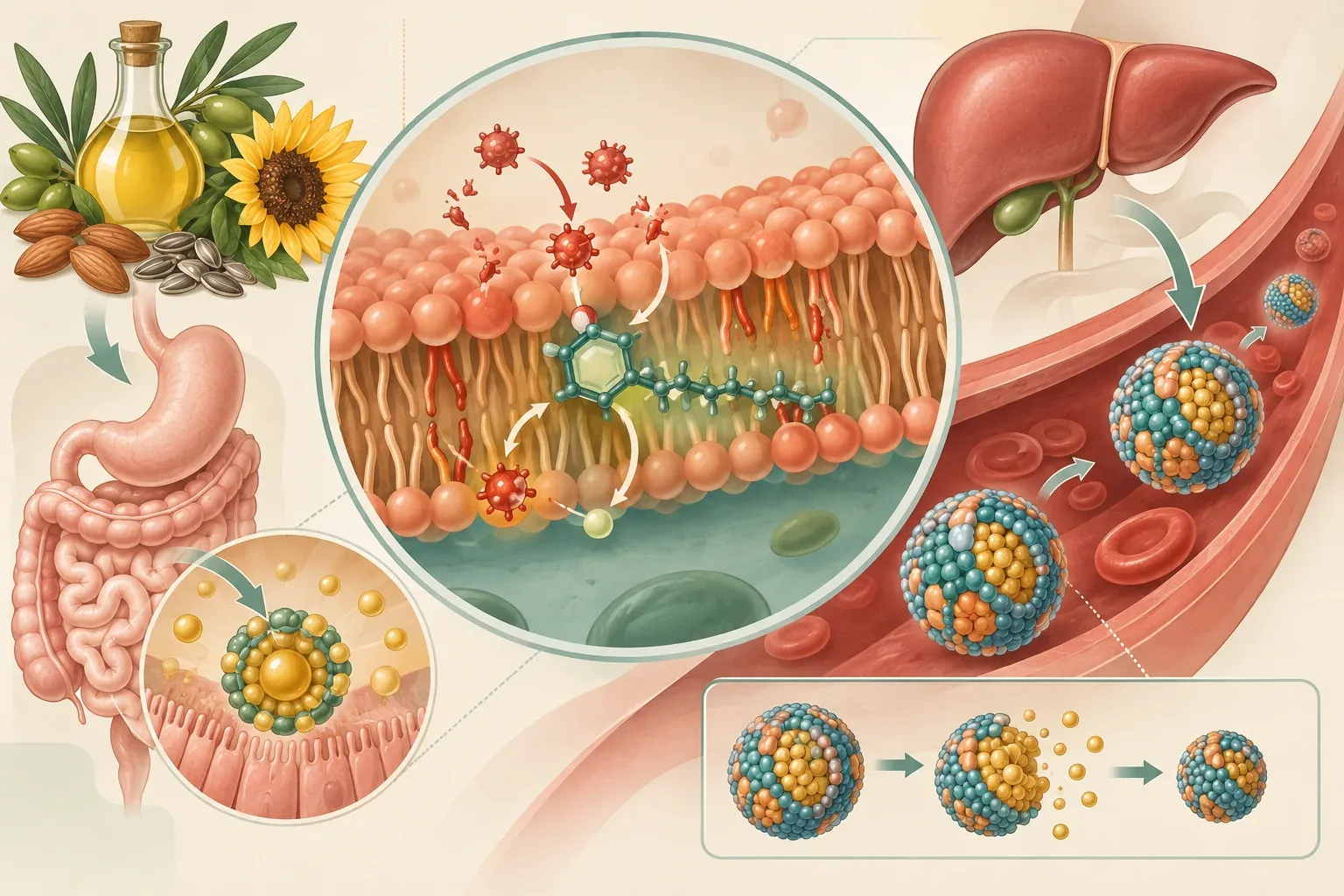
There is a reason to put these vitamins alongside an oil: dietary fat helps their absorption in the gut[11]. That does not establish that omega-3 is a uniquely effective carrier, or that the small amount of oil in any capsule reproduces taking the vitamins with a meal containing fat.
The combination is most useful when you would otherwise take those ingredients separately at similar amounts. You still need to check each vitamin's form and amount; needing omega-3 does not itself mean you need extra A, D, E and K. A fixed combination also means you cannot adjust one ingredient downwards without changing the others too.
Check the amounts of the omega-3 fats EPA and DHA separately from the total oil weight or total “omega-3” claim, and include any fish or algae oil you already take. Combining them does not show that either ingredient is present at the amount used in a particular trial. See our omega-3 guide.
Multivitamin + probiotics or digestive enzymes
These add another job beyond supplying vitamins and minerals. For probiotics, look for the named strains, the viable-organism count and storage instructions; evidence for one strain does not establish the same result for a different blend. A digestive-enzyme ingredient needs its own explanation of what it is intended to help digest. Neither word on the front establishes that you need it or that the finished combination improves digestion. Our probiotic guide explains how to assess the microorganism claims.
Multivitamin + botanicals or other specialty ingredients
Energy, immunity, eye-health and other specialized formulas can add plant extracts or ingredients such as CoQ10 or glucosamine. A long ingredient list gives no indication of whether the contents or their amounts are useful.
An extra ingredient can be convenient when you have a reason to take it. It can also make a formula more expensive or harder to adjust. The extra ingredient can also be used to make bold claims on the label if that ingredient supports some effect, without any real promise of improvement.
What to look for on the label
The number to find is each nutrient's amount next to its percent Daily Value, and the thing to check is whether the bottle is a broad multivitamin at all.
Which number on the label is the amount?
Each line lists an amount in mg or mcg and a percent Daily Value. One “50+” tablet supplies 220 mg calcium—about 17 percent of its 1,300 mg Daily Value—and no iron. Magnesium and potassium are also usually low because full amounts take more space, so food has to cover the rest. One women's formula lists 18 mg iron, but the label amount does not show that a particular person needs supplemental iron.
Misleading labels
A B-50 sold as a multivitamin
A B-50 contains 50 mg each of several B vitamins and no minerals. One capsule lists 50 mg each of thiamin, riboflavin, niacin, vitamin B6, and pantothenic acid. Its niacin alone exceeds the 35 mg supplement upper limit, which is intended to prevent warm, red, or burning skin. A B-50 is a high-dose B complex, not a broad multivitamin.
Iron in the wrong formula
Women's formulas often carry 18 mg iron. Men and women past menopause need 8 mg a day, which most get from food. Formulas for adults over 50 often have little or no iron, so check which one you bought.
One capsule versus one serving
The amounts on the Supplement Facts label apply to the stated serving. If the serving is three capsules, count all three capsules before comparing the nutrients with your diet, other supplements, and their upper limits.
A long ingredient list with very little behind it
A small addition can earn an ingredient a place on the label without contributing much to the reason you bought the product. If a highlighted mineral supplies only a few percent of its Daily Value, it may be doing more for the marketing than for a substantial dietary gap. Do not pay extra just because the ingredient list is longer.
Check the full-serving amount against the job you need it to do. A small contribution can fill a small gap. For ingredients without a Daily Value, the label gives no percentage-of-need comparison. An undisclosed amount also prevents judging how much the product supplies.
Manufacturer claims and the studies they may be based on
A "supports memory" or "clinically studied for cognition" line may point to the COSMOS memory sub-studies, which tested one basic formula in adults over 60. A "complete" or "whole-body" claim has no legal meaning.
Common Myths about Multivitamins
Do multivitamins prevent heart disease or cancer?
The two large trials found no heart benefit. For cancer, the 11-year trial in men found 8 percent fewer cancers, but no fewer cancer deaths, and the later COSMOS trial found no drop in total cancer. The US Preventive Services Task Force weighed all the trials together in 2022 and judged the evidence too limited to say for sure whether multivitamins help prevent heart disease or cancer.
Are expensive or "whole-food" multivitamins better?
The major trials discussed here did not compare price levels or establish that “whole-food” formulas work better.
Drawbacks and side effects
| Potential drawback | When/who it affects | Research evidence | Practical implication |
|---|---|---|---|
| Excess from overlapping products | A multivitamin combined with single nutrients, fortified foods or another multivitamin. | Upper limits apply to individual ingredients, not to a universal multivitamin dose. | Add up each nutrient across products before combining them. |
| Beta-carotene risk | Current or former smokers; high-dose prevention trials also included asbestos exposure. | Trials found more lung cancer in groups taking beta-carotene supplements. | Avoid beta-carotene supplements in these groups; a smaller supplemental amount has not been established as safe. |
| Ingredients that may be unsuitable for you | Warfarin use, unnecessary iron or high preformed vitamin A during pregnancy. | Vitamin K can change warfarin’s effect; too much iron or vitamin A can be harmful. | Choose the formula with the treating clinician; check each ingredient against its own upper limit. |
| Nausea, constipation or diarrhea | People who find the particular formula hard to tolerate | [12] | Review the actual ingredients and serving rather than assuming every multivitamin feels the same. |
When too much is dangerous
- Smokers and former smokers should avoid beta-carotene supplements. In one trial of male smokers, 20 mg a day produced an 18 percent relative increase in lung cancer; in another, 30 mg of beta-carotene plus 25,000 international units (IU), or 7,500 mcg, of vitamin A produced a 28 percent relative increase. The U.S. Preventive Services Task Force recommends against beta-carotene supplements. The evidence does not establish a smaller safe supplemental amount for smokers, so a low label number does not remove the concern. Because the second trial combined two ingredients, it cannot isolate the effect of preformed vitamin A.
- People taking warfarin should talk to their prescriber, because of the vitamin K in most multivitamins.
- Men and women past menopause should not take iron-containing formulas unless a blood test shows they need iron.
- Pregnant women need a pregnancy-specific formula review. The National Academies upper limit for preformed vitamin A is 3,000 mcg a day from food and supplements for adults aged 19 or older; it is 2,800 mcg at ages 14–18. These are ceilings, not targets, because excess can cause birth defects. [13]
A multivitamin can also cause nausea, constipation or diarrhea[12], even when the issue is tolerability rather than an overdose. Check the whole formula, including iron and other added ingredients if any of those symptoms occur.
The science behind multivitamins
The studies below report relative comparisons as risk ratios or hazard ratios; a ratio of 1 means no difference between groups. A 95% confidence interval shows the estimate’s uncertainty: if it includes 1, the results remain compatible with no difference.
The largest trials used historical Centrum Silver formulations, with some differences between studies. They found no clear cardiovascular benefit. Cancer and cognitive results differed, and newer reports examine other aspects of aging.
No clear heart benefit; cancer findings differ
In the Physicians' Health Study II, 14,641 male doctors age 50 or older took a basic multivitamin or placebo for a median of 11.2 years. The statistical analysis found an 8 percent relative reduction in total cancer, but no clear reduction in cancer deaths, prostate cancer, or colon cancer. There was no clear reduction in major cardiovascular events: the hazard ratio was 1.01, with a 95% confidence interval from 0.91 to 1.10.
COSMOS followed 21,442 older men and women for a median of 3.6 years. Invasive cancer occurred in 518 people taking the multivitamin and 535 taking placebo, a difference small enough to be chance. A lower lung-cancer count was an additional result the trial was not primarily designed to test and could have been a chance finding. Major cardiovascular events were also not clearly reduced: 429 versus 437, a hazard ratio of 0.98 (95% confidence interval 0.86 to 1.12). Neither trial established a reduction in deaths from any cause.
Small memory gains in COSMOS; an earlier trial was null
In the Physicians' Health Study II, 5,947 men age 65 or older were followed with telephone tests for up to 12 years. Daily multivitamin use did not clearly improve global thinking scores: the difference was −0.01 standard units, with a 95% confidence interval from −0.04 to 0.02. Testing began, on average, 2.5 years after treatment assignment, which limits comparison with studies that tested people before their first pill.
COSMOS tested daily Centrum Silver against placebo in three cognitive sub-studies. Each had its own questions; their results deserve more detail than a single “memory improved” verdict.
| Study | What the result means |
|---|---|
| COSMOS-Mind: 2,262 older adults, telephone tests over three years | The multivitamin comparison was a secondary question planned before the results were known. Global thinking scores favored it by 0.07 standard units (95% confidence interval 0.02 to 0.12), a small difference. |
| COSMOS-Web: 3,562 adults, online tests over three years | The primary one-year immediate-recall result favored the multi by 0.23 words, roughly a quarter of one word on average. The average difference across all three years was 0.15 words; the separate year-two and year-three differences were not statistically clear. Other memory-retention, recognition and executive-function tests did not show clear benefits. |
| COSMOS-Clinic: 573 adults, in-person tests over two years | The primary global-thinking result was uncertain: 0.06 standard units (95% confidence interval −0.003 to 0.13). A secondary memory result favored the multi by 0.12 units (0.002 to 0.23). Of the 573 baseline participants, 492 completed follow-up tests. |
Standard units express differences relative to the spread of scores among participants; these estimates are small fractions of that spread. Pooling results without counting any participant twice favored the multi for global thinking and memory. The global result used the phone and clinic studies; the memory result used all three. They still share the same parent trial and study infrastructure. [14], [15]
The online study translated its score difference into about three years of usual age-related memory change; the pooled global-thinking estimate translated to about two years. These calculations compare test scores with age-related differences. They do not establish that brains became younger or that dementia was prevented. Whether the small average gains are noticeable in daily life or persist longer remains uncertain.
The program received NIH support, Mars Edge funding and donated Pfizer/Haleon products. Several investigators reported additional industry relationships.
A five-ingredient antioxidant trial gave different answers in men and women
The French SU.VI.MAX trial tested one daily capsule containing vitamin C 120 mg, vitamin E 30 mg, beta-carotene 6 mg, selenium 100 mcg and zinc 20 mg. It recruited women aged 35–60 and men aged 45–60 from the general population. Of 13,017 randomized adults, 12,741 contributed data over a median 7.5 years.
Across men and women combined, it did not clearly reduce cancer, ischemic cardiovascular disease (events caused by restricted blood flow), or deaths. The main cancer endpoint excluded basal-cell skin cancer. Cancer results differed by sex: men had 88 cases with the supplement versus 124 with placebo, a 31% lower relative cancer risk, with an uncertainty range of 9% to 47% lower. Women showed no clear benefit. Deaths were also lower among supplemented men, but the statistical comparison did not establish that the mortality effect differed between men and women. [16]
During five years after supplementation stopped, the male cancer and mortality advantages were no longer evident. Follow-up[17] A separate analysis of the same trial reported more skin cancers among supplemented women, including a melanoma signal based on few events. Skin-cancer analysis[18] That skin finding remains provisional here: the full report and published discussion have not yet been fully assessed. The favorable male cancer result also cannot establish a benefit for every antioxidant combination or basic multivitamin.
Cataracts and macular degeneration
The physicians' trial also studied eye disease. Among 11,497 men without cataract at the start, daily historical Centrum Silver over about 11 years was associated with 872 cataracts versus 945 on placebo. The rate of developing cataracts during follow-up was 9% lower, with a 95% uncertainty range from 1% to 17% lower: a modest, promising reduction, with uncertainty close to no effect.
The eye outcomes were not uniformly favorable. Macular degeneration causing enough vision loss to meet the study’s threshold was not clearly reduced. A separate secondary measure counted all new macular-degeneration cases, with or without vision loss; that broader outcome was more common with the multivitamin. This is therefore a cataract-specific finding in older male physicians, not evidence for a general eye-health claim. Specialized eye formulas have a different formulation and purpose. [19]
The Italian-American CTNS trial provides another important contrast. It assigned 1,020 adults aged 55–75 with early or no cataract to a daily multivitamin/mineral tablet or placebo, with average follow-up of nine years. The primary outcome combined lens changes and cataract surgery. It favored the supplement: the rate of reaching that outcome during follow-up was 18% lower, with a 95% uncertainty range from 2% to 32% lower.
Secondary analyses of individual cataract types moved in opposite directions. Nuclear changes, in the center of the lens, were less common; posterior-subcapsular changes, near its back, were more common. The rate of nuclear changes was 34% lower, with an uncertainty range of 12% to 50% lower. The rate of posterior-subcapsular changes doubled, with an uncertainty range from 35% to 198% higher. Other secondary outcomes—cataract surgery and moderate vision loss—did not clearly improve. Those differences matter more than a general claim that a multivitamin “protects the eyes.” The historical study formulation does not establish the effect of a current bottle. [20], [21]
Fractures, strength and everyday function
In COSMOS, 1,082 of 10,720 multivitamin participants reported a clinical fracture, compared with 1,001 of 10,722 on placebo over a median 3.6 years. The hazard ratio was 1.09 (95% confidence interval 1.00 to 1.19). The estimate favored placebo and offers no evidence of fracture protection. Participants were community-dwelling older adults, not patients selected for osteoporosis. [22]
An earlier trial in a nutritionally deprived Chinese population tested two Centrum tablets plus a separate beta-carotene capsule daily for six years. Fractures were assessed retrospectively. Men had fewer fractures in selected periods that included five or ten years after treatment stopped, but the treatment-only and full follow-up estimates were uncertain; women showed no clear benefit. That different formula, population and follow-up pattern cannot be treated as proof that a basic daily multi prevents fractures. [23]
A clinic study measured grip strength, walking speed, balance, chair stands and the time needed to stand, walk and sit again. Of 603 older adults assessed initially, 535 returned after two years. Daily multivitamin assignment did not clearly improve these physical tests. Most participants started with good function, so this leaves a different question open for people with marked weakness or deficiency. [24]
A preliminary 2026 conference report gives a more favorable, but much narrower, finding. Among 16,027 COSMOS participants with complete annual questionnaires over three years, daily multivitamin assignment improved a cardiovascular symptom score—covering fatigue, swelling and breathlessness—by 0.63 points and a combined symptom/function score by 0.43 points compared with placebo. These questionnaire scores run from 0 to 100, with higher scores meaning better health status, so both average differences were less than one point. Their 95% confidence intervals were 0.23 to 1.02 and 0.12 to 0.73 points. Questionnaire scoring[25] Physical-ability scores did not improve. A subgroup of 122 people with carotid-artery narrowing had a larger reported benefit, but that exploratory finding needs a dedicated trial. The original abstract reports small average symptom-score differences; it does not yet establish better independence in daily life. Full journal review and methods are still needed. [26]
Two aging markers changed; health benefits remain uncertain
A 2026 COSMOS analysis followed 958 selected older adults for two years, measuring five DNA-based estimates of biological aging. Daily Centrum Silver slowed the yearly increase in two of them: PCGrimAge by about 0.11 clock-years and PCPhenoAge by about 0.21. Their 95% confidence intervals were about 0.02 to 0.21 and 0.02 to 0.41 clock-years slower, respectively. The other three clocks did not show a clear effect.
The often-quoted 1.4 and 2.6 months are conversions of those yearly marker differences. The analysis did not correct for testing multiple clocks, and it selected people who remained free of major cardiovascular events and invasive cancer during the relevant period. These findings are interesting biological signals; whether changing the markers improves health or extends life remains unknown. [27]
Infections, wellbeing and mood
In the year-long MAVIS trial, 910 adults aged 65 or older living in the community took a daily 16-nutrient tablet or placebo. The tablet supplied roughly 50–210% of UK reference intakes, rather than a high-dose immune formula. It did not clearly reduce days with infection or healthcare contacts for infection. The infection-day rate ratio was 1.07 (95% confidence interval 0.90 to 1.27), and quality of life did not improve. These results concern routine use, not treatment of a diagnosed deficiency. [28]
A different 12-week trial in adults aged 70 and older used one daily Wellwoman 70+ or Wellman 70+ tablet. These included vitamins and minerals plus ingredients such as CoQ10 and alpha-lipoic acid; the men's formula also contained botanicals. Among 228 participants with follow-up data from 266 enrolled, the primary wellbeing outcome did not improve. Some secondary results favored the products: friendliness in women, and stress reactivity and emotional loneliness in men. Many outcomes were tested, and these selected findings do not establish a broad wellbeing benefit. Vitabiotics funded the study and approved its design. [29]
Do high-dose vitamin and mineral combinations help clinical mental-health conditions? These are different formulations from the basic daily products above. A review of 16 trials found low or very low certainty across six clinical areas. Formulas contained 6–36 ingredients, sometimes far above ordinary multivitamin amounts:
- Depression: Five trials lasting 8–16 weeks gave mixed results. Two substantial medication-adjunct trials were negative at treatment completion; one had a later positive follow-up.
- Post-disaster stress: Two small, unblinded trials over 4–6 weeks compared combinations with other active supplements. Some anxiety and stress results favored combinations, but one trial's main comparison was null.
- Prison disciplinary incidents: Adult trials reported fewer incidents, while self-reported aggression and psychological symptoms were not consistently improved.
- Behavior in frontotemporal dementia: One 26-person crossover trial reported improved clinician-rated severity; the smaller symptom-score change fell below the review's threshold for clinical importance.
- ADHD: Global functioning and some self-reported symptoms improved, but clinician and observer ratings were inconsistent; pooled results mixed adults and children.
- Autism: A mixed-age trial reported small parent-rated changes after three months. It did not establish an adult-specific benefit.
Different diagnoses, formulas, comparators and outcome scales prevent treating these as evidence that a basic daily multi treats psychiatric illness. [30]
Pregnancy is a separate comparison
Prenatal trials usually compare multiple nutrients containing iron and folic acid with iron and folic acid alone. A 2019 review, predominantly from low- and middle-income countries, found fewer low-birthweight babies (risk ratio 0.88, 95% confidence interval 0.85–0.91) and babies small for gestational age (0.92, 0.88–0.97). Very preterm birth also decreased (0.81, 0.71–0.93; four trials), while the broader preterm estimate remained uncertain (0.95, 0.90–1.01).
Stillbirths, perinatal and neonatal deaths, maternal deaths, miscarriage, anemia, cesarean delivery and congenital anomalies showed no clear differences; some estimates were imprecise. In one UK placebo-controlled trial, maternal anemia decreased, illustrating why the comparator matters.
Formulas, iron doses and starting times varied, so these findings do not establish superiority for every retail prenatal. WHO recommends antenatal multiple-micronutrient supplements containing iron and folic acid in the context of rigorous research. Individual pregnancy care and established folic-acid recommendations remain separate decisions. [31], [32]
What is still open
The cancer and memory results split across trials. Differences in participants, formulas, testing and follow-up may contribute to the discrepancy of the results, but the studies cannot establish why the results diverged. The newer symptom and aging-marker findings also leave clinical importance and longer-term outcomes unresolved.
What you may have heard on podcasts
Rhonda Patrick said on The Diary Of A CEO in July 2025 that one COSMOS memory result equaled 5 years less memory aging. The published estimates were about 3 years in the online memory study and about 2 years for global thinking when the phone and clinic studies were pooled. These were models of small test-score differences, not the main COSMOS cancer and heart result.
Stasha Gominak said on the same show in July 2026 that many products called multivitamins are actually B-50s. That label warning is useful. Her schedule—about 3 months of a B-50, then a multivitamin, then stopping—is a personal clinical protocol.
Mark Hyman promoted a twice-daily multivitamin on his website in 2024, but in September 2026 he summarized a study of 390,124 adults as finding no lower death rate among daily multivitamin users. The mortality study was observational: people chose whether to take a multivitamin, so it cannot prove that the pill caused benefit or harm, and it does not answer questions about treatment of a documented deficiency.
The bottom line
A basic multivitamin can be a convenient way to cover some dietary gaps, but it cannot supply everything a varied diet provides. Choose one that actually fits your diet, your personal health situation, and how your body absorbs different forms of different vitamins. It's also not a dependable insurance policy against heart disease, cancer or memory decline. The large trials give a more mixed picture than a general “healthy aging” promise on many labels suggests.
If you choose one, compare its actual contents with your diet and other supplements rather than looking for the longest ingredient list or highest percentages of daily values. A reasonable formula should fill a need or a dietary deficiency without quietly creating excess. A specific deficiency, pregnancy requirement or absorption problem may be better handled by a diet plan or by a conversation with a nutritionist or a family doctor.
Help us improve this article
Spotted an error or found a source we should consider? Tell us which part of this article needs another look and include a link if you have one. Please leave out personal health details and lab results; we can’t answer individual medical questions.
More about multivitamin

Explore more in focus & memory




More in vitamins

References
- NIH nutrient fact sheet ↩
- Nutrient-intake study ↩
- NIH explains the magnesium limitation ↩
- B12 follow-up ↩
- Mayo’s vitamin B6 test (pyridoxal 5-phosphate, or PLP) requires 24 hours without vitamin supplements ↩
- Office of Dietary Supplements: Multivitamin/mineral supplements, health professional fact sheet ↩
- NIH describes this absorption effect ↩
- randomized trial of 440 adults with iron-deficiency anemia ↩
- American Gastroenterological Association's 2024 expert advice ↩
- British Society of Gastroenterology's 2021 guideline ↩
- dietary fat helps their absorption in the gut ↩
- MedlinePlus lists these side effects ↩
- Vitamin A limits ↩
- Web study ↩
- Clinic study and pooled analysis ↩
- Original trial ↩
- Follow-up ↩
- Skin-cancer analysis ↩
- Original eye trial ↩
- Original trial abstract ↩
- same-trial results reproduced in a later report ↩
- Fracture study ↩
- Earlier trial ↩
- Physical-performance study ↩
- Questionnaire scoring ↩
- Conference report and linked original abstract ↩
- Original aging-clock study ↩
- MAVIS trial ↩
- Original trial ↩
- Clinical-combination review ↩
- Cochrane review ↩
- WHO recommendation ↩
- Gaziano et al.: Physicians' Health Study II, multivitamins and cancer, 2012
- Sesso et al.: Physicians' Health Study II, multivitamins and heart disease, 2012
- Grodstein et al.: Physicians' Health Study II, multivitamins and thinking, 2013
- Sesso et al.: COSMOS, multivitamins and cancer and heart disease, 2022
- Baker et al.: COSMOS-Mind, cocoa extract and a multivitamin on thinking, 2023
- Yeung et al.: COSMOS-Web, multivitamins and memory, 2023
- Vyas et al.: COSMOS-Clinic and a meta-analysis of three COSMOS thinking studies, 2024
- US Preventive Services Task Force: vitamin, mineral, and multivitamin supplements to prevent heart disease and cancer, 2022
- The Diary Of A CEO: Rhonda Patrick, 28 July 2025
- The Diary Of A CEO: Stasha Gominak, 27 July 2026
- Loftfield et al.: multivitamin use and mortality in 3 US cohorts, 2024
- Mark Hyman: foundational supplements page, 13 September 2024
- The Dr. Hyman Show, episode 1181, 28 September 2026
- NIH Dietary Supplement Label Database: a 50+ multivitamin label
- NIH Dietary Supplement Label Database: a women's multivitamin label
- NIH Dietary Supplement Label Database: a B-50 label
Corrections & updates
- Update
Updated the evidence discussion and practical guidance after editorial review.
- Update
Expanded practical guidance on multivitamin combinations, ingredient amounts and choosing a product.
- Update
Revised the article after editorial review, with clearer evidence explanations and practical guidance.