
What is zinc?
Zinc supports normal immune function, growth, wound healing and taste. Foods including meat, shellfish, dairy, beans and fortified cereals supply it. Supplements use compounds such as zinc citrate, gluconate, acetate and oxide, as swallowed products or oral lozenges.
The amount beside Zinc on Supplement Facts on the back of the label is elemental zinc—the zinc itself, excluding the rest of its compound. For adults, the daily dietary requirement is 11 mg for men and 8 mg for women. High-dose cold or eye-study amounts answer different questions from meeting those needs.
What does zinc do in your body?
Zinc contributes to the structure and activity of many proteins. In enzymes, it helps particular chemical reactions take place. In other proteins, it helps maintain a shape that lets the protein interact with DNA or carry signals. These roles connect zinc to making proteins, copying genetic material and dividing cells.
Those processes matter during growth and pregnancy and when the body repairs damaged tissue. Zinc also supports normal immune-cell function and contributes to taste.
The body regulates zinc through absorption and losses from the gut. Supporting these normal functions requires an adequate supply, but the biology does not predict that extra daily zinc will keep improving immune responses or wound healing indefinitely. [1]
Why do people take zinc?
| Claimed benefit | Dose / form studied | Research verdict | Evidence strength |
|---|---|---|---|
| Correcting inadequate intake or deficiency | Amount selected for a dietary gap or a diagnosis | Zinc is necessary, but extra intake is not automatically beneficial once needs are met. | Strong |
| Shortening an existing cold | Repeated oral dosing for days; many lozenge trials exceeded the 40 mg adult daily limit | A review found possible shorter duration, with low confidence and very inconsistent results. | Limited |
| Preventing colds | Different preparations and longer preventive regimens | Reliable prevention has not been established. | Limited |
| Slowing progression of specified age-related macular degeneration, a disease affecting central vision | Complete Age-Related Eye Disease Study formulas, known as AREDS/AREDS2, using 80 or 25 mg zinc | The evidence concerns the full formula and eligible eye-disease stages, not general zinc use. | Strong |
Consider the purpose you're taking zinc for before choosing the form. A possible dietary gap, a short oral cold course and an ophthalmologist-selected eye formula are not the same, and might need different dosing.
When to ask a doctor before taking zinc
Review prolonged or high intake, especially if you have anemia, low white blood cell counts, progressive numbness or trouble walking. High zinc can interfere with copper absorption, and some of those findings can result from copper deficiency.
Check the right timing for your zinc supplement with a pharmacist if you take tetracycline or quinolone antibiotics or penicillamine. These medicines have specific spacing instructions. Poor nutrient absorption and persistent symptoms also need evaluation rather than repeated self-directed courses.
Common dosage and diet
The recommended daily amounts from the National Academies are 11 mg for adult men and 8 mg for adult women, counting food and supplements. The adult upper limit is 40 mg/day from all sources, including medicines. It is a safety reference, not a target.
Oysters and other shellfish, meat, dairy, eggs, beans, nuts, whole grains and fortified cereals are sources of zinc. Plant foods contain compounds such as phytate that can reduce zinc absorption, so the overall diet matters. A dietary review might be more useful than assuming that your full daily requirement must come from a pill.
Selected values from the NIH Office of Dietary Supplements food table[1] show the stated food and preparation. Amounts are per serving.
| Food and preparation | Source | Serving | Zinc (mg) |
|---|---|---|---|
| Eastern oysters, farmed, raw | Shellfish | 3 oz (about 85 g) | 32 mg |
| Beef bottom sirloin, roasted | Meat | 3 oz (about 85 g) | 3.8 mg |
| Blue crab, cooked | Shellfish | 3 oz (about 85 g) | 3.2 mg |
| Breakfast cereal, fortified to 25% DV | Fortified | 1 labeled serving | 2.8 mg |
| Oatmeal, cooked with water | Plant | 1 cup | 2.3 mg |
These are zinc contents, not absorbed amounts. On a vegan diet with few beans, soy foods, nuts, seeds or fortified grains, food zinc may be low; even when the label or table total looks adequate, phytate in some plant-heavy meals can reduce absorption. The food table cannot quantify your absorbed share. Count your usual mix of foods before deciding whether there is a gap.
Common pills or tablets around 8–15 mg sit near adult dietary references. Products at 25–30 mg supply more zinc than the adult daily requirement; 50 mg is already above the adult limit. Those comparisons do not tell you which amount you personally need.
There is no universal morning-versus-night advantage. Food may improve tolerance, while meal composition affects absorption. A short lozenge schedule should not silently become an indefinite daily supplement habit.
Fortification is not limited to supplements or US breakfast foods. Mexico's flour standard includes zinc, while South Korean Kellogg Corn Frost lists zinc oxide and 0.85 mg zinc per 30 g serving. A 60 g bowl would supply 1.7 mg; that belongs in the food total if a zinc tablet is also being used. It does not establish how much is absorbed from the meal or turn cereal fortification into evidence for a 50 mg daily supplement. [2], [3]
What changes how much you absorb
Diet composition has a large effect. NIH summarizes[1] zinc absorption from foods ranging from about 5% to more than 50%, depending partly on phytate in the diet; that is not a reduction to apply to every bean or vegan meal. In a supplement comparison in young adults, zinc citrate and gluconate were absorbed at about 61%, versus 50% for zinc oxide. A simultaneous supplement supplying 25 mg or more elemental iron can also reduce zinc absorption, but ordinary iron-fortified food does not necessarily do so. Count the zinc amount and the whole meal or supplement combination.
How can I tell if I'm low on zinc?
Zinc deficiency can affect taste, skin, wound healing, immunity and growth. Low intake and poor absorption raise the risk, but the clinical signs vary by age. [1]
Less distinctive signs
Reduced appetite, altered taste or smell and delayed wound healing can occur. These overlap with many other conditions, so they do not define a dependable minor-deficiency stage.
More pronounced deficiency
Hair loss, diarrhea, frequent infections and impaired growth are recognized findings, particularly in children. Older adults can have cognitive or psychological changes as well as poor wound healing. There is no universal symptom cutoff separating moderate from severe zinc deficiency. A restrictive diet, gastrointestinal disease and supplement history help a clinician interpret the pattern.
Testing and interpretation
For more information about testing for zinc, see the lab tests and preparation details near the end of this article.
Forms you can buy
| Form or route | Main distinction |
|---|---|
| Citrate or gluconate swallowed products | Both were absorbed similarly in a direct study; neither is proven to deliver better health outcomes for everyone |
| Oxide | Lower fasting absorption in one study, without proving that every oxide product has no value |
| Bisglycinate or picolinate | Limited small-study evidence for absorption or blood-marker claims |
| Acetate or gluconate oral lozenges | A repeated short-course delivery method, rather than interchangeable daily capsules |
| Sulfate | Another oral source; use its declared elemental amount |
| Zinc used inside the nose | Do not use: reported loss of smell prompted FDA safety warnings |
We have not selected a seller product. A useful label must make the elemental amount, oral route and complete serving instructions clear. A premium form name cannot substitute for those checks.
What to look for on the label
Which number counts?
“Zinc 15 mg, as zinc citrate” means 15 mg elemental zinc. Count the full serving and every zinc-containing product, including lozenges and multivitamins.
Label claims and common reading mistakes
Treating a compound weight as zinc
A front label may name a compound weight. Without a separate elemental declaration, it cannot be compared reliably with the 15 mg example. Chemical percentages vary with the exact compound and water bound into it.
Forgetting repeated lozenge servings
A lozenge's zinc amount is per piece or listed serving. Repeated doses can produce a daily total far above what the front-label number suggests. Compare the whole day's amount and intended stopping point.
Borrowing an eye-formula or cold-study result
A swallowed daily tablet does not become a tested cold lozenge or a complete AREDS formula because it shares the zinc ingredient. The preparation, other ingredients, duration and population matter.
How long should I take zinc supplements for?
A modest zinc amount can cover a continuing dietary gap, but once diet reliably meets the daily requirement there is no established store-building course to complete or staged taper. A diagnosed deficiency needs its cause and follow-up assessed. Cold lozenges are a separate, short use tested around an illness; they are not a reason to take the same high zinc amount every day. NIH's review[1] documents that sustained high zinc intake can interfere with copper and cause deficiency. Zinc status is regulated through absorption and losses, so no single depletion or washout time can set a schedule for everyone.
How zinc interacts with other nutrients
Copper
Controlled studies found that 50 mg/day supplemental zinc for several weeks changed copper-related measurements. Severe deficiency has also occurred with excessive zinc-containing denture adhesive. Ask your clinician to review how much zinc you use and investigate symptoms that could indicate copper deficiency. Do not assume a normal copper blood result or an added copper capsule resolves everything.
Iron
Large supplemental iron amounts can interfere with zinc absorption in particular circumstances. Food combinations and separate supplements are not necessarily equivalent. Review treatment timing if both are prescribed rather than abandoning either or inventing a universal spacing rule.
Common Myths about Zinc
Does more zinc mean a stronger immune system?
Correcting a zinc deficiency supports normal immune function.
Is picolinate or bisglycinate proved best?
Small absorption or blood-marker studies cannot establish a universal winner for illness, symptoms or long-term health. Citrate and gluconate had similar absorption in one direct comparison in which participants took the supplements without food; oxide absorption was lower.
Can I prevent copper depletion by adding a fixed copper-zinc ratio?
No universal zinc-to-copper ratio has been established for every diet, amount and duration. Count how much zinc you're getting from food and supplements and consider whether it is appropriate. Adding copper does not make unnecessary long-term high zinc use harmless.
Drawbacks and side effects
| Potential drawback | When/who it affects | Research evidence | Practical implication |
|---|---|---|---|
| Nausea, stomach symptoms or unpleasant taste | Especially repeated oral cold dosing | [4] | Consider tolerability alongside the uncertain benefit |
| Copper depletion | Prolonged high intake | [1] | Count total exposure and investigate concerning symptoms |
| Loss of smell | Intranasal zinc products | [5] | Do not substitute nasal zinc for oral lozenges |
Cold trials above the nutritional upper limit do not overturn that limit. They involve a different duration and aim, with inconsistent benefits and adverse effects. Children should not receive an adult maintenance or lozenge regimen by assumption.
Zinc during pregnancy and breastfeeding
Women need 11 mg/day during pregnancy and 12 mg/day while breastfeeding, from all sources. The adult 40 mg upper limit still applies unless a clinician directs medical treatment. Pregnant adolescents have different age-specific requirements.
Check the prenatal's elemental zinc before adding another product. An adult cold-trial amount is not a pregnancy dietary target.
The science behind zinc
Oral zinc for colds
The 2024 Cochrane review included 34 trials overall. Its cold-duration analysis suggested symptoms might end about two days sooner, but confidence was low and results varied sharply across studies. Prevention and symptom-severity findings were less convincing. Product differences, timing and substantial inconsistency prevent a single reliable regimen from emerging.
Some positive acetate-lozenge trials used early repeated dosing, while other lozenge trials were negative. Comparing absorption from swallowed capsules cannot tell us which lozenge works for a cold. The review group had public funding, while individual trial funding and manufacturer involvement varied.
Absorption versus a meaningful benefit
Wegmüller's small fasting comparison found similar citrate and gluconate absorption and lower oxide absorption. The ingredient manufacturer funded the study and employed some authors. It measured uptake, rather than infections, wound healing or symptom relief. Small picolinate and bisglycinate studies do not remove that distinction.
Eye formulas
AREDS and AREDS2 studied full antioxidant/mineral combinations in people with particular stages of age-related macular degeneration, a disease affecting central vision. The 80 mg and 25 mg zinc comparisons sit inside those formulas. Their findings do not establish zinc alone for preventing eye disease in healthy adults, and high-zinc eye formulas need the eye-care clinician's guidance.
Lab tests
NIH explains the limits of serum and plasma zinc[1]
Interpreting the results
A zinc blood test can support a clinical investigation. Meals, time of day, infection, inflammation, hormones and sample handling affect the result. It is not a precise measure of all body stores or proof that one supplement form works better.
If prolonged high zinc use is involved, assessment may need copper, ceruloplasmin—the blood protein carrying copper—and blood counts as well as zinc itself. Trying to maximize the zinc result can worsen the original imbalance.
Preparing for a test if you take supplements
Bring a list of your supplements, including cold lozenges and multivitamins, with the zinc amount and when you last took each one. Ask whether you should take your usual dose before the blood draw. There is no single supplement pause to apply to every zinc test.
Follow the written preparation instructions for the zinc test you book, especially if other blood tests are being collected at the same visit.
Where to get tested
A clinician can order serum or plasma zinc testing, and direct-order testing may also be available. Check the specimen type, collection instructions and who will interpret the result.
What to do with the result
Discuss an unexpected result with the clinician reviewing it before changing your dose. Meals, time of day and illness can affect blood zinc, so the number needs to be read alongside your diet, symptoms and supplement use.
If you have taken high amounts for a long time, ask whether copper and ceruloplasmin testing is appropriate too. Ceruloplasmin is a blood protein that carries copper; checking zinc alone can miss the copper problem caused by excessive zinc intake.
The bottom line
Zinc from nutrition, cold lozenges and eye-disease formulas addresses different problems. Filling a genuine intake gap matters if you're not getting enough from your diet; extra daily zinc is not a dependable way to prevent colds, while treatment lozenges may shorten an existing cold but have uncertain benefits and more side effects.
Choose the purpose before the form or amount, and count elemental zinc across products. A high-dose short course should not quietly become an indefinite daily routine, particularly because excess zinc can affect copper.
Help us improve this article
Spotted an error or found a source we should consider? Tell us which part of this article needs another look and include a link if you have one. Please leave out personal health details and lab results; we can’t answer individual medical questions.
Keep exploring
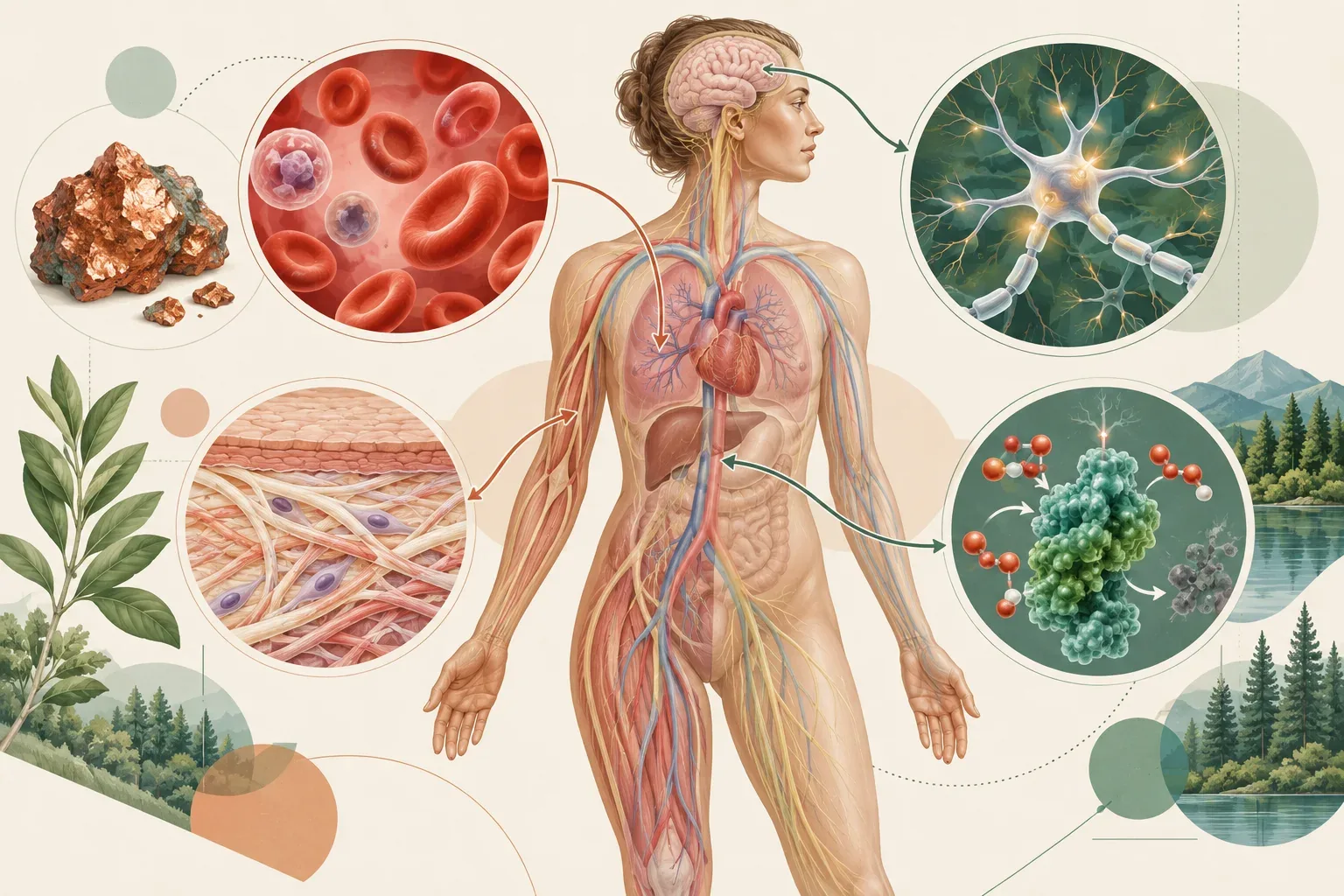 Nutrient connections worth understanding · Depletion · Nutrient balance · Disputed pairing
Copper Supplements: When Extra Copper Helps—and How to Read the Amount
Connection details
Context: 50 mg/day supplemental zinc for 6–10 weeks; adult total-intake upper limit 40 mg
Fifty milligrams daily for weeks can impair copper status; the 40 mg upper limit is a chronic total-intake boundary, not a target.
Source for this connectionContext: chronic supplemental zinc above food
If chronic supplemental zinc sits above food, reassess the zinc amount and consider copper status; added copper does not license chronic zinc above the upper limit.
Source for this connectionContext: 3:1 wellness ratio
That is not a 3:1 folklore law that licenses 8 mg copper.
Source for this connection

Explore more in immunity & colds


References
Corrections & updates
- Update
Revised the article after editorial review, with clearer evidence explanations and practical guidance.