
What is NAC?
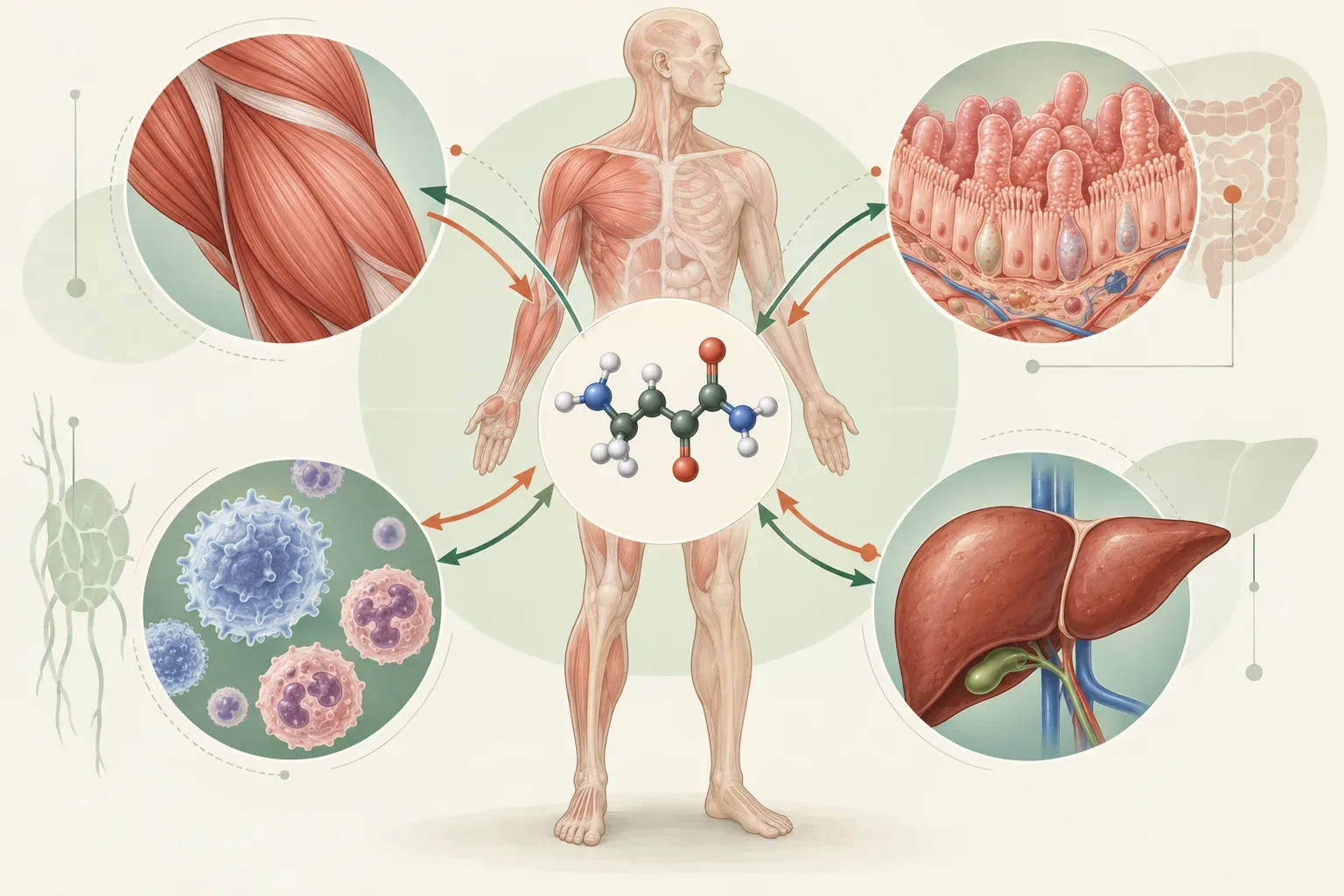
NAC, short for N-acetylcysteine, is a modified form of cysteine, an amino acid found in protein foods. The body can use cysteine to make glutathione, an antioxidant it produces itself.
The body also gets cysteine from food and can make it from another amino acid. Glutathione helps cells handle reactive compounds and certain harmful breakdown products. Glutathione status alone does not establish a need for NAC supplementation.
NAC is used in medical treatment for acetaminophen (Tylenol) overdose, in prescription inhalation solutions to thin mucus, and in oral supplements. Supplements are commonly 600 mg per capsule.
Oral-supplement research includes selected respiratory conditions, including chronic obstructive pulmonary disease (COPD), a long-term lung disease that makes breathing difficult. Mental-health research is broader than a single “mood support” claim: major depression, bipolar disorder and obsessive-compulsive disorder (OCD) have each been tested, with important positive findings and substantial negative trials.
Preparations and uses
| Preparation and route | Purpose | Where to find the details |
|---|---|---|
| Medical oral or intravenous NAC | Acetaminophen overdose treatment | Emergency antidote use |
| Prescription inhalation solution | Thinning mucus | Inhaled NAC |
| Oral capsules, powder and studied combinations | COPD flare-ups and other researched outcomes | Oral findings |
Medical NAC for acetaminophen overdose
If someone may have taken too much acetaminophen, call poison control or go to an emergency room.
In acetaminophen poisoning, a toxic breakdown product can deplete glutathione and injure liver cells. Timely medical NAC treatment helps restore protection. [1]
The oral antidote is calculated by body weight, started promptly after an overdose, and followed by repeated doses under medical direction. In the historical oral protocol, the first dose is 140 mg per kilogram of body weight: about 9,800 mg for a 70 kg (154 lb) adult, more than 16 times a 600 mg capsule.
NAC can occasionally tighten the airways when given by vein, so asthma matters in medical treatment.
Inhaled prescription NAC for mucus
NAC has chemical activity that can break some bonds holding mucus proteins together, reducing mucus thickness. Prescription inhalation solution uses this action to thin mucus.
The inhalation-solution label lists mouth irritation, runny nose, drowsiness, chest tightness and uncommon airway narrowing. People with asthma should ask their clinician before using NAC.
Oral NAC: what the studies found
Oral uses at a glance
Doses below use milligrams (mg) and grams (g): 1 g equals 1,000 mg. “Review pending” means we have not finished assessing the research; it describes our review status rather than the strength of the findings. The linked summaries explain the results and their limitations.
| Claimed benefit | Oral dose / form studied | Research verdict | Evidence strength |
|---|---|---|---|
| Reduce COPD flare-ups | Oral 600 mg/day for 3 years, or 600 mg twice daily for 1–2 years, in people with COPD | Results differ by disease severity and the kind of flare-up counted | Moderate |
| Reduce flu-like symptoms | 600 mg twice daily for 6 months; mostly older adults | Fewer symptoms in one trial; infection itself was not prevented | Limited |
| Improve major depression | 2 g/day for 12 weeks with usual treatment | No clear benefit on the main depression measure; some other measures and later follow-up favored NAC | Review pending |
| Improve bipolar depressive symptoms | 2–3 g/day for 16–24 weeks with usual treatment | Early positive trial, later negative trials; recurrence prevention also uncertain | Review pending |
| Reduce OCD symptoms | Approximately 2–4 g/day for 12–20 weeks as add-on treatment | Small positive studies conflict with larger negative research | Review pending |
| Prevent hangovers | Trials tested use around a drinking session | Two trials found no overall benefit | Limited |
COPD: some flare-up benefits, but trials disagree
The older trials explain why NAC attracted interest in lung disease. BRONCUS randomized 523 people with COPD to 600 mg once daily or placebo for three years. Neither lung-function decline nor the rate of exacerbations—episodes when symptoms worsen—showed a clear benefit. Flare-ups averaged 1.25 versus 1.29 per year. PANTHEON subsequently randomized 1,006 people with moderate-to-severe COPD at 34 Chinese hospitals to 600 mg twice daily or placebo for a year; 964 contributed to its primary analysis. Flare-ups averaged 1.16 versus 1.49 per year, about 0.33 fewer per person-year, or 22% lower. [2]; [3]
A 2015 analysis of 13 studies and 4,155 participants favored fewer exacerbations overall. However, the contrast between the two large trials was never a clean dose comparison: they differed in populations and treatment setting. Hainan Zambon funded PANTHEON, supplied its tablets and collaborated in preparing the report; several authors worked for Zambon companies. [4]
The 2024 trial by Zhou and colleagues makes that distinction more concrete. It randomized 968 people with mild-to-moderate COPD to the same 600 mg twice-daily amount or placebo for two years. Among 924 with exacerbation follow-up, total flare-ups averaged 0.65 versus 0.72 per year; that difference was not statistically clear. Lung function also showed no clear improvement. A secondary result was more encouraging: moderate or severe flare-ups averaged 0.34 versus 0.45 per year. [5]
That leaves a specific possible benefit—reducing some clinically important flare-ups in selected COPD patients—alongside negative findings for total flare-ups in milder disease and for lung-function improvement. Disease severity, previous flare-ups and the outcome being counted all change the interpretation.
Flu: fewer symptoms in one trial, without preventing infection
In a 1997 trial, 262 mostly older adults took 600 mg twice a day or a placebo for six months. Those on NAC had fewer and milder flu-like illnesses; among people whose blood tests showed they had caught the flu virus, 25 percent on NAC got sick with symptoms versus 79 percent on placebo. It is a single trial.
Major depression: no clear benefit on the main symptom measure
The largest dedicated major-depression trial in this evidence set was less positive than a general “mood support” claim suggests. Berk and colleagues randomized 269 adults and analyzed 252 with follow-up data. They added 2,000 mg/day of NAC or placebo to usual care for 12 weeks. Existing treatment varied; not everyone was taking an antidepressant. The primary measure, the Montgomery–Åsberg Depression Rating Scale (MADRS), is a clinician's assessment of depressive symptoms. At week 12, NAC did not clearly outperform placebo.
There were signals worth following: one functioning measure favored NAC during treatment, and several symptom, response and remission measures favored it four weeks after treatment ended. These were secondary findings among many comparisons. The analysis did not account for the greater chance of finding an apparent benefit by chance when testing many outcomes. They support further research rather than an established antidepressant effect. The trial received public and charitable funding, Zambon supplied NAC, and two authors disclosed provisional patents concerning NAC-related psychiatric uses. [6]
A 2024 review pooled 12 trials across depressive conditions and found a small average symptom benefit, with much of the signal in bipolar disorder. That pooled result does not erase the negative result on the main symptom measure in the dedicated major-depression trial. [7]
Bipolar depression: early benefit did not hold up consistently
The early bipolar result encouraged further research. In 2008, 75 people with bipolar disorder took 1 g of NAC twice daily or placebo, added to usual medication, for 24 weeks. NAC improved depression scores more than placebo. The difference on that scale emerged at about 20 weeks. Benefits faded during the four weeks after treatment stopped. Yet the other primary outcome—time to another mood episode—did not improve. Symptom relief and prevention of future episodes were already giving different answers within the same trial. [8]
Later trials tested different stages of illness:
- Acute depression at 2 g/day. A 2019 three-arm study randomized 181 people to NAC, NAC plus a broader nutrient combination, or placebo for 16 weeks; 148 had follow-up data. Neither active arm improved the primary depression outcome over placebo. Some later results favored the combination, which cannot be credited to NAC alone. [9]
- Acute depression at 3 g/day. An 80-person trial continued for 20 weeks and again found no clear depression benefit. Increasing the amount did not resolve the uncertainty. [10]
- Maintenance after an initial course. In a 149-person study, everyone first received NAC for eight weeks knowing what they were taking. Of these, 121 contributed follow-up during the subsequent comparison, in which participants did not know whether they were continuing NAC or had switched to placebo. Continuing 2 g/day did not clearly prevent mood events or improve symptoms compared with switching to placebo over 24 weeks. Symptoms had already become relatively low before that comparison, leaving less room to improve. [11]
The positive trial therefore remains part of the evidence, but it has not become a dependable result across acute depression and maintenance care. Treatment stage and duration may matter; the available comparisons have not identified a group that can confidently expect to benefit. NAC was studied alongside usual bipolar treatment, so these findings do not provide a basis for stopping a mood stabilizer.
OCD: larger trial did not confirm early promise
OCD trials ask whether NAC reduces intrusive thoughts and repetitive compulsions, commonly measured with the Yale–Brown Obsessive Compulsive Scale (Y-BOCS). The scale ranges from 0 to 40, with higher scores representing worse symptoms. Early enthusiasm came partly from a 2012 trial of 48 adults whose symptoms had not responded adequately to a serotonin reuptake inhibitor, a type of medication used to treat OCD. Adding up to 2,400 mg/day of NAC for 12 weeks improved OCD scores more than placebo. [12]
A 2017 trial in 40 adults with treatment-resistant OCD was less encouraging. At 3,000 mg/day for 16 weeks, scores fell from 25.6 to 21.3 with NAC and from 24.8 to 21.8 with placebo, without a significant treatment advantage. A secondary anxiety measure favored NAC, but depression and OCD severity did not. [13]
The 2022 trial was larger and longer: 98 participants, 20 weeks, and 2–4 g/day adjusted according to response. Its analysis included 89 people with at least one follow-up. The difference on the OCD scale was only 0.53 points in favor of placebo, with an uncertainty interval extending from about 2 points favoring NAC to 3 points favoring placebo. Anxiety, depression, functioning and quality of life also showed no clear advantage. [14]
These results explain why “promising for OCD” and “failed a larger trial” can both be accurate. A small positive add-on trial can reveal a useful possibility, but the longer study substantially weakens the expectation of a reliable benefit. No effective NAC amount or course emerges consistently from these comparisons.
Does NAC help anxiety?
The OCD trials above measured anxiety symptoms within OCD; they did not establish NAC as a treatment for a general anxiety disorder.
Brain measurements can change without symptom improvement
Glutathione is part of the body's antioxidant defenses. Glutamate is also a building block of glutathione, but in the brain it has another job as a signaling chemical. NAC supplies cysteine for glutathione, and researchers also study whether it changes glutamate signaling in the brain. These proposed effects are reasons for psychiatric research.
There is now some direct human evidence of a brain effect. A September 2026 accepted manuscript describes a small crossover experiment in bipolar disorder: 12 people enrolled, 10 supplied analyzable data, and each received 3 g/day of NAC and placebo for 14 days each, with a break between treatments. Brain glutathione was higher after NAC, but depression and mania scores did not clearly improve. This was a short biomarker experiment, with a final publication version still pending. [15]
A separate 2026 experiment enrolled 54 people with both bipolar and alcohol use disorders; 49 completed at least one condition. They received NAC, another medication and placebo in separate one-week periods while continuing mood-stabilizing treatment. NAC lowered a combined brain measurement of glutamate and glutamine, two related amino acids, and an exploratory measure suggested fewer heavy-drinking days over the brief treatment window. Depression did not improve. Longer trials are needed to establish whether that short drinking signal persists. [16]
These findings make the mechanisms more than a purely laboratory story. They also show why “raises glutathione” or “modulates glutamate” is an incomplete answer to whether NAC will relieve a particular illness: measurable brain changes and useful symptom changes have not consistently arrived together.
Hangovers: two trials found no overall benefit
In a 2021 trial where participants took NAC and placebo in separate drinking sessions, 49 of 62 enrolled people completed the sessions; the main hangover comparison was not significant. A 2024 trial randomized 45 students and analyzed 40, again without a significant symptom benefit.
GlyNAC has inconsistent glutathione findings
GlyNAC, glycine combined with NAC, is sold for aging. Its effects on glutathione have been inconsistent: a small 2023 trial found an increase, while a 2022 trial did not find an increase overall. These findings do not establish a reliable benefit for aging.
PCOS: results depend on the fertility treatment
NAC has been studied as an addition to ovulation medicines in women with polycystic ovary syndrome. In a trial of 180 infertile women[17], adding 1.2 g/day NAC to 100 mg/day clomiphene for five days early in the cycle improved ovulation and pregnancy rates compared with clomiphene plus placebo. The protocol also used an injection of human chorionic gonadotropin (hCG), a hormone used to trigger egg release[18], and intercourse timed around ovulation.
A different trial in 97 women[19] used intrauterine insemination[20], a procedure that places sperm directly into the womb, with clomiphene, letrozole and injected fertility hormones. Adding 1.2 g/day NAC for five days did not clearly improve pregnancy rates.
An active-treatment comparison[21] in 192 women whose ovulation had not responded to clomiphene favored metformin plus clomiphene over NAC plus clomiphene across three treatment cycles. Ovulation rates were 69.1% versus 20.0%, and pregnancy rates 22.7% versus 5.3%, respectively. These studies do not establish NAC as a stand-alone fertility treatment or show a live-birth benefit. The choice of an add-on belongs with the fertility team and the specific treatment plan.
Craving studies and sleep during alcohol-use treatment
Two 2024 reviews reached different conclusions about craving. A nine-trial analysis[22] found no clear overall benefit, while an eleven-trial analysis[23] reported a reduction but judged the evidence weak. Both reviews covered different substance-use disorders, rather than alcohol alone, and used varied treatment protocols. Study results differed substantially.
A 28-day trial in 42 adults with alcohol-use disorder[24] compared 2,400 mg/day NAC with placebo. Across the trial as a whole, NAC did not clearly reduce the number of drinks consumed on drinking days compared with placebo. Heavy-drinking and secondary clinical outcomes did not show a consistent added benefit. Insomnia symptoms, a secondary outcome, eased over time without a clear advantage for NAC over placebo. Headache was reported by 14% of participants receiving NAC.
How long should I take NAC supplements for?
There is no recognized recommended daily amount or supplement upper limit for NAC, and no established general course for daily supplementation. The oral studies used different durations: respiratory trials lasted one to three years, while the psychiatric trials discussed here usually ran for 12–24 weeks. An early bipolar trial found its depression-score difference late in treatment, but later 16- and 20-week trials were negative. Those mixed results do not identify a reliable “wait this long and it will work” rule.
For chronic illness, duration belongs with the treatment decision and whether NAC is contributing a useful benefit. The long COPD studies provide more safety follow-up than the mood studies, but they do not establish lifetime safety in healthy people.
Oral NAC: drawbacks and side effects
| Potential drawback | When/who it affects | Research evidence | Practical implication |
|---|---|---|---|
| Stomach upset, nausea or diarrhea | Oral NAC users | These are reported adverse effects; overall events were similar to placebo in PANTHEON | Discuss persistent symptoms with your clinician |
| Stronger nitroglycerin effects | People taking nitroglycerin | Combination research raises tolerability concerns | Have the prescriber check the combination |
| Unknown safety in understudied groups | Pregnancy, breastfeeding or prolonged high-dose use | The available trials do not establish a universal safe ceiling | Ask your clinician before use during pregnancy or breastfeeding; no safe ceiling is established for prolonged high doses |
Safety details
Oral NAC commonly causes nausea or other stomach upset and has a sulfur smell.
In the 1,200 mg COPD trial, overall side effects were about as common on NAC as on placebo (29 versus 26 percent). Across the oral COPD studies in a 2015 review, adverse events did not increase at the higher doses studied.
Digestive complaints were more common with NAC in the major-depression trial. [6]
NAC strengthens nitroglycerin’s effect on blood vessels. In a 1997 trial of 200 people with unstable chest pain, the combination prevented some heart events but caused so many side effects that the authors judged it impractical.
For COPD, bipolar disorder, depression or OCD, the trials added NAC to regular care under doctors. Discuss adding it with the clinician treating that condition.
What to pay attention to on the label
NAC is sold mainly as capsules and powder, which contain the same named compound, and it is also combined with glycine. Look for NAC or N-acetyl-L-cysteine in milligrams on the Supplement Facts panel, then check how many capsules make a serving.
| Listing | NAC amount | How to read it |
|---|---|---|
| NAC capsules | Commonly 600 mg per capsule | Two capsules supply 1,200 mg |
| NAC powder | As labeled | Measure by the label |
| GlyNAC (glycine plus NAC) | Varies | Check the labeled amount of each ingredient separately; “GlyNAC” is not a fixed dose |
Misleading labels
Hangover and “detox” claims
“Liver detox” and hangover-prevention claims concern different outcomes. The established liver use is emergency treatment after acetaminophen overdose. The two hangover trials found no overall symptom benefit.
Anything implying FDA approval
FDA has approved prescription NAC medicines, not NAC supplements. In its 2022 guidance, FDA stated that NAC cannot qualify as a dietary supplement because it was approved as a drug first. The guidance also described a policy of generally not taking action solely because an otherwise compliant supplement contains NAC. That enforcement policy was not product approval, evidence of benefit, or permission to make disease-treatment claims.
Confusing servings and items per serving
If a bottle says 180 capsules but defines a serving as 3 capsules, it contains 60 servings. The Supplement Facts amount applies to all three capsules together.
How NAC interacts with other nutrients
Molybdenum
Some products pair NAC with molybdenum and claim the mineral “recycles glutathione.” No human trial has shown that adding molybdenum improves a glutathione or detox outcome. The combination is a marketing formula, not a demonstrated requirement for NAC to work.
The bottom line
NAC has established medical uses and a plausible role in reducing some COPD flare-ups. For mental health, the useful answer is diagnosis-specific: major-depression evidence is limited, bipolar trials conflict, and OCD's early promise did not hold up in a larger trial. Two hangover trials found no overall benefit.
Human studies can now show changes in brain glutathione or glutamate-related measures, but reliable symptom relief has been harder to demonstrate. If you are considering NAC for an ongoing illness, the relevant conversation is whether these particular add-on findings justify it within your existing care. Buying it mainly for a general detox or predictable mood lift is beyond what these results support.
Help us improve this article
Spotted an error or found a source we should consider? Tell us which part of this article needs another look and include a link if you have one. Please leave out personal health details and lab results; we can’t answer individual medical questions.
Explore more in immunity & colds





Nutrient connections worth understanding
 Disputed pairing
Molybdenum Supplements: Daily Needs, Food and Detox Claims
Connection details
Context: glutathione recycler folklore
Not molybdenum folklore about recycling glutathione.
Source for this connection
More in compounds


References
- Heard: acetylcysteine for acetaminophen poisoning, 2008 ↩
- Decramer et al.: NAC 600 mg daily in COPD (BRONCUS), 2005 ↩
- Zheng et al.: NAC 1,200 mg daily in COPD (PANTHEON), 2014 ↩
- Cazzola et al.: NAC and COPD flare-ups meta-analysis, 2015 ↩
- Zhou et al.: NAC in mild-to-moderate COPD, 2024 ↩
- Berk et al.: adjunctive NAC in major depressive disorder ↩
- Peng et al.: NAC for depression meta-analysis, 2024 ↩
- Berk et al.: NAC for depressive symptoms in bipolar disorder ↩
- Berk 2019 ↩
- Ellegaard et al.: adjunctive NAC in acute bipolar depression ↩
- Berk 2012 ↩
- Afshar 2012 ↩
- Costa 2017 ↩
- Sarris 2022 ↩
- Prisciandaro et al.: brain glutathione biomarker and NAC response in bipolar disorder ↩
- Prisciandaro et al.: NAC/gabapentin crossover in bipolar and alcohol use disorders ↩
- trial of 180 infertile women ↩
- human chorionic gonadotropin (hCG), a hormone used to trigger egg release ↩
- different trial in 97 women ↩
- intrauterine insemination ↩
- active-treatment comparison ↩
- nine-trial analysis ↩
- eleven-trial analysis ↩
- 28-day trial in 42 adults with alcohol-use disorder ↩
- Berk et al.: maintenance NAC in bipolar disorder
- Berk et al.: NAC, mitochondrial combination, and placebo in bipolar depression
- Afshar et al.: NAC add-on in refractory OCD
- Costa et al.: NAC augmentation in treatment-resistant OCD
- Sarris et al.: phase III NAC augmentation in OCD
- De Flora et al.: NAC and flu-like illness, 1997
- Coppersmith et al.: NAC and hangover, 2021
- Podobnik et al.: NAC and binge-drinking hangover, 2024
- Horowitz et al.: nitroglycerin and NAC in unstable angina, 1988
- Ardissino et al.: nitroglycerin, NAC, or both in unstable angina, 1997
- Acetylcysteine solution prescribing information, DailyMed
- Acetylcysteine injection prescribing information, DailyMed
- FDA: policy regarding N-acetyl-L-cysteine
- NIH Dietary Supplement Label Database: a NAC 600 mg label
Corrections & updates
- Update
Updated the evidence discussion and practical guidance after editorial review.
- Update
Updated the evidence discussion and practical guidance after editorial review.