
What is glutamine?
Glutamine is an amino acid, one of the building blocks of protein. The body makes its own, and protein foods such as meat, fish, eggs, dairy, and beans supply more.
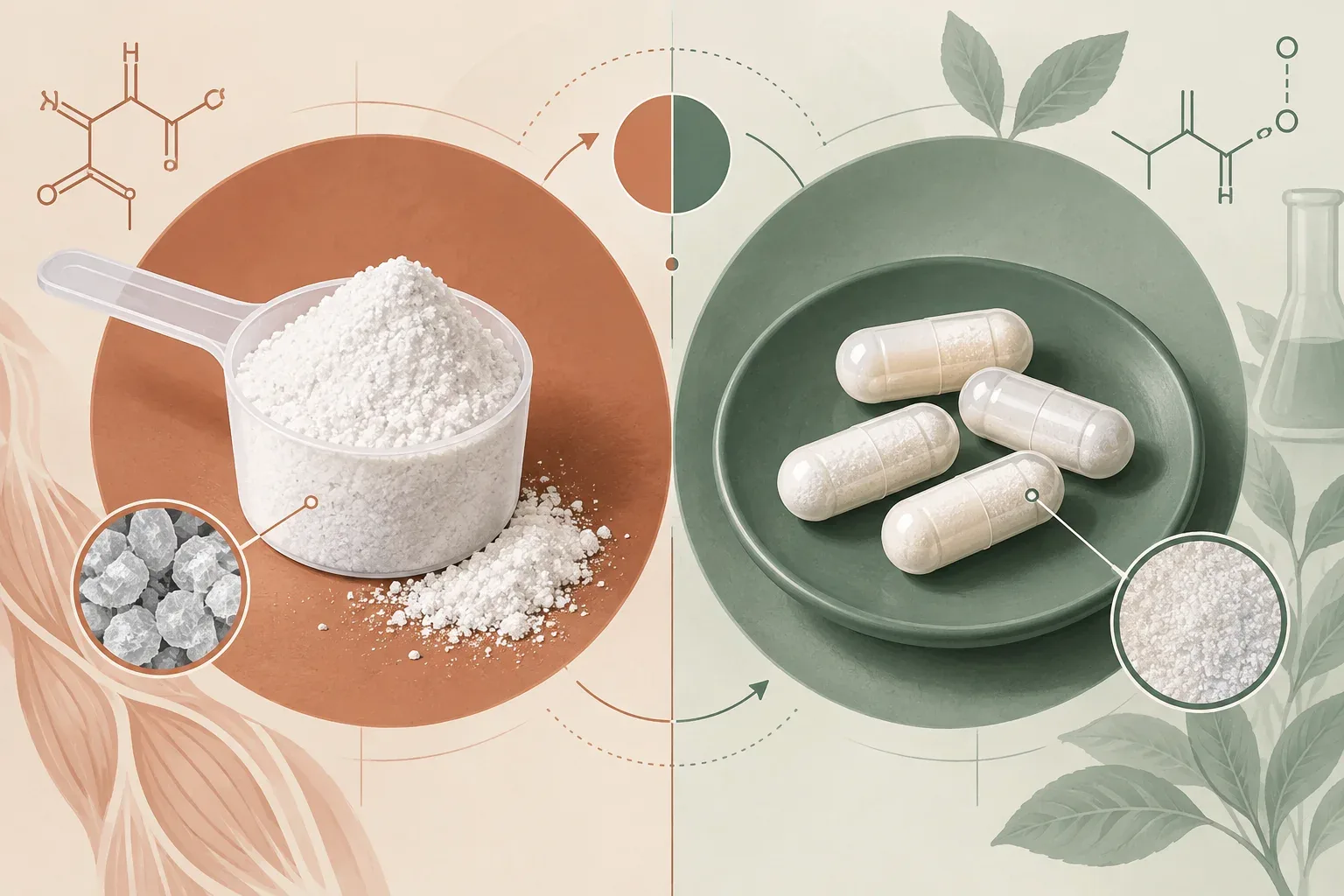
Supplements sell L-glutamine (the form found in the body and food; labels use both names) as a powder, usually 3 to 5 g per scoop, or as 500 mg tablets. A prescription glutamine powder is approved in the US for sickle cell disease.
People take glutamine for gut health, immunity, and exercise recovery. Trials found benefits in sickle cell disease and symptom improvements in two different irritable bowel syndrome (IBS) settings. An athlete review found no clear benefit for immune-cell measurements or aerobic performance; infection reports were a different outcome.
What glutamine does in your body
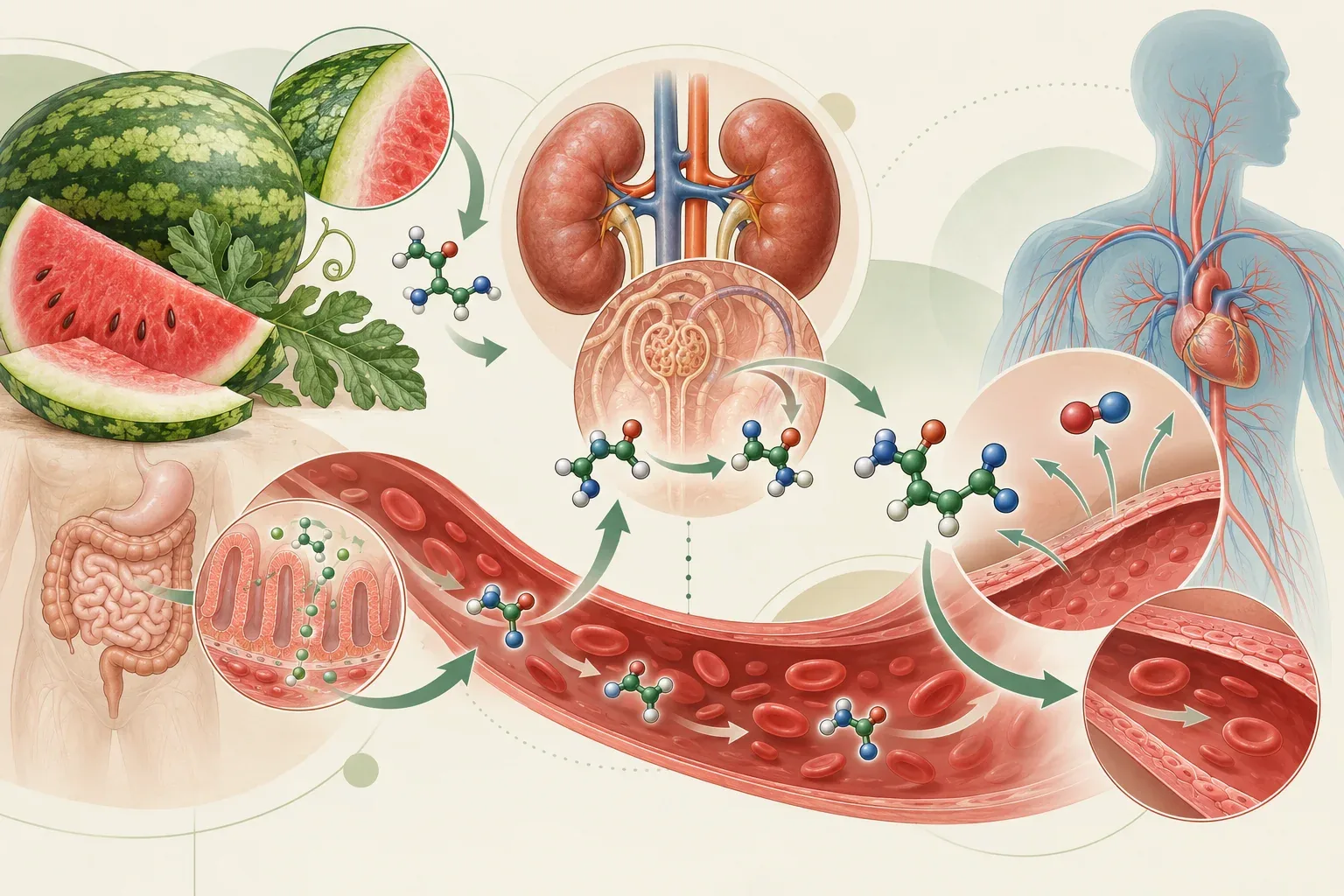
Glutamine carries nitrogen between tissues and supplies material for building proteins and other molecules. It also serves as an important fuel for cells in the intestinal lining and for some immune cells. Those cells use it as part of their ordinary growth and maintenance.
Muscle and other tissues make glutamine, and the body continually exchanges it through the bloodstream. During some severe illnesses, demand and production can become imbalanced. That is why glutamine is sometimes called conditionally essential.
The trials later in this article test supplementation in particular clinical settings, including one where giving more caused harm. [1]
What people take glutamine for
| Claimed benefit | Dose / form studied | Research verdict | Evidence strength |
|---|---|---|---|
| Reduce sickle-cell pain crises | Pharmaceutical-grade L-glutamine 0.3 g/kg twice daily for 48 weeks; children and adults under medical care; prescription label uses weight bands | Fewer pain crises and hospital stays than placebo | Moderate |
| Ease selected post-infection IBS with diarrhea | L-glutamine 5 g three times daily for 8 weeks; adults with increased intestinal permeability | Large improvement versus whey protein in one narrowly selected trial | Review pending |
| Improve IBS symptoms alongside a low-FODMAP diet | Glutamine 15 g/day for 6 weeks; 50 adults with several IBS subtypes | Overall symptom scores improved more with glutamine; several individual outcomes did not | Review pending |
| Prevent post-exercise infections | Glutamine after an endurance event and again 2 hours later; follow-up questionnaire over 1 week; amount not established from the reviewed abstract | One questionnaire study was positive; a later review assessed different immune outcomes | Limited |
“Review pending” means our assessment of the IBS evidence is unfinished, not that the published trials await peer review. Both found symptom improvement, but they studied different patient groups and treatments; the first has selection and analysis concerns, and the second did not improve several individual outcomes.
For athletes, the evidence does not establish a broad recovery or immune benefit.
When to ask a doctor before taking glutamine
- You are critically ill or in intensive care. In a large trial of patients on ventilators, high-dose glutamine was linked to more deaths.
- You have IBS or another gut condition. The first IBS trial selected people with post-infection diarrhea and increased intestinal permeability; the later trial included several IBS subtypes alongside a specific diet. A clinician can assess which evidence is relevant to your symptoms.
- You have sickle cell disease. The approved product and dose are set by your doctor.
- You are pregnant or breastfeeding. No trial we cite covers these periods.
Which foods supply glutamine?
A review's food-composition table[2] gives the following glutamine estimates per 100 g of food. Standard food tables often combine glutamine with a related amino acid during laboratory analysis, rather than reporting glutamine separately.
| Food in the review | Source | Glutamine (g per 100 g food) |
|---|---|---|
| Beef | Meat | 1.2 |
| Egg | Egg | 0.6 |
| Tofu | Plant | 0.6 |
| Corn | Plant | 0.4 |
| Skim milk | Dairy | 0.3 |
| White rice | Plant | 0.3 |
Protein foods supply glutamine along with other amino acids.
How can I tell if I'm low on glutamine?
There is no recognized everyday glutamine-deficiency diagnosis or routine test for healthy people. Blood levels can change during critical illness.
There is no recognized recommended daily amount or official upper limit for glutamine. Protein recommendations cover it as part of food protein; retail directions, prescription regimens and podcast suggestions answer different questions.
Before the test if you already supplement
If a specialist orders amino-acid testing, report glutamine use and follow that test’s preparation instructions.
All forms at a glance
| Listing | Glutamine per serving | Compared with evidence |
|---|---|---|
| L-glutamine powder | 3 to 5 g per scoop | Easy to measure in grams; IBS and sickle-cell trials used condition-specific preparations |
| L-glutamine tablets | 500 mg each | Per-tablet amount; total intake depends on the product directions |
| Gut blends | About 3 g plus other ingredients | One example also contains arabinogalactan (a plant fiber), licorice and aloe |
| Prescription sickle cell powder | 5 g packets, dosed by body weight | The prescription product tested for sickle cell disease; not interchangeable with a wellness tub |
What to pay attention to on the label
Find grams of L-glutamine per serving and multiply by the labeled daily servings.
Which number on the label is the amount?
One powder lists 3 g of L-glutamine per level scoop, taken once a day. One tablet product lists 1 g per 2 tablets and suggests 2 tablets four times a day, which is 4 g a day.
Shopping comparisons that can mislead
Daily servings and the IBS research
The tablet product’s suggested schedule supplies 4 g a day, compared with 15 g a day in the IBS trial. An IBS-benefit claim based on that trial would therefore be invoking research at nearly four times the product’s suggested daily amount.
Confusing servings and items per serving
Some manufacturers put 180 capsules on the front, and the back says 3 capsules per serving and 60 servings. The amount on the Supplement Facts panel is for the whole 3-capsule serving.
Manufacturer claims and the studies they may be based on
A "supports gut health" or "gut lining" claim may point to the IBS trial at 15 g a day. An "immune support" or "recovery" claim may point to a 1996 study in which athletes reported fewer infections on questionnaires, or to podcast advice; the athlete review found no clear immune-cell benefit and did not directly pool infection reports.
Common questions about glutamine
Is glutamine dangerous, given the intensive care trial?
That trial combined glutamine given by vein and by feeding tube in people on ventilators with failing organs. In 2013, 1,223 such patients were randomized; 1,218 were included in the main analysis comparing glutamine with no glutamine. Deaths were 32.4 percent versus 27.2 percent at 28 days, which did not cross the trial's stricter statistical threshold; in-hospital and six-month mortality were significantly higher with glutamine. That result is a reason not to add glutamine in intensive care without the care team. It does not show that a few grams of powder harm healthy people. Oral treatment in sickle cell disease involves a different population and exposure, with its own safety findings described below.
Drawbacks and side effects
| Potential drawback | When/who it affects | Research evidence | Practical implication |
|---|---|---|---|
| Serious harm in intensive care | Ventilated patients with organ failure receiving high-dose IV plus enteral glutamine | Higher hospital and six-month mortality in a large trial | Hospital use belongs to the treating team. |
| Gut symptoms and other adverse events | Prescription sickle-cell treatment | Label and trial report nausea, constipation and several pain symptoms | Use the prescribed product and monitoring plan; do not transfer dosing to ordinary supplements. |
Understanding these risks
There is no official upper limit for glutamine. In the sickle cell trial, nausea, chest pain not caused by the heart, tiredness, and muscle and joint pain were more common on glutamine than placebo. The prescription label lists constipation, nausea, headache, belly pain, cough, and limb, back, and chest pain as common.
Across two trials in people with sickle cell disease, the Endari prescribing information[3] reports serious adverse reactions in both groups, more often with placebo. It also reports three deaths among 187 Endari recipients and none among 111 placebo recipients; none of the deaths were considered related to treatment. These safety figures combine two trials. They belong alongside the reduction in sickle-cell crises and hospitalizations described below.
The science behind glutamine
Prescription treatment reduced sickle-cell crises and hospital stays
In a 2018 trial, 230 children and adults with sickle cell anemia or sickle beta-zero thalassemia took pharmaceutical-grade glutamine (0.3 g per kg of body weight twice a day; the approved label specifies weight bands of 5, 10, or 15 g per dose, with 15 g as the top dose) or placebo for 48 weeks. The typical patient in the glutamine group had 3 pain crises rather than 4 and 2 hospital stays rather than 3. Two-thirds of patients were also taking hydroxyurea, a standard sickle cell drug.
The approved label covers children aged 5 and older and adults. Its weight bands give 10–30 g/day in two doses; adults over 65 kg (about 143 lb) receive 15 g twice daily.
The prescription treatment comes with a defined product, weight-based dosing and medical follow-up. A retail glutamine tub shares the molecule's name but has not thereby become the approved treatment; patients should discuss the prescription option with their sickle-cell team rather than replace it with an independently selected powder.
Two trials found fewer crises when glutamine was added to hydroxyurea
A 24-week study[4] randomized 60 children with sickle cell disease who were already taking hydroxyurea to oral L-glutamine or continued standard care. The glutamine regimen used 0.3 g/kg per dose twice daily, with a maximum of 15 g per dose. Pain crises and related hospitalizations were lower with glutamine, but there was no placebo and the groups differed in how many pain crises they had before the study. Changes in cerebral blood-flow measurements did not establish prevention of stroke.
Nine children receiving glutamine developed temporary nausea, mild abdominal pain and loose stools. One of the 30 assigned to glutamine developed a serious sickle-cell liver complication after 12 weeks, needed intensive care and exchange transfusion, and improved; glutamine was stopped and the child left the study. The report does not establish that glutamine caused the illness.
A six-month placebo-controlled trial[5] randomized 53 children and adolescents while they continued hydroxyurea. Glutamine was given at 0.3 g/kg twice daily, capped at 30 g/day, against maltodextrin placebo. The average number of vaso-occlusive events was 1.00 with glutamine versus 1.65 with placebo: 0.65 fewer events per participant over six months. The reported statistical uncertainty range (95% confidence interval) was compatible with an average benefit of 0.23–1.07 fewer events. The definition included acute sickle pain requiring medical treatment as well as acute chest syndrome, a lung complication, and several other serious sickle-cell events. Hospitalizations and acute-chest-syndrome episode counts also favored glutamine.
However, the printed counts and statistical test for how many children developed acute chest syndrome are inconsistent, leaving that particular comparison unresolved. This small, university-funded trial tested several outcomes without tightening its statistical threshold to account for the number of comparisons. That increases the chance that an apparently positive result arose by chance, so the additional findings on hospitalizations and acute chest syndrome need confirmation. The authors reported no serious adverse events. Their results section says all 53 participants completed follow-up, but the flow chart lists nine losses, withdrawals or protocol violations while keeping all 53 in the analysis. The report does not reconcile those accounts.
Environmental enteropathy: an amino-acid mixture
A 16-week trial in Zambian adults[6] studied environmental enteropathy, intestinal damage associated with deprived living conditions. It randomized 102 people; 85 entered the final analysis, with smaller numbers for some tests. The daily amino-acid mixture supplied 29.9 g glutamine, 2.79 g leucine and 0.28 g tryptophan, with or without a multiple-micronutrient preparation, in comparisons with matching placebos. The amino acids helped preserve the height of the villi—the tiny projections on the intestinal lining[7]—against a seasonal decrease. Leakage across the lining improved only with the combined amino-acid and micronutrient regimen. Two other types of measurement did not improve: activation of a nutrient-sensing system in immune cells within the gut lining, and blood markers of microbes or their products passing across the gut barrier. The first tested a proposed mechanism; the second looked for evidence of material escaping from the intestine. This concerns particular mixtures and intestinal measurements, not proof that glutamine alone treats a general “leaky gut.”
Two IBS trials found symptom improvement in different settings
Two trials provide encouraging results in different IBS settings. The first randomized 115 people with diarrhea-predominant IBS that began after a gut infection; 106 completed treatment. They also had an abnormal urine sugar-absorption test, a sign that the gut lining allowed more through than expected. Participants took 5 g of glutamine three times a day or a whey-protein control powder for 8 weeks. About 80 percent on glutamine had a reduction of at least 50 points on the IBS symptom-severity score, versus 6 percent on the control, and the gut-lining test improved. The trial authors called for larger studies.
The score combines pain, bloating, bowel problems and their effect on well-being, with a maximum of 500 points. Its original validation study[8] found that a 50-point drop reliably indicated symptom improvement. Crossing that threshold means improvement, not necessarily remission or disappearance of every symptom.
In published correspondence[9], gastroenterologists Alexander Ford and Peter Gibson questioned aspects of that selection, the unconfirmed preceding infections, telephone-based compliance checks and the analysis of completers. Those concerns affect how confidently the unusually large benefit can be interpreted.
A later trial added glutamine to dietary treatment
In Rastgoo and colleagues' 2021 trial[10], 50 adults with IBS received 15 g/day of glutamine or whey-protein control powder for six weeks. Both groups followed a low-FODMAP diet, which limits certain fermentable carbohydrates. Most participants had diarrhea-predominant IBS, but constipation, mixed and unclassified subtypes were also included. Forty-four people finished; the analysis used a statistical method to estimate missing measurements.
Overall symptom scores fell by 58% with glutamine and 46% with control, with the analysis accounting for starting differences and favoring glutamine. The added effect was not consistent across individual outcomes: the analysis did not show clear advantages for abdominal-pain intensity or frequency, bloating, stool frequency, stool consistency or quality of life. The university-funded study reported no adverse effects and no commercial or financial conflicts.
This is additional randomized evidence for IBS, but it is not a repetition of the original experiment. It tested glutamine added to a diet in a broader population, rather than glutamine alone in a permeability-selected postinfection group. Both studies are useful to discuss when IBS persists, while a general promise to repair any person's gut goes beyond their participants and outcomes.
Does it improve the gut barrier more generally?
A 2024 review[11] found no clear overall improvement in intestinal-permeability tests across its varied clinical studies. Its dose-subgroup claims are difficult to interpret: some entries place the best estimate outside the uncertainty range printed for that same estimate, so those numbers cannot all be correct, and the preparation table includes an intravenous amino-acid regimen despite the abstract describing oral treatment. That review cannot establish a general dose for “leaky gut,” or extend the selected IBS results to everyone.
In a crossover heat-exercise trial[12], ten men took one glutamine dose of 0.3 g per kilogram of fat-free mass (body weight excluding fat) or placebo before an 80-minute exertional heat test. Glutamine did not protect against measured intestinal injury, increased permeability or bacterial material crossing into the bloodstream, assessed using bacterial DNA in blood samples. No participant reported gastrointestinal intolerance at that dose, but tolerability did not translate into protection. The result concerns this single-dose protocol, not every dose or chronic regimen.
Fewer reported infections, but no broad immune-cell benefit
In a 1996 study, athletes who drank glutamine after a race or hard training reported fewer infections in the next week (81 percent infection-free versus 49 percent on placebo), but this relied on questionnaires. A 2019 review identified 47 studies and meta-analyzed 25; its immune-cell measures and aerobic performance results did not confirm a broad benefit. The review did not directly pool the questionnaire infection result.
The same review also reported a small body-weight difference: about 1.36 kg (3 lb) lower with glutamine in a pool of five athlete trials. The abstract’s uncertainty range was about 0.16–2.55 kg lower; the available author-uploaded proof table prints 0.17 rather than 0.16 kg at the lower end. Fat mass and lean mass did not clearly improve. This is a limited body-weight finding in athletes, not an established fat-loss regimen: the final published table and the individual weight-study doses and durations remain unverified in our assessment.
What is still open
The IBS evidence now includes two different settings. Larger trials are needed to establish which patients benefit, whether the added symptom relief lasts and how glutamine compares with established IBS treatments. Broad immunity claims in healthy adults remain a separate unanswered question.
What you may have heard on podcasts
Rhonda Patrick (The Diary Of A CEO, 30 March 2026) said she started glutamine in her mid-40s, mainly for her immune system, when a young child was bringing home infections, and that she was getting sick less often, adding that it could be placebo. She was also taking creatine and urolithin A. She recalled studies of endurance athletes who had fewer respiratory illnesses on glutamine and said gut cells use it for energy. She did not give an amount.
Andy Galpin (Huberman Lab, 22 February 2023) recommended 20 g a day for recovery after hard training, split into 10 g in the morning and 10 g at night.
Andrew Huberman (Huberman Lab, 11 September 2025) said people who supplement typically take 1 to 10 g a day, that evidence for immune benefits is somewhat scant, and that emerging evidence suggests glutamine may reduce sugar cravings.
Patrick's memory of fewer reported infections resembles the positive 1996 questionnaire study, but the larger review did not directly pool that infection outcome and her own experience involved three supplements at once. No cited trial tested Galpin's 20 g recovery schedule. Huberman's description of the immune evidence as “somewhat scant” fits that mixed record; no cited trial tested the sugar-craving idea.
The bottom line
Glutamine has useful evidence in specific patient groups, including prescription treatment for sickle-cell disease, selected post-infection IBS and an add-on to a low-FODMAP diet. Evidence for immunity, recovery and general gut health in healthy people remains unconvincing.
The clinical setting matters: high-dose use in critically ill patients also produced harm. We would start with the problem you're looking to solve rather than the idea that glutamine is fuel for immune or gut cells, or deserves a place as a standalone supplement.
Help us improve this article
Spotted an error or found a source we should consider? Tell us which part of this article needs another look and include a link if you have one. Please leave out personal health details and lab results; we can’t answer individual medical questions.
Explore more in gut & digestion



More in compounds




References
- Heyland et al.: glutamine and antioxidants in critically ill patients (REDOXS), 2013 ↩
- review's food-composition table ↩
- DailyMed: Endari (L-glutamine oral powder) prescribing information ↩
- 24-week study ↩
- six-month placebo-controlled trial ↩
- 16-week trial in Zambian adults ↩
- tiny projections on the intestinal lining ↩
- original validation study ↩
- Ford and Gibson: correspondence on the postinfectious IBS trial, 2019 ↩
- Rastgoo et al.: glutamine added to a low-FODMAP diet for IBS, 2021 ↩
- 2024 review ↩
- crossover heat-exercise trial ↩
- Castell et al.: glutamine and infections in athletes, 1996
- Niihara et al.: L-glutamine in sickle cell disease, phase 3 trial, 2018
- Zhou et al.: glutamine for post-infectious irritable bowel syndrome, 2019
- Ramezani Ahmadi et al.: glutamine in athletes, meta-analysis, 2019
- The Diary Of A CEO: Rhonda Patrick, 30 March 2026
- Huberman Lab: Andy Galpin on nutrition and supplementation, 22 February 2023
- Huberman Lab Essentials: foods and supplements for the brain, 11 September 2025
- NIH Dietary Supplement Label Database: an L-glutamine powder label
- NIH Dietary Supplement Label Database: an L-glutamine tablet label
- NIH Dietary Supplement Label Database: a glutamine gut blend label
Corrections & updates
- Update
Updated the evidence discussion and practical guidance after editorial review.
- Update
Updated the evidence discussion and practical guidance after editorial review.