
What is beta-alanine?
Beta-alanine is an amino acid the body makes in the liver. Meat, poultry, and fish add some from food, up to about 1 g a day for heavy meat eaters and almost none for vegans.
Beta-alanine supplements come as powder, capsules, sustained-release tablets and ingredients in pre-workout drinks. Regular use over weeks can raise muscle carnosine, which helps buffer acidity during intense exercise.
Athletes take it for demanding efforts such as rowing, swimming and hard conditioning. Some trials find improved exercise capacity, but competitive performance results are less consistent. A newer review of repeated brief sprints found no clear average benefit. Beta-alanine has not demonstrated a dependable muscle-building effect.
What beta-alanine does in your body
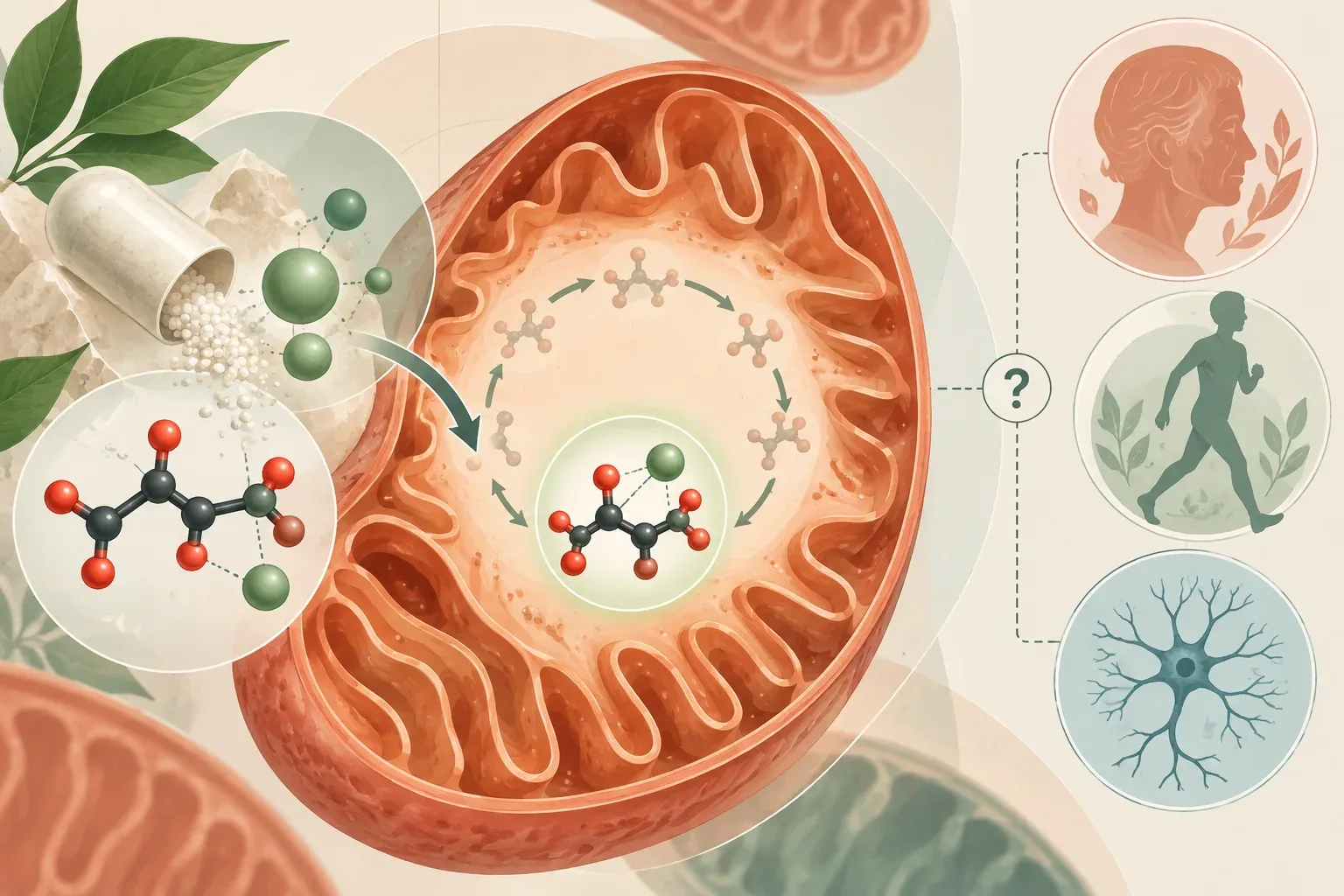
Muscle combines beta-alanine with histidine to make carnosine. During hard exercise, rapid energy use changes the chemical environment inside muscle, including an increase in acidity. Carnosine helps buffer that change, allowing muscle to resist part of the fall in pH.
Beta-alanine availability can limit how much carnosine muscle makes. Regular supplementation can therefore increase the muscle's carnosine supply over time.
The tingling some people notice has a different origin and is not a measurement of muscle carnosine. A noticeable sensation after a dose therefore does not tell you whether the intended muscle effect has developed. [1]
What people take beta-alanine for
| Claimed benefit | Dose / form studied | Research verdict | Evidence strength |
|---|---|---|---|
| Performance during hard 1–4-minute efforts | Usually 4–6 g/day for at least 4 weeks; healthy athletes, mostly young men | Some reviews find a small benefit; another review did not support use | Limited |
| Raise muscle carnosine | 4–6 g/day for 4 weeks; some studies continued to 10 weeks | Muscle carnosine rises, with substantial individual variation | Moderate |
The most plausible sports use is improving tolerance of intense exercise, especially efforts lasting roughly one to four minutes. A review of 40 trials and 1,461 people found a small overall benefit, while a Defense Department-sponsored review of 20 trials did not support use. Results also depend on the test: continuing shuttle runs until exhaustion is different from rowing a fixed distance faster or repeating brief sprints. The individual studies below help explain why a broad “delays fatigue” claim is too simple.
Where does beta-alanine appear in food?
The following food analysis[2] measured free beta-alanine in dry samples. Its numbers are not cooked-serving amounts. Meat also contains carnosine and anserine, compounds that release beta-alanine when digested; those are separate from the free beta-alanine column.
| Food analyzed | Source | Free beta-alanine (mg per 100 g dry food) |
|---|---|---|
| Beef loin | Meat | 71 |
| Beef round | Meat | 62 |
| Beef chuck | Meat | 45 |
| Soybeans | Plant | 7 |
| Potato | Plant | 5 |
On a vegan diet you may get very little beta-alanine from food, especially the carnosine-bound beta-alanine supplied by meat and fish. Your body also makes beta-alanine, so low dietary intake is not a deficiency or an automatic reason to supplement.
All forms at a glance
These amounts come from individual label examples; other products can supply different amounts.
| Listing | Beta-alanine per serving | Directions on this label | Useful distinction |
|---|---|---|---|
| Powder | 2 g per half teaspoon | Three to four servings daily: 6–8 g | Powder volume and grams are different units. |
| Capsules | 750 mg each; 2.25 g per three-capsule serving | Two to three servings daily: 4.5–6.75 g | Count all capsules in the serving. |
| Sustained-release tablets | 1.6 g per two tablets | Once or twice daily: 1.6–3.2 g | Release is spread out to reduce tingling. |
| Pre-workout | About 2.5 g per scoop | Before a workout | Increasing scoops also increases caffeine and the other ingredients. |
The ingredient is a less compelling purchase for someone whose sole goal is gaining muscle.
What to pay attention to on the label
The capsule count also determines how many servings you get. For example, 180 capsules with 3 capsules per serving provide 60 servings.
Misleading labels
Pre-workouts taken only on training days
One pre-workout lists 2.5 g of beta-alanine per scoop, along with 180 mg of caffeine and other ingredients, taken 30 minutes before a workout. That presentation can suggest an immediate beta-alanine effect, whereas the performance studies used regular intake over weeks to build muscle carnosine. Increasing scoops also increases caffeine and the other ingredients.
Manufacturer claims and the studies they may be based on
A "delays muscle fatigue" or "increases training capacity" claim may point to the reviews and the sports-society statement, which found the clearest effect on how long people could keep going at high intensity for about 1 to 4 minutes. A "builds muscle" claim is not supported by the pooled body-composition results. "CarnoSyn" is a brand of beta-alanine used in trials and products; the brand name alone does not establish a performance benefit for a particular serving or sport.
Practical questions
Why does beta-alanine make you tingle, and is it dangerous?
The tingling, called paresthesia, is expected and not considered harmful in the short trials. A single dose of about 800 mg or more, or more than 10 mg per kg of body weight, can cause tingling, prickling, or burning, usually for 60 to 90 minutes. For an 80 kg (176 lb) adult, that threshold is 800 mg. Dividing a 4 to 6 g daily total avoids taking the entire amount at once, but even a 1.6 g (1,600 mg) divided dose can cause tingling; sustained-release tablets may reduce it further. Some people also report itchy skin.
Does beta-alanine build muscle?
It has not demonstrated a reliable muscle-building benefit. A 2022 synthesis of 20 studies involving 492 participants found no significant improvement in fat-free mass, body weight or fat measures. [3]
Does it work better with baking soda?
Possibly. In the largest review (2017, 40 studies), beta-alanine combined with sodium bicarbonate (baking soda) had a larger effect than beta-alanine alone. A smaller 2024 review of 10 studies found a clear benefit only for the combination; in that smaller set, beta-alanine alone did not reach a clear result. Bicarbonate can upset the stomach; ask a pharmacist or sports dietitian before adding it.
Drawbacks and side effects
| Potential drawback | When/who it affects | Research evidence | Practical implication |
|---|---|---|---|
| Tingling and itching | Immediate-release servings, including amounts of 800 mg or more | NIH reports dose-related paresthesia and itching | Smaller divided servings or sustained-release preparations may reduce symptoms. |
| Uncertain safety with prolonged use | Beyond short healthy-adult trials; medical conditions, pregnancy or breastfeeding | Most reassurance covers up to 8 weeks; longer data are limited | Safety with prolonged use remains uncertain. |
Understanding these risks
There is no official upper limit for beta-alanine. Beyond tingling and itching, trials in healthy people found no clear safety problem at 1.6 to 6.4 g a day for up to 8 weeks. Evidence from 8 weeks to one year is limited, and there are no data beyond one year. If a label directs more than 6.4 g a day, ask a clinician or sports dietitian first.
The science behind beta-alanine
The evidence comes from many small, short trials, mostly in young men. Larger pooled reviews found a small average effect, while one Defense Department-sponsored review did not support use.
Muscle carnosine
Four weeks of 4 to 6 g a day raises muscle carnosine. Ten-week studies reported rises as high as 80 percent, while individual responses in one study ranged from 2 to 69 percent.
Carnosine compared with beta-alanine
Oral carnosine can also raise muscle carnosine. In a four-week study, researchers reported increases with both beta-alanine and an amount of L-carnosine supplying the same number of molecules as the higher beta-alanine dose. Equal grams on two labels would not reproduce that comparison. The muscle measurement does not establish equal sports performance from the two supplements. [4]
Performance
A 2012 review of 15 studies found the clearest benefits for efforts of 60 to 240 seconds and did not detect a benefit under 60 seconds. Its median improvement of about 3 percent combined different exercise measures; it is not a promise of a 3 percent faster race. A 2017 review of 40 studies found a small overall effect, clearer for continuing until exhaustion than for completing a fixed task faster.
A positive shuttle-test trial in footballers
In 2012, 17 amateur male footballers took beta-alanine or placebo for 12 weeks. The beta-alanine group used 3.2 g daily in four sustained-release tablets. Their test involved progressively faster shuttle runs with brief rests until they could no longer maintain the pace.
Distance increased by about 34% within the nine-person beta-alanine group, while it fell in the eight-person placebo group; the comparison of changes favored beta-alanine. This was a small, specific exercise-capacity study. It did not measure goals or running performance during matches.
The supplier provided both supplements. One author disclosed paid consulting, patents and other research grants involving the beta-alanine supplier. [5]
The rowing result was less decisive
A 2013 trial assigned 16 trained male rowers to beta-alanine or placebo for 28 days. The researchers used 80 mg per kilogram of body weight daily and tested 2,000-meter rowing performance. Mean times improved by 2.9 seconds in the beta-alanine group and worsened by 1.2 seconds with placebo, but the overall comparison narrowly missed the study's statistical threshold.
Times for selected portions of the rowing distance favored beta-alanine. Those encouraging segments do not turn the uncertain overall result into a demonstrated faster 2,000-meter performance. This trial is a useful example of why increasing exercise capacity and improving a competitive event should be considered separately. [6]
Repeated brief sprints: a newer review found no clear benefit
A 2026 review of 17 randomized trials examined repeated-sprint ability. The protocols involved four to twelve repetitions separated by rests ranging from ten seconds to four minutes. Pooled results did not show significant improvements in mean performance, peak performance or the decline across repetitions.
Participants were mainly young men, with three female-only studies. The review was supported by public Chinese grants and declared no conflicts. Its result makes repeated-sprint improvement a weak basis for buying beta-alanine, even though a small football study found better performance on an increasingly demanding shuttle test. The two kinds of test place different demands on the athlete. [7]
Cognition in older adults
A 2023 trial[8] randomized 100 older adults to 2.4 g/day of beta-alanine or placebo for ten weeks; 79 completed it. The study was funded by the supplement supplier Natural Alternative Inc., and the authors declared no conflicts of interest. On the Montreal Cognitive Assessment, a screening test of thinking and memory, the overall comparison did not show a clear advantage. A subgroup starting with scores of 26 or below improved more with beta-alanine. That narrower result needs confirmation before it supports a general memory claim. A separate Stroop test of attention and response control showed no between-group advantage, including in the lower-baseline subgroup.
Mood, anxiety and physical-function measures did not differ clearly between groups. Depression scores fell within the beta-alanine group, but that alone does not establish a benefit over placebo.
Where the sources disagree
The International Society of Sports Nutrition supports 4 to 6 g a day, divided into smaller doses, with clearer effects after about four weeks for 1- to 4-minute efforts. Other studies used different schedules; no universal minimum effective serving has been established. A review sponsored by the US Department of Defense, of 20 trials mostly in men aged 18 to 25 taking 1.6 to 6.4 g a day for 4 to 8 weeks, did not support it for performance or recovery. Results from longer events are less consistent. The reviews used different trial sets and standards, so their conclusions are not directly interchangeable.
What is still open
The remaining questions include which competitive events benefit enough to matter, whether particular groups respond more reliably, and safety with prolonged use. Longer events have been studied, but the evidence does not support a general endurance recommendation.
What you may have heard on podcasts
Andy Galpin (Huberman Lab, 22 February 2023) described consistent daily use to raise muscle carnosine and gradual increases in the daily total to limit the "ants under the skin" feeling. His suggested daily total rose from about 2 g toward 5 or 6 g. This is his advice.
Mike Israetel (Renaissance Periodization, 10 August 2026) called beta-alanine an honorable mention, when going over his top five supplements. He connected it with one-to-several-minute hard efforts, repeated high-repetition sets, and hard conditioning intervals, but said people who lift mainly to build muscle do not benefit much because it has no muscle-building effect of its own. He said the main side effect is skin tingles, which he personally hates.
The bottom line
Beta-alanine may offer a small advantage during certain sustained, intense efforts. Positive exercise-capacity results sit alongside inconclusive rowing findings and a newer pooled analysis with no clear repeated-sprint improvement.
Whether it is worth the extra cost and routine depends on the kind of training you do and how much a small possible improvement matters to you.
Help us improve this article
Spotted an error or found a source we should consider? Tell us which part of this article needs another look and include a link if you have one. Please leave out personal health details and lab results; we can’t answer individual medical questions.
Explore more in exercise & muscle


More in compounds




References
- Trexler et al.: International Society of Sports Nutrition position stand on beta-alanine, 2015 ↩
- food analysis ↩
- Body-composition review ↩
- Harris and colleagues ↩
- Saunders and colleagues ↩
- Ducker and colleagues ↩
- Liang and colleagues ↩
- 2023 trial ↩
- Office of Dietary Supplements: Dietary supplements for exercise and athletic performance, health professional fact sheet
- Hobson et al.: beta-alanine and exercise performance, meta-analysis, 2012
- Saunders et al.: beta-alanine and exercise capacity and performance, meta-analysis, 2017
- Curran-Bowen et al.: beta-alanine and sodium bicarbonate, meta-analysis, 2024
- Huberman Lab: Andy Galpin on nutrition and supplementation, 22 February 2023
- Renaissance Periodization: five supplements, 10 August 2026
- NIH Dietary Supplement Label Database: a beta-alanine powder label
- NIH Dietary Supplement Label Database: a sustained-release beta-alanine label
- NIH Dietary Supplement Label Database: a beta-alanine capsule label
- NIH Dietary Supplement Label Database: a pre-workout label with beta-alanine
Corrections & updates
- Update
Updated the evidence discussion and practical guidance after editorial review.