
What is collagen?
Collagen is the main structural protein in skin, tendons, cartilage, and bone. Collagen peptides are collagen from cow, pig, or fish skin and bones, hydrolyzed into smaller pieces that dissolve in drinks. Gelatin is the same protein broken down less, so it gels.
Collagen is an incomplete protein: it lacks tryptophan, an amino acid the body cannot make, and contains little leucine, which helps trigger muscle protein building. It therefore does not replace whey, soy, dairy, eggs, meat, or another complete protein.
Trials of named collagen ingredients have reported improvements in skin measurements, joint discomfort and some bone or body-composition outcomes. The evidence is different for each use: recent skin reviews disagree, joint-pain trials suggest small added benefits, and direct short-term muscle-protein research favors whey over collagen.
What collagen does in your body
The body makes collagen by joining amino acids into protein strands that assemble into a strong supporting structure. Different tissues organize that structure differently: tendons need tensile strength, skin needs support, and bone combines collagen with mineral.
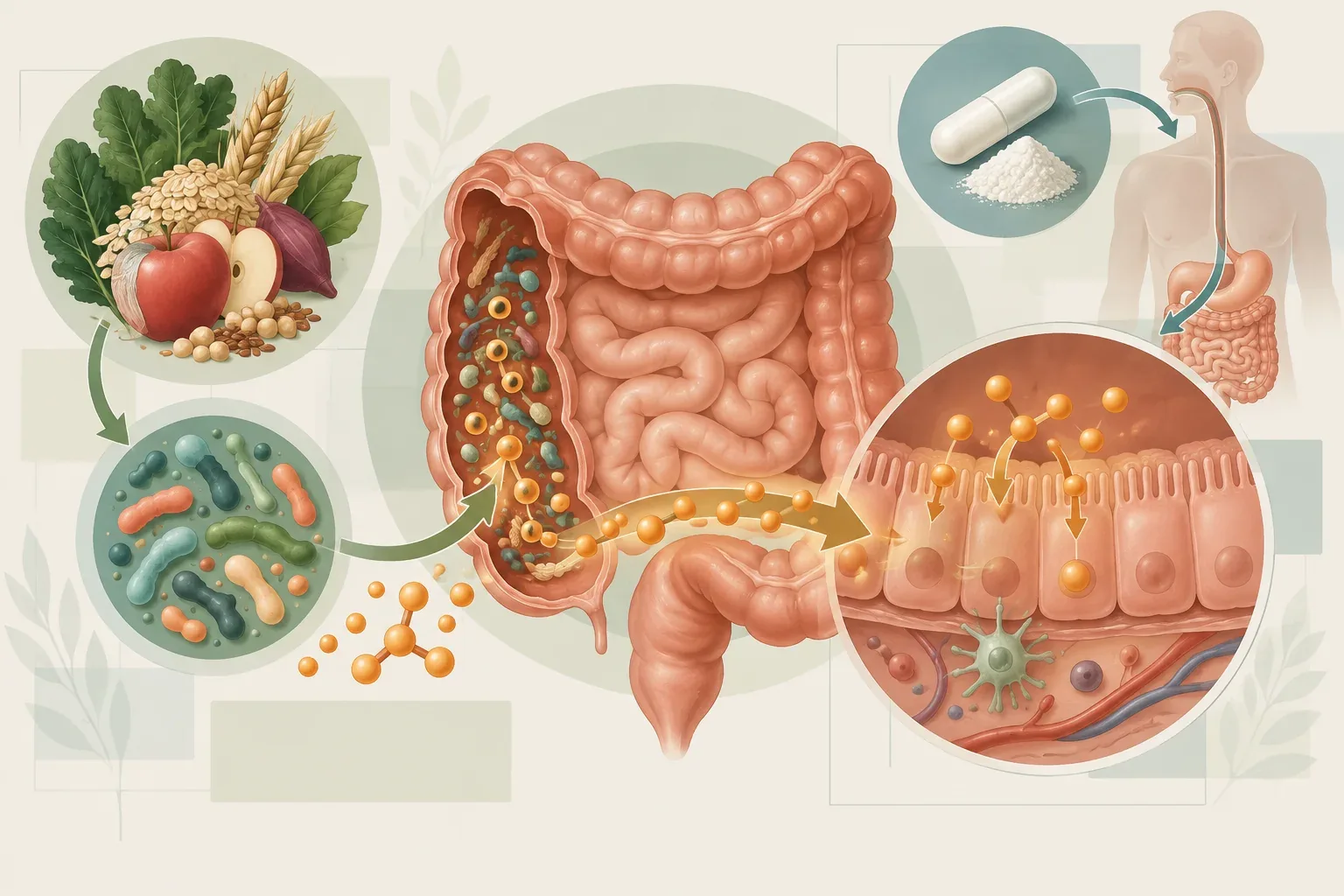
Digestion breaks collagen peptides into amino acids and smaller peptides that enter the body's pool of building materials. Some small peptides can also be absorbed.
The established structural role and the result of taking an oral powder are separate questions. [1]
What people take collagen peptides for
| Claimed benefit | Dose / form studied | Research verdict | Evidence strength |
|---|---|---|---|
| Skin elasticity or hydration | Specific hydrolysates 2.5 or 5 g/day for 8 weeks in women aged 35–55 | Small gains in some trials disappeared in higher-quality subgroups of a later review. | Limited |
| Activity-related joint pain | Specific hydrolysates 5 g/day for 12 weeks or 10 g/day for 24 weeks in athletes | Some trials report small pain reductions; the 24-week trial’s positive findings did not survive adjustment for multiple comparisons. | Limited |
| Muscle gains with training | Collagen 15 g/day for 12 weeks in older men with muscle loss, alongside resistance training | Training results include positive collagen findings; short-term protein building favors whey. | Limited |
| Bone density after menopause | Specific peptides 5 g/day for 12 months; one trial also supplied both groups calcium and vitamin D | Bone measures improved in small trials; fracture prevention was not shown. | Limited |
Many skin studies ran eight to twelve weeks; joint studies ran 12 to 24 weeks. The evidence suggests, at most, modest benefits for skin or activity-related joint discomfort, with important uncertainty from study quality and commercial funding.
For muscle or general protein intake, choose a complete protein instead. For osteoporosis or persistent joint pain, collagen is not a substitute for diagnosis or established treatment.
When to ask a doctor before taking collagen peptides
- You are allergic to fish, shellfish, beef, or pork. Collagen comes from these sources; check the label.
- You have kidney disease or must limit protein. Collagen adds protein to your day.
Assessing protein intake
The body makes collagen from amino acids. The practical nutrition check is total protein: the adult baseline is 0.8 g per kilogram of body weight a day, about 56 g for a 70 kg (154 lb) person, with enough complete protein to supply every essential amino acid.
What you can buy
Collagen is sold as powders, tablets, and gummies, while some “collagen boosters” contain no collagen at all. The table separates actual collagen from products that only claim to support its production.
| Listing | Collagen per serving | Label detail |
|---|---|---|
| Collagen peptide powder | 10–20 g | The serving weight is collagen when no other ingredients are included |
| Named skin hydrolysate tablets | 2.5 g per 3 tablets | The declared amount covers all three tablets |
| Example gummy label | 500 mg (0.5 g) each | Also contains 3 g of sugar per gummy; daily totals depend on the serving directions |
| “Collagen booster” | None | Vitamins only |
What to pay attention to on the label
Find the grams of collagen per serving and the source animal. A named hydrolysate identifies the ingredient more precisely than “collagen peptides” alone.
Which number on the label is the amount?
Look for collagen peptides or hydrolyzed collagen in grams. One powder lists 20 g of the collagen-peptide ingredient from cows per serving, with 18 g declared as protein. Use the 20 g ingredient amount when comparing collagen-peptide preparations; the protein line describes its contribution to total dietary protein. One tablet product lists 2.5 g of a named skin hydrolysate per three tablets, the lower of the two amounts tested in that skin trial.
Misleading labels
Collagen “boosters” with no collagen
One “vegan collagen booster” gummy we found contains vitamins A, C, and E and folic acid, but no collagen. The name refers to vitamins that help the body make its own collagen, not to collagen itself.
Confusing servings and items per serving
If a bottle says 180 capsules but defines a serving as 3 capsules, it contains 60 servings. The Supplement Facts amount applies to all three capsules together.
Manufacturer claims and the studies they may be based on
A “clinically studied for skin” line may point to the 8-week trial of 2.5 to 5 g, using collagen supplied by the ingredient’s maker. A “supports joint comfort” line may point to athlete trials with small pain improvements. “Bioactive” is a marketing word, not a measured unit.
Common questions about collagen peptides
Which form of collagen is most effective?
Positive studies used specific hydrolysates, often from one maker. Undenatured type II collagen, often sold as UC-II, is a different product taken at about 40 mg rather than grams; its results do not apply to collagen peptides.
Are collagen peptides the same as gelatin powder?
They come from the same protein, but gelatin is broken down less, so it gels in liquid while peptides dissolve. The skin and joint evidence summarized here concerns peptides, not gelatin, so those results cannot be assigned to gelatin powder.
Alcock and colleagues compared broth with a 20 g collagen supplement used in research. Glycine, proline, and hydroxyproline (an amino acid found mostly in collagen) were lower in broths made to a set recipe, and broths made to different recipes varied.
What are the signs that collagen is working?
Skin trials used instruments to measure elasticity, so a measured change may not be visibly noticeable. Joint trials measured pain during particular activities, with substantial improvement also occurring in placebo groups.
Can collagen replace whey or other protein?
Collagen is a poor substitute when the goal is muscle protein synthesis. In a direct trial in older women, whey produced a stronger response at the same protein amount. The result measured protein production over hours and days, rather than long-term muscle gain.
Drawbacks and side effects
| Potential drawback | When/who it affects | Research evidence | Practical implication |
|---|---|---|---|
| Source-animal allergy | Fish-, beef- or pork-derived products in someone with that allergy | The source determines this practical safety issue. | Avoid a product from an animal you are allergic to. |
| Replacing complete protein | Using collagen as your main protein, or adding it to a protein-restricted diet | Collagen is incomplete and performed worse than whey on muscle protein synthesis. | Keep complete protein in the diet; discuss restrictions with your clinician. |
| Uncertain long-term or high-intake safety | Amounts or durations beyond the specific trial | Short trials reported few effects but did not set an upper limit. | Long-term and higher-intake safety remain uncertain. |
There is no official upper limit, and short trials reported few side effects. The main practical downsides are cost, sugar in gummies, an animal-source allergy, and displacing complete protein.
Who should not take collagen peptides: people allergic to the source, and people on protein-restricted diets without their doctor’s advice. Vitamin C helps the body build its own collagen, and some products pair the two, but none of the trials in the section below showed the combination is needed.
The science behind collagen peptides
The evidence suggests small effects, with confidence weakened by funding patterns and study quality.
Skin
Some trials report better instrument-measured hydration or elasticity after collagen. How much confidence to place in those results is contested, even among recent reviews.
A 2014 trial assigned 69 women with dry forearm skin to 2.5 or 5 g/day of VERISOL, a porcine collagen hydrolysate, or placebo for eight weeks. Instrument-measured elasticity was about 7% higher relative to placebo after four and eight weeks. Hydration, water loss and skin roughness did not clearly improve. Seven women dropped out. GELITA supplied the collagen.
The 2025 review by Myung and Park[2] combined 23 randomized trials involving 1,474 participants. Its overall results favored collagen, but the higher-quality subgroups and those classified as lacking pharmaceutical-company funding did not show clear benefits. Funding is a useful transparency check, not proof that sponsorship caused a particular result.
Why the newer reviews disagree
Batool and colleagues' July 2026 review[3] reported 35 trials and found improved hydration, elasticity and water retention. The elasticity benefit appeared after the researchers removed two studies with unusually negative results; including them had produced almost no average effect. Wrinkle and other structural results also changed when the researchers altered which data they combined. The included-product table also contains combinations and a plant-based collagen alternative, which complicates treating the pool as one test of plain collagen peptides.
In September 2026, Grimes and Mahto[4] re-examined two older influential reviews. They identified problems in how earlier reviews represented variation in the results and combined tests measuring different skin properties. Their reanalysis did not support the earlier benefit claims. This was a reanalysis of existing trials, rather than a new group of people taking collagen.
These reviews reuse much of the same underlying literature. Adding their trial counts together would exaggerate the amount of independent evidence. The positive finding is that some preparations improved particular skin measurements; the unsettled question is how consistently those changes survive careful study selection and whether users see a worthwhile difference. Hydration, elasticity and visible wrinkles should not be collapsed into a single promise to reverse skin aging.
Joints
Joint research measures something more directly felt than a skin-instrument reading: pain during movement. Trials in active people with knee discomfort and trials in diagnosed osteoarthritis should still be considered separately.
An earlier 12-week athlete trial tested 5 g/day of a specific hydrolysate and reported a small added reduction in activity-related pain. It had manufacturer funding.
The 24-week Clark trial[5], funded by GELITA, needs closer qualification. It assigned 147 athletes to 10 g/day of collagen hydrolysate or placebo, but only 97 entered the analysis. Several pain ratings improved more with collagen. However, EFSA’s review of the paper and the sponsor’s final report[6] found that none of the primary results remained statistically significant after adjusting for the 15 comparisons tested. That adjustment accounts for the greater chance of a false positive when many outcomes are examined. The stronger knee-pain result came from a group the researchers had not planned to analyze separately.
A 2021 randomized trial[7] provides another activity-pain result: 180 young active adults without diagnosed joint disease completed 12 weeks of 5 g/day peptides or placebo. Exercise-related pain fell by 21.9 mm on a 100 mm scale with peptides and 15.6 mm with placebo—an additional 6.3 mm on average.
This trial was partly funded by GELITA, which supplied the peptides; one author disclosed GELITA-supported lectures. Both groups improved substantially. Comparing the additional change, rather than quoting only the collagen group's total improvement, gives a fairer sense of the possible benefit.
A 2024 review of 35 osteoarthritis trials found small-to-moderate improvements in pain and function across different collagen derivatives. That wider pool includes products beyond the peptide powders considered here. A positive osteoarthritis average does not identify a universal winner among ordinary powders, and it should not erase the narrower athlete-trial findings.
Muscle
In a 2015 trial, 53 older men with muscle loss did strength training for 12 weeks. Lean mass increased by 4.2 kg with 15 g of collagen a day versus 2.9 kg with placebo. A 2025 correction[8] disclosed that Gelita supplied samples and covered participant compensation and sample analysis; one author was a co-inventor on a related patent application, with no royalties reported.
In Oikawa and colleagues' trial[9], 22 healthy women around age 69 received 30 g of whey or collagen twice daily for six days. They exercised one leg, allowing researchers to assess feeding alone and feeding plus exercise. Whey increased muscle-protein synthesis more than collagen in both settings. Across the six-day measurement period, the exercised-leg response increased significantly with whey, while collagen's change from baseline was not significant. A 2020 correction[10] added an author's outside-work fees, equity and patent disclosures; it did not correct the numerical results.
A 2021 training trial[11] adds another comparison: 97 previously untrained middle-aged men completed 12 weeks of training with 15 g/day of collagen, whey or a nonprotein placebo. Collagen improved body composition more than placebo, but its exploratory comparison with whey found no clear difference. GELITA partly funded the trial and supplied the collagen; one author disclosed supported lectures and collagen patents.
A 2026 network meta-analysis[12] reported greater gains in fat-free mass with collagen than with whey. Fat-free mass includes muscle, water and other tissue. Most of that comparison came indirectly from different trials; only one trial directly compared collagen and whey. The favorable result deserves consideration, while incomplete information about usual protein intake and training history prevents treating it as a universal ranking.
The older-men trial compared collagen with a nonprotein placebo. The older-women trial compared short-term protein production with whey, and the 2021 trial compared changes over a training program. Their different designs explain why the results need separate interpretation. Collagen’s amino-acid profile remains a reason to keep complete protein central when muscle is the goal.
Bone density
König and colleagues[13] enrolled 131 postmenopausal women in a 12-month trial of 5 g/day of specific collagen peptides or placebo; 102 completed it. Spine and femoral-neck bone-density measures improved more with peptides. The femoral neck is the top of the thigh bone. The analysis estimated missing measurements and accounted for starting differences between groups. Both groups were encouraged to take calcium and vitamin D, but their use was not controlled. GELITA partly funded the study; the authors said investigators handled its planning, organization and analysis.
The published abstract of a separate 12-month trial[14] by Lampropoulou-Adamidou and colleagues reports results in 51 postmenopausal women with low bone density. Both groups received 500 mg of calcium and 400 IU of vitamin D3; one also received 5 g/day of peptides. Measurements in the shin bone and lower spine favored the peptide group. Neither trial established fewer fractures or tested bone broth, whose peptide amount cannot be assumed to match the supplements.
What is still open
For skin, the disagreement includes study quality, sponsorship, formulation and how different measurement scales are pooled. For joints, some trials show a small extra reduction in activity-related pain, with much less evidence that any generic product provides the same result. For muscle, whey produced a stronger short-term protein-building response. The direct training comparison did not demonstrate a clear difference, while a newer network analysis favored collagen for fat-free-mass gains largely through indirect comparisons. More direct trials would help resolve that contrast.
What you may have heard on podcasts
Andrew Huberman (Huberman Lab, 25 April 2025) said whey is a better protein than collagen or bone broth for muscle because collagen has little leucine. He also said about 15 g of collagen a day for about two weeks or more may support skin elasticity. We generally agree with this statement.
The muscle comparison matches the research. The skin claim is less secure: trials ran eight weeks at 2.5 to 5 g, not two weeks at 15 g, and the 2025 review found no benefit in its higher-quality or non-pharmaceutical-funded subgroups.
The bottom line
Collagen peptides may offer small benefits for selected skin or joint outcomes, but the findings depend on the product, how your body absorbs it and how much collagen you're getting from your diet. They are less convincing as a replacement for complete protein when the aim is building muscle.
The possible skin or joint benefit is modest and uncertain. Whether that is worth the cost and daily routine is a personal decision.
Editor's note: For a daily protein shake, we prefer whey as the base with a smaller addition of collagen peptides or a collagen-pattern beef isolate over collagen alone. Our whey-and-beef mix article shows how the amino-acid balance changes and why that comparison does not establish better muscle or joint outcomes.
Help us improve this article
Spotted an error or found a source we should consider? Tell us which part of this article needs another look and include a link if you have one. Please leave out personal health details and lab results; we can’t answer individual medical questions.
Explore more in skin, hair & nails


More in gut & digestion

References
- Alcock et al.: bone broth versus a 20 g collagen supplement, 2019 ↩
- 2025 review by Myung and Park ↩
- Batool et al.: updated skin review, July 2026 ↩
- Grimes and Mahto: technical reanalysis of collagen skin meta-analyses, September 2026 ↩
- Clark et al.: collagen hydrolysate and joint pain in athletes, 2008 ↩
- EFSA: assessment of collagen hydrolysate and maintenance of joints, 2011 ↩
- Zdzieblik et al.: activity-related knee discomfort trial, 2021 ↩
- 2025 correction ↩
- Oikawa et al.: whey versus collagen in older women, 2020 ↩
- 2020 correction ↩
- 2021 training trial ↩
- 2026 network meta-analysis ↩
- König et al.: collagen peptides and bone density, 2018 ↩
- published abstract of a separate 12-month trial ↩
- Proksch et al.: collagen peptides and skin elasticity, 2014
- Zdzieblik et al.: collagen peptides and joint pain in athletes, 2017
- Zdzieblik et al.: collagen peptides with strength training in older men, 2015
- de Miranda et al.: collagen and skin aging, meta-analysis, 2021
- Pu et al.: oral collagen and skin, meta-analysis, 2023
- Myung and Park: collagen and skin aging by funding source, meta-analysis, 2025
- Liang et al.: collagen derivatives for osteoarthritis, meta-analysis, 2024
- García-Coronado et al.: collagen and osteoarthritis symptoms, meta-analysis, 2019
- Argyrou et al.: calcium, vitamin D, and collagen peptides, 12 months
- Paul et al.: collagen as a protein source, 2019
- Khatri et al.: collagen and muscle protein, review, 2021
- Huberman Lab: AMA on collagen, whey, and creatine, 25 April 2025
- NIH Dietary Supplement Label Database: a collagen peptide powder label
- NIH Dietary Supplement Label Database: a collagen gummy label
- NIH Dietary Supplement Label Database: a vegan “collagen booster” label
- NIH Dietary Supplement Label Database: a skin hydrolysate tablet label
Corrections & updates
- Update
Updated the evidence discussion and practical guidance after editorial review.
- Update
Updated the evidence discussion and practical guidance after editorial review.