
What is sodium butyrate?
Butyrate is a short-chain fatty acid, a small fat that gut bacteria make when they ferment fiber. It fuels the cells lining the colon. Eating fermentable fiber lets those bacteria make butyrate where it is used; swallowing purified butyrate is a different intervention.
The human evidence is mixed and highly specific to the product and route. Tiny studies put butyrate directly into the colon by enema. Small capsule trials used a coated, 300 mg product and reported fewer episodes of irritable bowel syndrome (IBS) symptoms or diverticulitis flares. At the other extreme, 3.9 g a day of sodium butyrate raised blood pressure in one trial.
Many listings provide 500 mg to 1 g; 1 g equals 1,000 mg. Every gram of sodium butyrate contains about 209 mg of sodium and about 800 mg of butyric acid; the trial amounts below refer to the weight of the whole salt. There is no official daily amount or upper limit.
Colon cells use butyrate for energy, and butyrate also acts as a signal in immune and metabolic pathways. Researchers study these roles using several delivery forms.
What butyrate does in your body
Gut microbes produce butyrate when they ferment certain fibers and other material reaching the large intestine. Cells lining the colon take up and use much of that butyrate as fuel. This is a local relationship between microbial activity and the tissue next to it.
Butyrate also participates in signaling and can affect how cells regulate gene activity. Many proposed anti-inflammatory or metabolic effects come from studying those pathways. They should remain distinct from the more direct finding that colon cells use butyrate for energy.
Delivery matters for a supplement. Butyrate released earlier in the digestive tract, a coated capsule intended to release it later, and an enema do not necessarily expose the same tissue to the same amount. [1]
How fiber helps your gut make butyrate
Fiber is the raw material from which gut bacteria make butyrate.
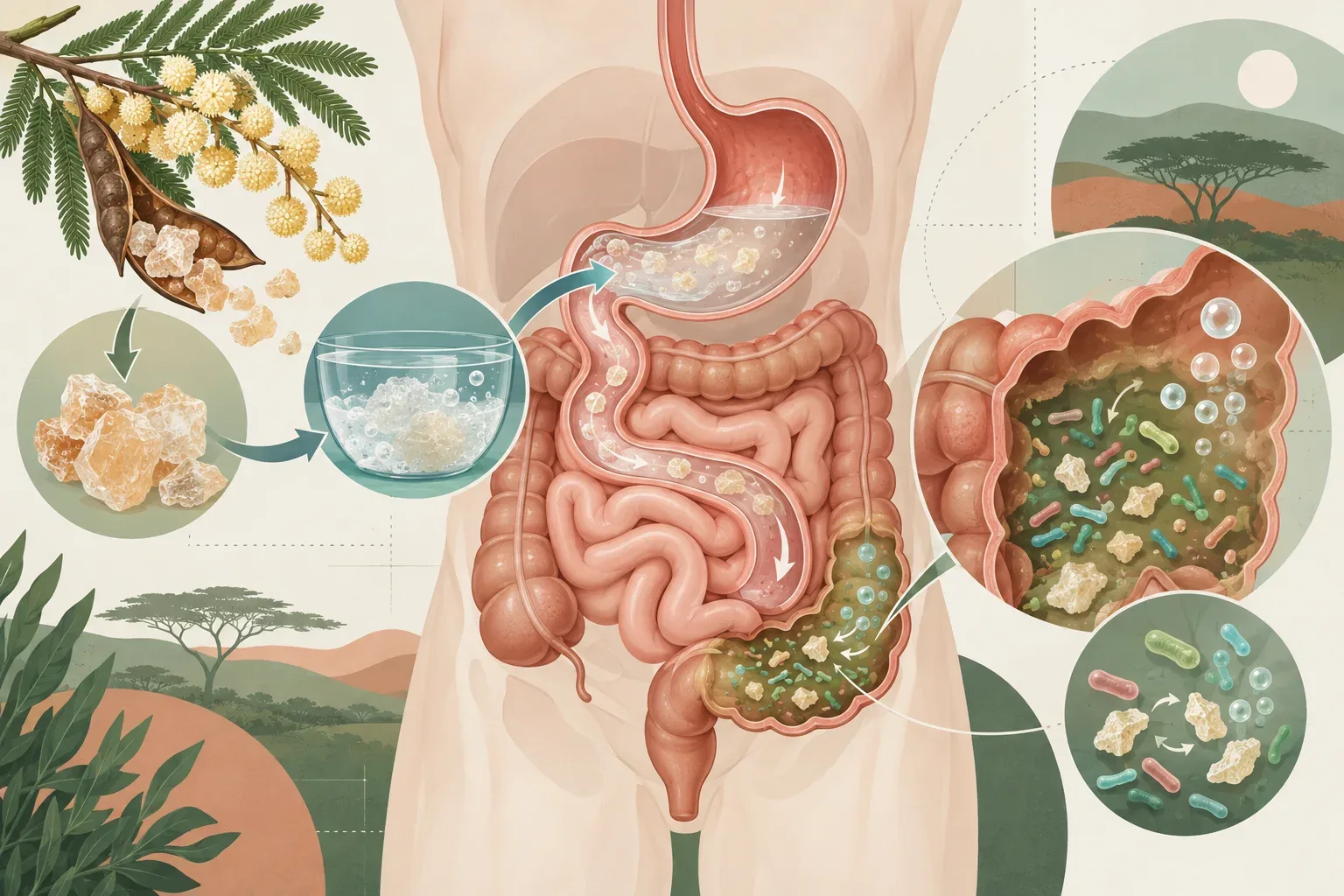
Acacia fiber
Acacia fiber is fermented by gut bacteria and may raise the butyrate your gut makes on its own, alongside the fiber in vegetables and whole grains.
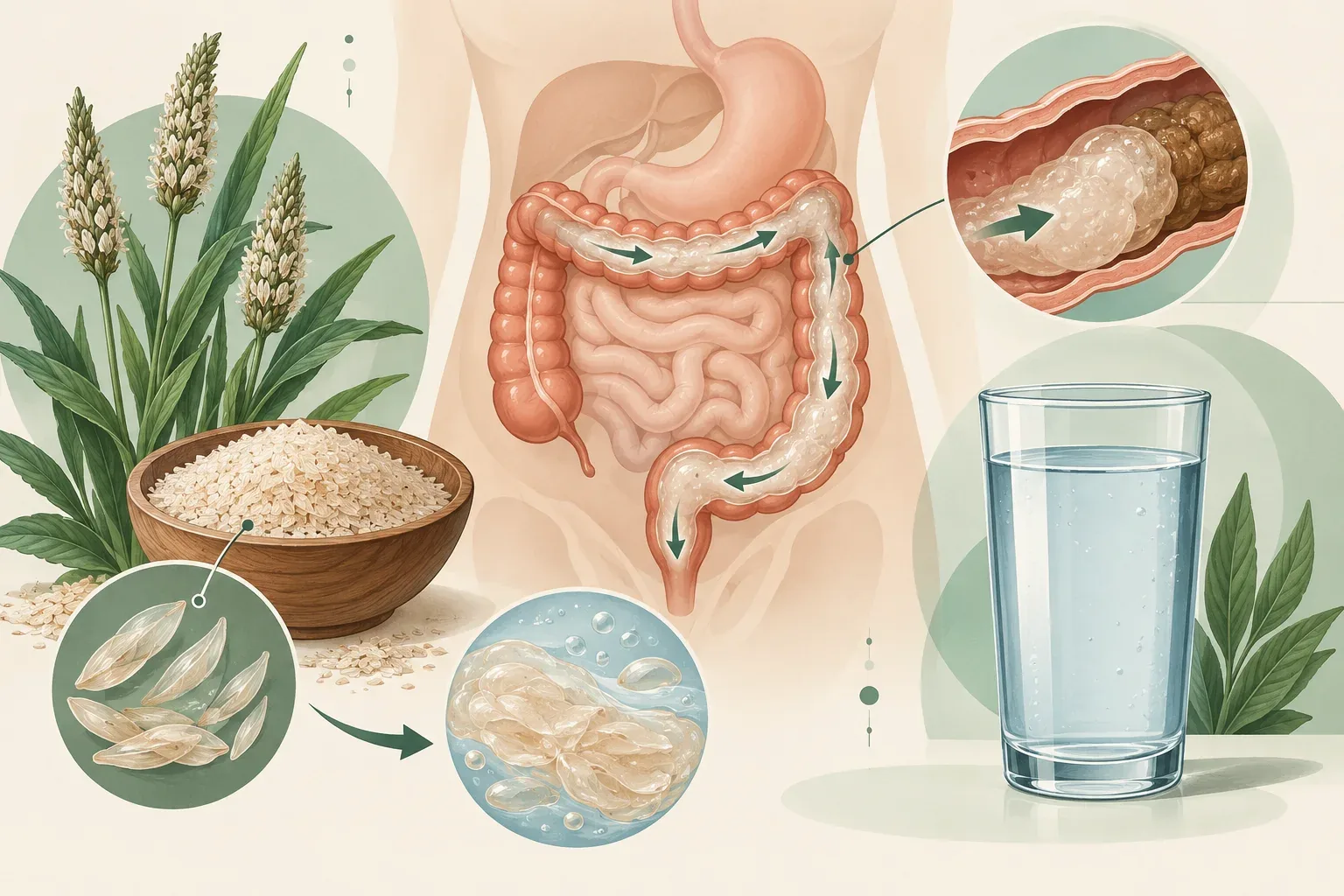
Psyllium
Psyllium may also raise your own butyrate production, though it ferments less than acacia.
What people take sodium butyrate for
| Claimed benefit | Dose / form studied | Research verdict | Evidence strength |
|---|---|---|---|
| IBS symptoms | Microencapsulated sodium butyrate 300 mg/day for 12 weeks, added to usual treatment in adults | Some symptoms became less frequent, not less severe. | Limited |
| Preventing diverticulitis flares | Microencapsulated sodium butyrate 300 mg/day for 12 months in adults with previous diverticulitis | Fewer flares occurred in one small trial using a completer analysis. | Limited |
| Weight loss with a reduced-calorie diet | Sodium butyrate 1,875 mg/day for 12 weeks in adults with excess weight | Extra loss appeared only among participants without diabetes. | Limited |
| Blood sugar in type 1 diabetes | Sodium butyrate 4 g/day for 1 month | A small trial found no immune or blood-sugar improvement. | Limited |
For general gut health, fiber from beans, lentils, whole grains, vegetables, or a tolerated fiber supplement is the better-supported first step. Gut bacteria convert it into butyrate in the colon and fiber has benefits beyond butyrate production.
For IBS, diverticulitis, Crohn's disease, or ulcerative colitis, the positive results come from small studies of particular coated products or enemas, usually added to regular treatment. They do not establish an interchangeable store dose. Sodium butyrate should not replace medical treatment for any of those conditions.
Results apply to the preparation and population studied.
When to ask a doctor before taking sodium butyrate
- You have high blood pressure or limit sodium. A high dose raised blood pressure in one trial, and each gram of sodium butyrate adds about 209 mg of sodium.
- You have IBD (Crohn's disease or ulcerative colitis). Small trials used butyrate alongside regular treatment, not instead of it.
- You have kidney or heart problems. Calcium, magnesium, and sodium forms each add minerals that damaged kidneys may not clear well, and sodium can raise blood pressure.
Common dosage
There is no recognized recommended daily amount or upper limit for sodium butyrate.
The trials gave it daily for one month to one year. They do not show whether taking it with food or at a particular time changes the result.
What foods are high in butyrate?
Butter and some cheeses contain butyrate, but little of it reaches the colon. The food that matters is fiber: beans, lentils, oats, barley, whole grains, and vegetables give gut bacteria the material to make butyrate where it is used.
Fiber intake and butyrate measurements
Fiber intake is more useful to check: adult targets range from 21 to 38 g a day depending on age and sex, including 25 g for women and 38 g for men through age 50.
What you can buy
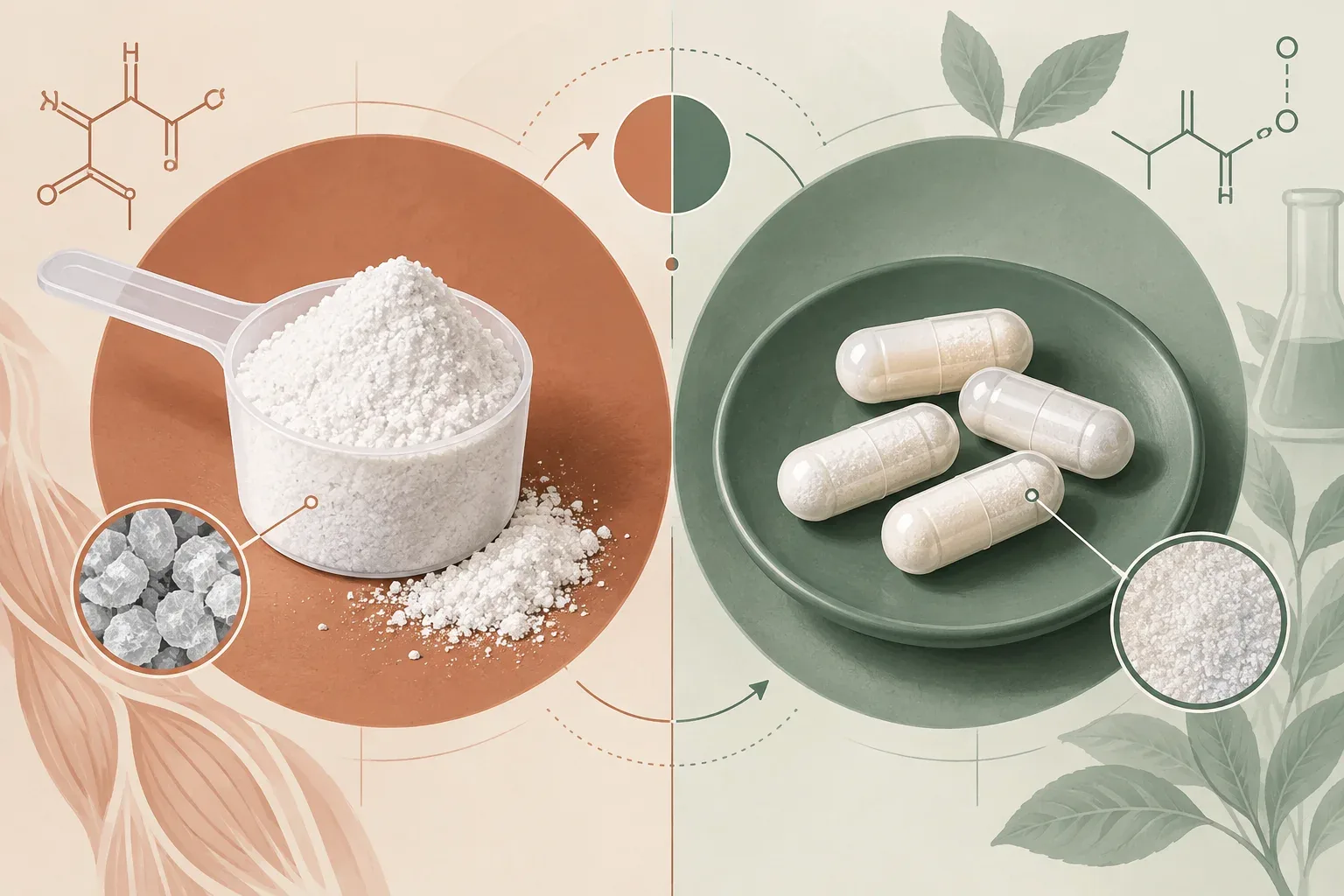
Supplements sell sodium butyrate, calcium/magnesium butyrate, and tributyrin, a compound that releases butyrate during digestion. This complete forms table compares the common listings without treating them as equivalent.
What changes where butyrate is released
Coatings and chemical form can change where butyrate is released. In the blood-pressure trial, researchers measured a rise in blood butyrate but not stool butyrate. Stool is only an indirect clue about what reached or remained in the colon, so the study does not show that an ordinary capsule delivers more butyrate there.
| Listing | Amount per serving | Compared with trials |
|---|---|---|
| Sodium butyrate | 500 mg–1 g | Higher than the 300 mg gut trials; adds sodium |
| Calcium/magnesium butyrate | About 460 mg butyric acid per capsule (about the butyrate in 575 mg of sodium butyrate) | Not the form tested in the gut trials |
| Tributyrin | 500 mg (roughly 440 mg of butyric acid once digested) | A different compound; not tested in the trials described here |
The trials used their own products, often microencapsulated to release in the gut; none tested a brand you can buy.
What to pay attention to on the label
Find both the amount and the form. “500 mg” could mean sodium butyrate, a calcium/magnesium salt, tributyrin, or butyric acid; those are not interchangeable trial products.
Which number on the label is the amount?
Look for “butyric acid” or the named butyrate salt in milligrams. One label, for example, lists 460 mg of butyric acid from calcium and magnesium butyrate, plus 55 mg of calcium and 25 mg of magnesium per capsule. That is not 460 mg of sodium butyrate.
Misleading labels
Labels that list only minerals
One “Cal-Mag Butyrate” capsule lists only 42 mg of calcium and 21 mg of magnesium, with no butyrate amount. You cannot tell how much butyrate you are getting.
Gut-health claims on capsule bottles
A “supports gut health” line may point to small trials of a 300 mg microencapsulated product, which is not the same as a plain capsule. Claims of healing colitis or the gut lining may instead point to studies that put butyrate directly into the colon by enema, in 10 or fewer people. Swallowed capsules are a different route and dose.
Confusing servings and items per serving
If a bottle says 180 capsules but defines a serving as 3 capsules, it contains 60 servings. The Supplement Facts amount applies to all three capsules together.
“Postbiotic” on the front label
Some ads call purified butyrate a “postbiotic.” Under the International Scientific Association for Probiotics and Prebiotics' consensus definition[2], a postbiotic contains inanimate microorganisms or their components and has a demonstrated benefit; purified butyrate alone does not meet that definition. The word does not tell you the product's dose or release location.
“Anti-aging” claims
An “anti-aging” claim on a butyrate bottle has no matching human trial in the evidence reviewed here. Check the actual outcome tested, preparation and amount before treating a broad claim as a product benefit.
Common Myths about Sodium butyrate
Is a butyrate capsule the same as a butyrate enema?
No. An enema delivers butyrate directly to the inflamed colon at high concentration. A swallowed product passes through the stomach and small intestine first.
Does butter give you butyrate?
Butter contains some butyrate, but it is absorbed early in digestion and is not a way to deliver butyrate to the colon.
Drawbacks and side effects
| Potential drawback | When/who it affects | Research evidence | Practical implication |
|---|---|---|---|
| Unpleasant smell, burps or stomach upset | Oral products at supplement amounts | These are the practical tolerability problems described for oral butyrate. | Reassess a poorly tolerated formulation. |
| Added sodium | Sodium butyrate supplies about 209 mg sodium per gram | The salt contributes to total sodium intake. | Include it in a sodium restriction and discuss the form with your clinician. |
| Higher blood pressure at a high research dose | 3.9 g/day for 4 weeks in adults with hypertension | Pressure rose versus a sodium-matched placebo in one small trial. | Do not escalate to high trial doses expecting lower blood pressure. |
Common side effects
There is no official upper limit. The common side effects are an unpleasant smell and taste, burps, and stomach upset. Sodium forms add about 209 mg of sodium per gram.
When too much is dangerous
In one trial, 3.9 g a day for four weeks raised blood pressure by about 10 mm Hg systolic and 5 mm Hg diastolic relative to a placebo containing the same amount of sodium. That comparison argues against sodium alone explaining the rise, but it is still one small study of a high dose.
People with high blood pressure or a sodium restriction should ask their clinician before using the sodium form. People with IBD should not use any butyrate product in place of treatment.
The science behind sodium butyrate
The evidence consists of tiny enema studies, several small capsule trials, and one high-dose blood-pressure warning. Route, coating, and condition matter throughout.
Enemas in colitis
In a 1992 study of 10 people with ulcerative colitis limited to the lower colon, two weeks of butyrate enemas cut average stool frequency from about five to two a day and stopped bleeding in nine participants. A 1989 study found improvement in four people whose colitis was in a bypassed section of bowel. These direct-to-colon results cannot be assigned to capsules.
IBS and diverticulitis
A 2013 trial of 66 adults with IBS found that 300 mg of microencapsulated butyrate added to usual treatment made some symptoms less frequent, but not less severe. A 2014 trial of 52 adults with past diverticulitis found fewer flares over a year: 2 of 30 on butyrate versus 7 of 22 on placebo. Both analyses excluded people who did not finish, which can make a treatment look better than it would in everyone assigned to it.
IBD, weight, and diabetes
A 2026 trial of 140 people with IBD found that microencapsulated butyrate added to treatment improved Crohn's disease activity and quality of life. In ulcerative colitis, an inflammation marker fell only slightly, although quality of life improved. The published summary did not give the dose. A separate 2026 trial of 46 adults on a calorie-reduced diet found more weight loss only among those without diabetes: 7.0 kg versus 3.2 kg on placebo. In a 2020 trial of 30 adults with type 1 diabetes using 4 g a day for one month, the primary immune measure, insulin dose and HbA1c did not show clear benefits; fecal butyrate changed.
Blood pressure
A 2024 trial gave 23 people with high blood pressure 3.9 g of sodium butyrate a day, in 26 capsules, or a placebo with the same 798 mg of sodium for 4 weeks. Daytime blood pressure rose on butyrate, even though animal studies had suggested it would fall.
What is still open
It has not been shown that ordinary shop capsules reach the colon or improve a health outcome; the positive trials used special microencapsulated products.
The bottom line
The positive butyrate trials were small and preparation-specific, while some outcomes were negative and one high-dose trial raised blood pressure.
We would compare the condition, amount and release formulation before treating two products as equivalent. More milligrams are not necessarily more useful, and an enema result cannot establish what a capsule will do. If you have IBD or blood-pressure concerns, the supplement belongs in a discussion about your existing treatment.
Help us improve this article
Spotted an error or found a source we should consider? Tell us which part of this article needs another look and include a link if you have one. Please leave out personal health details and lab results; we can’t answer individual medical questions.
Explore more in gut & digestion



More in gut & digestion

References
- Hamer et al.: butyrate and the colon, review, 2008 ↩
- International Scientific Association for Probiotics and Prebiotics' consensus definition ↩
- Scheppach et al.: butyrate enemas in ulcerative colitis, 1992
- Harig et al.: short-chain fatty acid irrigation in diversion colitis, 1989
- Banasiewicz et al.: microencapsulated butyrate in IBS, 2013
- Banasiewicz et al.: microencapsulated butyrate in diverticulitis, 2014
- Verhaar et al.: oral butyrate and blood pressure, 2024
- de Groot et al.: oral butyrate in type 1 diabetes, 2020
- Facchin et al.: oral butyrate in inflammatory bowel disease, 2026
- Testa et al.: oral sodium butyrate and weight loss, 2026
- NIH Dietary Supplement Label Database: a calcium/magnesium butyrate label
- NIH Dietary Supplement Label Database: a Cal-Mag butyrate label
- NIH Dietary Supplement Label Database: a tributyrin label