
What is copper?
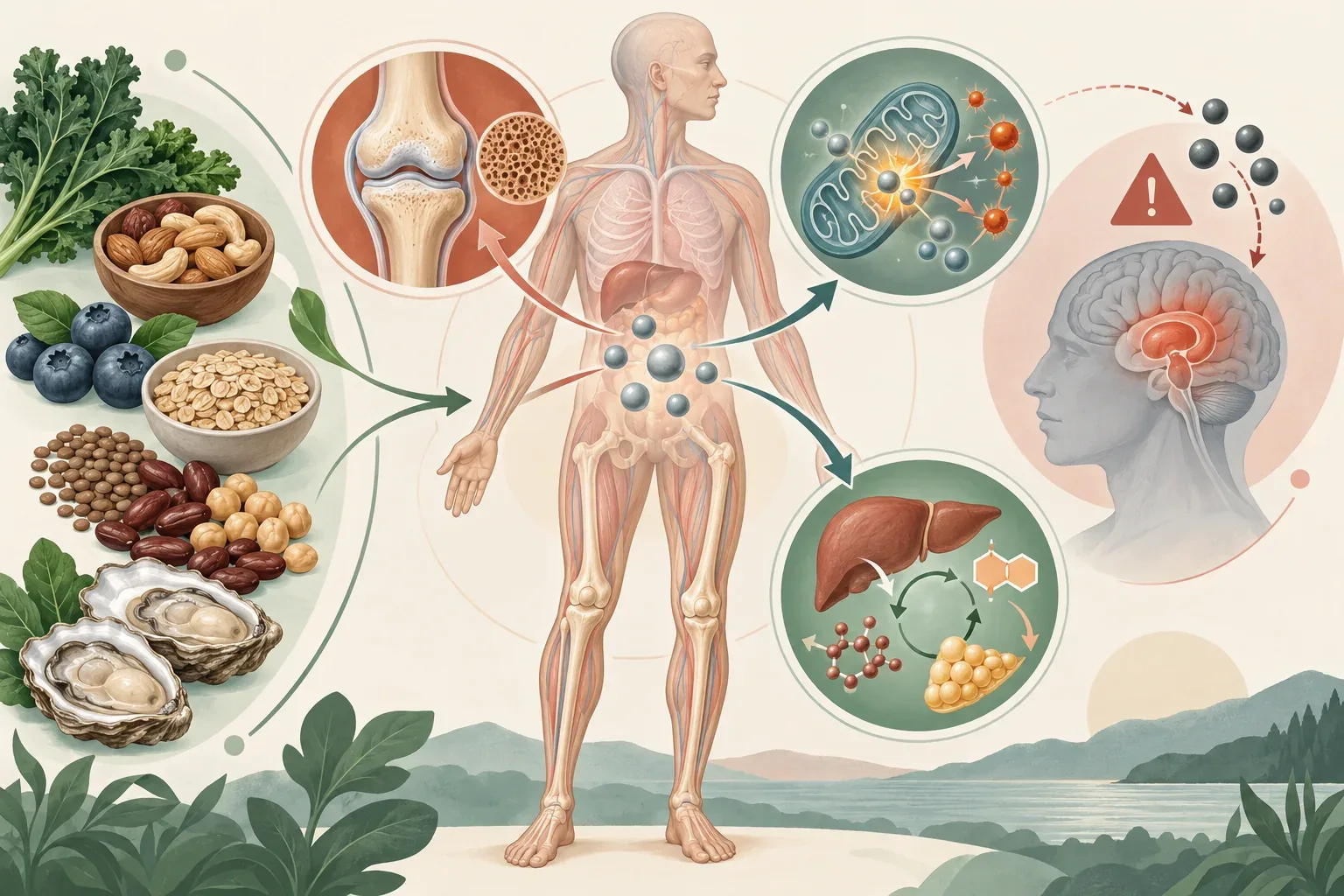
Copper is a dietary mineral found in foods including shellfish, nuts, seeds, beans and whole grains. Your body needs it for iron handling, connective tissue and several enzymes. Adults need 900 micrograms a day in total, which is 0.9 milligrams.
Supplements supply copper as gluconate, sulfate, oxide, or compounds attached to amino acids such as glycine. You may also encounter orotate and branded copper compounds. Before comparing those names, check how much elemental copper—the copper itself, excluding the rest of its compound—the full serving provides and whether your diet or multivitamin already supplies it.
What does copper do in your body?
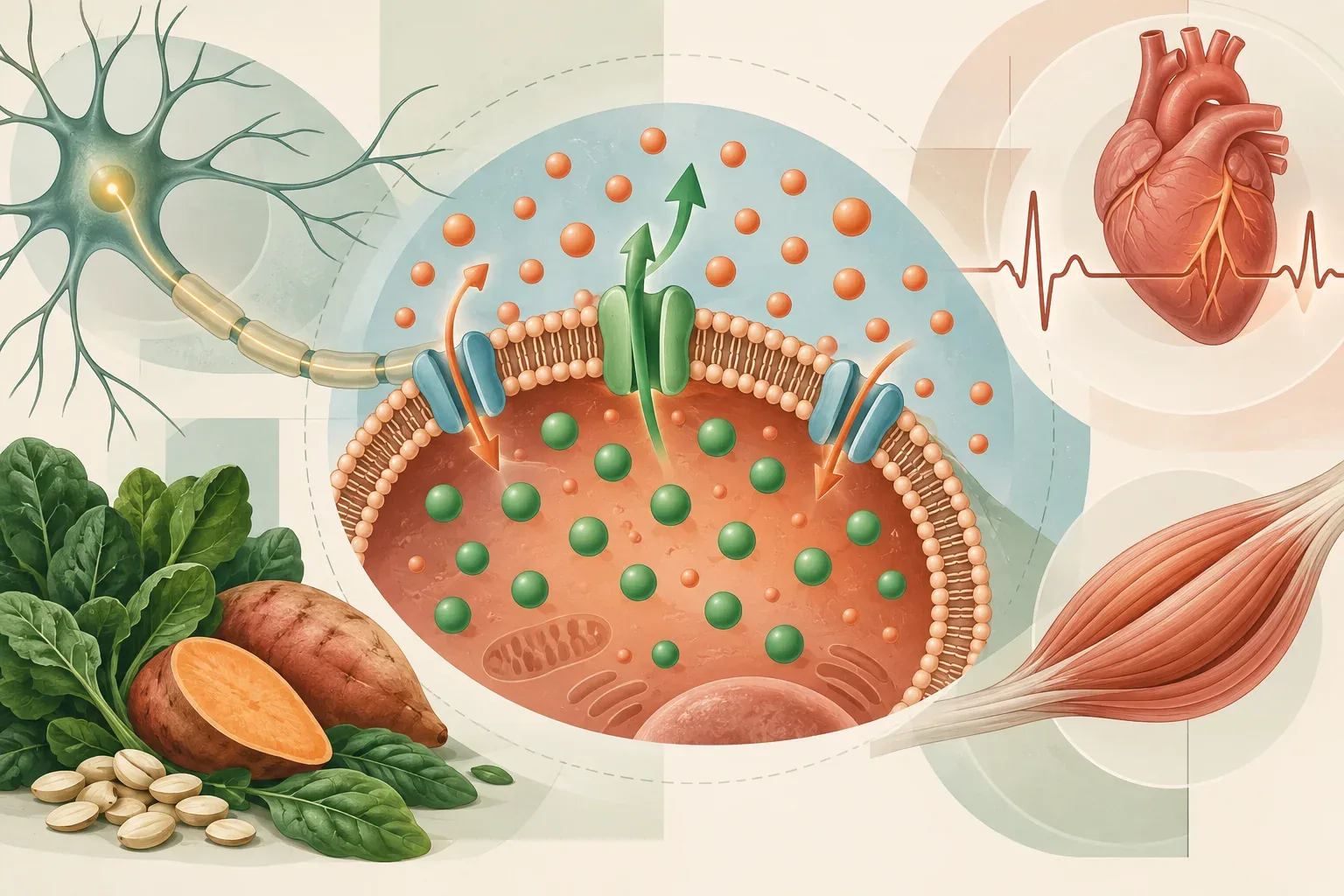
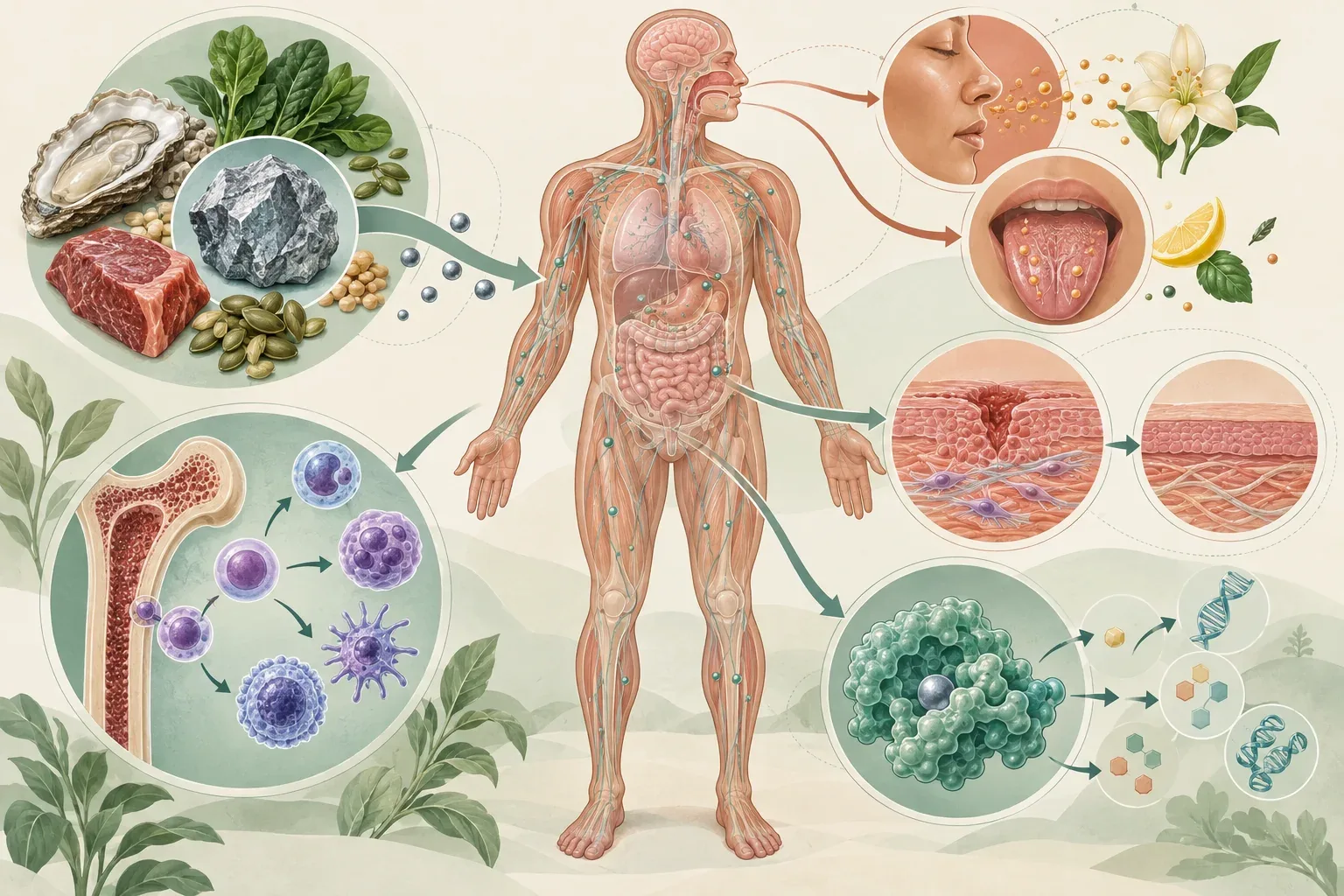
Copper works inside enzymes rather than acting as a general stimulant or antioxidant on its own. Copper-containing enzymes help cells use oxygen to produce usable energy and help form connective tissue. Others participate in making chemical messengers and pigments.
One important connection is iron handling. Copper-dependent proteins help move iron into the forms and transport system the body can use. This helps explain why copper deficiency can cause anemia even when the problem is not simply too little iron in food. Another copper-containing enzyme helps manage reactive molecules produced during normal metabolism.
Absorption from the gut and removal through the liver and bile help regulate the supply. Having enough copper supports these existing systems; it does not mean that continually increasing intake improves their performance. [1]
Why do people take copper?
| Claimed benefit | Dose / form studied | Research verdict | Evidence strength |
|---|---|---|---|
| Correcting established deficiency | Amount and duration selected for the cause; no single oral treatment dose fits everyone | Replacement addresses a real nutritional need; the cause also needs treatment. | Strong |
| Improving cholesterol | Glycinate at 2 mg elemental copper/day for eight weeks; sulfate studies used 3–6 mg/day | Blood markers sometimes changed, without consistent cholesterol improvement. | Moderate |
| Improving thinking in mild Alzheimer disease | Copper orotate supplying 8 mg elemental copper/day for 12 months | The trial did not find a cognitive advantage over placebo. | Limited |
The clearest reason to take copper is a deficiency that has been investigated. Most U.S. adults get enough through food, according to the NIH fact sheet. A supplement becomes a different question after bariatric surgery, with poor intestinal absorption, or after prolonged excessive zinc exposure.
When to ask a doctor before taking copper
Wilson disease requires particular care. Copper can accumulate in organs even when a blood copper result is low. If you have suspected Wilson disease, unexplained liver disease or abnormal copper results, do not use a low number on a blood test as permission to start a supplement. Copper-binding medicines and medical zinc used for Wilson disease should be changed only with the treating specialist.
Common dosage and food sources
The recommended daily amount from the National Academies is 900 mcg for adults, counting food and supplements together. It is the same for adult men and women and is not calculated from body weight. Children's requirements vary by age.
The official adult upper limit is 10 mg a day from all sources. A nutritional requirement and a safety limit serve different purposes: neither tells you the treatment amount for confirmed deficiency.
NIH reports average adult food intakes of about 1.1–1.4 mg daily.
Selected values from the NIH Office of Dietary Supplements food table[1] show the stated food and preparation. Amounts are per serving.
| Food and preparation | Source | Serving | Copper (mcg) |
|---|---|---|---|
| Beef liver, pan-fried | Meat | 3 oz (about 85 g) | 12,400 mcg |
| Eastern wild oysters, cooked | Shellfish | 3 oz (about 85 g) | 4,850 mcg |
| Potato, cooked with skin | Plant | 1 medium | 675 mcg |
| Cashews, dry-roasted | Plant | 1 oz (about 28 g) | 629 mcg |
| Firm tofu, raw | Plant | ½ cup | 476 mcg |
| Chickpeas | Plant | ½ cup | 289 mcg |
Liver and oysters are unusually concentrated. The 3-ounce liver example contains 12.4 mg, above the 10 mg adult daily upper limit. That limit concerns regular intake; it is not a single-meal toxicity threshold or a reason to use liver as an everyday serving target.
No established morning, evening or cycling schedule makes one copper form preferable. For prescribed replacement, follow the treatment and monitoring instructions rather than choosing timing from a product advertisement.
How can I tell if I'm low on copper?
Copper deficiency is uncommon, but poor absorption, gastrointestinal surgery and prolonged excessive zinc use can raise the risk. Its effects on blood cells and nerves do not fit a reliable minor, moderate and severe symptom sequence.
Blood-cell changes
Anemia and low numbers of neutrophils, a type of white blood cell, are characteristic findings. Anemia may persist despite iron treatment when copper deficiency is the underlying problem. [2]
Neurological involvement
Numbness, weakness and difficulty with balance or walking can occur, sometimes without blood-count changes. Some nerve injury persists after copper is restored. [3]
When to seek medical assessment
Ask for medical evaluation if you have unexplained anemia, low white blood cells, numbness or changes in walking. These can occur with copper deficiency, but they have other causes too. Bring a list of supplements and denture products: excessive zinc-containing denture adhesive has caused serious copper deficiency.
Testing and interpretation
For more information about testing for copper, see the lab tests and preparation details near the end of this article.
Copper forms you can buy
The first useful comparison is the amount, followed by the specified compound. There is no proven universal form ranking.
| Form | What to compare |
|---|---|
| Glycinate, glycine chelate or bisglycinate | Elemental copper and exact ingredient specification |
| Sulfate | Declared elemental copper; the weight of the whole salt depends on its chemical form |
| Gluconate | Elemental copper per full serving |
| Oxide | The specified oxide and elemental amount |
| Orotate | Elemental copper, without assuming a memory benefit |
| Cunermuspir | A separate elemental declaration; reported chelate milligrams are insufficient |
Cunermuspir is a copper–niacin compound, also described as cuprous nicotinic acid. Niacin is vitamin B3. Its clinical registry reports the weight of the compound without an elemental-copper amount, so those milligrams cannot be used as an ordinary copper dose.
There is no seller recommendation here because a current product with a verified label has not been selected. For medical replacement, use the clearly specified preparation chosen for your diagnosis.
What to look for on the label
Which number is the copper amount?
On a U.S. Supplement Facts panel, “Copper 2 mg (as copper bisglycinate)” provides 2 mg of copper, or 2,000 mcg. The ingredient in parentheses identifies its source.
Misleading labels
A compound amount without an elemental amount
If the front advertises “6 mg copper chelate,” look for a separate copper amount in Supplement Facts. Part of the chelate's weight comes from the material attached to copper. Without a declared elemental amount, you cannot reliably compare it with the 2 mg example.
A large Daily Value percentage mistaken for a safety score
Two milligrams is about 222% Daily Value because the label reference is 0.9 mg. It is not 222% of the 10 mg upper limit, and the percentage does not establish a need for the product.
Overlooking copper already included elsewhere
Check your multivitamin before adding a separate capsule. Copper from gluconate and copper from bisglycinate still contribute to the same total.
“Better absorbed” as a reason to pay more
An absorption claim needs a relevant human comparison. “Chelated” or “copper(I)” on the package does not establish faster recovery, fewer side effects or better health outcomes. A manufacturer's heart or memory claim may refer to laboratory or mechanistic research rather than a demonstrated benefit in people.
How long should I take copper supplements for?
The reason for low copper determines the course. A confirmed deficiency may need replacement followed by a lower maintenance intake when levels and the cause have been reassessed; ongoing malabsorption or continuing high zinc exposure can keep the need in place. For someone whose diet already supplies enough copper, there is no established store-building supplement course. NIH's copper review[1] does not provide one depletion rate or taper that can be applied from a label alone. Do not continue a treatment-size amount merely because the first follow-up test improved, and do not use a high copper dose to counterbalance an unnecessary high zinc dose.
Common Myths about Copper
Does taking zinc mean I need a fixed copper dose?
High zinc intake can reduce copper absorption, but there is no established add-on dose that suits every zinc amount, diet and duration. Investigate the zinc exposure itself. Simply taking the products at different times has not been shown to prevent depletion during chronic high zinc use.
Is chelated copper the best absorbed form?
Chelated copper is attached to a partner such as the amino acid glycine. The NIH fact sheet says studies have not established how well the different supplement forms are absorbed. A direct comparison of sulfate with a glycine chelate measured blood and bone-related changes rather than absorption or recovery from deficiency. It did not identify a winner in terms of absorption.
Can copper reverse gray hair or brain fog?
Copper participates in pigmentation and nervous-system function. That explains why these claims sound plausible, but it does not show that adding copper improves those symptoms when your regular dietary intake is already adequate. The research reviewed later in the article does not establish those benefits.
Drawbacks and side effects
| Potential drawback | When/who it affects | Research evidence | Practical implication |
|---|---|---|---|
| Nausea, cramps, vomiting or diarrhea | Excessive intake | [1] | Count copper across products and food; seek assessment for persistent symptoms |
| Liver damage | Chronic excessive exposure; special risk with impaired copper handling | [4] | Do not treat the upper limit as a desirable daily amount |
The safety evidence underlying the 10 mg limit includes a study with only seven copper-treated adults followed for 12 weeks. Normal liver-related tests in that small experiment do not guarantee long-term safety for every user.
Copper during pregnancy and breastfeeding
The recommended daily amounts from the National Academies are 1,000 mcg during pregnancy and 1,300 mcg during breastfeeding. These totals include food; they are not automatic additional supplement amounts.
Women taking a prenatal should check its copper content before adding a second product. Pregnancy can raise blood copper and ceruloplasmin, so an unexpected result needs pregnancy-specific clinical interpretation.
The science behind copper
Extra copper and heart or bone health
In DiSilvestro and colleagues' placebo-controlled study, 2 mg of elemental copper as glycinate daily for eight weeks increased selected copper-related blood measurements. Cholesterol and measured markers of inflammation or cardiovascular risk did not improve.
Bügel and colleagues gave 16 women 3 or 6 mg of elemental copper as sulfate for four weeks. Most measurements of blood fats and clotting were unchanged. One clotting-related measurement decreased at 6 mg, but the trial did not measure heart attacks or strokes.
Baker and colleagues studied 24 adults through six-week periods involving placebo, sulfate and a glycine chelate at 3–6 mg elemental copper. Blood tests related to copper supply and measurements of bone breakdown or rebuilding did not consistently improve. Absorption and fractures were not tested.
A five-trial analysis by Wang and colleagues, covering 176 adults, found no significant improvement in cholesterol or triglycerides, another type of blood fat. Together, these findings leave a gap between changing a copper-related measurement and improving health after nutritional needs are met.
Copper orotate and Alzheimer disease
Kessler and colleagues randomized 68 people with mild Alzheimer disease to placebo or 8 mg elemental copper daily for a year. The defined orotate compound weighed 51.62 mg. The groups did not differ in cognitive outcomes. A spinal-fluid measurement changed in the copper group, but the change was not significantly different from the change with placebo.
That result does not establish a memory benefit from a lower-dose retail orotate product. The study received copper-industry support.
Cunermuspir and fatigue or pain claims
The manufacturer-sponsored registry describes 56 participants, with 49 completing 28 days, across fibromyalgia, chronic fatigue syndrome and post-COVID syndrome. Treatment used one 6.06 mg-chelate capsule twice daily. A laboratory test measured energy production in platelets, the blood cells involved in clotting. After adjustment for starting differences, that result did not clearly beat placebo. Participants also completed symptom questionnaires, which did not show a clear benefit. The registry's missing elemental amount remains an additional obstacle to interpreting the dose.
What you may have heard on podcasts
Gordon Lithgow discussed copper's possible importance in Alzheimer disease on FoundMyFitness on April 7, 2017. His discussion concerned tissue metals and transport proteins; it did not specify a copper supplement dose.
A possible role in disease does not establish that extra intake treats it. The orotate trial found no cognitive advantage. Whether a different copper pathway or a selected patient group could respond remains unresolved.
Lab tests
Interpreting the results
A clinician usually considers serum or plasma copper together with ceruloplasmin, a protein that carries copper in blood. Neither is a dependable measure of copper stores by itself. Blood counts, symptoms, diet, zinc exposure and absorption problems help explain the results.
Inflammation, infection, estrogen use and pregnancy can raise copper and ceruloplasmin. Conversely, low values can occur in Wilson disease despite excessive copper in tissues. That is why a result needs a diagnosis rather than an automatic supplement dose. [1]
NIH lists serum copper concentrations of 63.5–158.9 mcg/dL, equivalent to 10–25 micromoles/L, and ceruloplasmin of 180–400 mg/L. These are reference ranges, not personalized targets. Your laboratory and clinical circumstances still matter.
Preparing for a test if you take supplements
Preparation for a copper blood test depends on the ordered assay. Report copper and zinc products, amounts and the timing of your last doses. Follow its written instructions, and do not interrupt prescribed replacement or Wilson disease treatment yourself.
For a specialist 24-hour urine collection, follow the collection team's instructions. The test can contribute to a Wilson-disease work-up; it is not an ordinary low-copper nutrition test. One missed capsule cannot remove the effects of long-term zinc exposure or pregnancy on blood measurements.
Available tests
A blood copper test and a ceruloplasmin test can help investigate suspected deficiency or excess. Walk-In Lab lists a ceruloplasmin test. A combined copper, zinc and ceruloplasmin panel can address a question involving zinc exposure. Choose additional testing with the clinician investigating the cause rather than repeatedly testing until a preferred number appears.
The bottom line
Copper is essential to the body, but most people should start with their diet and the reason they think they need more. Correcting a real deficiency is useful; supplementing with extra copper has not shown clear improvements in cholesterol, memory or general wellness, and over-supplementation can cause unpleasant side-effects.
If a supplement is appropriate, count the elemental copper and include other products that already supply it. A more elaborate form does not automatically improve the outcome, and high zinc intake can complicate the balance. The useful decision is whether you have a gap or a diagnosed need to address.
Help us improve this article
Spotted an error or found a source we should consider? Tell us which part of this article needs another look and include a link if you have one. Please leave out personal health details and lab results; we can’t answer individual medical questions.
Explore more in focus & memory


More in minerals


References
- NIH: Copper fact sheet ↩
- Clinical descriptions cover both findings ↩
- The clinical literature describes the different recovery patterns ↩
- National Academies: Copper requirements and upper limit ↩
- Baker: Sulfate and glycine chelate trial
- DiSilvestro: Copper glycinate trial
- Bügel: Copper sulfate trial
- Wang: Copper and blood lipids
- Kessler: Copper in Alzheimer disease
- Cunermuspir trial registry
- Wilson disease practice guidance
- FoundMyFitness: Gordon Lithgow
Corrections & updates
- Update
Revised the article after editorial review, with clearer evidence explanations and practical guidance.