
What is potassium?
Potassium is an essential mineral and the main one inside your cells. Your cells keep about 30 times more potassium inside than outside, and that difference is what lets nerves fire, muscles contract, and kidneys work. Your kidneys hold on to potassium or dump it depending on how much you eat.
Almost all potassium comes from food. Potatoes, beans, lentils, dried fruit, bananas, milk, yogurt, fish, and meat all carry hundreds of milligrams a serving, and for most US adults milk, coffee, tea, and potatoes are the biggest sources.
A potassium supplement is usually potassium chloride, potassium citrate, or potassium gluconate, and the potassium-only tablets sold in the United States mostly hold 99 mg. The reason is a bowel-injury warning history for higher-dose potassium chloride tablets, explained in the safety section of this article. The adequate intake from the National Academies is 3,400 mg a day for men and 2,600 mg for women, from food and supplements combined, preferably met through food. A 99 mg tablet is about 3 percent of the men’s adequate intake.
People reach for potassium to lower blood pressure, replace what they sweat out, or follow an electrolyte or diet plan. Eating more potassium-rich food is linked to lower blood pressure, especially when sodium comes down at the same time. Correcting a low blood potassium result is a clinician-directed job, usually with prescription doses in the grams rather than a 99 mg tablet.
What potassium does in your body
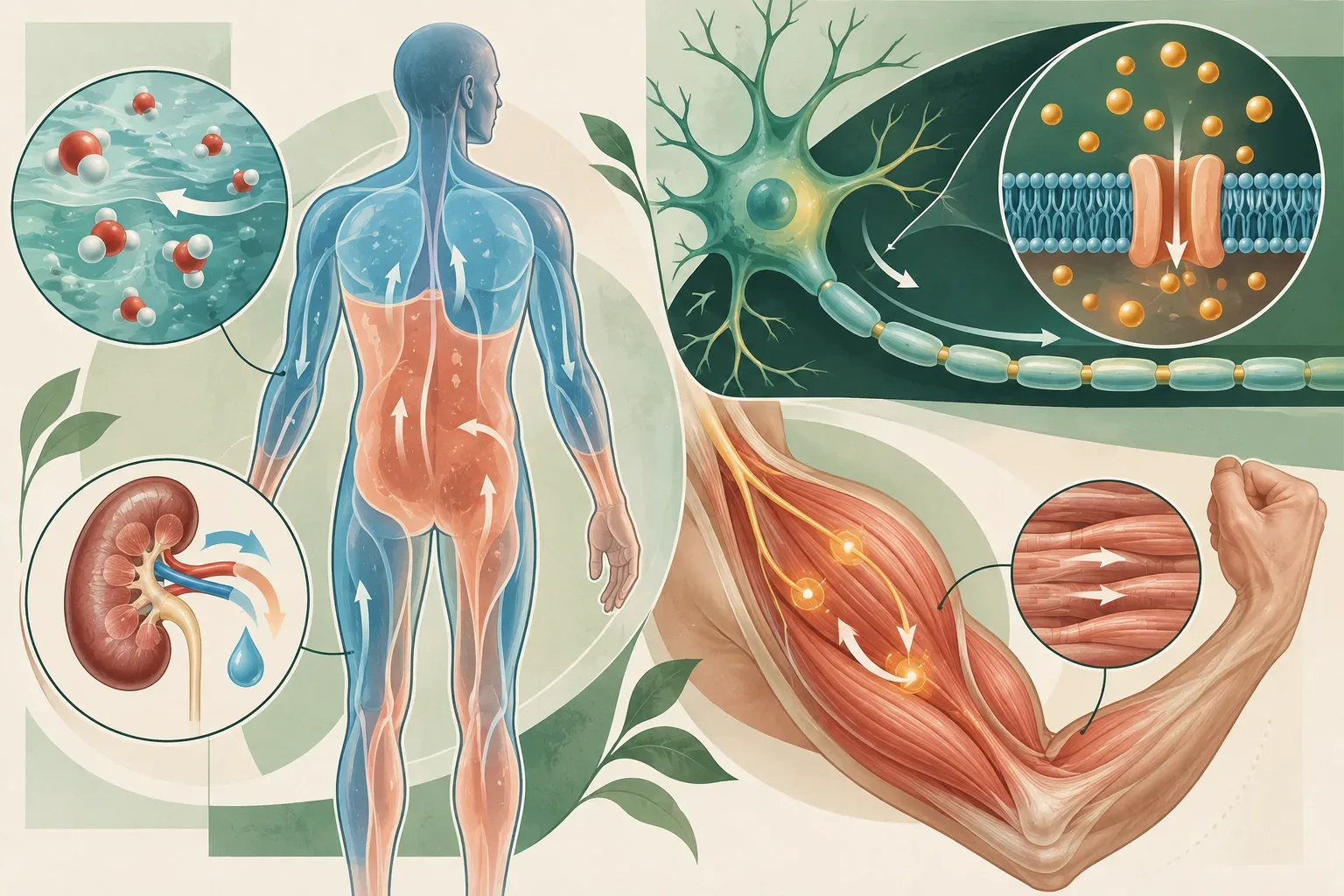
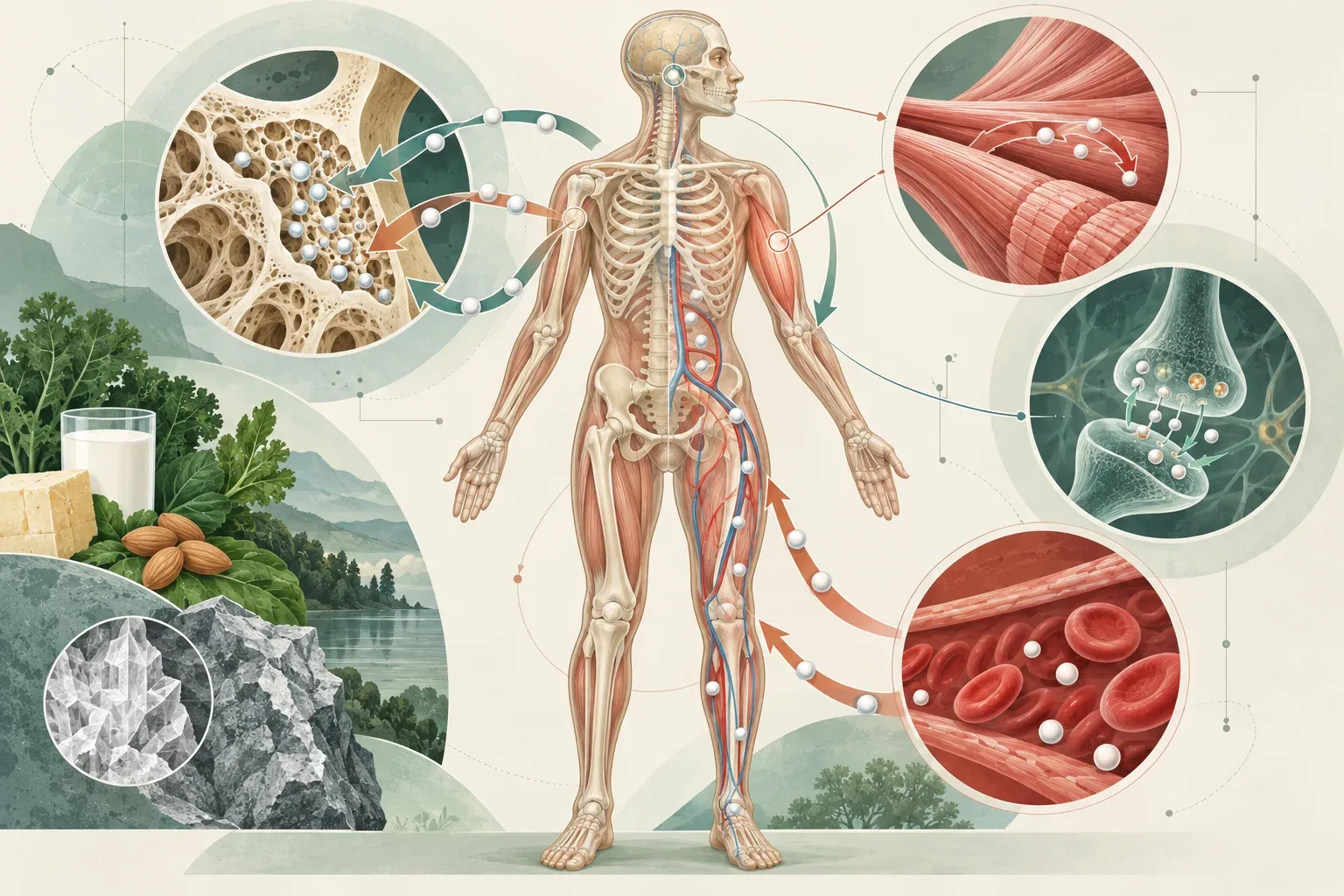
Potassium is the main positively charged mineral inside cells. Sodium is more concentrated outside them. Cells use pumps and channels to maintain these differences, creating the electrical conditions that let nerves transmit signals and muscles contract. The heart depends on that same controlled electrical activity.
Potassium also helps maintain the amount of fluid inside cells. The kidneys adjust how much leaves in urine, while hormones help regulate both kidney handling and movement between blood and cells. Blood potassium can therefore change because of illness or medicines as well as because of intake.
That is why the dietary role and a blood result are related but different questions. Adequate food intake supports normal function, while an excessively high or low circulating concentration can interfere with the electrical system in your body. [1]
The short version
Unit: milligrams of potassium. The Supplement Facts line lists the potassium itself, not the weight of the whole salt.
Reasonable start: Start with food. If you have already decided to buy a tablet, the ordinary one is 99 mg, and it does not close a food gap.
| Form | Common supplement dosage | What that number means |
|---|---|---|
| Potassium chloride | 99 mg tablet | Milligrams of potassium |
| Potassium citrate | 99 mg tablet | Milligrams of potassium |
| Potassium gluconate | 99 mg tablet | Milligrams of potassium |
| Multivitamin that includes potassium | About 80 mg | Milligrams of potassium; many multivitamins have none |
Skip: a 99 mg tablet sold with a blood-pressure promise, a plan to stack tablets until you reach grams, and a potassium salt substitute in a household where someone has kidney disease or takes a drug that holds potassium in.
What people take potassium for
| Claimed benefit | Dose / form studied | Research verdict | Evidence strength |
|---|---|---|---|
| Lowering high blood pressure | About 1,173–4,692 mg/day elemental potassium, mostly as chloride, for 4–15 weeks in hypertension trials; clinician oversight needed. | Most pooled reviews found lower pressure, while a stricter review was inconclusive. | Moderate |
| Reducing strokes with a salt substitute | About 75% sodium chloride / 25% potassium chloride replacement for 4.7 years in high-risk rural Chinese adults. | Strokes and deaths fell; potassium’s share cannot be separated from sodium reduction. | Moderate |
| Preventing recurrent calcium stones with low urine citrate | Potassium citrate 30–60 mEq/day for three years; about 1,173–2,346 mg/day potassium, medically supervised. | Fewer new stones; citrate’s urinary effect is central. | Moderate |
| Bone health | Potassium citrate or bicarbonate; trial schedules ranged from three months to two years. | Some bone markers improved, but bone-density results conflict. | Limited |
| Blood-glucose control | Potassium chloride or citrate in small trials of adults with impaired glucose regulation. | Some fasting measures improved; results across glucose tests were mixed. | Limited |
For ordinary intake, start with food. The population food-intake gap is real—adult men average about 3,016 mg a day from food against 3,400 mg, and women about 2,320 mg against 2,600 mg—but that is not the same as clinical low blood potassium. People who take a potassium-containing supplement add a mean of only about 87 mg a day, while ordinary foods can add hundreds of milligrams. The gap closes at the dinner table much faster than it does by a supplement bottle.
Clinician-directed correction of a low blood level usually uses prescription potassium and follow-up blood tests. A water pill that increases potassium loss, vomiting, diarrhea or some bowel diseases can contribute to a low blood level. Potassium citrate is also prescribed to prevent recurrent calcium kidney stones when urine citrate is low. That is a separate treatment goal that does not require a low blood potassium result. Nonprescription tablets, salt substitutes, and food can still raise blood potassium dangerously when the kidneys or medicines limit clearance. If you are pregnant or breastfeeding, the intake target is higher; food remains the usual way to meet it.
When to ask a doctor before taking potassium
Ask first if you have kidney disease, type 1 diabetes, heart failure, adrenal insufficiency, or liver disease, or if you take a blood-pressure or heart drug. Those conditions, and some of those drugs, can push potassium too high even when you eat less than the adequate intake. Other drugs pull it too low.
The NIH fact sheet names the drugs by what they do:
- Drugs that hold potassium in: angiotensin-converting enzyme (ACE) inhibitors such as benazepril (Lotensin), angiotensin receptor blockers such as losartan (Cozaar), and potassium-sparing diuretics such as amiloride and spironolactone (Aldactone). Adding potassium pills or a potassium salt substitute on top of these can raise your blood potassium to a dangerous level.
- Drugs that push potassium out: loop diuretics such as furosemide (Lasix) and bumetanide (Bumex), and thiazide diuretics such as chlorothiazide (Diuril) and metolazone. These can drop your blood potassium too low, and your doctor may check it and prescribe potassium.
With these drugs the question is whether you should add potassium at all, and that question should be directed to the prescribing doctor.
Common dosage
As of 2026, the National Academies has not set a Recommended Dietary Allowance (RDA) for potassium. It instead set an Adequate Intake (AI) of 3,400 mg for men and 2,600 mg for women aged 19 and older from food and supplements together. An AI is a different technical target, based on amounts healthy people eat when intake appears adequate because the evidence was insufficient to calculate an RDA.
| Age | Boys and men | Girls and women |
|---|---|---|
| Birth to 6 months | 400 mg | 400 mg |
| 7–12 months | 860 mg | 860 mg |
| 1–3 years | 2,000 mg | 2,000 mg |
| 4–8 years | 2,300 mg | 2,300 mg |
| 9–13 years | 2,500 mg | 2,300 mg |
| 14–18 years | 3,000 mg | 2,300 mg |
| 19 and older | 3,400 mg | 2,600 mg |
Table note: These amounts do not apply when kidney disease or medicines interfere with potassium clearance. A clinician sets the intake amount in those cases.
The amount is not set by body weight. The fact sheet sets no time of day and no with-food rule for a 99 mg tablet. Food potassium arrives spread across meals by default, and a prescription label gives its own directions.
What changes how much you absorb
The body absorbs about 85 to 90 percent of the potassium in food. For potassium gluconate, the NIH fact sheet reports about 94 percent absorbed, similar to potassium from potatoes.
Cooking can change the potassium amount left in food before it reaches the gut. The USDA retention table[2] models 90% potassium retention for root vegetables boiled in covering water and drained, versus 100% when the cooking water is used. Those broad-group factors are not a measured percentage for every potato or vegetable. They should not be confused with the approximately 85%–90% intestinal absorption from food described above, or with kidney excretion afterward.
Am I getting enough potassium from food?
Your usual meals give a better answer than a population average. Adult men average about 3,016 mg a day from food and women about 2,320 mg, both below the adequate intake; that does not establish your own shortfall. The foods below, from the NIH fact sheet, show how fast the numbers add up.
Selected values from the NIH Office of Dietary Supplements food table[1] show the stated food and preparation. Amounts are per serving.
| Food and preparation | Source | Serving | Potassium (mg) |
|---|---|---|---|
| Dried apricots | Plant | ½ cup | 755 mg |
| Lentils, cooked | Plant | 1 cup | 731 mg |
| Acorn squash, mashed | Plant | 1 cup | 644 mg |
| Potato, baked, flesh only | Plant | 1 medium | 610 mg |
| Banana | Plant | 1 medium | 422 mg |
| Milk, 1% | Dairy | 1 cup | 366 mg |
Using the table’s servings, a medium baked potato, a cup of lentils, a medium banana and a cup of 1% milk supply 2,129 mg before anything else you eat. Whole-wheat flour and brown rice carry far more potassium than white flour and white rice. If your meals lean on packaged food, that is usually where the gap is.
How can I tell if I'm low on potassium?
Eating too little potassium and having a low blood potassium result are different problems. Low blood potassium, or hypokalemia, more often follows losses or medicines than an ordinary dietary gap.
Mild low blood potassium
Constipation, tiredness, muscle weakness or feeling generally unwell can occur. Some people have few recognizable symptoms.
Moderate to severe low blood potassium
More serious depletion can cause marked weakness or paralysis, excessive urination, trouble breathing and abnormal heart rhythms. Severity depends on the blood result and clinical circumstances, not symptoms alone. Breathing difficulty, paralysis or significant rhythm symptoms need emergency care. Potassium replacement requires attention to kidney function, medicines and magnesium as well as the potassium result.
Testing and interpretation
For more information about testing for potassium, see the lab tests and preparation details near the end of this article.
Potassium forms you can buy
Potassium chloride, potassium citrate, potassium gluconate, aspartate, bicarbonate, and phosphate all supply the same active potassium, but the attached component differs. On the supplement shelf they usually land at about 99 mg of potassium, so the partner changes what comes with the potassium more than how much you get. If a clinician is treating a low blood result, use the prescribed form and follow-up plan; for an optional 99 mg top-up, choose a bottle with clear Supplement Facts and remember that a serving of lentils or a baked potato supplies several hundred milligrams.
Potassium chloride
Potassium chloride is the form in most salt substitutes and in most prescription potassium, and it was the form in most of the blood-pressure trials. It is about 52 percent potassium by weight. A typical facts line reads Potassium (as potassium chloride) 99 mg. Chloride is also the form behind the small-intestine warnings on higher-dose drug tablets.
Potassium citrate
Potassium citrate carries citrate along with the potassium. In the urine, citrate binds calcium and makes the urine less acidic, which helps keep calcium stones from forming. That is why doctors prescribe it, in grams, for calcium kidney stones with low urine citrate. A 99 mg citrate tablet is far below those amounts. A typical facts line reads Potassium (as potassium citrate) 99 mg.
Potassium salt substitutes
A salt substitute is not a supplement, but it can put gram amounts of potassium into your daily meals: about 440 to 2,800 mg per teaspoon, depending on the product. Check the potassium per serving rather than relying on the front-panel name. Do not use it without clinician guidance if you have kidney disease or take a medicine that holds potassium in.
What to pay attention to on the label
The number that counts is the milligrams of potassium on the Supplement Facts line. On a potassium-only product, that number is almost always 99 mg.
Which number on the label is the amount?
The Supplement Facts line lists potassium itself, not the weight of the salt it came in. If a facts line says Potassium (as potassium citrate) 99 mg, you are getting 99 mg of potassium. No additional conversion is necessary.
The percent Daily Value beside it is measured against 4,700 mg, an older figure the FDA still uses on labels. The Supplement Facts label on a 99 mg tablet says about 2 percent of that Daily Value. Against today’s adult amount it is about 3 percent for men and about 4 percent for women.
Misleading labels
Salt weight on the front, potassium on the back
Potassium chloride is about 52 percent potassium, and potassium citrate is about 38 percent. So 99 mg of potassium weighs about 190 mg as potassium chloride or about 260 mg as potassium citrate. If you're considering buying a product that says 260 mg potassium citrate on the front, read the facts line: the potassium is about 99 mg.
Confusing servings and tablets per serving
Some manufacturers put 180 tablets on the front, and the back says 3 tablets per serving and 60 servings. At 99 mg a tablet, that serving is 297 mg—still about a tenth of the men’s adequate intake, and three tablets instead of one.
A 99 mg tablet sold with a blood-pressure promise
Some labels put “supports healthy blood pressure” or “electrolyte support” next to 99 mg. The trials that lowered blood pressure used about 1,173 to 4,692 mg of potassium a day. A 99 mg tablet is 2 to 8 percent of those amounts.
Potassium iodide counted as potassium
Some labels list potassium iodide in micrograms. That ingredient is there for its iodine. It adds essentially no potassium.
A salt substitute with no potassium number
Salt substitutes can supply gram-scale potassium. Use the practical label and safety check in the forms section above rather than guessing from the product name.
Manufacturer claims and the studies they may be based on
A “blood pressure” line on a potassium product may borrow the FDA health claim that diets with foods that are a good source of potassium and low in sodium may reduce the risk of high blood pressure and stroke. That claim concerns a dietary pattern. It's also possible that this claim refers to gram-dose potassium chloride trials or to a large salt-substitute trial. None of those used a 99 mg tablet. A “muscle and nerve function” line may borrow the fact that your nerves and muscles need potassium to work, but this doesn't imply that that supplement pill would make anything work better.
How long should I take potassium supplements for?
For most people the relevant fix is a continuing pattern of potassium-rich foods, not a bottle taken until body stores are supposedly full. A low blood potassium result can reflect medicines, kidney handling, gastrointestinal loss or another acute problem; replacement amount and duration depend on that cause and follow-up blood tests. The kidneys continually regulate potassium, so there is no general 'stores drain in X days' schedule or safe self-directed taper. NIH's review[1] distinguishes dietary intake from treatment of hypokalemia. For an optional dietary top-up, reassess the need as your food intake changes. Prescribed replacement follows its separate clinical plan and blood-test results. People with kidney disease or taking an ACE inhibitor, ARB or potassium-sparing diuretic need their clinician's advice before changing supplemental potassium, because they may be unable to clear the extra amount.
How potassium interacts with other nutrients
Sodium
Eating more potassium and less sodium both tend to move blood pressure down. A salt substitute changes both minerals at once; see the forms section for the label and safety check and the science section for outcomes.
Common Myths about Potassium
Is the adequate intake a pill target?
No. The 3,400 mg and 2,600 mg adult adequate intakes are total-intake benchmarks based on what healthy people eat; they are usually met through food. Reaching 3,400 mg with 99 mg tablets would take about 34 of them, and a 4,000 mg band you may hear on podcasts would take about 40. That is not a supplement plan. If your doctor wants you to take grams of potassium, it will be a prescription with a blood test behind it.
Are bananas the best potassium food?
No. In the earlier NIH food table, a cup of cooked lentils has 731 mg, the flesh of a medium baked potato has 610 mg, and half a cup of dried apricots has 755 mg. Each supplies more potassium than a medium banana at 422 mg.
Does the salt-substitute stroke trial mean a potassium tablet prevents strokes?
No. The trial changed both sodium and potassium at meals; a 99 mg tablet does neither at that scale. The science section gives the amounts and outcomes.
Drawbacks and side effects
| Potential drawback | When/who it affects | Research evidence | Practical implication |
|---|---|---|---|
| Dangerously high blood potassium | Kidney disease, potassium-retaining medicines or very large supplemental exposure. | Hyperkalemia can be silent and can cause life-threatening rhythm problems. | Check suitability before pills or salt substitutes; severe weakness or irregular heartbeat needs urgent care. |
| Stomach or bowel injury | Oral products; some solid potassium-chloride drugs have specific small-bowel injury warnings. | Minor gut upset and formulation-specific serious injury are distinct risks. | Follow the exact product and prescription directions; 99 mg is not a universal toxicity boundary. |
Potassium supplements can cause minor stomach and bowel upset. The serious risk is high blood potassium, which can have no symptoms until it is severe. Then it can cause muscle weakness, paralysis, heart palpitations, burning or prickling in the hands and feet, and heart rhythm problems that can be life threatening.
There is no official upper limit, because in healthy people with normal kidneys the kidneys clear extra food potassium. The National Academies looked at case reports of very large supplement doses causing heart problems and death and judged them too thin to set a number. The real limiter is kidney clearance. Very large amounts from pills or salt substitutes can outrun even healthy kidneys, and kidney disease or a drug that holds potassium in can turn ordinary food amounts into a problem. If you feel palpitations, new weakness, or tingling after adding potassium, stop taking it and get your blood potassium checked that day. Severe weakness or an irregular heartbeat is an emergency.
Some potassium chloride drugs that deliver more than 99 mg per tablet have been tied to sores in the small intestine, with bleeding, blockage, and perforation, and the FDA requires a warning on them. That history helps explain why most potassium-only supplements contain no more than 99 mg, but 99 mg is not a universal legal limit for supplements.
Potassium during pregnancy and breastfeeding
The adequate intake for women 19 to 50 is 2,900 mg a day in pregnancy and 2,800 mg while breastfeeding, from the National Academies as listed on the NIH fact sheet. For women 14 to 18 it is 2,600 mg in pregnancy and 2,500 mg while breastfeeding. Like the adult amounts, those numbers come from the potassium intakes of healthy women and are meant to be met with food. The same kidney and drug cautions apply in pregnancy.
The science behind potassium
The strongest clinical questions concern blood pressure, salt substitutes and kidney stones. Gram-dose potassium pills lowered blood pressure in people with hypertension in most pooled reviews, but results in the smaller set of higher-quality trials and in people with normal blood pressure were less clear. A potassium salt substitute cut strokes and deaths in one large trial, though some of that may come from eating less sodium. And potassium citrate cut new kidney stones in people with low urine citrate, where the citrate is the active part.
Blood pressure and potassium pills
A 2017 review pooled 25 randomized trials in 1,163 people with hypertension. Most used potassium chloride at 30 to 120 mmol a day, which is about 1,173 to 4,692 mg of potassium (1 mmol of potassium is about 39 mg), for 4 to 15 weeks. In that group, compared with control:
- Systolic pressure (the top number) came down about 4.5 mm Hg.
- Diastolic (the bottom number) came down about 3.0 mm Hg.
Those were short trials of gram doses in people who already had high blood pressure.
A 2015 review of 15 trials in 917 people not on blood-pressure medicine, mostly using about 2,346 to 2,541 mg of potassium a day, found the largest drop in people with hypertension: 6.8 systolic and 4.6 diastolic. The National Academies’ own 2019 pool of 16 trials found about 6.9 and 3.6 mm Hg overall, but in trials of people without hypertension the difference could have been chance.
On the other side, a 2006 Cochrane review included six trials, with five in its principal analysis; only two were rated high quality. Its pooled reductions could have been chance. What is still open is how much of the effect holds in careful trials and in people whose blood pressure is normal.
Food, salt substitutes, and stroke
In the DASH feeding trial, 459 adults ate either a diet rich in fruit, vegetables, and low-fat dairy or a typical control diet. In that trial the DASH diet:
- Lowered systolic pressure by about 5.5 mm Hg.
- Lowered diastolic pressure by about 3.0 mm Hg.
It had much more potassium than a typical American diet, but it also had more magnesium and calcium, so the potassium’s own share cannot be separated out.
The 2021 Salt Substitute and Stroke Study randomized whole villages in rural China, with 20,995 people who had had a stroke or were 60 or older with high blood pressure. Half the villages replaced regular salt with a mix of about 75 percent sodium chloride and 25 percent potassium chloride. Over about 4.7 years, in that group:
- Strokes were about 29 versus 34 for every 1,000 people followed for a year.
- Deaths were about 39 versus 45.
- Serious high-potassium events were about the same in both groups.
People taking potassium-sparing drugs or with serious kidney disease were excluded, and a salt company donated the substitute in the third and fourth years of the trial, a funding tie worth knowing. A 2018 federal review found that salt substitutes lowered blood pressure in 13 trials, but that adding potassium on top of cutting sodium did not add more. What is still open is how much of the stroke result is potassium and how much is less sodium, and whether it carries over to US kitchens.
Kidney stones and potassium citrate
In a trial of 57 people with repeated calcium stones and low urine citrate, potassium citrate at 30 to 60 mEq a day (for potassium, 1 mEq is the same as 1 mmol, so about 1,173 to 2,346 mg of potassium) reduced new stones compared with placebo. Three-year results were reported for 38 participants—18 on potassium citrate and 20 on placebo—so the findings did not include all 57 people initially randomized. A 2015 Cochrane review of seven citrate-salt trials in 477 people found:
- Fewer new stones.
- Smaller stones.
The NIH fact sheet says the citrate does the work: it binds calcium in the urine and raises urine pH.
Bone density and bone turnover
Bone density describes how much mineral bone contains. Bone turnover is the ongoing removal of old bone and formation of new bone; studies measure related substances in blood or urine to estimate that activity. Bone studies have tested alkaline potassium salts, mainly citrate and bicarbonate. Their effects cannot be assumed for every potassium preparation.
A two-year trial in 201 healthy adults over 65 without osteoporosis[3] compared 60 mEq potassium citrate daily with placebo; everyone also received calcium and vitamin D. Lumbar-spine bone density rose 1.7 percentage points more with citrate (95% confidence interval 1.0–2.3). The reported fracture improvement was in a calculated risk score, not a demonstrated reduction in fractures.
The result was not consistent across trials. A two-year study of 276 postmenopausal women aged 55–65[4] compared 18.5 or 55.5 mEq potassium citrate daily, extra fruit and vegetables, and placebo. Neither citrate dose clearly improved spine or hip bone density or produced a sustained reduction in bone-turnover markers. A one-year trial in 83 women with low bone density, called osteopenia[5] found lower bone-turnover markers with 40 mEq potassium citrate daily, but no statistically clear spine or hip bone-density difference from placebo. These populations and doses differ, so the findings do not identify a dependable bone-protection regimen.
In a three-month bicarbonate trial[6], 244 adults aged 50 or older were randomized to placebo or 1 or 1.5 mmol/kg daily; 233 completed it. The median doses were 81 and 122 mmol daily. Both doses reduced urinary calcium versus placebo, while the lower dose reduced a urinary marker of bone breakdown and a serum marker of bone formation. Neither dose clearly improved strength or physical function. Lower turnover over three months is a different finding from stronger bones or fewer fractures.
Blood glucose
In a three-month pilot trial[7] in African-American adults with prediabetes, 27 of 29 recruited participants completed potassium chloride at 40 mEq daily or placebo. Average fasting glucose changed by −1.1 mg/dL with potassium and +6.1 mg/dL with placebo, a statistically significant difference. The groups did not differ clearly on glucose or insulin during an oral glucose-tolerance test.
A separate pilot in 11 adults with combined glucose intolerance[8] studied people whose potassium was normal and who did not have acidosis, an excess of acid in body fluids. It compared oral potassium chloride, potassium citrate and placebo, with each potassium treatment supplying 90 mEq daily for two weeks. Both salts improved an estimate of insulin production; only citrate improved the reported insulin-sensitivity estimates. HOMA-IR, an estimate in which a lower number indicates less insulin resistance, was 2.8 with citrate (confidence interval 2.5–3.1) versus 3.2 with placebo (2.9–3.5). Those intervals describe each treatment estimate, not the difference between them. These short, small studies leave diabetes prevention and durable glucose control unresolved.
What you may have heard on podcasts
Podcast recommendations about sodium and potassium can describe different situations: a whole day’s intake or the contents of a workout drink.
On 14 March 2022, Andrew Huberman, relaying James DiNicolantonio’s book The Salt Fix, gave a daily band of 8 to 12 g of salt — which he put at 3.2 to 4.8 g of sodium — alongside 4 g of potassium and 400 mg of magnesium. That is roughly one gram of sodium for each gram of potassium, and the 4 g sits just above the men’s adequate intake.
On the 22 February 2023 Huberman Lab Guest Series episode with Andy Galpin[9], Galpin gave a rough three-to-one sodium-to-potassium ratio for fluids during training. He was discussing a workout drink, not a general daily intake target. The adult adequate intake is still 3,400 mg for men and 2,600 mg for women, from food.
Labs
The test is serum potassium, which shows whether your blood level is low, normal, or high today; it will not show how much potassium is stored in your cells or whether your diet meets the adequate intake. There is no urine potassium test that answers the food question either. A urine citrate measurement, covered with potassium citrate above, belongs to a kidney-stone work-up, and the citrate is the active part. Potassium can be measured alone or in a metabolic panel; a comprehensive metabolic panel also includes kidney-function markers.
Interpreting the results
Eating below the adequate intake usually does not show up as a low blood result. In healthy people with normal kidneys a low blood level is rare. When it happens, it usually traces to diarrhea, vomiting, laxatives, water pills, heavy sweating, or dialysis rather than to diet. If a low result will not come back up, magnesium is often low too—in more than half of people with clinically significant low potassium—and clinicians interpret potassium, magnesium, losses, and medicines together.
NIH gives the usual range, while NHS specialist guidance[10] distinguishes mild, moderate and severe hypokalemia. These concentrations use millimoles per liter, numerically the same as mEq/L for potassium:
| Reading | mmol/L | Interpretation |
|---|---|---|
| Usual range listed by NIH | about 3.6–5.0 | Use the reporting laboratory’s range |
| Mild hypokalemia in NHS guidance | 3.0–3.5 | Can be symptom-free; requires assessment in context |
| Moderate hypokalemia in NHS guidance | 2.5–2.9 | Weakness, constipation or rhythm problems can occur; needs prompt clinical management |
| Severe hypokalemia in NHS guidance | under 2.5 | Requires urgent or emergency clinical action even without symptoms |
Before the test if you already supplement
A standalone potassium test usually needs no special preparation, according to MedlinePlus[11]. Keep prescribed replacement on its clinical plan. Ask the clinician whether to take the scheduled dose before or after the draw, and report potassium-containing electrolyte powders and salt substitutes. Other tests collected at the same time may require fasting.
A supplement can change blood potassium, especially when the kidneys cannot clear it. A damaged sample or repeated fist-clenching during collection can also produce a misleadingly high result. Accurate collection matters. [11]
Blood magnesium can stay normal while the body is short, so a clinician interprets it alongside ongoing losses and medicines when investigating persistent low potassium.
The bottom line
Potassium matters for health, but meeting dietary needs, treating low blood potassium and preventing certain kidney stones are different. Bone-density trials conflict, and the small blood-glucose trials have not established a diabetes-prevention benefit. The trials used gram amounts or prescription preparations, well above a small retail tablet.
For ordinary intake, look at the foods you eat before trying to build a daily total from many pills. A potassium-containing salt substitute can also change exposure substantially. Kidney function and potassium-retaining medicines matter because excess blood potassium can be dangerous without obvious symptoms. A medical replacement plan should be based on the cause and monitoring, not a symptom guess.
Help us improve this article
Spotted an error or found a source we should consider? Tell us which part of this article needs another look and include a link if you have one. Please leave out personal health details and lab results; we can’t answer individual medical questions.
Explore more in heart & blood pressure
More in minerals

References
- NIH Office of Dietary Supplements: Potassium — Health Professional Fact Sheet ↩
- USDA: Table of Nutrient Retention Factors, Release 6 ↩
- two-year trial in 201 healthy adults over 65 without osteoporosis ↩
- two-year study of 276 postmenopausal women aged 55–65 ↩
- one-year trial in 83 women with low bone density, called osteopenia ↩
- three-month bicarbonate trial ↩
- three-month pilot trial ↩
- separate pilot in 11 adults with combined glucose intolerance ↩
- Huberman Lab Guest Series episode with Andy Galpin ↩
- NHS specialist guidance ↩
- MedlinePlus ↩
- National Academies: Dietary Reference Intakes for Sodium and Potassium, 2019
- 21 CFR 201.306: potassium salt preparations for oral use
- Appel et al.: the DASH feeding trial
- Filippini et al.: potassium supplements and blood pressure in hypertension
- Binia et al.: potassium intake and blood pressure
- Dickinson et al.: Cochrane review of potassium for hypertension
- Neal et al.: Salt Substitute and Stroke Study
- Agency for Healthcare Research and Quality: sodium and potassium intake review, 2018
- Barcelo et al.: potassium citrate and calcium kidney stones
- Phillips et al.: Cochrane review of citrate salts for kidney stones
- Macdonald-Clarke et al.: potassium absorption from potatoes and potassium gluconate
- Review of falsely high potassium results
Corrections & updates
- Update
Updated the evidence discussion and practical guidance after editorial review.
- Update
Revised the article after editorial review, with clearer evidence explanations and practical guidance.