
What vitamin B3 is
Vitamin B3 is a water-soluble vitamin. You get preformed niacin from foods such as meat, fish, peanuts, and fortified grains.
The common supplement forms are nicotinamide, also called niacinamide, and nicotinic acid. Both count toward nutritional niacin equivalents, but they stop being interchangeable as the dose rises: nicotinic acid can flush and change cholesterol levels at gram doses, while nicotinamide does not flush and was the molecule used in high-dose skin-cancer trials.
The recommended daily amount is 16 mg niacin equivalents for adult men and 14 mg for adult women. One milligram of preformed nicotinic acid or nicotinamide equals 1 mg niacin equivalents, so the unit conversion is simple in this case. Food and dietary protein both contribute, so a separate supplement is usually unnecessary with a varied diet. A nutrition-level product may help when intake stays low.
The short version
- Unit: The label says milligrams. For preformed nicotinic acid and nicotinamide, 1 mg equals 1 mg niacin equivalents, abbreviated mg NE. Nutrition planning also uses an estimate of 60 mg tryptophan, an amino acid in protein, for 1 mg NE; conversion varies between people.
- Reasonable starting point: Use 16 mg NE for adult men or 14 mg NE for adult women as the daily reference, allowing for food, protein and supplements; the food table is not an exact personal shortfall calculator. A multivitamin or B-complex near that range is meant to cover ordinary daily nutrition. There is no evidence-based morning-versus-night rule for nutrition-dose nicotinamide.
- Skip: a label that says only “niacin” without naming the molecule, and any “flush free” claim offered as proof of the same effect. Products with 500 mg nicotinamide, 500–2,000 mg nicotinic acid, or a sustained-, timed-, or extended-release design are high-dose products, not daily nutrition; they need a reason and usually a clinician.
| Label form or class | Common supplement dosage | What that number means |
|---|---|---|
| Nicotinamide / niacinamide | Around the 14–16 mg NE daily range in a multivitamin or B-complex | Nonflushing preformed niacin |
| Nicotinic acid | Around the 14–16 mg NE daily range when used for nutrition | Preformed niacin that can flush as the amount rises |
| Inositol hexanicotinate | Often marketed as “flush free” | Printed compound milligrams do not establish free nicotinic acid or mg NE |
| Nicotinamide riboside (NR) | A compound the body can use to make NAD, a helper molecule for cellular energy reactions | No accepted general conversion makes its milligrams equal to mg NE |
What vitamin B3 does in your body
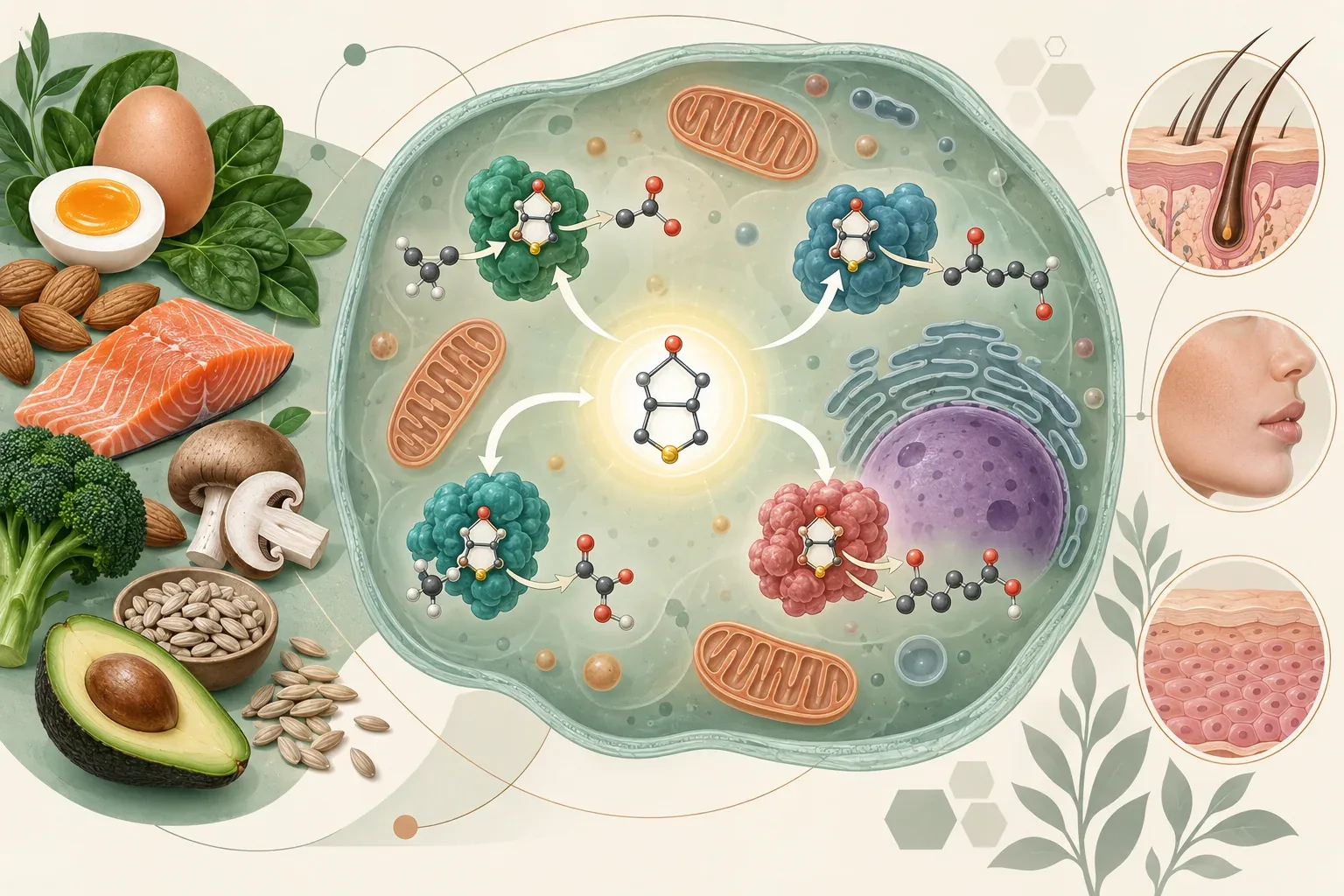
Niacin supplies the raw material for nicotinamide adenine dinucleotide (NAD) and its related form NADP, helper molecules that accept and donate electrons. Cells use them to transfer energy through the reactions that break down food and to support the manufacture of substances such as fats. The body also makes some niacin from the amino acid tryptophan.
NAD has another role beyond carrying electrons: enzymes use it in cell signaling and processes involved in DNA repair. These jobs explain why niacin is essential to many tissues and why a serious shortage can affect the skin, digestive system and nervous system together.
Nicotinic acid and nicotinamide can both supply nutritional niacin. Their different effects at large treatment amounts are a separate issue from this shared role in maintaining the body's NAD supply. [1]
What people take vitamin B3 for
| Claimed benefit | Dose / form studied | Research verdict | Evidence strength |
|---|---|---|---|
| Preventing cardiovascular events on statins | Extended-release nicotinic acid 1,500–2,000 mg/day for three to four years in statin-add-on trials; one combined it with laropiprant. | Modern add-on trials found no event benefit despite better lipid numbers. | Strong |
| Preventing repeated skin cancers | Nicotinamide 500 mg twice daily for 12 months in adults with previous nonmelanoma skin cancers and no known immune suppression. | ONTRAC found fewer new cancers during treatment. | Moderate |
| The same skin-cancer prevention after transplantation | Nicotinamide 500 mg twice daily for 12 months in high-risk solid-organ transplant recipients. | ONTRANS found no reduction; recruitment limited precision. | Limited |
| Early Parkinson disease | Nicotinamide riboside 500 mg twice daily for 52 weeks with usual treatment. | The primary clinical score favored placebo, despite earlier NAD-marker interest. | One larger clinical trial; unfavorable |
| Glaucoma alongside existing treatment | Nicotinamide 1–3 g/day, with different glaucoma populations and sometimes combined with pyruvate. | Small short trials show selected test signals; lasting vision protection is unresolved and liver monitoring matters. | Limited |
| High phosphate during dialysis | Modified-release nicotinamide 250–1,500 mg/day added to phosphate binders. | Phosphate improved at twelve weeks, but the overall one-year result was null and adverse effects increased. | Moderate for early marker; uncertain durability |
Most adults do not need a separate niacin product because food and protein usually cover the requirement. A supplement is more reasonable to discuss when your diet stays low in both niacin and protein, or when a medical condition or medicine creates a recognized deficiency risk.
When to ask a doctor before taking it
Ask your doctor before using more than the recommended daily amount if you have liver disease, unexplained abnormal liver enzymes, diabetes or prediabetes, gout or high uric acid, low blood pressure, active peptic ulcer disease, kidney failure requiring dialysis, or substantial alcohol intake.
High-dose nicotinic acid also needs a medication check. Statins can add muscle risk. Blood thinners can add bleeding concerns. Diabetes treatment may need adjustment if glucose control worsens. Do not replace a prescribed statin with retail niacin. Immediate-, sustained-, timed-, and prescription extended-release products are not interchangeable milligram for milligram.
Common dosage
The recommended daily amount from the National Academies is 16 mg NE for adult men and 14 mg NE for adult women. These totals count food plus supplements. Pregnancy and breastfeeding amounts are in the pregnancy section.
The official upper limit from the National Academies is 35 mg a day for adults from supplements and fortified foods. The 1998 review applied that flushing-based limit (how it was set) to added nicotinic acid and nicotinamide, even though nicotinamide does not flush. Naturally occurring niacin in food and medically supervised treatment are outside that limit.
The recommended amount is not set by body weight, and splitting a high dose is a treatment decision rather than a way around the upper limit.
Morning or night, with food or without?
Nutrition-dose nicotinamide does not have an evidence-based time-of-day requirement or recommendation. Taking nicotinic acid with food may reduce flushing, but food does not turn a 500–2,000 mg exposure into ordinary nutrition.
Food and protein
Most mixed diets provide enough niacin equivalents through preformed niacin and protein. Meat, fish, peanuts, and fortified grains are useful sources. For nutrition planning across groups, the standard estimate counts 60 mg dietary tryptophan as 1 mg NE; it is not precise personal arithmetic.
Selected values from the NIH Office of Dietary Supplements food table[1] show the stated food and preparation. Amounts are per serving.
| Food and preparation | Source | Serving | Preformed niacin (mg) |
|---|---|---|---|
| Beef liver, pan-fried | Meat | 3 oz (about 85 g) | 14.9 mg |
| Chicken breast, grilled | Meat | 3 oz (about 85 g) | 10.3 mg |
| Sockeye salmon, cooked | Fish | 3 oz (about 85 g) | 8.6 mg |
| Brown rice, cooked | Plant | 1 cup | 5.2 mg |
| Peanuts, dry-roasted | Plant | 1 oz (about 28 g) | 4.2 mg |
| Breakfast cereal, fortified to 25% DV | Fortified | 1 labeled serving | 4.0 mg |
These are the listed amounts of preformed niacin. The daily recommendation is in niacin equivalents (NE), which can also include niacin made from dietary tryptophan; do not add an assumed tryptophan conversion to each row.
Riboflavin, vitamin B6, and iron help the pathway that turns tryptophan into NAD-related compounds, so severe undernutrition can make the estimate less dependable.
If you regularly eat protein and a varied diet, you will usually meet your niacin need; 500 mg is far above the 14–16 mg daily reference. Alcohol use, poor absorption, a very restricted diet or a medical condition can change that picture and warrant assessment for deficiency.
Niacin bound in grains
Niacin in some grains is tightly bound and only about 30% bioavailable unless processing releases it, so a grain's total niacin number is not always the amount the body absorbs; the percentage is a general estimate, not a correction for every serving.
Niacin entered flour enrichment as part of deficiency prevention and the restoration of selected milling losses. Free niacin added to food is more available than much of the niacin bound within some grains. Its amount also belongs in the added-niacin calculation: the US adult 35 mg upper limit includes niacin added to foods and supplements, while naturally occurring food niacin is excluded. A fortified cereal or drink therefore belongs beside the multivitamin when checking that total. This is separate from the much larger treatment doses discussed below. [1], [2]
How can I tell if I'm low on vitamin B3?
Niacin status can fall before obvious symptoms appear. Severe deficiency causes pellagra, a recognizable illness affecting the skin, digestive tract and nervous system. [1]
Low status before obvious illness
Specialist markers can change before visible deficiency signs. There is no reliable minor-versus-moderate symptom checklist for this stage.
Severe deficiency: pellagra
A rough, darkened rash on sun-exposed skin, a bright red tongue and diarrhea or other persistent digestive symptoms are characteristic findings. Depression, fatigue, memory changes and confusion can also occur. Advanced untreated pellagra can be fatal. This combination needs medical assessment, particularly with severe food restriction, alcohol dependence or an absorption disorder.
Testing and interpretation
For more information about testing for vitamin B3, see the lab tests and preparation details near the end of this article.
Vitamin B3 forms you can buy
Nicotinamide, also called niacinamide, and nicotinic acid are forms of the same vitamin but have different effects at high doses. Release-modified nicotinic acid, inositol hexanicotinate, and NAD precursors need separate decisions.
Nicotinamide or niacinamide
Nicotinamide and niacinamide are two names for the same molecule. It supplies preformed niacin without nicotinic-acid flushing, which makes it the practical nutrition form in a multivitamin or B-complex. Its lack of flush does not give it nicotinic acid's gram-dose lipid effect, and a 500 mg tablet belongs to high-dose dermatology or experimental use rather than ordinary 14–16 mg nutrition.
Look for “niacin (as niacinamide)” on the Supplement Facts panel and check its milligrams per serving, including any niacin in your other supplements.
Immediate-release nicotinic acid
Nicotinic acid supplies preformed niacin and can trigger flushing as the amount rises. An amount near the daily recommendation can fill the same dietary requirement as nicotinamide, but a 500 mg or gram-dose product enters drug-like lipid and safety territory.
Use nicotinic acid above the daily nutrition amount only when a clinician directs the dose and release form. An immediate-release label and an expected flush do not make a retail high-dose product a substitute for prescribed cholesterol treatment.
Sustained-, timed-, and extended-release nicotinic acid
Release-modified products spread delivery over time, but the words are not interchangeable quality grades, and a retail product is not a prescription extended-release drug. A label should identify the release type, milligrams per serving, capsules per serving, and manufacturer directions; even then, a high-dose plan needs medical monitoring.
Inositol hexanicotinate
Inositol hexanicotinate is an ester that binds six nicotinic-acid parts to inositol. Its compound weight is not a validated free-nicotinic-acid amount, so “500 mg flush-free niacin” does not establish a 500 mg nicotinic-acid exposure or equal cholesterol action. The attached inositol does not turn it into a myo-inositol supplement; our inositol guide explains the separate form and dose question.
Nicotinamide riboside (NR) and nicotinamide mononucleotide (NMN)
NR and NMN are separate compounds that the body can use to make NAD; this is what “NAD precursor” means. Neither has a general National Academies or FDA conversion that makes its label milligrams equal to mg NE, and neither should inherit nicotinic-acid cardiovascular results or nicotinamide skin-cancer results.
Can you take two vitamin B3 products the same day?
The official upper limit is 35 mg a day for adults from supplements and fortified foods. Add the milligrams of nicotinic acid and nicotinamide from those sources. A multivitamin or B-complex near the 14–16 mg range plus a second niacin product counts toward that 35 mg.
What to pay attention to on the label
Check the molecule, milligrams per serving, number of capsules per serving, and release words. “Niacin” is an umbrella term in ordinary speech; it is not enough information for a high-dose product decision.
Which number on the label is the amount?
The Supplement Facts label says niacin in milligrams. The percent Daily Value uses 16 mg NE as the reference. A label that says 16 mg niacin is therefore 100% Daily Value, but the ingredient name should still tell you whether the source is nicotinic acid or nicotinamide.
For those two preformed forms, milligrams convert directly to mg NE. Do not apply that shortcut to inositol hexanicotinate, nicotinamide riboside, or nicotinamide mononucleotide. The milligrams on those labels describe different molecules.
Misleading labels
“Niacin” without the molecule
A 16 mg amount can serve the same nutrition job whether the source is nicotinic acid or nicotinamide. At 50, 500, or 2,000 mg, hiding that identity conceals the flush, lipid, liver, and study differences that matter.
ER, SR, IR, “timed release,” and “extended release”
IR usually means immediate release, SR means sustained release, and ER means extended release. A retail sustained- or timed-release supplement is not interchangeable with a prescription extended-release drug, and less flushing does not prove less liver exposure.
“Flush free”
For a “flush free” product, check whether the ingredient is inositol hexanicotinate or nicotinamide.
Borrowing results from another molecule
Nicotinamide skin-cancer results do not belong on a label for nicotinamide riboside (NR) or nicotinamide mononucleotide (NMN), two different compounds sold as NAD boosters. Gram nicotinic-acid cardiovascular research does not belong on a 16 mg niacinamide product. A percentage taken from another study does not support the claim unless the molecule, release system, dose, and patient group match.
Manufacturer claims and the studies they may be based on
A “heart health” claim may be based on gram-dose nicotinic-acid research that moved cholesterol numbers. A “skin health” claim may be based on 500 mg nicotinamide taken twice daily in people with repeated prior skin cancers. A “cellular energy” or “NAD” claim may come from NR or NMN biomarker research. These claims may mention the same biological pathway, but they do not share one dose or one patient outcome.
How long should I take vitamin B3 supplements for?
For ordinary nutrition, consider your usual pattern of protein foods and other niacin sources rather than trying to calculate your personal conversion from tryptophan. A nutrition-level supplement can help when intake stays low; it does not need a loading phase or a planned taper when diet becomes sufficient. A high-dose niacin product for lipids is a medication-style decision with monitoring, not an extension of the daily requirement. NIH's review[1] does not give a useful store-depletion interval or a universal duration for those different purposes. Do not use flushing or a temporary change in a blood marker to decide on your own that a high-dose course is complete.
Common Myths about Vitamin B3
Does a niacin flush mean toxins are leaving?
No. The warmth, redness, burning, or itching comes from prostaglandin-driven widening of small skin blood vessels after nicotinic acid. It shows exposure to a flushing molecule; it does not show detoxification.
Is the 35 mg upper limit a liver-toxicity threshold?
No. The 35 mg limit came from flushing at low supplemental nicotinic-acid doses, not from liver injury. Liver, glucose, uric-acid, blood-pressure, bleeding, and muscle risks become more important from the high hundreds of milligrams through gram doses. The flush-based limit is conservative; crossing it is not proof of poisoning.
Drawbacks and side effects
| Potential drawback | When/who it affects | Research evidence | Practical implication |
|---|---|---|---|
| Flushing, itching and dizziness | Nicotinic acid, sometimes starting around 30–50 mg. | A recognized dose-related effect; the adult added-niacin limit is 35 mg/day. | Check the molecule; nicotinamide does not produce the same flush. |
| Liver injury and metabolic harms | Gram-dose nicotinic acid; sustained-release formulations have particular liver concerns. | Clinical trials and treatment evidence identify liver, glucose, uric-acid and other harms. | Use clinician-directed monitoring; do not substitute release types milligram for milligram. |
| Diarrhea or low platelets | High-dose nicotinamide, including dialysis studies. | A different adverse-effect pattern from nicotinic acid; no-flush does not mean harmless. | These high doses need medical supervision; they are much larger than the daily nutritional amount. |
What a high dose usually does
Too much nicotinic acid can cause flushing, burning, itching, headache, dizziness, rash, and a blood-pressure drop, starting around 30–50 mg. The National Academies took the 50 mg amount at which flushing clearly caused problems, applied a safety margin, and set the adult upper limit for added niacin at 35 mg a day. Some people flush below that.
When too much is dangerous
At roughly 1,000–3,000 mg a day, nicotinic acid can worsen glucose tolerance or diabetes control, raise uric acid and trigger gout, cause nausea and other digestive trouble, affect the eyes, lower blood pressure, increase bleeding, and injure the liver. Combining it with a statin can increase muscle risk. Substantial alcohol use adds to the liver concern.
Release profile matters. In the McKenney comparison, which increased doses from 500 to 3,000 mg a day in 46 people, 12 of 23 people assigned sustained-release nicotinic acid developed hepatotoxic effects, compared with none of 23 assigned immediate release, even though sustained release caused less flushing, burning, and itching. Immediate-release grams are not therefore safe to use without supervision; the result shows why “less flush” is not a safety upgrade.
Nicotinamide does not flush, but high doses are not inert. NIH notes diarrhea and low platelet counts in dialysis studies at 500–1,500 mg a day, and nausea, vomiting, and liver-toxicity signs around 3,000 mg a day. The molecule and amount determine which side effects matter.
Monitoring high-dose use
| Question | Test or measure | What it can tell you |
|---|---|---|
| Liver safety | Liver function panel | Liver enzymes, bilirubin, and albumin before or during clinician-directed high-dose use |
| Glucose safety | Hemoglobin A1c or clinician-ordered glucose testing | Whether longer-term glucose control is worsening; not proof that niacin caused the change |
| Gout risk | Uric acid ordered by your clinician | Whether uric acid is high or rising during drug-like nicotinic-acid use |
| Low blood pressure | Home or clinic blood pressure | Whether dizziness or faintness matches a meaningful pressure drop |
| Lipid treatment | Cholesterol panel | Whether LDL, HDL, and triglycerides moved; not whether heart attacks or strokes were prevented |
| Statin combination | Symptoms plus clinician-selected muscle testing | New muscle pain or weakness needs review rather than another release formulation |
A blood B2/B3/B5 panel, where available, does not determine whether a B3 supplement is needed, replace the urinary deficiency method, or replace liver monitoring for high-dose nicotinic acid.
Vitamin B3 during pregnancy and breastfeeding
Women need 18 mg NE a day during pregnancy and 17 mg NE while breastfeeding. Those are total daily amounts from food plus supplements, not reasons to use high-dose nicotinic acid, 500 mg nicotinamide, NR, or NMN.
On a prenatal Supplement Facts panel, count the niacin milligrams and read the source in parentheses. Nicotinamide and nicotinic acid both count as preformed niacin for the daily amount, but nicotinamide avoids the nicotinic-acid flush. A woman considering any product above the ordinary prenatal range should take the molecule, total daily amount, and other medicines to her obstetric clinician.
The science behind vitamin B3
The evidence splits by job. Nutrition-dose niacin prevents inadequacy. Gram-dose nicotinic acid changes lipid numbers on blood tests, but cardiovascular outcomes differ between an older pre-statin trial and modern statin-add-on trials. Nicotinamide at 500 mg twice daily produced different skin-cancer results in high-risk adults without known immune suppression and in high-risk transplant recipients taking immune-suppressing treatment.
An older heart-attack result versus no added benefit with modern statin treatment
The Coronary Drug Project tested 3,000 mg a day of immediate-release nicotinic acid in men who had already had a heart attack, before modern statin therapy. Definite nonfatal reinfarction occurred in 8.9% with nicotinic acid and 12.2% with placebo. Five-year mortality was similar, 24.4% versus 25.4%, but at 15 years—nearly nine years after treatment ended—it was 52.0% versus 58.2%. Investigators could not establish whether that late difference came from fewer early reinfarctions, cholesterol lowering, or another factor.
AIM-HIGH later added 1,500–2,000 mg a day of extended-release nicotinic acid to intensive statin therapy in 3,414 people with cardiovascular disease. Its combined cardiovascular outcome occurred in 16.4% versus 16.2%, and the trial ended early because benefit had become unlikely.
HPS2-THRIVE added 2,000 mg of extended-release nicotinic acid plus the flush-blocking drug laropiprant to statin-based treatment in 25,673 high-risk adults. Lipids improved, but major vascular events were 13.2% versus 13.7%. Serious loss of diabetes control was more common (11.1% versus 7.5%), as was new diabetes (5.7% versus 4.3%). Because the product included laropiprant, not every harm can be assigned to nicotinic acid alone.
The practical conflict remains: the older trial left a real nonfatal-heart-attack and long-follow-up signal, while two modern statin-add-on strategies did not reduce events and added harm. Different eras, release systems, background treatment, and trial questions keep either side from erasing the other.
Fewer skin cancers in ONTRAC, but not in transplant recipients in ONTRANS
ONTRAC tested nicotinamide 500 mg twice daily for 12 months in 386 adults without known immune suppression who had at least two nonmelanoma skin cancers in the previous five years. The trial reported a 23% lower rate of new nonmelanoma skin cancers with nicotinamide than with placebo during treatment. There was no evidence of benefit after treatment stopped.
ONTRANS used the same molecule and schedule in 158 solid-organ transplant recipients taking immune-suppressing treatment. It counted 207 new basal- or squamous-cell cancers with nicotinamide and 210 with placebo; the measured rates were the same. The rate ratio was 1.0, with a 95% confidence interval of 0.8–1.3. Poor recruitment ended the trial early, limiting its precision.
Both 1,000 mg-a-day protocols sit far above the nutrition amount and belong in a dermatologist-led decision.
What the no-flush assay established
Meyers and colleagues tested common 500 mg retail categories in 2003. Immediate-release products averaged about 520 mg free nicotinic acid, sustained-release products about 503 mg, and no-flush products 0 mg. In these tested products, the inositol-hexanicotinate compound amount was not equal to the free-nicotinic-acid amount. This laboratory assay did not test every current product or measure cholesterol outcomes in patients.
NR’s main Parkinson result favored placebo
The 2026 NOPARK trial[3] tested oral nicotinamide riboside, 500 mg twice daily for 52 weeks, in 410 people with early Parkinson disease receiving stable dopaminergic treatment; 393 entered the primary analysis. On the main 236-point combined symptom-and-function scale, higher scores mean worse disease. NR was 2.72 points worse than placebo (95% confidence interval 0.47–4.98). That average difference was smaller than the report's 5.2-point benchmark for clinically important worsening, but its direction was unfavorable. Four of five key secondary outcomes did not differ, while nonmotor symptoms also favored placebo.
This is clinical-outcome evidence, beyond the smaller studies showing that NR changes NAD-related blood measurements. It does not support NR as a disease-modifying treatment for early Parkinson disease.
Some glaucoma tests improved; lasting vision protection is unproven
Hui's 57-person trial[4] studied people already treated for glaucoma. Oral nicotinamide increased from 1.5 g/day for six weeks to 3 g/day for six weeks. Participants then switched from nicotinamide to placebo or vice versa, without a break between treatment periods. Such a break, called a washout, allows effects of the first treatment to subside before the second is assessed. Without one, lingering effects are a concern when interpreting the comparison. Some retinal electrical-function and visual-field measures improved, but the short study does not establish sustained protection against vision loss.
A separate phase 2 trial[5] combined 1–3 g/day nicotinamide with 1.5–3 g/day pyruvate, alongside existing glaucoma treatment. Of 42 randomized participants, 32 completed roughly two months of observation. The median number of visual-field test locations improving beyond ordinary variability was 15 with the combination versus 7 with placebo (P=.005). Two broader visual-field indices did not significantly improve. The result belongs to the combination and short-term test performance, not established long-term preservation of sight.
A 53-person trial[6] studied normal-tension glaucoma: damage to the optic nerve despite eye pressure within the usual normal range. Participants were already using pressure-lowering treatment. The nicotinamide regimen was 1 g/day for six weeks, then 2 g/day for six weeks, before participants switched treatments without a break. The authors’ later analysis found no evidence of lingering effects from the first treatment, but the lack of a planned washout remains a limitation. Selected retinal electrical responses improved more during nicotinamide, but visual-field indices and the number of meaningfully improved test locations did not. Only 31 participants contributed to the electrical-response analysis and 41 to the visual-field analysis; exclusions and the short observation limit interpretation. The study was funded by Hanlim Pharm, and an author disclosed a patent interest in nicotinamide treatment for glaucoma. It does not establish lasting preservation of vision.
The American Glaucoma Society and American Academy of Ophthalmology statement[7] advises against 3 g/day or more outside clinical trials with liver monitoring. It also calls for coordinated care and periodic liver tests when lower doses are considered, and advises against supplementation in people with current or previous liver disease. Nicotinic acid is not an interchangeable glaucoma treatment.
Early phosphate reduction was not sustained overall at one year
NOPHOS[8] tested 250–1,500 mg/day modified-release nicotinamide, added to existing phosphate binders, in people on hemodialysis whose blood phosphate remained high. Its 722-person analysis found a 0.51 mg/dL lower phosphate level than placebo at twelve weeks (95% confidence interval 0.29–0.72 lower).
The 52-week report from the same trial[9] found that the overall difference was no longer significant at one year: −0.08 mg/dL (95% confidence interval −0.36 to 0.20). Results were more favorable among people who completed treatment, but that is a selected group. Diarrhea, itching, anemia and low platelet counts were more frequent with nicotinamide. The early blood-marker improvement therefore needs to be weighed against tolerability and the absence of a sustained overall result.
What you may have heard on podcasts
Podcast discussions sometimes attach the nicotinamide skin-cancer result to NR or NMN, or treat one person's NAD-precursor dose as general niacin guidance. Three examples show why the specific form matters:
Peter Attia said on Huberman Lab on July 29, 2024, that he remembered roughly 60–80% fewer basal- and squamous-cell cancers but could not remember whether the precursor was NR or NMN. The paper in the show notes was ONTRAC: nicotinamide 500 mg twice daily and a 23% lower nonmelanoma-skin-cancer rate. It was not an NR or NMN trial.
Charles Brenner said on FoundMyFitness on February 10, 2026, that 500–1,000 mg a day was a substantive NR range and generalized the Australian nicotinamide trial into a broader NAD-boosting cancer-prevention case. ONTRAC tested nicotinamide in people with repeated prior skin cancers, not NR in the general population. Brenner disclosed that he is chief scientific adviser to Niagen, making that commercial relationship relevant to his NR claims.
David Sinclair said on FoundMyFitness on November 6, 2019, that he personally took 1 g NMN each morning. That is his personal protocol.
Labs
Confirm the collection method with the ordering clinician.
Interpreting the results
A standard blood niacin result is not a reliable score of your total vitamin B3 status. The most sensitive specialist measure, used in the National Academies review, is a 24-hour urine collection for two niacin breakdown products: N1-methylnicotinamide and N1-methyl-2-pyridone-5-carboxamide. [1]
In adults, the NIH fact sheet reads combined excretion in micromoles (µmol), a count of the breakdown-product molecules, this way:
| 24-hour urine, both breakdown products combined | What it reflects |
|---|---|
| above 17.5 µmol a day | Adequate status |
| 5.8–17.5 µmol a day | Low status |
| below 5.8 µmol a day | Deficiency |
These measurements are useful in clinical or research settings, but they do not create a simple home or retail screening test and do not directly measure total body stores.
If your symptoms and diet make deficiency plausible, ask a clinician whether the specialized 24-hour urine test would help assess it. For what a commercial blood panel's B3 value can and cannot tell you, see monitoring high-dose use.
Before the test if you already supplement
Ask the ordering clinician how to handle niacin throughout a 24-hour urine collection; the blood-test instructions do not cover that collection. For the separate plasma B3-and-metabolites assay, Mayo lists a 4-hour fast as preferred, not required[10], and gives no supplement-stop interval. Tell the clinician whether you take nicotinic acid, niacinamide or a B-complex, and when you last took it.
The bottom line
The form of vitamin B3 matters because the uses are different. Nutritional niacin helps meet a dietary need; high-dose nicotinic acid changes cholesterol numbers without adding cardiovascular benefit in the modern statin trials. Nicotinamide has a more specific skin-cancer finding in a selected high-risk population.
“No flush” does not mean the product reproduces nicotinic acid’s effects. The skin-cancer finding concerns a dermatologist-led treatment for selected high-risk patients, at an amount far above ordinary nutritional needs.
NR did not improve early Parkinson disease in the larger clinical trial. Glaucoma and dialysis research concerns other B3 regimens: short-term test or phosphate signals do not yet establish durable clinical benefit.
Source notes
- NIH Office of Dietary Supplements: Niacin fact sheet for health professionals[1]
- [11]
- [12]
- [13]
- Coronary Drug Project report[14] and 15-year follow-up[15]
- AIM-HIGH[16] and HPS2-THRIVE[17]
- ONTRAC[18] and ONTRANS[19]
- [20]
- [21]
- [22]
- [23]
- [24]
Additional outcome sources:
Help us improve this article
Spotted an error or found a source we should consider? Tell us which part of this article needs another look and include a link if you have one. Please leave out personal health details and lab results; we can’t answer individual medical questions.
Explore more in cholesterol & blood fats



More in vitamins


References
- NIH explains niacin's normal functions ↩
- enrichment history ↩
- 2026 NOPARK trial ↩
- Hui's 57-person trial ↩
- phase 2 trial ↩
- 53-person trial ↩
- American Glaucoma Society and American Academy of Ophthalmology statement ↩
- NOPHOS ↩
- 52-week report from the same trial ↩
- Mayo lists a 4-hour fast as preferred, not required ↩
- National Academies: Niacin dietary reference intake chapter ↩
- FDA: Quantitative labeling of niacin ↩
- FDA: Prescription extended-release nicotinic acid label ↩
- Coronary Drug Project report ↩
- 15-year follow-up ↩
- AIM-HIGH ↩
- HPS2-THRIVE ↩
- ONTRAC ↩
- ONTRANS ↩
- McKenney release-form comparison ↩
- Meyers no-flush product assay ↩
- Huberman Lab: Peter Attia on longevity supplements ↩
- FoundMyFitness: Charles Brenner on NAD ↩
- FoundMyFitness: David Sinclair on NMN and resveratrol ↩
Corrections & updates
- Update
Updated the evidence discussion and practical guidance after editorial review.
- Update
Revised the article after editorial review, with clearer evidence explanations and practical guidance.