
What vitamin A is
Vitamin A comes in two groups of fat-soluble vitamins. Preformed vitamin A is ready for the body to use and store; its supplement forms include retinol and retinyl esters. Provitamin A carotenoids must first be converted by the body; they include beta-carotene, alpha-carotene, and beta-cryptoxanthin.
Food supplies both forms. Liver, eggs, dairy, fish, and fortified foods can provide preformed A. Orange, yellow, and dark-green fruit and vegetables provide carotenoids. Supplements commonly use retinyl palmitate, retinyl acetate, beta-carotene, or a mixture.
The main number used to count vitamin A activity is micrograms of retinol activity equivalents, usually marked as mcg RAE. This conversion makes it easier to calculate how vitamin A and provitamin carotenoids contribute to the daily amount. People take vitamin A for a documented deficiency, a dietary shortfall, or a medical absorption problem.
It is also marketed for eyes, skin, immunity, and cancer prevention, but being essential does not prove that extra intake helps someone who already gets enough.
The short version
- Unit: Use mcg RAE for vitamin A activity. If a label or paper uses international units, abbreviated IU, identify the source before converting.
- Reasonable starting point: Count food, fortified food, a multivitamin, and any separate supplement against the adult daily amount: 900 mcg RAE for men and 700 mcg RAE for women. Most healthy adults do not need a stand-alone product merely because vitamin A is essential.
- Skip: Skip a product that hides the source, leaves the preformed share of a mixture unclear, uses the wrong IU conversion, or presents 10,000 IU of preformed A as casual daily nutrition. Current or former smokers and asbestos-exposed adults should avoid stand-alone beta-carotene supplements unless a clinician has reviewed the reason.
| Form shown on a label | Amount to read | What that amount does |
|---|---|---|
| Retinyl palmitate | mcg RAE | All of it is preformed vitamin A and counts toward the preformed-A upper limit |
| Retinyl acetate | mcg RAE | All of it is preformed vitamin A and counts toward the same upper limit |
| Beta-carotene | mcg RAE plus the named source | Contributes estimated vitamin A activity through variable conversion |
| Mixed preformed A and beta-carotene | Total mcg RAE plus each source's share | Requires two sums: total activity and the preformed amount |
What vitamin A does in your body
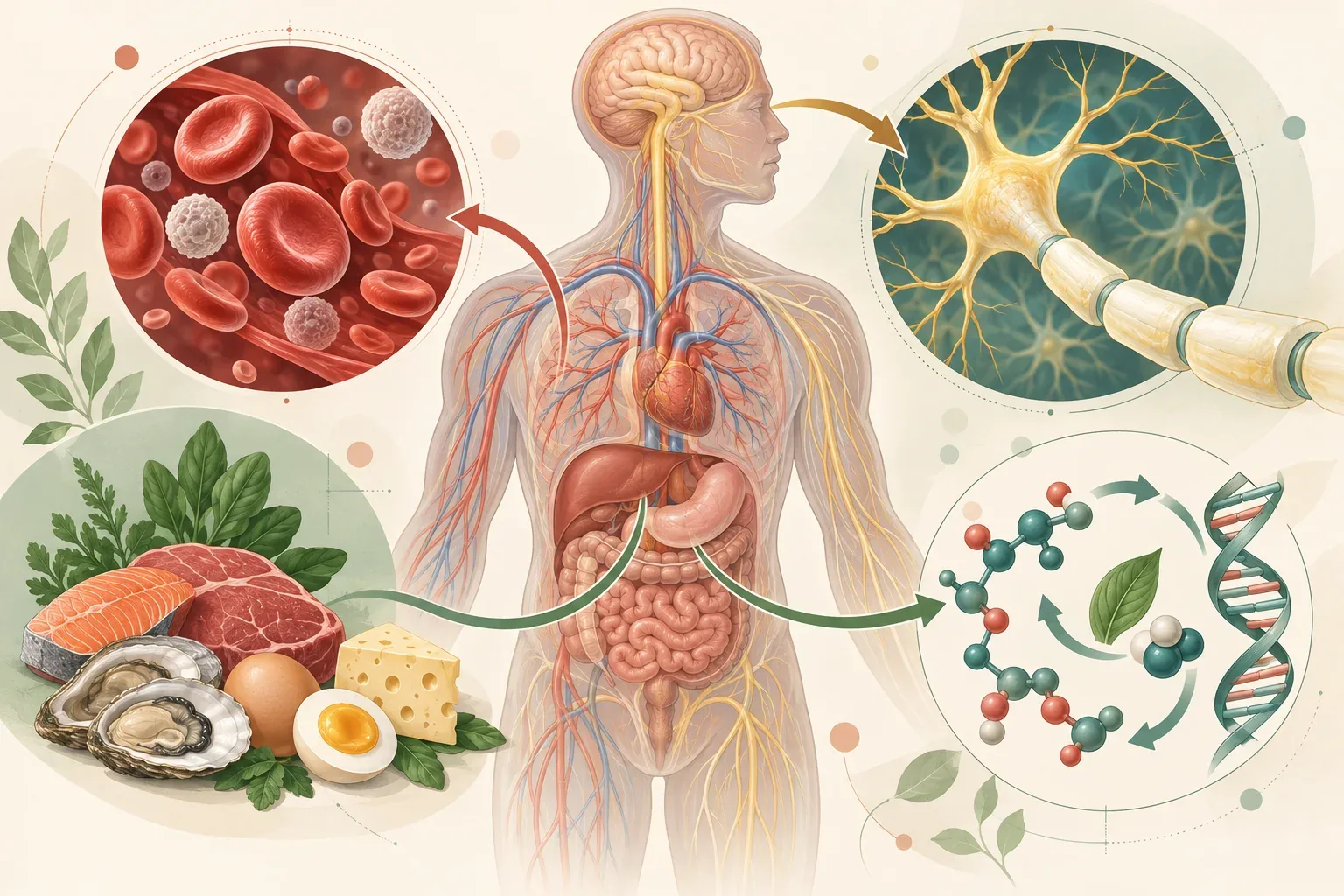
Vitamin A has two distinct jobs that help explain its effects on vision and growth. In the retina, a form called retinal joins a light-sensitive protein. Light changes its shape, beginning the signal that lets the eye detect an image. This is particularly important for seeing in dim light.
Another form, retinoic acid, helps control which genes a cell uses. It guides cells as they develop into specialized tissues, including the surfaces lining the eyes, airways and gut. Vitamin A also supports normal immune function and reproduction.
The body stores retinol mainly in the liver. It can also convert beta-carotene to retinal, but the amount converted varies.
What people take vitamin A for
| Claimed benefit | Dose / form studied | Research verdict | Evidence strength |
|---|---|---|---|
| Correcting deficiency and related eye disease | Clinician-selected preformed vitamin A; route, amount and duration depend on age, diagnosis and absorption. | Deficiency treatment is established; ordinary wellness dosing is a different question. | Strong |
| Preventing cancer in generally nourished adults | Beta-carotene 50 mg every other day for about 12 years in mostly nonsmoking male physicians. | The trial found no clear cancer-prevention benefit. | Moderate |
| Cancer prevention in smokers | Beta-carotene 20 mg/day in ATBC; CARET combined 30 mg/day with 7,500 mcg RAE/day retinyl palmitate over several years. | Both high-risk trials found harm, not prevention. | Strong |
| Child supplementation programmes | Periodic high-dose oral vitamin A; schedules and settings vary. | Combining trials suggested fewer deaths; the very large DEVTA trial found no clear reduction. | Limited |
| Treatment of measles in children | Age-specific oral vitamin A at diagnosis and the following day, under clinical supervision. | Severe-disease trial evidence and guidance support a treatment role; it does not prevent measles. | Limited |
| Macular degeneration and inherited retinal disease | Disease-specific combinations or high-dose regimens; not ordinary vitamin A supplements. | AREDS2 supports a carotenoid substitution; modern reanalysis weakens the old retinitis-pigmentosa vitamin A claim. | Limited for AREDS2; review pending for inherited retinal disease |
Vitamin A supplementation makes the most sense when a clinician has found a deficiency, a sustained dietary gap, or a condition that interferes with fat absorption. Most healthy adults should first ask whether food, fortified products, and a multivitamin already cover the daily amount.
Clinical treatment for xerophthalmia—advanced eye dryness and damage from vitamin A deficiency—documented deficiency, or childhood measles can use amounts far above ordinary nutrition. Those medical regimens are tied to diagnosis, age, setting, and follow-up. They are not daily-wellness instructions.
When to ask a doctor before taking it
Ask before taking a stand-alone product if you have liver disease, drink heavily, have unexplained liver-test abnormalities, have a significant fat-malabsorption condition, or use an oral retinoid such as isotretinoin or acitretin. Preformed vitamin A is stored mainly in the liver, and an oral retinoid can add to the same toxicity problem.
Orlistat can reduce absorption of vitamin A and the other fat-soluble vitamins D, E and K. That does not mean you should automatically take more; your doctor can decide whether testing, a different formulation, or supervised replacement is appropriate.
Women who are pregnant or trying to conceive should have the preformed-A amount on every supplement checked before use.
Common dosage
The recommended daily amount from the National Academies includes vitamin A from food and supplements. Pregnancy and breastfeeding amounts are in the pregnancy section below. The Food and Drug Administration's Daily Value is 900 mcg RAE for adults and children age four and older; it is a label comparator, not every person's recommended amount.
| Who | Food plus supplements |
|---|---|
| Adult men | 900 mcg RAE a day |
| Adult women | 700 mcg RAE a day |
| Ages 1–3 | 300 mcg RAE a day |
| Ages 4–8 | 400 mcg RAE a day |
| Ages 9–13 | 600 mcg RAE a day |
The official upper limit from the National Academies is 3,000 mcg RAE a day of preformed vitamin A for adults. Count preformed A from food, fortified food, and supplements together. The limit does not apply to beta-carotene or other provitamin A carotenoids. That exclusion means the evidence was not sufficient to set a carotenoid limit; it does not declare high-dose beta-carotene pills safe.
The daily amount is not scaled to adult body weight.
What changes how much you absorb
The form matters most. The NIH fact sheet reports that roughly 70% to 90% of preformed vitamin A from supplements, such as retinyl palmitate or acetate, is absorbed. For beta-carotene from supplements, the reported range is much wider: 8.7% to 65%. Beta-carotene in whole food is usually less available still, and more variable. The official retinol activity equivalent (RAE) conversions account for both absorption and conversion into vitamin A: 2 mcg of supplemental beta-carotene or 12 mcg from food counts as 1 mcg RAE. Those ratios are accounting factors, not measured absorption percentages.
Some fat in the meal helps carotenoids get in. In a randomized crossover study[1], seven healthy adults ate the same salad on separate days with dressing containing 0, 6, or 28 grams of canola oil. After the fat-free dressing, almost no carotenoids appeared in the blood. More appeared after 6 grams, and more again after 28 grams. Procter & Gamble funded the study and employed two of its authors. It measured carotenoids after single meals, not long-term vitamin A status, and it does not show that a supplement needs a high-fat meal.
After beta-carotene is absorbed, the body still has to split it into vitamin A, and that step varies between people. In a study of 28 healthy women[2] given one large 120 mg test dose of beta-carotene with a fatty meal, common variants in BCMO1, the gene for the enzyme that does the splitting, went with less conversion; one variant pattern cut conversion efficiency by about a third (32%). Conversion is also regulated by how much vitamin A the body already has. A consumer gene test does not diagnose vitamin A deficiency, and that test dose is far above any food amount.
Conditions that interfere with fat absorption can lower vitamin A absorption and raise the risk of deficiency. They include pancreatic insufficiency and cystic fibrosis, celiac and Crohn's disease, bariatric surgery, and use of the weight-loss drug orlistat. In those cases a clinician may choose a predictable preformed form and check whether status improves, rather than relying on beta-carotene conversion or a larger dose.
Morning or night, with food or without?
Take an oral supplement recommended for a documented need with a meal containing some fat. Morning versus evening has no significant impact.
Food and vitamin A
Food can cover the adult daily amount for many people. Liver is exceptionally concentrated in preformed A, while eggs, dairy, fish, and fortified foods add smaller amounts. Orange, yellow, and dark-green produce supplies provitamin carotenoids. A baked sweet potato can exceed the Daily Value in RAE without exposing you to the 20- or 30-mg beta-carotene capsules used in the smoking trials.
Selected values from the NIH Office of Dietary Supplements food table[3] show the stated food and preparation. Amounts are per serving.
| Food and preparation | Source | Serving | Vitamin A (mcg RAE) |
|---|---|---|---|
| Beef liver, pan-fried | Meat | 3 oz (about 85 g) | 6,582 mcg RAE |
| Sweet potato, baked in skin | Plant | 1 whole | 1,403 mcg RAE |
| Spinach, frozen, boiled | Plant | ½ cup | 573 mcg RAE |
| Carrots, raw | Plant | ½ cup | 459 mcg RAE |
| Atlantic herring, pickled | Fish | 3 oz (about 85 g) | 219 mcg RAE |
| Skim milk, with added vitamins A and D | Dairy | 1 cup | 149 mcg RAE |
The plant entries contain provitamin A carotenoids; liver and fortified milk can supply preformed vitamin A. The total in mcg RAE does not tell you the preformed amount for the upper-limit calculation.
Use two calculations. For adequacy, count preformed A and carotenoid-derived activity together in mcg RAE. For preformed-A safety, count only retinol and retinyl esters from liver, fortified food, fish-liver oil, multivitamins, prenatals, and stand-alone products.
Some meal fat helps absorb carotenoids; the salad study behind that is described under what changes how much you absorb. If you have night-vision symptoms, severe restriction, or fat malabsorption, ask for clinical assessment rather than relying on food arithmetic alone.
Fortified products can supply preformed A even when the food itself is plant-based. The US shelf-stable Silk Original Soymilk ingredients list vitamin A palmitate, a retinyl ester. That source belongs in the preformed-A tally alongside a retinol supplement; it is different from the carotenoids in carrots. These are product- and country-specific practices, so use the actual label rather than assuming all milk or plant drinks have the same addition. [4], [5]
How can I tell if I'm low on vitamin A?
Vitamin A deficiency most clearly affects vision. The NIH deficiency summary[3] describes an eye-disease progression rather than a symptom score you can use at home.
Early or less advanced deficiency
The first recognizable eye symptom is night blindness: difficulty seeing in dim light or adjusting to darkness. A dietary gap can develop for a while before this becomes noticeable.
Advanced or severe deficiency
The eye surface can become abnormally dry, a condition called xerophthalmia. Damage can extend to the cornea, the clear front surface of the eye, and cause permanent vision loss. New night-vision problems or other vision changes need prompt assessment rather than waiting to see whether a supplement helps.
Testing and interpretation
For more information about testing for vitamin A, see the lab tests and preparation details near the end of this article.
Vitamin A forms you can buy
Retinyl palmitate, retinyl acetate, and beta-carotene all supply vitamin A, counted as mcg RAE. They are not equally absorbed, equally converted, equally stored, or equal in pregnancy and liver risk. Products use preformed retinyl esters, beta-carotene, or a disclosed mixture. None is a universal winner: the choice turns on whether you need predictable replacement, how clearly the label separates the sources, and whether pregnancy, smoking, asbestos exposure, liver disease, or malabsorption changes the risk.
Retinyl palmitate
Retinyl palmitate is a stable preformed form used in supplements and fortified foods. It releases retinol during digestion and gives a predictable activity amount, which can matter when a clinician has established a need. Every mcg RAE from it counts toward the preformed-A upper limit.
A transparent facts line identifies “vitamin A” in mcg RAE and names retinyl palmitate in parentheses. Palmitate has not been shown to be safer or clinically better than acetate at the same activity amount.
Retinyl acetate
Retinyl acetate is another stable preformed source that releases retinol. It belongs in the same pregnancy, liver, and upper-limit calculation as palmitate. There is no direct patient-outcome comparison in the current evidence that makes acetate the better daily form.
A transparent facts line names retinyl acetate and gives the vitamin A activity in mcg RAE. The acetate portion is not extra vitamin A that you add to the declared amount.
Beta-carotene
Beta-carotene is a provitamin A precursor, so your body must absorb and convert it. Conversion varies, and a person with documented deficiency or malabsorption may need a more predictable clinician-selected form. A transparent label names beta-carotene rather than hiding it inside “mixed carotenoids.”
Current and former smokers and asbestos-exposed adults should avoid high-dose beta-carotene supplements.
Mixed-source vitamin A
A mixed product can combine a predictable preformed share with beta-carotene-derived activity. It is usable only when the label states the beta-carotene share and names the preformed source, as in the 50% example under misleading labels.
The mix is not automatically balanced or safer. You still calculate total activity for adequacy and preformed A for the upper limit, then apply the pregnancy and smoking-history questions to the appropriate fraction.
Can you take two vitamin A products the same day?
Add the preformed mcg RAE from food, fortified food, and every supplement. The adult ceiling is 3,000 mcg RAE a day of preformed vitamin A, but it is a safety boundary rather than a target. Beta-carotene does not count toward that ceiling. A multivitamin, fortified food, liver or fish-liver oil, and a stand-alone retinyl ester all count, so judge the combined amount rather than each product alone.
What to pay attention to on the label
The mcg RAE amount and the source in parentheses decide whether you can calculate both adequacy and preformed-A safety. Read them together. A total without a source can tell you activity on paper while leaving the relevant risk calculation unresolved.
Which number on the label is the amount?
Use these source-specific activity conversions:
- 1 mcg retinol or preformed vitamin A equals 1 mcg RAE.
- 2 mcg supplemental beta-carotene equals 1 mcg RAE.
- 12 mcg beta-carotene from food equals 1 mcg RAE.
- 24 mcg alpha-carotene or beta-cryptoxanthin from food equals 1 mcg RAE.
Older labels and papers may use IU, and the conversion still depends on the source. For preformed A, 1 IU equals 0.3 mcg RAE, so 5,000 IU equals 1,500 mcg RAE and 10,000 IU equals 3,000 mcg RAE. Supplemental beta-carotene uses the same 0.3 mcg RAE per IU. (One IU of beta-carotene is about 0.6 mcg of beta-carotene itself, which yields the same vitamin A activity as 0.3 mcg of retinol.) Food beta-carotene uses 0.05 mcg RAE per IU because its vitamin A activity is lower and more variable.
Misleading labels
The source is missing
“Vitamin A, 900 mcg RAE” without a source does not show whether the amount is preformed A, beta-carotene, or a mixture. You cannot audit pregnancy or the preformed-A upper limit from that line.
The mixed-form percentage is unclear
If a product gives 900 mcg RAE and plainly says 50% comes from beta-carotene, 450 mcg RAE is beta-carotene-derived and the remaining 450 mcg RAE comes from the named preformed source. If the percentage has no clear denominator or the remaining source is not named, do not guess the preformed share.
IU is converted with the wrong arithmetic
For preformed vitamin A, 5,000 IU is 1,500 mcg RAE, not 125 mcg. A label or calculator that produces the smaller result has used vitamin D arithmetic, which does not apply to vitamin A.
Manufacturer claims and the studies they may be based on
An eye-health or immune claim may be based on vitamin A's essential biological role or on treatment of deficiency. That does not show that extra vitamin A improves vision or immunity in an adult who already gets enough. A cancer-prevention claim may be borrowing from food observations or from high-dose prevention trials; those trials did not establish a preventive benefit and produced harm in some high-risk populations.
Skin and anti-aging claims may confuse benefits from nutrition or supplementation with those from topical retinoids or prescription drugs. Those are different forms, routes, and doses.
How long should I take vitamin A supplements for?
The reason matters because preformed vitamin A is stored, chiefly in the liver. A documented deficiency or absorption disorder can require a clinician-selected treatment course; once corrected, the goal is enough vitamin A from food and, if necessary, a smaller continuing supplement, not continued treatment dosing. If your usual food already covers the daily amount, there is no store-building reason to take extra preformed A. NIH's review[3] does not give one useful depletion clock for all diets and starting stores. Prolonged excess can accumulate, so do not use the adult upper limit as a long-term target. Pregnancy and liver disease make the choice especially consequential.
How vitamin A interacts with other nutrients
Zinc and vitamin A
Zinc participates in the biology of retinol-binding protein, but the human intervention evidence does not support an automatic zinc add-on. In one trial of deficient Bangladeshi children, fewer children who started deficient remained deficient with zinc plus vitamin A, although the groups' average serum-retinol changes were similar. In another trial of Indian children, adding zinc to a low-dose vitamin-A multivitamin did not improve plasma retinol.
If testing or clinical context shows that both nutrients are low, correcting both can be reasonable. The conflict is a reason to diagnose the zinc problem, not to turn every vitamin A product into a two-supplement stack.
Drawbacks and side effects
| Potential drawback | When/who it affects | Research evidence | Practical implication |
|---|---|---|---|
| Liver and neurological toxicity | Excess preformed vitamin A, especially repeated high intake. | Established toxicity; case series cannot supply an individual safe threshold. | Keep the 3,000 mcg RAE adult preformed-A limit in view and seek care for concerning symptoms. |
| Birth defects | Excess preformed vitamin A during pregnancy or around conception. | Human observational evidence supports the pregnancy warning; exact thresholds are uncertain. | Have every retinol-containing product checked before use. |
| Lung-cancer risk from beta-carotene pills | Smokers and asbestos-exposed trial populations. | ATBC and CARET found increased lung cancer; these were not vegetable-food trials. | Do not use high-dose beta-carotene as a safer substitute for retinol. |
What a high dose usually does
Too much preformed vitamin A can cause nausea, headache, dizziness, blurred vision, vomiting, and raised pressure inside the skull.
Beta-carotene does not cause classic preformed-A toxicity because conversion is regulated by the body. High intake can turn skin yellow-orange, which is generally reversible.
When too much is dangerous
Repeated excess can damage skin, bone, and liver and can progress to fibrosis or cirrhosis. The liver risk depends on the amount and duration. Researchers described 41 patients selected because a biopsy had confirmed vitamin-A liver injury. The group included cirrhosis, chronic hepatitis, high pressure in the vein that carries blood to the liver, and six liver-related deaths during follow-up. The lowest reported continuous intake associated with cirrhosis was 25,000 IU (7,500 mcg RAE) a day for six years. Because the report started with people who already had injury, it cannot tell you how often injury occurs or establish a safe threshold below that amount. Heavy alcohol use can increase vulnerability.
If you develop severe headache, repeated vomiting, blurred vision, jaundice, or other concerning symptoms while taking a high amount, stop self-dosing and seek medical care.
Vitamin A during pregnancy and breastfeeding
Women who are pregnant or trying to conceive need enough vitamin A while limiting preformed A because excess can cause birth defects. The National Academies daily amount is 750 mcg RAE for pregnant adolescents and 770 mcg RAE for pregnant adult women. During breastfeeding, it is 1,200 mcg RAE for adolescents and 1,300 mcg RAE for adult women.
A prenatal Supplement Facts line can list retinyl palmitate, retinyl acetate, beta-carotene, or a mixture. Your obstetric clinician should review the named forms and add the preformed share to food and other supplements. The upper limit for preformed A stays the same in pregnancy: 3,000 mcg RAE a day for adult women and 2,800 mcg RAE for those aged 14–18. Early pregnancy is the critical window for fetal harm.
The exact dose at which risk begins is debated. The largest study that followed pregnant women linked supplemental preformed A above 10,000 IU (3,000 mcg RAE) a day with more birth defects, especially before week seven; its numbers and limits are under pregnancy and liver evidence. The National Academies weighed it with the wider human and animal evidence when setting the 3,000 mcg preformed-A upper limit.
Beta-carotene does not carry the same birth-defect warning as preformed A. Choose the prenatal form and amount with the clinician who is following the pregnancy rather than adding a separate vitamin A product.
The science behind vitamin A
Vitamin A evidence is strongest for its essential role, correction of clinical deficiency, and the hazards of excess preformed A. Child supplementation programmes, disease treatment and routine adult prevention answer different questions. Beta-carotene cancer findings also changed with the population and regimen tested.
Comparing forms in deficiency treatment
One older trial compared two different, one-time treatment regimens in vitamin-A-deficient Senegalese children: 200,000 IU of retinyl palmitate and 1,200,000 IU of beta-carotene. Using the older source-specific conversions, those amounts equal 60,000 and 360,000 mcg RAE, respectively, so they were not matched for vitamin A activity. Seven weeks later, a microscope exam of cells from the eye's surface was normal in about half of each group: 124 of 242 versus 123 of 246. The finding concerns those one-time regimens in deficient children.
Pregnancy and liver evidence
Rothman's 1995 observational study followed 22,748 pregnant women.
- In the study's selected group of birth defects, cases were 4.8 times as common with supplemental preformed-A intake above 10,000 IU (3,000 mcg RAE) a day as with 5,000 IU (1,500 mcg RAE) or less.
- The researchers estimated one additional malformation per 57 infants above that exposure.
Intake was reported rather than assigned, event counts in the highest bands were limited, and later debate questioned a precise threshold; the form, timing, and direction of the risk remain important.
The liver-injury case series under when too much is dangerous shows what prolonged preformed-A toxicity can look like. Together, pregnancy and liver evidence explain why the adult upper limit is a preformed-A ceiling rather than a general total-RAE ceiling for every carotenoid.
ATBC, CARET, and the Physicians' Health Study
The trials do not support one universal beta-carotene verdict. ATBC (the Alpha-Tocopherol, Beta-Carotene Cancer Prevention Study) tested 20 mg a day of synthetic beta-carotene in 29,133 Finnish male smokers. Across 876 new lung cancers, beta-carotene led to 18% more cases than no beta-carotene; the likely true increase was somewhere between 3% and 36%, so it was unlikely to be chance.
CARET (the Beta-Carotene and Retinol Efficacy Trial) tested a combination: 30 mg a day of beta-carotene plus 25,000 IU (7,500 mcg RAE) a day of retinyl palmitate in 18,314 current or former smokers and asbestos-exposed workers. Across 388 lung cancers, the combination raised lung-cancer risk by 28% (likely range 4% to 57%), and the trial stopped early. Because both ingredients were given together, CARET cannot tell us which ingredient caused the harm.
The Physicians' Health Study tested 50 mg of beta-carotene every other day for about 12 years in 22,071 male physicians, most of whom were not current smokers.
- Cancer occurred in 1,273 beta-carotene recipients and 1,293 placebo recipients.
- Lung cancer was 82 versus 88.
- All-cause deaths were 979 versus 968.
The study found no significant benefit or harm, but its healthier, mostly nonsmoking population does not prove safety for heavy smokers or asbestos-exposed workers.
Those three results differ in population, smoking intensity, formulation, schedule, and whether another ingredient was given with beta-carotene. They were prevention trials, so they do not answer a different question: the lowest dose and source that can correct a documented individual's need without causing excess in populations unlike those trials. None of the trials tested beta-carotene-rich vegetables.
Broad mortality reviews mix populations and study designs
A 2024 review of 120 randomized trials found essentially the same death rate when individuals were assigned vitamin A or a comparison: the relative risk was 0.99, and the range from 0.93 to 1.05 included no difference. Trials that assigned whole groups or communities rather than individuals suggested a benefit, but those results varied widely and the reviewers had very low confidence in them. This does not erase treatment of deficiency or public-health use in specific deficient populations; it does block the claim that routine vitamin A pills generally extend life.
Child supplementation programmes and measles treatment
Preventive supplementation in children is a different question from routine adult prevention. A 2022 Cochrane review[6] included community trials in children aged six months to five years. Nineteen trials contributing to mortality analysis, with about 1.2 million children, found a 12% lower risk of death with vitamin A than control (risk ratio 0.88; 95% confidence interval 0.83–0.93). These programmes largely took place in countries where deficiency was a public-health concern. Regimens varied, and transient vomiting was more frequent after dosing.
The largest trial, DEVTA[7], offers a less favorable result. It allocated 72 administrative areas in northern India to 200,000 IU retinyl acetate by mouth every six months, albendazole, both, or neither, over five years. Deaths among preschool children were estimated to be about 4% lower with vitamin A, but the uncertainty range ran from 11% lower to 3% higher (mortality ratio 0.96; 95% confidence interval 0.89–1.03). That includes no difference, despite improved retinol status and fewer deficiency signs. Community-level allocation, delivery, baseline nutrition and background causes of death matter when comparing this result with the favorable combined estimate. DEVTA is part of the broader evidence, not a reason to discard the other trials or count their review as independent confirmation.
Treatment after a child develops measles is a third setting. In a 189-child South African hospital trial[8], oral retinyl palmitate totaling 400,000 IU reduced the risk of death or a major complication versus placebo (relative risk 0.51; 95% confidence interval 0.35–0.74). The children had severe measles and most had low blood retinol. A Cochrane treatment review[9] found no significant overall mortality reduction, but two-dose regimens favored children younger than two; it did not directly compare one dose against two.
Current CDC guidance[10] places vitamin A within clinician-supervised care, especially for severe measles. When used, the age-specific oral dose is given at diagnosis and again the next day: 50,000 IU under six months, 100,000 IU at six to eleven months, and 200,000 IU from twelve months. These are short medical regimens. Vitamin A does not prevent measles or replace vaccination.
Retinol and fractures: an unresolved contradiction
In the Nurses' Health Study[11], 72,337 postmenopausal women were followed for eighteen years. Those reporting at least 2,000 mcg/day retinol had more hip fractures than those below 500 mcg/day: relative risk 1.89 (95% confidence interval 1.33–2.68). A Swedish cohort[12] also linked high blood retinol with fractures in men. Neither study assigned supplements, so other differences between participants may contribute.
In contrast, a follow-up of 2,322 asbestos-exposed adults[13] found no increased fracture risk with greater cumulative exposure to 25,000 IU/day retinyl palmitate over up to sixteen years. This was not a sustained placebo comparison: initial randomized groups later all received retinol. The results leave the fracture question unsettled, and the very high study dose still exceeds the adult upper limit for other established reasons.
Eye-disease formulations are not generic vitamin A supplements
Vitamin A is essential to the visual cycle, and deficiency can cause night blindness. That does not establish a general eyesight benefit from extra retinol in an adult who already has adequate stores. In a 30-day placebo-controlled trial[14], 104 adults aged 50 and older with normal retinal aging or early age-related retinal changes received 50,000 IU/day oral retinol (15,000 mcg RAE) or placebo. They had no measured serum deficiency in the reported blood tests. One laboratory measure of recovery in darkness favored retinol. A questionnaire about difficulty seeing in dim light also favored retinol on its mobility section: participants reported less difficulty moving around. The other five questionnaire sections and several laboratory vision measures did not differ. The practical importance remains unclear, and this short study does not support that high dose as an ordinary supplement amount.
AREDS2 follow-up[15] concerned people with age-related macular degeneration taking a multinutrient eye formulation. Ten-year follow-up favored lutein/zeaxanthin over beta-carotene for progression to late disease in a direct comparison (hazard ratio 0.85; 95% confidence interval 0.73–0.98). This means an estimated 15% lower rate of progression over follow-up, with an uncertainty range of 2% to 27% lower, rather than 15 fewer cases in every 100 people. Prior beta-carotene allocation was associated with more lung cancers. During follow-up everyone was offered the revised formulation, so these are long-term results by earlier assignment, not ten years of continuously separate treatments. They support the formulation substitution; lutein and zeaxanthin do not supply vitamin A activity.
Retinitis pigmentosa is another, inherited condition. A 1993 trial[16] in 601 adults tested 15,000 IU/day vitamin A, 400 IU/day vitamin E, both, or trace doses for four to six years. Its retinal electrical-response endpoint favored vitamin A, although visual acuity declined similarly across groups. A 2023 reanalysis[17] incorporating genetic information and a baseline electrical-response predictor no longer detected an overall vitamin A benefit; the unfavorable vitamin E signal remained. The reanalysis is of existing cohorts, not a new treatment trial. High-dose vitamin A is therefore not a general recommendation for this inherited disease.
Historical aside: liver and ancient eye remedies
Liver appears in an Egyptian eye remedy, but identifying the disease in that text is disputed. In a 2025 translation-based study[18], David Maskill discusses Ebers remedy 351 and the argument that its eye complaint was night blindness. He also records disagreement with that interpretation. The proposed diagnosis remains an inference from an old description.
Modern evidence establishes a narrower fact: vitamin A deficiency can impair night vision, and liver contains preformed vitamin A. The NIH fact sheet[3] explains that visual role. The biological fit makes the historical interpretation plausible; the ancient diagnosis and treatment outcome remain uncertain.
What you may have heard on podcasts
On his show on October 5, 2026, Mark Hyman said that at the first sign of a cold he takes, and recommends, “fifty thousand of vitamin A and fifty thousand of vitamin D for three to five days.” He did not say IU and did not say whether the vitamin A was retinol or beta-carotene. An essay on his website from December 2025 gives a longer schedule: 50,000 IU of vitamin A a day, three days on and two off, stopping by day ten.
If that vitamin A is preformed retinol, 50,000 IU is 15,000 mcg RAE a day, five times the adult upper limit. For women who could become pregnant, that limit was set from a birth-defect risk perspective. Hyman did not name a supporting trial, and the evidence presented on this page does not support the regimen.
Labs
Interpreting the results
A serum or plasma vitamin A test measures retinol in the blood. It can support an assessment when deficiency or toxicity is a real clinical question, but it cannot reliably measure liver stores of vitamin A: the body holds blood retinol fairly steady until stores are substantially depleted, and infection or inflammation can lower the result. A commonly used low threshold is 20 mcg/dL, about 0.70 micromoles per liter. A clinician assessing possible toxicity may add retinyl esters—the storage forms that can appear in blood after very high intake—or liver tests. A basic serum retinol test does not include them.
A 2025 diagnostic review in people at risk of deficiency[19] compared routine blood markers with reference methods assessing liver stores. Across marker/reference-method comparisons, pooled estimates ranged from 0% to 54% for detecting deficiency and from 74% to 94% for correctly identifying its absence. None of the studies was originally designed to test diagnostic accuracy. A normal result can therefore miss low stores, and a low result needs symptoms, diet, inflammation, and malabsorption context.
| Serum or plasma retinol | µmol/L | What the NIH fact sheet says |
|---|---|---|
| 20 mcg/dL or less | 0.70 or less | Often reflects moderate deficiency |
| 10 mcg/dL or less | 0.35 or less | Indicates severe deficiency |
In a US national survey of 7,254 people with retinol measurements[20], fewer than 1% had a level under 20 mcg/dL.
Before the test if you already supplement
For its serum vitamin A and E profile, Mayo Clinic Laboratories[21] requires a 12-hour fast and no alcohol for 24 hours. It does not give a separate multi-day vitamin A stop interval. Ask the lab whether to take your next vitamin A or multivitamin dose after the draw; confirm any change to prescribed replacement with the clinician.
Tell them the form, daily amount and last dose, including retinol in cod-liver oil.
The bottom line
Vitamin A is necessary, and treating a true deficiency can protect vision and health. Extra vitamin A in someone already getting enough has not shown the same clear benefit, while excess preformed A and high-dose beta-carotene can cause important harm in particular settings.
Check both the amount in RAE and where it comes from before adding a product. A mixture of retinol and carotenoids cannot be judged from one large IU number. Pregnancy, liver concerns and smoking history change the decision. We would not use a high-dose vitamin A supplement as routine disease prevention.
Child supplementation programmes and clinician-supervised measles treatment have their own evidence. Their benefits in particular settings do not settle routine adult prevention or justify copying their high doses.
Source notes
- NIH Office of Dietary Supplements: Vitamin A and Carotenoids[3]
- [22]
- [23]
- [24]
- [25]
- [26]
- [27]
- [28]
- [29]
- [30]
- [31]
- [32]
- [33]
- [34]
- [35]
- [36]
- [1]
- [2]
- [37]
Additional outcome sources:
Help us improve this article
Spotted an error or found a source we should consider? Tell us which part of this article needs another look and include a link if you have one. Please leave out personal health details and lab results; we can’t answer individual medical questions.
Explore more in eyes & vision
More in vitamins

References
- randomized crossover study ↩
- study of 28 healthy women ↩
- NIH Office of Dietary Supplements food table ↩
- Silk ingredients ↩
- Canadian fortification rules ↩
- 2022 Cochrane review ↩
- DEVTA ↩
- 189-child South African hospital trial ↩
- Cochrane treatment review ↩
- Current CDC guidance ↩
- Nurses' Health Study ↩
- Swedish cohort ↩
- follow-up of 2,322 asbestos-exposed adults ↩
- 30-day placebo-controlled trial ↩
- AREDS2 follow-up ↩
- 1993 trial ↩
- 2023 reanalysis ↩
- 2025 translation-based study ↩
- 2025 diagnostic review in people at risk of deficiency ↩
- US national survey of 7,254 people with retinol measurements ↩
- Mayo Clinic Laboratories ↩
- Mayo Clinic Laboratories: Vitamin A, serum, specimen requirements ↩
- National Academies: Dietary Reference Intakes for Vitamin A ↩
- FDA: converting vitamin A units for nutrition labeling ↩
- Rothman 1995: preformed vitamin A and birth defects ↩
- ATBC 1994 ↩
- CARET 1996 ↩
- Physicians' Health Study 1996 ↩
- AREDS2 follow-up 2022 ↩
- Bjelakovic 2024 preventive-supplement review ↩
- Gannon 2025 diagnostic review ↩
- Geubel 1991 liver-injury case series ↩
- Carlier 1993 deficient-child form comparison ↩
- Owsley 2006 dark-adaptation trial ↩
- Rahman 2002 vitamin A and zinc trial ↩
- Sazawal 2007 zinc add-on trial ↩
- The Dr. Hyman Show, episode 1183, October 5, 2026 ↩
Corrections & updates
- Update
Updated the evidence discussion and practical guidance after editorial review.
- Update
Revised the article after editorial review, with clearer evidence explanations and practical guidance.