
What is TMG?
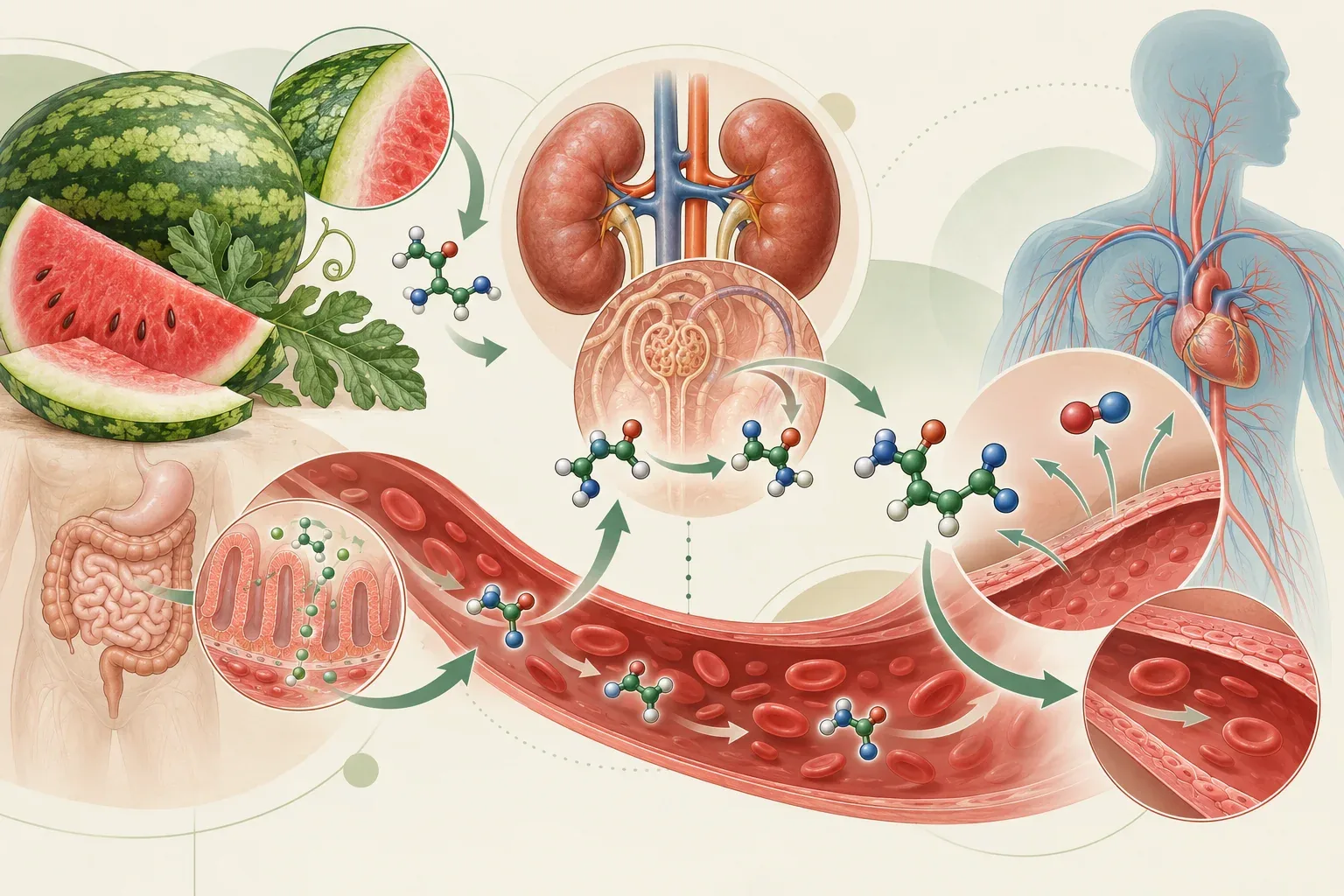
TMG, short for trimethylglycine and also sold as betaine anhydrous, is a small molecule found in foods including wheat germ, bran, beets and spinach. Food amounts depend on the ingredient and preparation; the table below uses a corrected USDA database rather than assuming every food supplies the amount reported in older reviews.
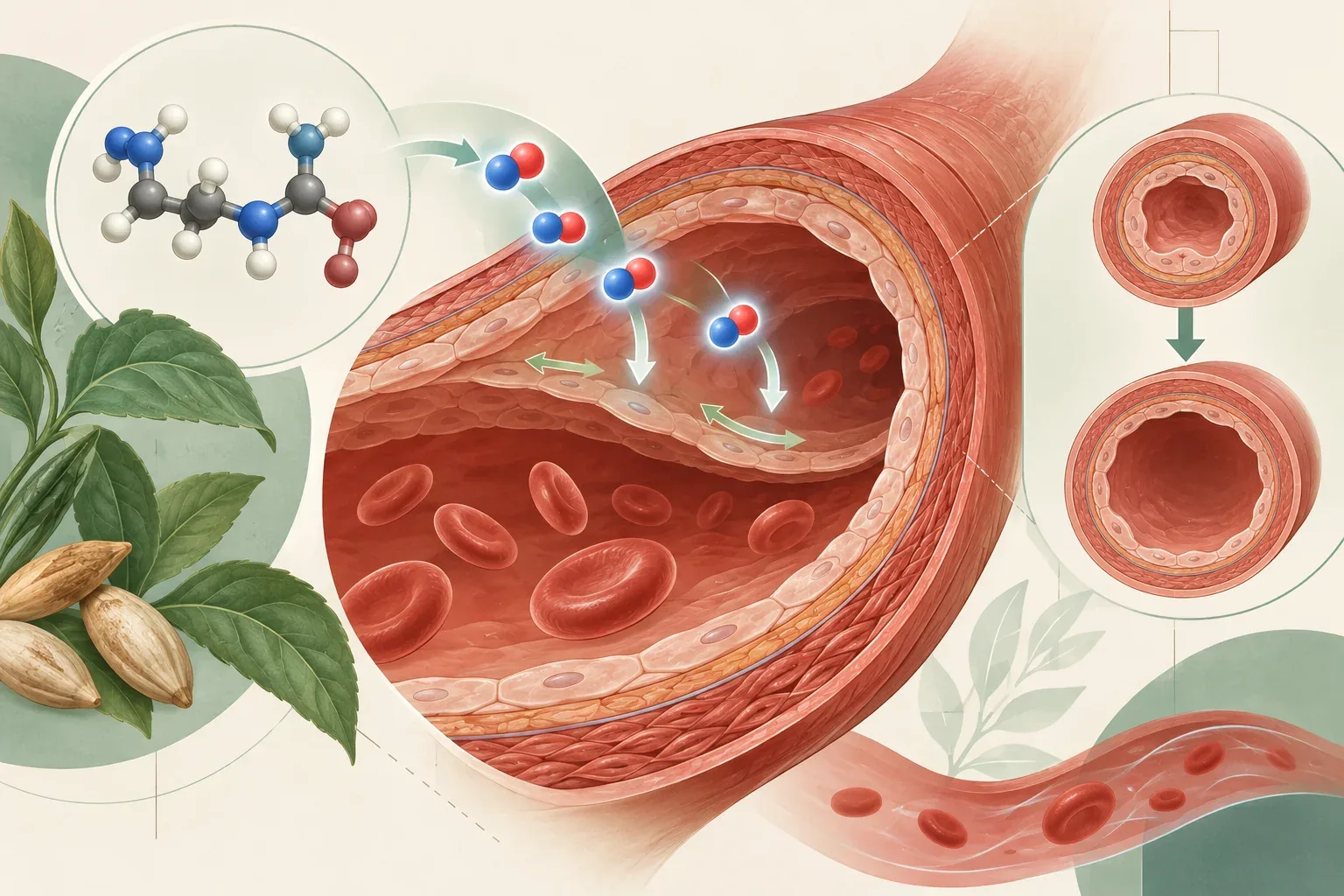
People take it to lower homocysteine, which doctors measure because high levels have been linked to heart disease; for general “methylation” support, meaning the transfer of small chemical tags among molecules; and for strength training. What is established is narrower: it lowers homocysteine by a modest amount, higher amounts raise cholesterol, and no trial has shown that TMG prevents heart attacks or strokes. A prescription form of the same substance treats homocystinuria, a rare inherited disease.
What TMG does in your body
In the liver and kidneys, TMG hands a small chemical tag, called a methyl group, to homocysteine, an amino acid in the blood, turning it back into methionine, the amino acid that homocysteine is made from. That is a second route alongside the one that runs on vitamin B12 and folate. This helps explain why betaine can lower a blood homocysteine measurement.
Betaine also acts as an osmolyte: a molecule cells can use to help maintain water balance and protect the working environment of proteins.
These mechanisms explain why researchers investigate betaine's effects on homocysteine. [1]
The short version
Amounts on TMG labels are given in milligrams or grams of trimethylglycine, also called betaine anhydrous.
| Typical listing | TMG per unit |
|---|---|
| Tablet | 1,000 mg |
| Capsule | 500 mg |
| Powder | 1–1.5 g per scoop |
Skip: betaine HCl, a stomach-acid product with a similar name, as a substitute; 6 g a day for “heart health”; and TMG in place of checking vitamin B12 and folate.
Which foods supply TMG?
The USDA's corrected betaine database gives these examples. Betaine here means TMG, and the values apply to the stated food, not every product made from it.
| Food and preparation | Betaine per 100 g | Example portion and contribution |
|---|---|---|
| Toasted wheat germ, plain | 410 mg | 30 g supplies about 123 mg |
| Kretschmer toasted wheat bran, as recorded in 2008 | 320 mg | 30 g supplies about 96 mg |
| Beets, raw | 130 mg | 100 g supplies about 130 mg |
| Beets, canned and drained | 260 mg | 100 g supplies about 260 mg |
| Spinach, frozen, boiled and drained | 110 mg | 100 g supplies about 110 mg |
The same USDA update says earlier measurements overstated betaine in some grains, seafood and spinach because of an analytical problem. That is why an older review's much larger percentages should not be used to calculate a meal. Plant variety and growing conditions also change amounts. USDA betaine tables and correction[2] · Craig's earlier review[3]
What people take TMG for
| Claimed benefit | Dose / form studied | Research verdict | Evidence strength |
|---|---|---|---|
| Lower homocysteine | Betaine anhydrous: 1.5, 3 or 6 g/day in two doses for 6 weeks; adults with mildly elevated homocysteine | Lowered the marker; heart-attack or stroke prevention is unproven | Moderate |
| Improve strength or body composition | Betaine anhydrous, commonly 2.5–5 g/day; small training studies over several weeks | Some strength results are positive, others null; fat-loss findings conflict | Limited |
| Improve glucose control | 10 g/day for 12 weeks; 27 adults with prediabetes | Little metabolic benefit in a small trial | Limited |
| Prevent heart attacks or strokes | No established dose or duration | Lowering homocysteine does not itself establish fewer cardiovascular events | Insufficient |
Most people do not need TMG. Its one well-shown effect is a modest drop in homocysteine, and in large trials, lowering homocysteine with B vitamins did not prevent heart attacks.
If a blood test shows high homocysteine, the first step is to check vitamin B12 and folate with a doctor, because a shortage of either can raise it and has its own fix. TMG is an option a doctor may add after that. For people with homocystinuria, the prescription form is part of specialist care, with doses set by the treating doctor.
For gym use, strength gains in trials were small and mixed.
When to ask a doctor before taking TMG
- High cholesterol or heart disease. At 4 to 6 g a day, trials found total and LDL (“bad”) cholesterol went up.
- Homocystinuria. The prescription form is part of specialist care. In one inherited type, caused by a faulty enzyme called CBS, it can push methionine, the amino acid TMG turns homocysteine into, to very high levels, and brain swelling has been reported. A specialist manages the dose.
- High homocysteine already being treated with vitamin B12 or folate, so your doctor can judge whether anything else is needed.
- Pregnancy or breastfeeding. The prescription label reports limited case data in pregnancy and no data on breast milk; ordinary supplement use during pregnancy has not been studied.
What to pay attention to on the label
Which number on the label is the amount?
There is no recognized recommended daily amount or official upper limit for TMG. Check whether the labeled amount covers one tablet or a whole serving. For example, a 1,000 mg tablet supplies 1 g: 1.5 g is one and a half tablets, and 6 g is six. These conversions explain the amounts in studies; they are not starting-dose instructions. The prescription powder can be dissolved in a drink or mixed with food.
Misleading labels
Betaine hydrochloride is a different preparation
Betaine hydrochloride contains the same betaine component plus hydrochloric acid and is marketed for stomach acid. It is a different preparation, not a gram-for-gram replacement for betaine anhydrous. The two have been confused even in a pharmacy, where the prescription betaine drug was dispensed instead of betaine HCl.
“Methylated” TMG
TMG carries three methyl groups, which is where its name comes from, and gives one away. Calling it a “methylated” form, the way vitamin labels describe methylfolate, suggests an upgraded version of something else; it is not, and the word is not an indicator of potency.
Heart-health claims
A “supports healthy homocysteine levels” label may draw on the 2003 dose trial or the European food-safety agency's acceptance of a claim at 1.5 g a day. That is a claim about a blood marker. A lower homocysteine number is not the same as fewer heart attacks, and higher amounts of TMG raised cholesterol in trials.
Strength and performance claims
The sports review found a small strength gain mainly in the legs, with no effect on upper-body strength, sprint power or endurance. Reviews disagree about body-fat effects. A broad performance claim therefore goes beyond the findings described in the research section.
Confusing servings and items per serving
Some manufacturers put 180 capsules on the front, and the back says 3 capsules per serving and 60 servings. The amount on the Supplement Facts panel is for the whole 3-capsule serving.
How TMG interacts with other nutrients
TMG works on the same metabolic pathways as two B vitamins, and it is often mentioned alongside SAMe, another methyl donor.
Vitamin B12
Vitamin B12 runs the main route that turns homocysteine back into methionine. If homocysteine is high, check B12 first; TMG does not fix a B12 shortage, which can cause nerve damage and anemia.
Folate
Folate works with B12 on the same route. In the trials behind a 2005 analysis, folic acid, the form of folate in most supplements, at 0.8 mg a day did not change cholesterol, and the authors preferred it over TMG when homocysteine is the goal.
SAMe
SAMe is the methyl donor the body makes from methionine; TMG is a different donor that works on another step. Taking TMG is not a way to take SAMe, and stacking several methyl donors has not been shown to do more.
Common Myths about TMG
Does TMG protect the heart?
Not shown. No trial has tested TMG pills against heart attacks or strokes. A 2017 review of 15 trials with 71,422 people found that lowering homocysteine with B vitamins did not reduce heart attacks or deaths, with a small reduction in stroke. TMG lowers homocysteine too, but at higher amounts it also raises cholesterol.
Does TMG raise testosterone?
Not reliably. In one small trial of 43 CrossFit athletes, testosterone rose about 7 percent after three weeks of 2.5 or 5 g a day. In a 2026 trial of 36 women with overweight or obesity, 3 g a day for eight weeks did not change testosterone or other sex hormones.
Does TMG make you gain weight or lose fat?
Neither is established. Body weight did not change in two reviews of the trials. One 2019 review of six trials found about 2.5 kg less body fat, while a larger 2022 review found no effect on body fat, lean mass, or weight.
Does TMG raise blood pressure?
Not in the trials. A 2022 review of the trials found no effect on blood pressure.
Drawbacks and side effects
| Potential drawback | When/who it affects | Research evidence | Practical implication |
|---|---|---|---|
| Higher LDL cholesterol | Especially the 6 g/day, 6-week exposure and higher-dose trial groups | A trial found about a 14 mg/dL rise versus placebo; reviews also flag higher-dose lipid effects | Discuss lipid monitoring if taking gram-level amounts |
| Nausea, stomach upset or unusual body odor | Reported with prescription betaine | These are listed adverse effects; frequencies need not match retail use | Review troublesome symptoms and the exact product |
| Severe methionine elevation and brain swelling | Certain people with CBS-related homocystinuria receiving prescription betaine | Prescription labeling describes reported cases in this specific disorder | This condition needs specialist treatment and monitoring |
| Uncertain prolonged-use safety | Healthy people taking TMG for more than a few months | No official upper limit or adequate long-term safety evidence | Do not treat a short study amount as a lifelong target |
What a high dose usually does
There is no official upper limit, but the trials point to cholesterol as the thing to watch. At 6 g a day for 6 weeks, LDL cholesterol rose about 0.36 mmol/L, or about 14 mg/dL, compared with placebo. Reviews of the trials found total cholesterol and LDL rose at 4 g a day or more, and one found no rise below 4 g.
Nausea and stomach upset are the most common side effects listed on the prescription label; it also lists diarrhea, vomiting, and an unusual body odor.
When too much is dangerous
In people whose homocystinuria comes from a faulty CBS enzyme, the prescription form raised methionine to very high levels, and brain swelling was reported; it resolved when the drug was stopped. Safety beyond a few months has not been studied in healthy people.
The science behind TMG
The evidence is strongest for homocysteine, clear on a cholesterol rise at higher amounts, empty on heart events, and mixed on body composition and strength.
Homocysteine
In a 2003 trial, 76 healthy adults whose homocysteine was 8.4 to 22.2 micromoles per liter at screening took 0, 1.5, 3, or 6 g of TMG a day, split into two doses, for six weeks. Compared with placebo, fasting homocysteine fell 12, 15, and 20 percent. A 2013 review of five trials using at least 4 g a day found an average drop of about 1.2 micromoles per liter, the unit on a homocysteine lab report, and a 2022 review found about 1.3; your lab report shows its own normal range to compare against.
No study has compared times of day for taking TMG.
Cholesterol
A 2005 analysis of four trials found that 6 g a day for six weeks raised LDL cholesterol by about 0.36 mmol/L (about 14 mg/dL) and triglycerides slightly, while folic acid did not change cholesterol. The authors warned that the cholesterol rise might cancel out any benefit of lower homocysteine. The research center that conducted the analysis was funded partly by food companies, which had no say on publication. A 2021 review of six trials at 4 g a day or more found total cholesterol rose, but not LDL on its own; a 2022 review found both rose, and saw no rise below 4 g a day.
Heart events and TMAO
No trial has tested TMG against heart attacks or strokes. Trimethylamine N-oxide (TMAO) is a substance gut bacteria and the liver make from choline and some other nutrients, and higher blood levels have been linked to heart disease. This evidence matters here because researchers asked whether betaine tracked with TMAO and heart events. In a 2014 study that followed 3,903 heart patients for three years, higher blood betaine went with more heart attacks, strokes, and deaths only when TMAO was also high. In separate tests that tracked labeled betaine and choline through the body, betaine was a far poorer source of TMAO than choline.
Body composition, strength, and blood sugar
A 2019 review found less body fat with TMG, and a 2022 review found no effect; a 2002 trial of 6 g a day with a diet found no extra weight or fat loss beyond the diet. A 2024 review of 17 sports studies with 317 people found:
- a small gain in maximal strength, mainly in the legs
- no effect on upper-body strength, sprint power, or endurance
In a 2018 trial of 27 adults with prediabetes, about 10 g a day for 12 weeks had little effect on blood sugar or insulin.
Fatty liver: controlled and uncontrolled results differ
A 2022 review found no change in liver enzymes, the blood tests doctors use to check the liver.
A 12-month placebo-controlled trial[4] assigned 55 people with biopsy-confirmed steatohepatitis, fat buildup with liver inflammation and damage[5], to 20 g/day oral betaine or placebo. Thirty-five completed the study and 34 had a follow-up biopsy. The corrected abstract states that betaine did not improve liver fat compared with placebo, although it might have limited worsening. Liver-disease activity scores and fibrosis (liver scarring) did not improve clearly, and the metabolic measures tested also failed to improve. The high dropout rate adds uncertainty. The original correction[6] clarified that fewer betaine-treated patients improved their liver-fat grade than those taking placebo. A published comment[7] questioned how accurately the biopsy scoring captured liver fat; it did not supply a new clinical efficacy trial.
Earlier enthusiasm came partly from an uncontrolled ten-person pilot[8], in which seven completed a year and liver tests and biopsy findings improved from baseline. More recent lower-dose pilot studies[9] used 1–8 g/day for 12–24 weeks in people with metabolic fatty liver and elevated ALT, a liver enzyme. ALT and several other blood markers fell at 2, 4 and 8 g/day, but those comparisons were with each group’s starting values, without a placebo group. About 35% reported mild, temporary digestive symptoms.
These uncontrolled marker improvements keep the question open; they do not overturn the placebo-controlled result or establish prevention of cirrhosis. Betaine hydrochloride sold for digestion is also a different preparation from the betaine used in these liver trials.
Mood: a combination study, not TMG alone
The homocysteine and body-composition trials do not tell us whether isolated TMG improves everyday energy, mood or sleep.
A small open-label study[10] assigned 64 people with mild depression to 500 mg/day SAMe plus 250 mg/day betaine, or 75 mg/day amitriptyline, for twelve months. Sixty completed it. Depression scores favored the combination at six and twelve months. However, participants and clinicians knew the treatment, there was no placebo group, and the product's main formulator was an author. The findings cannot identify what betaine contributed, or establish that an ordinary TMG supplement will improve mood.
Labs
Blood betaine was measured in the heart-patient study above, but that study did not test whether a blood level identifies people who benefit from TMG. The tests below help investigate high homocysteine and track possible cholesterol changes. Homocysteine can rise when vitamin B12 or folate runs low and for other reasons, including inherited conditions.
| Test | Where it fits | What it cannot tell you |
|---|---|---|
| Homocysteine | The marker TMG lowers; the reason to consider it at all | It does not show heart risk on its own or the cause of a high result |
| Vitamin B12 and folate | Checks two common, fixable causes of high homocysteine | A borderline B12 result may leave deficiency uncertain; an additional test can help clarify it |
| Cholesterol panel | Tracks total cholesterol, LDL, HDL, and triglycerides if you take 4 g a day or more | It does not show whether TMG caused a change |
Methylmalonic acid (MMA)[11] is a marker that can rise with vitamin B12 deficiency and help clarify a borderline B12 result. Kidney problems can also raise MMA, so the result needs that context.
Before the test if you already supplement
For homocysteine monitoring, ask whether the clinician wants your result while taking TMG or before a planned treatment change. Do not stop prescription betaine on your own. MedlinePlus says an 8–12-hour fast may be requested[12], but gives no TMG washout interval. Report TMG and any B vitamins with the dose and last dose.
The bottom line
TMG lowers homocysteine, but lowering that biomarker has not been shown to prevent heart attacks or strokes. The strength and body-composition findings are mixed, and higher amounts can also raise LDL cholesterol.
That makes “better methylation” an incomplete reason to buy it. If an abnormal homocysteine result is the concern, look into the cause rather than assuming TMG is the missing ingredient. For training, the benefit remains uncertain; higher amounts also bring the lipid concerns described above.
Help us improve this article
Spotted an error or found a source we should consider? Tell us which part of this article needs another look and include a link if you have one. Please leave out personal health details and lab results; we can’t answer individual medical questions.
Explore more in heart & blood pressure

Nutrient connections worth understanding
 Disputed pairing
SAMe: Conflicting Depression Evidence, Joint Trials, and Label Math
Connection details
Context: stacked methyl donors
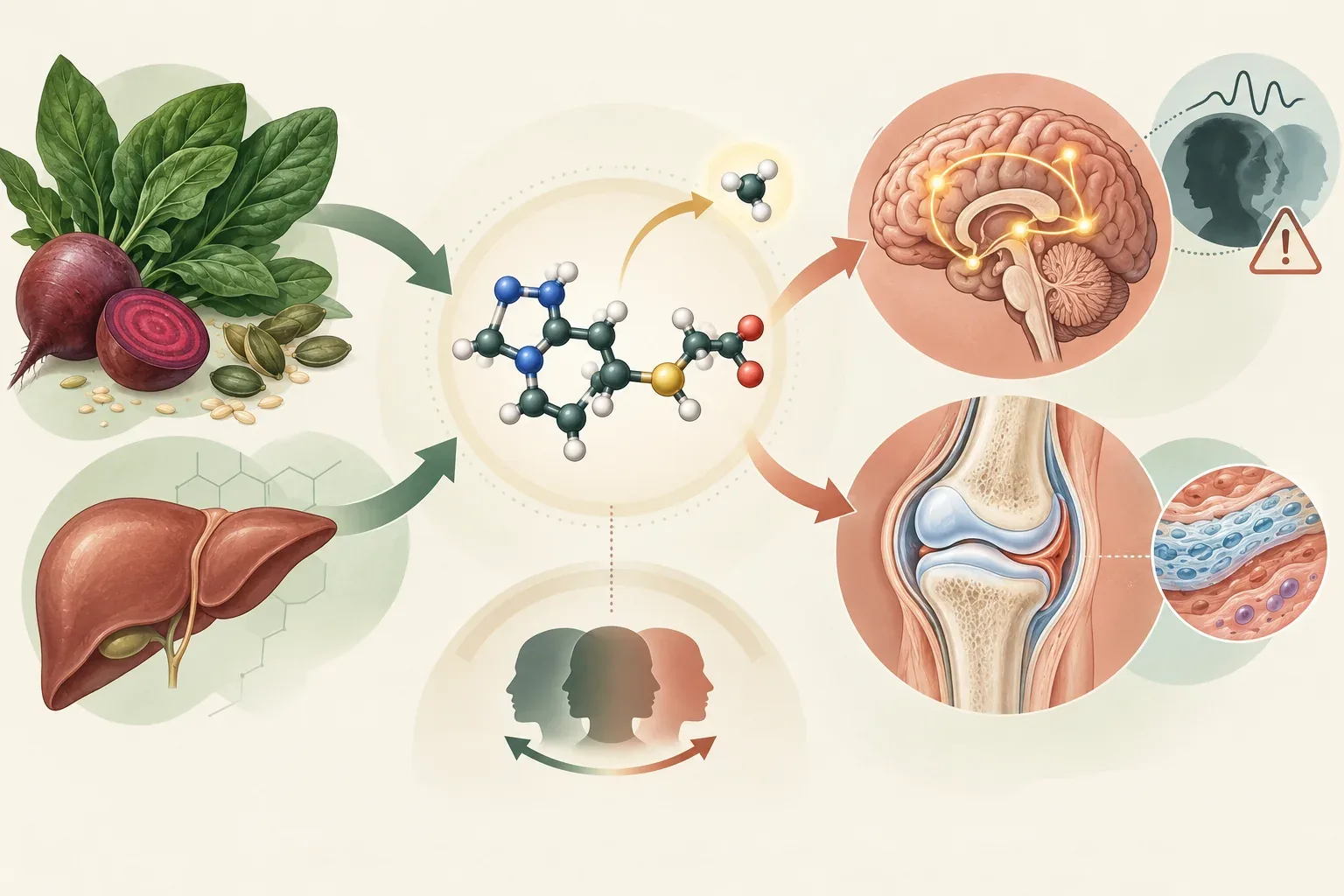
TMG is a different donor (BHMT). It is not a second SAMe.
Source for this connection
 Nutrient use
Vitamin B12 (Cobalamin): Daily Needs, Deficiency Signs and Treatment Choices
Connection details
Context: homocysteine as the reason
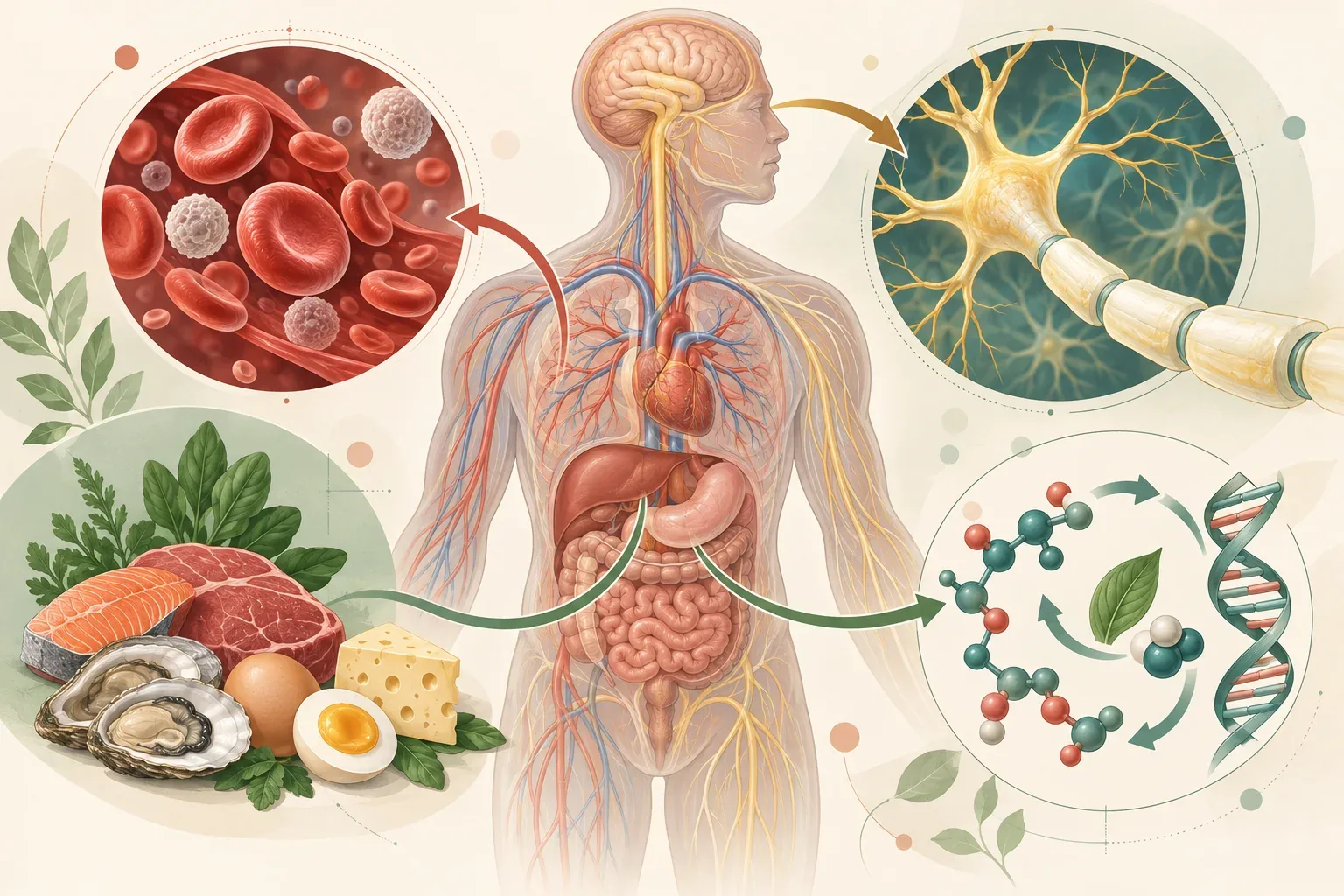
B12 and folate first if homocysteine is the reason.
Source for this connection
 Nutrient use
Vitamin B9 (Folate and Folic Acid): Benefits, Forms, and Dosage
Connection details
Context: homocysteine as the reason
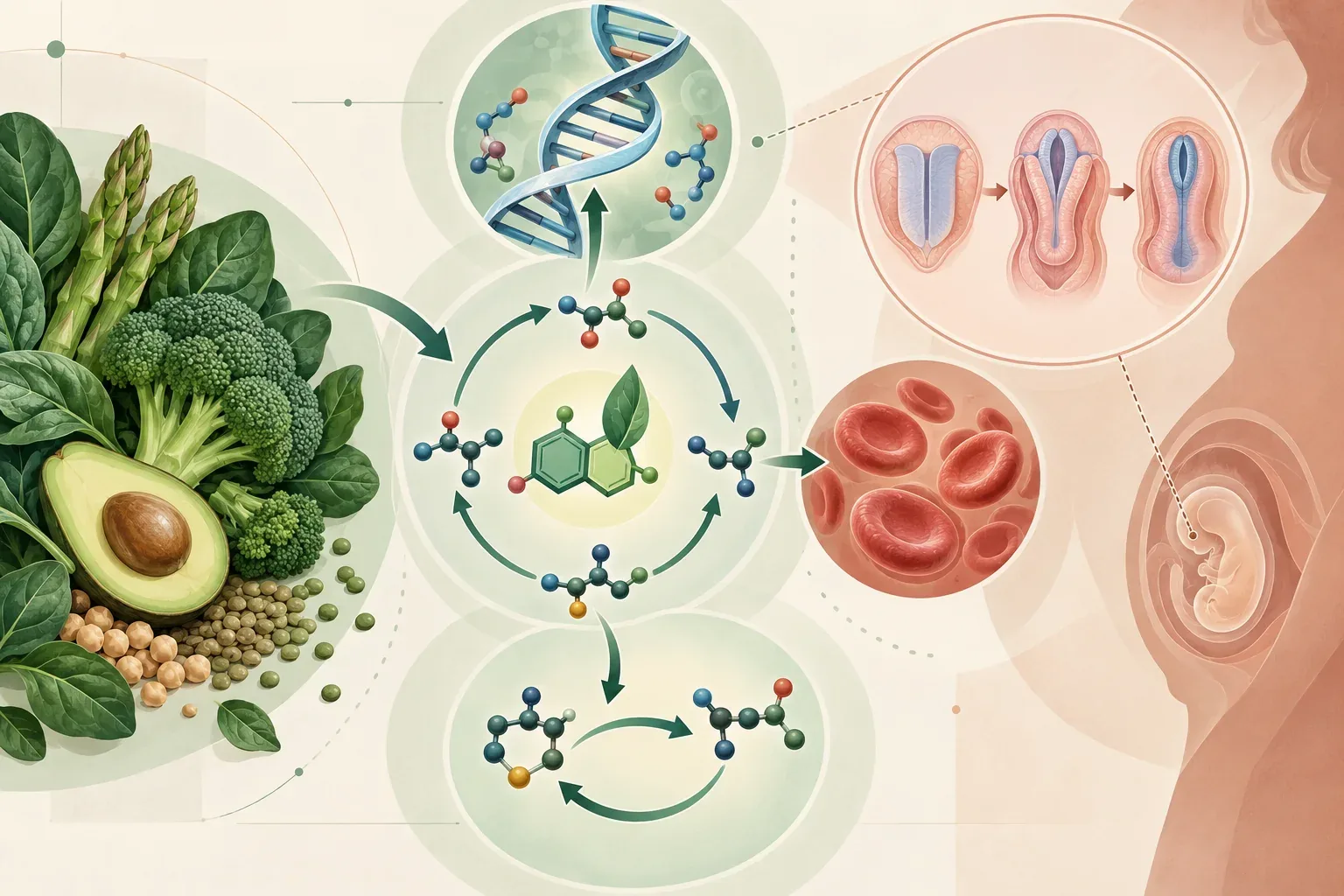
B12 and folate first if homocysteine is the reason.
Source for this connection
More in compounds



References
- Olthof et al.: betaine dose and homocysteine, 2003 ↩
- USDA: corrected betaine food-composition database, 2008 ↩
- Craig's earlier review ↩
- 12-month placebo-controlled trial ↩
- fat buildup with liver inflammation and damage ↩
- original correction ↩
- published comment ↩
- uncontrolled ten-person pilot ↩
- lower-dose pilot studies ↩
- small open-label study ↩
- NIH Office of Dietary Supplements: Vitamin B12 — Health Professional Fact Sheet ↩
- MedlinePlus says an 8–12-hour fast may be requested ↩
- Olthof et al.: betaine and blood lipids, 2005
- Schwab et al.: betaine in obese adults on a diet, 2002
- McRae: meta-analysis of betaine and homocysteine, 2013
- Meta-analysis of betaine and total cholesterol, 2021
- Ashtary-Larky et al.: betaine and cardiovascular markers, 2022
- Gao et al.: betaine and body fat, 2019
- Ashtary-Larky et al.: betaine and body composition, 2022
- Betaine and exercise performance meta-analysis, 2024
- Betaine and CrossFit performance and hormones, 2023
- Betaine and sex hormones in women, 2026
- Betaine in adults with prediabetes, 2018
- Wang et al.: choline, betaine, TMAO, and heart events, 2014
- Cochrane: homocysteine-lowering interventions for preventing cardiovascular events, 2017
- EFSA: betaine and homocysteine metabolism claim, 2011
- Cystadane (betaine) prescription label, DailyMed
- Guilliams and Drake: betaine HCl and stomach acid, 2020
- Craig: betaine in human nutrition, 2004
- NIH Office of Dietary Supplements: Folate — Health Professional Fact Sheet
- NIH Office of Dietary Supplements: Choline — Health Professional Fact Sheet
- NIH Dietary Supplement Label Database: a TMG 1,000 mg label
Corrections & updates
- Update
Updated the evidence discussion and practical guidance after editorial review.