
What is pomegranate extract?
Pomegranate extract concentrates compounds from the fruit, peel, or seeds. Labels may measure punicalagins, the fruit's main tannins; ellagic acid, which those tannins break down into; or broader plant compounds called polyphenols. Two products with the same extract weight can therefore describe different material.
People buy pomegranate extract hoping to improve blood pressure, memory, exercise performance or prostate health. The studies do not all use the same product: some test concentrated extracts, others use juice, and some test urolithin A directly. Those results need to be read separately.
Historical intestinal uses and today's extracts
NCCIH[1] records traditional pomegranate uses for intestinal parasites, diarrhea and sore throat. Modern studies of juice and extracts often ask about blood pressure, memory or other outcomes instead. A result for one of those outcomes does not confirm the older intestinal claims.
Plant parts matter here as well. Juice, a standardized fruit extract and preparations made from peel, root or bark can have different compositions. NCCIH warns that large amounts of root, stem or peel may be unsafe.
The short version
| Extract | Amount you may see | What that number means |
|---|---|---|
| Punicalagin extract (Pomanox, the blood pressure trial product) | 210 mg of punicalagins a day | The amount in the 2017 placebo-controlled trial discussed below; earlier extract trials also exist |
| POMx (dose-comparison prostate trial) | 1 to 3 g of extract a day; studied as grams of POMx, not as a matched dose of another punicalagin extract | The 1-g-versus-3-g trial had no placebo; 3 g caused more diarrhea and did no better than 1 g |
| Pomella and other extracts standardized to 30% punicalagins | 150 to 400 mg of extract | 400 mg at 30% is 120 mg of punicalagins |
Unit: use milligrams of punicalagins when the label provides them. POMx studies report grams of extract without stating the punicalagin amount.
Skip: urolithin A claims on pomegranate products, “equivalent to 7 grams of fruit” math, and ellagic acid percentages that come partly from other plants.
What people take pomegranate extract for
| Claimed benefit | Dose / form studied | Research verdict | Evidence strength |
|---|---|---|---|
| Lower blood pressure | Extract supplying 210 mg punicalagins/day for 8 weeks; 53 adults | The diastolic (lower-number) result favored extract, but its size versus placebo is unclear; the main systolic (upper-number) result was not significant | Limited |
| Change cholesterol and triglycerides | Juice, 45–500 mL/day across trials lasting 1–52 weeks | Small favorable lipid estimates in one review conflict with an older null review; capsule effects remain unestablished | Limited for juice |
| Slow carotid artery-wall thickening | Juice, 240 mL/day for up to 18 months | No significant overall difference in the larger trial; favorable subgroups were exploratory | Limited |
| Slow prostate-cancer progression | POMx 1 or 3 g/day for up to 18 months in a dose study; a later placebo-controlled study tested extract | The placebo-controlled result did not confirm a PSA benefit; progression benefit is unproven | Insufficient |
| Improve cognition in older adults | 740 mg extract/day for 12 weeks; 86 adults aged 55–70 | One of six cognitive tests improved; broader benefit is uncertain | Limited |
| Improve exercise performance | Mostly juice studies, 50–500 mL; duration varies; no established capsule dose | Small mixed studies do not establish a benefit for extract capsules | Review pending |
Pomegranate extract has preliminary findings for specific outcomes. If you are considering it for blood pressure, treat the 210 mg punicalagin result as preliminary, not as a reason to replace treatment with supplements.
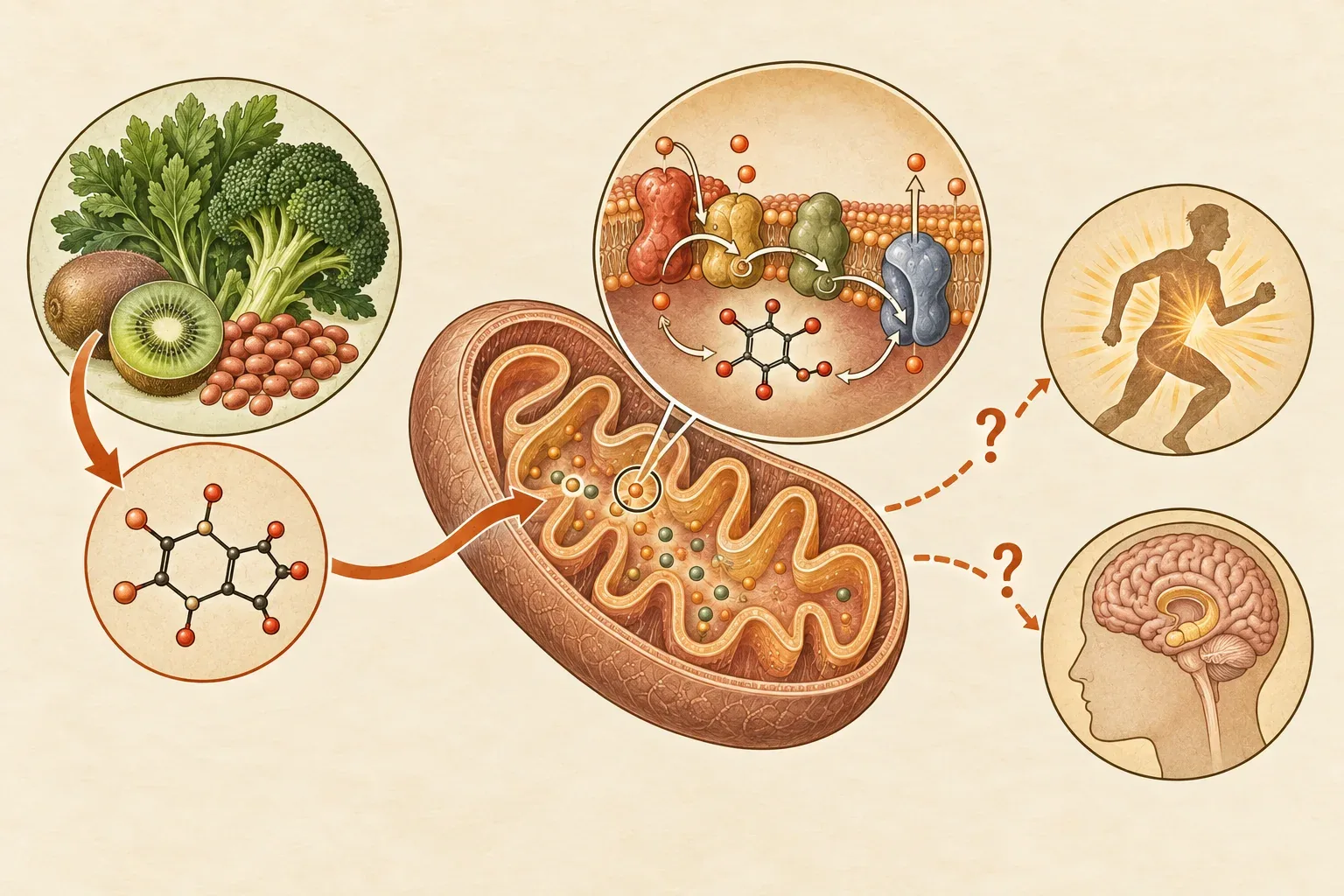
Pomegranate does not reliably supply urolithin A. Its tannins must first be broken down and then converted by gut bacteria, and people vary greatly in that conversion. In one human juice challenge[2], about a third had no detectable urolithin A in blood a day later, another 27% made little, and about 40% reached the study's higher-producer threshold. A pomegranate capsule therefore cannot promise the exposure measured in a direct urolithin A trial.
When to check first—or skip it
- You take blood pressure medicine. The extract may lower blood pressure slightly.
- You take drugs with a narrow safe range, such as blood thinners or anti-rejection drugs. In a lab dish, pomegranate juice blocked an enzyme that clears many drugs; in people, juice did not, and extracts were not tested.
Common dosage
As of 2026, there is no recognized recommended daily amount for pomegranate extract. We checked the National Institutes of Health Office of Dietary Supplements and the National Academies, which set official nutrient amounts; neither has set one for pomegranate extract, or an upper limit.
Study-specific amounts appear with their findings below. The blood-pressure trial gave its capsule after a meal, and the reviewed trials did not compare times of day.
Preparation types and label amounts
The useful label question is which marker the manufacturer measured. Extract weight alone does not make two products comparable.
Punicalagin extract
A label that states punicalagin milligrams lets you compare directly with the 210 mg trial amount. A 30% extract would require 700 mg of extract to contain 210 mg of punicalagins, but matching that number does not prove the rest of the preparation is equivalent.
POMx
POMx labels and trials use grams of extract. The prostate trial tested 1–3 g/day of POMx.
Extracts standardized to 30% punicalagins
The labels we checked list 150–400 mg of extract per serving. Use the standardization percentage to find the punicalagin amount.
Extracts standardized to ellagic acid
One label we found lists 70% ellagic acid from pomegranate and Chinese sumac. That percentage does not convert to punicalagin milligrams and does not show how much came from pomegranate.
Juice
Juice is an alternative if you want to consume pomegranate as a food or drink. Blood-pressure trials commonly used about 240 mL (8 oz) a day, but their results apply to that drink, not to a capsule with a different mix of compounds. An 8 oz serving of bottled pomegranate juice contains about 31 g of naturally occurring sugar in USDA food-composition data[3]; check the exact product label if sugar intake matters to you.
What to pay attention to on the label
Which number on the label is the amount?
Look for the extract weight and its standardization. One product lists 400 mg of Pomella extract “standardized to 30% punicalagins,” which is 120 mg of punicalagins, a little over half the 210 mg in the blood pressure trial.
Misleading labels
Extract weight, fruit-equivalent weight and punicalagins
One capsule lists 400 mg of extract “equivalent to whole plant pomegranate 7 grams.” That is the manufacturer's fruit-equivalent conversion. Look for the punicalagin milligrams instead.
Ellagic acid from another plant
One 250 mg product is “standardized to 70% ellagic acid” from a blend of pomegranate and Chinese sumac, a different plant. Presenting the percentage as a measure of pomegranate strength obscures the second plant’s contribution. Ellagic acid percentages also do not quantify punicalagins.
Manufacturer claims and the studies they may be based on
A “supports healthy blood pressure” line may point to the 8-week extract trial, where only diastolic pressure fell, or to juice trials. A “supports healthy arteries” line may point to a 2004 juice study of just 10 people with no placebo group; it cannot show that a capsule has the same effect. A “cellular aging” line may point to urolithin A trials that used urolithin A itself, not pomegranate.
Common Myths about Pomegranate extract
Is pomegranate extract the same as pomegranate juice?
No. Juice trials used about 240 mL a day; their pooled results suggested systolic pressure—the upper number—was about 5 millimetres of mercury (mmHg) lower. The extract trial did not show a clear systolic effect. Juice also supplies sugar, which can matter to blood pressure as part of the overall diet; a review of randomized sugar-intake trials[4] found that higher sugar intake can raise blood pressure modestly. The juice trial result already includes everything in the drink, sugar included. Millilitres of juice cannot be converted into extract milligrams.
Is pomegranate a source of urolithin A?
Only for some people. Gut bacteria turn pomegranate tannins into urolithin A, but the amount varies, as the juice-challenge findings above illustrate. Urolithin A supplements contain the compound itself.
Does pomegranate help you lose weight?
No. A 2019 review of 13 trials with 513 people found no change in weight, waist size, or body fat.
Drawbacks and side effects
| Potential drawback | When/who it affects | Research evidence | Practical implication |
|---|---|---|---|
| Diarrhea | Higher extract amounts in the prostate study | Reported in about 2% at 1 g/day versus 14% at 3 g/day in that trial | Diarrhea was more frequent at the higher amount in this trial |
| Uncertain medicine interactions | People taking medicines affected by drug-metabolizing enzymes | Laboratory inhibition did not translate to a juice–midazolam interaction; extracts remain uncertain | Check the exact product and medicine with a pharmacist |
| Limited pregnancy and long-term safety data | Concentrated extract use | Food and juice experience does not establish concentrated-product safety | Discuss concentrated supplements during pregnancy or breastfeeding |
| Allergic reaction | People with pomegranate allergy or a new reaction during use | [1] | Check the source and other ingredients; a food-derived extract can still trigger allergy. |
Safety details
There is no official upper limit. For daily use, trials of 8 weeks to 18 months reported few side effects; in the prostate trial, diarrhea affected about 2 percent of men on 1 g and 14 percent on 3 g.
The interaction concern comes from a lab-dish and rat study in which juice blocked a drug-clearing enzyme, the one grapefruit also affects. In 13 people, 8 oz of pomegranate juice did not change how they cleared midazolam, a drug that enzyme handles, while grapefruit juice did. Extract capsules were not tested, so check with a pharmacist if you take blood thinners, anti-rejection drugs, or other drugs where small changes matter.
Pregnant or breastfeeding people should avoid concentrated extracts as a precaution unless a clinician recommends one.
Allergic reactions to pomegranate have also been reported[1]. Avoid it if you have a known pomegranate allergy. Stop and seek medical advice for a suspected reaction.
The science behind pomegranate extract
The capsule evidence is narrower than the marketing: the blood-pressure trial missed its main result, the placebo-controlled prostate trial found no benefit, and memory and exercise findings came from different preparations.
Blood pressure
In 2017, 53 adults completed a trial of an extract with 210 mg of punicalagins or a placebo for 8 weeks. The main systolic comparison between groups was not statistically significant. The secondary diastolic comparison favored extract, but the paper does not give a clear estimate of how much extra reduction it produced versus placebo. Earlier extract trials used other preparations, so 210 mg is one studied amount, not the only one.
A separate review of eight juice trials found systolic pressure about 5 mmHg lower and diastolic pressure about 2 mmHg lower. That result does not establish the same effect for capsules.
Cholesterol and triglycerides
A 2026 review of 17 juice trials[5] reported small differences versus control: LDL cholesterol was about 4.8 mg/dL lower, triglycerides 8.2 mg/dL lower and HDL cholesterol 2.8 mg/dL higher. Total cholesterol was not significantly different overall. For LDL and triglycerides, the range of plausible effects extended close to no benefit, and the trials varied in participants, juice preparation and duration.
An earlier review of 12 trials[6] reported no significant overall lipid effect. These conflicting reviews cannot be treated as independent confirmations of a cholesterol benefit.
Blood flow and artery-wall measurements
In a three-month trial of 45 people with coronary heart disease[7], 240 mL of juice daily was compared with a matched placebo drink. The imaging score for stress-induced shortage of blood flow to the heart improved by 0.8 points on juice and worsened by 1.2 points on placebo, a statistically significant comparison. Blood pressure did not change in either group.
A larger artery-wall trial[8] assigned 146 people at moderate coronary risk to 240 mL of juice daily and 143 to a control drink for up to 18 months. Overall carotid artery-wall thickening did not differ significantly. Some higher-risk subgroups had favorable findings, but those analyses were exploratory.
Prostate cancer
In a 2013 trial without a placebo group, 104 men with rising PSA—a blood marker used to follow prostate cancer—took 1 or 3 g of extract. The time for PSA to double lengthened from about 12 to about 18 months. In a 2015 trial of 183 men that included a placebo, doubling time lengthened in the placebo group too, and the extract did no better. Pom Wonderful funded that trial and supplied the study products and placebo. Authors Allan Pantuck and David Heber disclosed research funding from the company; Heber also disclosed paid consulting.
Memory and exercise
A 12-month juice trial in 261 adults found that one learning score held steady while it declined on placebo; other memory tests showed no difference. A 12-week trial of 740 mg of extract in 86 older adults found a difference on one of six thinking tests, while physical function did not change. A published correction[9] specifies 36% punicalagins and 1.3% ellagic acid. Euromed funded the trial; the authors reported no funder role in its design, analysis or writing.
Exercise reviews describe small, mixed studies, mainly in men, using 50–500 mL of juice.
What is still open
Blood-pressure, lipid, imaging and PSA findings do not establish prevention of clinical events or cancer progression.
What you may have heard on podcasts
Rhonda Patrick, a scientist who talks about supplements on podcasts, recommended pomegranate on The Diary Of A CEO on 30 March 2026 as a cheaper alternative to urolithin A supplements. She separately said that half of people cannot make urolithin A from pomegranate and cited an exercise increase of up to 17% in VO2 max, a measure of fitness.
The conversion studies use different definitions of a “producer.” In the juice challenge above, 33% had no detectable blood urolithin A after a day, 27% made a small amount, and 40% reached the higher-producer threshold; that does not support one universal “half of people” figure. We also could not verify a 17% rise in VO₂max from pomegranate. An eight-cyclist crossover study[10] found that pomegranate extract changed oxygen uptake during a high-altitude test but did not improve time to exhaustion. A separate direct urolithin A trial[11] reported a 14.3% increase from baseline in predicted VO₂max at 1,000 mg a day, but its comparison with placebo was not statistically clear. That was not a pomegranate trial and does not verify the podcast's 17% claim.
The bottom line
We would not buy a pomegranate-extract capsule expecting a reliable blood-pressure, memory, prostate or exercise benefit. If you enjoy pomegranate juice, it is a different way to consume the fruit, with its own study results and sugar content. If your goal is urolithin A exposure, a pomegranate product cannot guarantee that your gut bacteria will make it. For a capsule, check the plant part and measured punicalagin amount before spending more for a large extract number on the front.
Help us improve this article
Spotted an error or found a source we should consider? Tell us which part of this article needs another look and include a link if you have one. Please leave out personal health details and lab results; we can’t answer individual medical questions.
Explore more in heart & blood pressure


More in compounds




References
- NCCIH ↩
- human juice challenge ↩
- USDA food-composition data ↩
- review of randomized sugar-intake trials ↩
- 2026 review of 17 juice trials ↩
- earlier review of 12 trials ↩
- three-month trial of 45 people with coronary heart disease ↩
- larger artery-wall trial ↩
- published correction ↩
- eight-cyclist crossover study ↩
- separate direct urolithin A trial ↩
- Stockton et al.: pomegranate extract and blood pressure, 2017
- Sahebkar et al.: pomegranate juice and blood pressure, meta-analysis, 2017
- Tomás-Barberán et al.: urolithin production types in people, 2014
- Hidaka et al.: pomegranate juice and a drug-clearing enzyme in lab and rat studies, 2005
- Farkas et al.: pomegranate juice and midazolam clearance, 2007
- Aviram et al.: pomegranate juice in carotid artery narrowing, 2004
- Paller et al.: two doses of pomegranate extract in prostate cancer, 2013
- Pantuck et al.: pomegranate extract versus placebo in prostate cancer, 2015
- Siddarth et al.: pomegranate juice and memory, 2020
- Farhat et al.: pomegranate extract in older adults, 2025
- Gheflati et al.: pomegranate and body weight, meta-analysis, 2019
- Ammar et al.: pomegranate and exercise, systematic review, 2018
- The Diary Of A CEO: Rhonda Patrick, 30 March 2026
- NIH Dietary Supplement Label Database: an ellagic acid extract label
- NIH Dietary Supplement Label Database: a 30% punicalagin extract label
- NIH Dietary Supplement Label Database: an extract with a fruit-equivalent claim
Corrections & updates
- Update
Updated the evidence discussion and practical guidance after editorial review.
- Update
Updated the evidence discussion and practical guidance after editorial review.