
What is nattokinase?
Nattokinase is an enzyme produced during bacterial fermentation of soybeans. A 1987 paper[1] reported the fibrin-degrading enzyme in natto, a traditional Japanese fermented-soy food. Supplements concentrate the enzyme from the food-making process; eating natto is a different exposure. A common supplement serving declares 2,000 fibrinolytic units, usually written FU.
FU describes the enzyme's measured activity. Milligrams describe weight. You need the activity amount to compare nattokinase products.
Why do people take nattokinase?
| Claimed benefit | Dose / form studied | Research verdict | Evidence strength |
|---|---|---|---|
| Lowering blood pressure | Some small trials used 2,000 FU/day for eight weeks | Short trials suggest a small average reduction; a longer trial found none. | Limited |
| Slowing artery-wall thickening | 2,000 FU/day, median three years, 265 adults without clinical cardiovascular disease | The placebo-controlled trial found no advantage. | Moderate |
| Reducing arterial plaque | 6,000 FU/day for 26 weeks; a separate uncontrolled study used 10,800 FU/day for a year | The designs cannot establish that higher-dose nattokinase caused the reported improvement. | Insufficient |
| Lowering LDL cholesterol | 2,000 FU/day for three years; other doses in smaller studies | The long placebo trial found no LDL reduction; the direct drug comparison favored simvastatin for lipids. | Insufficient |
| Preventing heart attacks, strokes or dangerous clots | No established regimen for these outcomes | Adequate event-prevention evidence is missing. | Insufficient |
| Preventing flight-related clots | A Pycnogenol–nattokinase blend before and during one long flight; FU unstated | One trial reported fewer ultrasound-detected clots, with conflicting participant counts. | Limited |
These are reasons people consider the enzyme, rather than established reasons everyone should start taking it. Nattokinase cannot be substituted for prescribed anticoagulation, cholesterol treatment or blood-pressure medication.
When to ask a doctor before taking it
Speak to your clinician before combining nattokinase with warfarin, another prescribed blood thinner, aspirin or prescription-dose EPA, an omega-3 fatty acid used at 4 g/day in cardiovascular research. Also raise a history of bleeding in the brain, cerebral microbleeds, ulcers, upcoming procedures and soy allergy. Women who are pregnant or breastfeeding should avoid self-directed use.
Product instructions disagree on stopping seven days versus two weeks before surgery.
One reported mechanical-valve clot[2] followed replacing warfarin with nattokinase for about a year. The 53-year-old man required another valve replacement. A different report described brain bleeding in a person taking aspirin and nattokinase who already had cerebral microbleeds. Cases cannot establish how frequently either problem occurs, but they illustrate why substitution and combination are different risks that both need attention.
What to look for on the label
Which number measures the amount?
Look for the FU in the full serving, then check how many capsules that serving requires. “100 mg” without an activity declaration does not tell you how much nattokinase activity you are buying.
There is no official U.S. recommended daily amount or upper limit for nattokinase.
The European Food Safety Authority assessed a preparation called NSK-SD containing 20,000–28,000 FU per gram.
Misleading labels
A blend that hides the activity amount
If a multi-enzyme blend lists only total milligrams, it does not reveal nattokinase's FU contribution. A familiar ingredient name cannot fill that missing number.
Quality language presented as treatment evidence
A “clinically studied” claim may refer to blood markers or an ingredient study rather than a trial of the finished product and the outcome you care about.
We have not selected a product to recommend after checking its current label. Compare clear activity and serving declarations before considering any product, and keep the medical treatment question separate.
How nattokinase interacts with other nutrients
Can I combine it with omega-3?
High-dose purified EPA has a small bleeding signal in its own trial evidence. That does not establish the safety or risk of adding nattokinase. Review the combination with the clinician prescribing EPA or monitoring your bleeding risk; do not assume ordinary fish oil and prescription-dose EPA are the same exposure.
Common Myths about Nattokinase
Does nattokinase dissolve plaque?
It can break down fibrin in laboratory experiments. Fibrin helps form blood clots; arterial plaque is a different, complex structure. Laboratory activity does not establish that an oral supplement clears plaque or prevents cardiovascular events.
Is natto food equivalent to a capsule?
Natto is fermented food and also supplies vitamin K2. It does not give a standardized capsule-equivalent FU amount. Vitamin K is especially relevant to warfarin, so food and purified-enzyme products should not be treated as interchangeable.
Drawbacks and side effects
| Potential drawback | When/who it affects | Research evidence | Practical implication |
|---|---|---|---|
| Bleeding concern | Especially combinations, prior bleeding or procedures | [3] | Review medicines and procedure timing before use |
| Loss of prescribed clot protection | Replacing warfarin or another effective treatment | [4] | Keep prescribed anticoagulation; do not substitute the enzyme |
| Uncertain safety at higher exposure | High-dose or prolonged use | [5] | Absence of an official upper limit is not a safety guarantee |
A fatal abdominal bleeding report[6] involved a 92-year-old woman after a fall, a ruptured liver cyst and an uncertain nattokinase amount. She was not taking aspirin or a prescribed anticoagulant. Those competing explanations prevent assigning the bleed solely to nattokinase or calculating a risk percentage.
EFSA reached a more reassuring but narrow conclusion for NSK-SD: up to 100 mg/day under the proposed conditions for healthy adults over 35, excluding women who are pregnant or breastfeeding. The panel compared that human amount with a much higher dose, adjusted for body weight, that caused no observed harm in a 90-day rat study. It found the human studies too small and inconsistent to settle safety by themselves, and the available warfarin study insufficient to establish the safety of taking the two together.
The science behind nattokinase
Short blood-pressure trials found benefits; the longer trial did not
Kim's eight-week trial[7] randomized 86 adults with untreated systolic pressure of 130–159 mm Hg to 2,000 FU/day or placebo. Among the 73 who completed it, nattokinase lowered systolic pressure by an additional 5.55 mm Hg and diastolic pressure by 2.84 mm Hg compared with placebo. Systolic is the upper number and diastolic the lower one. The 95% confidence intervals ranged from 0.57 to 10.5 mm Hg lower for systolic and 0.33 to 5.33 lower for diastolic, so the size of the effect remains uncertain.
Kim's trial was manufacturer-funded and supplied, with two company co-authors. Jensen's separate trial[8] had distributor sponsorship and analyzed 74 of 79 enrolled adults with elevated pressure. After eight weeks of 100 mg NSK-SD providing at least 2,000 FU/day, final diastolic pressure averaged 84 mm Hg versus 87 on placebo, a statistically significant difference. Systolic pressure did not differ significantly. Both groups received diet and lifestyle advice.
In contrast, the larger Hodis trial found no blood-pressure advantage over a median three years at 2,000 FU/day. Its participants started around 120/72 mm Hg, considerably lower than those entering the short trials. The evidence therefore suggests a possible small short-term effect in untreated elevated pressure, without showing that the same benefit persists for years or applies to people whose pressure is already normal.
The artery-wall trial found no benefit; higher-dose plaque results remain uncertain
Hodis randomized 265 adults[9] without clinical cardiovascular disease to 2,000 FU daily or placebo for a median three years; 234 had at least one follow-up ultrasound. Neck-artery wall thickness increased by 0.013 mm/year with nattokinase and 0.011 mm/year with placebo, a nonsignificant difference (p=0.31). Arterial stiffness also showed no advantage. The Helen Diller Family Foundation funded the trial; Jarrow Formulas donated the capsules and Japan Bio Life Sciences donated the ingredient.
The higher-dose studies gave more encouraging imaging results in different populations. Ren's 26-week trial[10] compared 6,000 FU/day with simvastatin 20 mg/day in patients with carotid atherosclerosis and high lipids. Seventy-six of 82 participants finished. The published abstract reports plaque area falling from 0.25 to 0.16 cm² and wall thickness from 1.13 to 1.01 mm in the nattokinase group. It reports a larger proportional plaque reduction than with simvastatin, while the drug lowered LDL cholesterol more. Both groups improved from their own imaging baselines; there was no placebo group.
Chen's retrospective study[5] reviewed selected records from 1,062 people who completed a year of treatment: its dose table lists 1,001 taking 10,800 FU/day and 61 taking 3,600 FU/day. In a separate ultrasound table for 683 participants, average wall thickness fell from 1.33 to 1.04 mm and plaque area from 24.9 to 15.94 mm². The lower-dose rows showed little change. These were uncontrolled comparisons. The dose table does not say how many people in each dose group had ultrasound measurements, and dose labels differ between tables. Five authors worked for Sungen, the tablet manufacturer, and one for Sinopharm.
Those results leave a real question about higher doses in people with existing disease. They do not settle it: the studies differ in population, preparation and design, and the higher-dose findings lack the same placebo-controlled test as Hodis.
Hodis also counted cardiovascular events, but they were uncommon: strokes occurred in one participant in each arm, and deep-vein clots in two on nattokinase and one on placebo.
A dependable cholesterol benefit remains unproven
In Hodis, LDL cholesterol averaged 2.6 mg/dL higher with nattokinase than placebo; the 95% confidence interval ranged from 4.9 mg/dL lower to 10.2 higher, with no significant difference. Ren's direct comparison favored simvastatin for lowering LDL, total cholesterol and triglycerides. Chen reported lower lipid values after treatment, but without an untreated group to show what would otherwise have happened.
Absorption and clotting markers
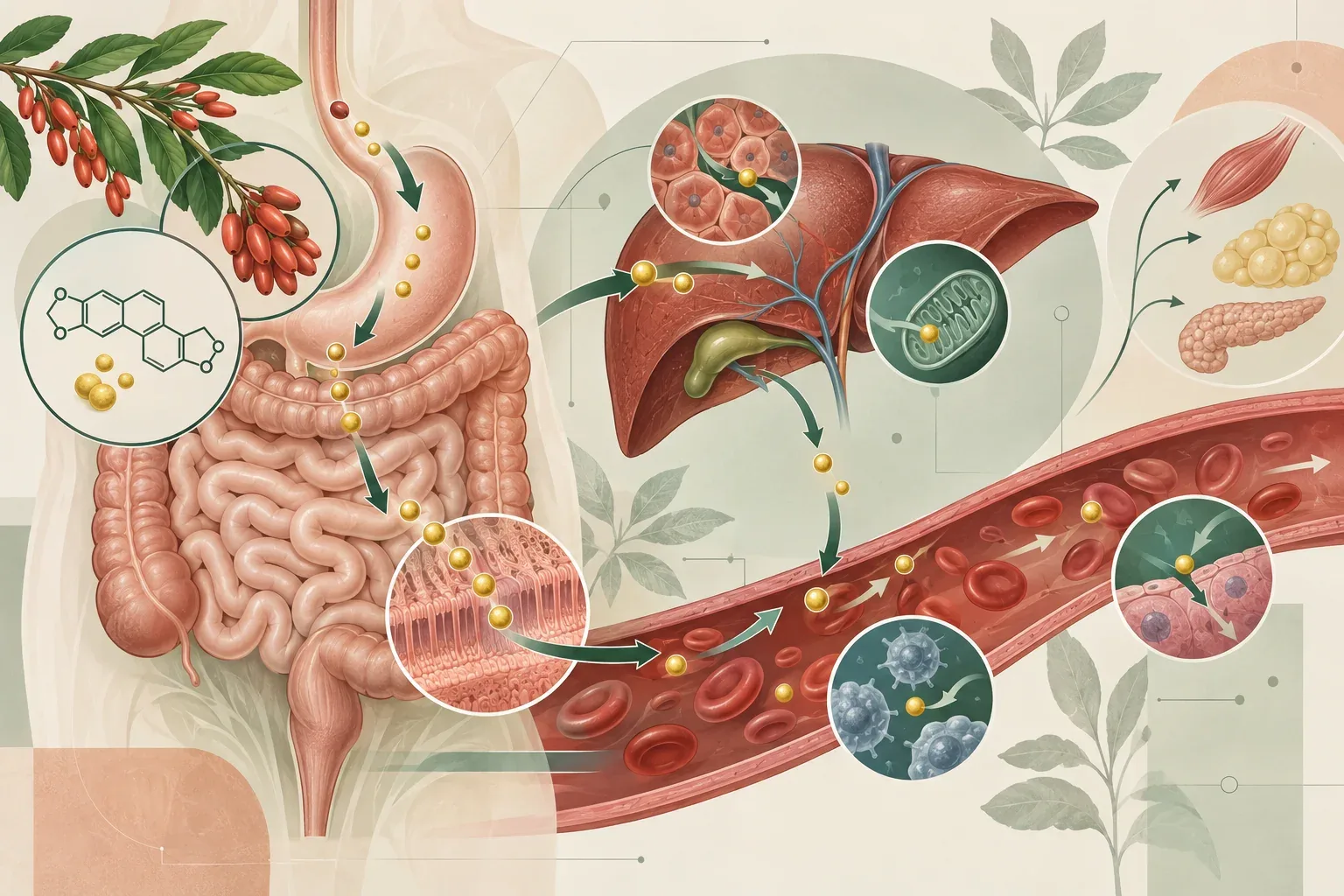
Ero's small absorption study[11] followed 11 healthy adults after one 2,000-FU NSK-SD capsule. An antibody test detected increased binding in blood, peaking at about 13 hours. That test could not settle whether it was detecting intact enzyme or fragments. EFSA also noted that the test was not validated and did not measure biological activity in blood. The often-repeated picture of intact swallowed enzyme circulating and digesting plaque goes beyond those findings.
Hsia's study[12] gave 4,000 FU/day for two months to 45 people drawn from healthy, cardiovascular-risk and dialysis groups. Fibrinogen and two other clotting proteins declined from their starting levels, with no placebo comparison. Kurosawa's crossover[13] gave 12 healthy young men a single 2,000-FU dose and placebo on separate occasions. Several clotting and clot-breakdown markers changed over the following eight hours, while remaining within normal ranges.
Flight-related clots
The LONFLIT-FLITE trial[14] tested Flite Tabs, a blend of Pycnogenol and nattokinase, in high-risk passengers on a seven- to eight-hour flight. Participants took two capsules two hours before flying and two more six hours later; both groups also followed an exercise and water plan. The paper gives the blend's weight but no nattokinase FU amount.
Among passengers who completed before-and-after ultrasound scans, five of 92 placebo recipients had a deep-vein clot and two had a superficial clot, versus none of 94 blend recipients. The overall clot difference was statistically significant. The clots were asymptomatic. The paper inconsistently reports 224 and 204 as its included or randomized totals, which weakens confidence in the analysis. This preliminary finding belongs to the combination product and cannot be assigned to nattokinase alone.
Lab tests
There is no nattokinase-level test or established laboratory target for adjusting its dose.
Preparing for a test if you take supplements
Report nattokinase and all blood-thinning medicines before a blood draw. PT/INR testing[15] is used for particular clotting questions, including warfarin monitoring. Your clinician should give instructions for the test and medical situation.
An INR is not a validated nattokinase dose meter. If a symptom raises concern about a clot, stroke or bleeding, seek urgent medical evaluation even if a previous routine test was normal.
The bottom line
Nattokinase has some small blood-pressure findings, but the more ambitious claims about clearing plaque or preventing dangerous clots remain unproven. The longer placebo-controlled artery study was negative. Higher-dose studies reported smaller plaque measurements, but their designs and reporting problems leave the benefit uncertain. The favorable study tested a combination product.
A clear FU amount helps you understand the bottle. Bleeding concerns matter particularly with medicines or surgical procedures. We would not replace prescribed clot-prevention or cholesterol treatment with it.
Help us improve this article
Spotted an error or found a source we should consider? Tell us which part of this article needs another look and include a link if you have one. Please leave out personal health details and lab results; we can’t answer individual medical questions.
Explore more in heart & blood pressure


More in compounds

References
- 1987 paper ↩
- Elahi: Mechanical-valve thrombosis after warfarin substitution ↩
- Case reports describe serious bleeding, without establishing a rate ↩
- A mechanical-valve thrombosis case followed substitution ↩
- Chen: Retrospective higher-dose study ↩
- fatal abdominal bleeding report ↩
- Kim: Eight-week blood-pressure trial ↩
- Jensen: Blood-pressure and clotting-marker trial ↩
- Hodis: Three-year placebo-controlled trial ↩
- Ren: Nattokinase–simvastatin comparison ↩
- Ero: Oral absorption study ↩
- Hsia: Blood-protein study ↩
- Kurosawa's crossover ↩
- Cesarone: Flight combination trial ↩
- PT/INR testing ↩
- Chen: Table 1 correction
- Kurosawa: Single-dose crossover study
- EFSA: Specified NSK-SD preparation
- Omega-3 bleeding review
Corrections & updates
- Update
Updated the evidence discussion and practical guidance after editorial review.
- Update
Revised the article after editorial review, with clearer evidence explanations and practical guidance.