
What is iodine?
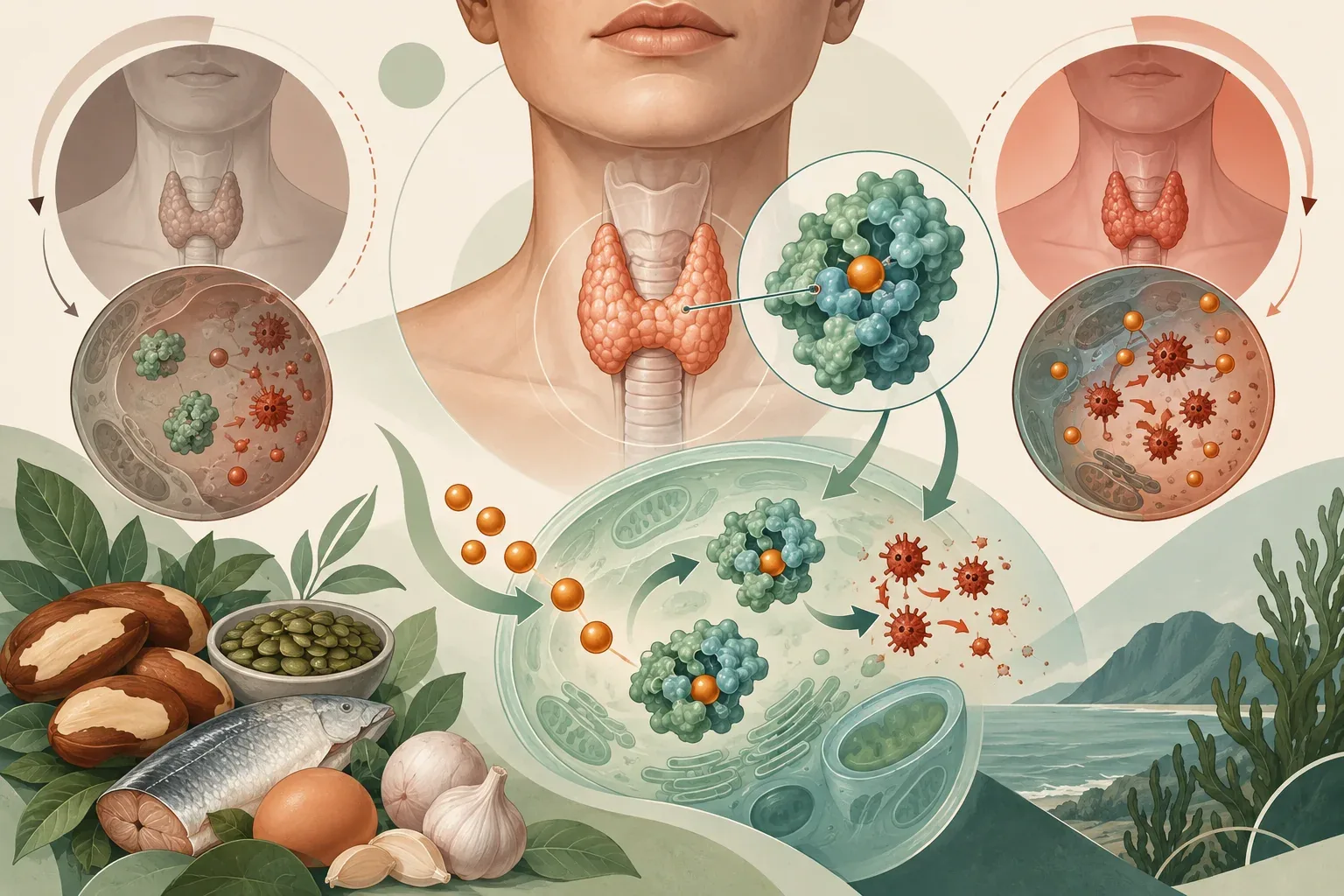
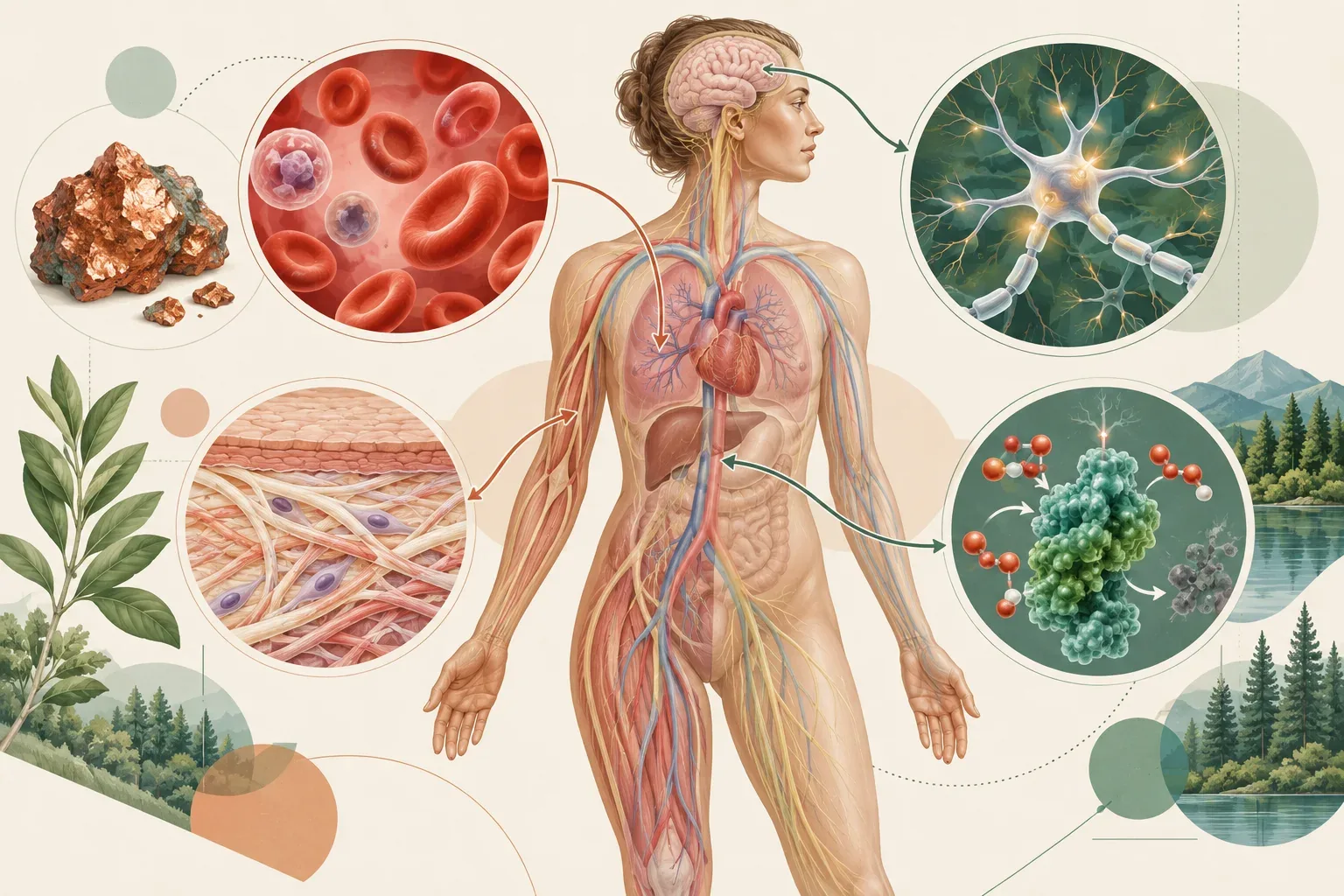
Iodine is an essential mineral, and your thyroid uses almost all of it. It is built into the two thyroid hormones, T4 and T3, which set the pace of your metabolism and guide the development of a baby’s brain and skeleton before and after birth. A healthy adult body holds about 15 to 20 milligrams, most of it in the thyroid.
Iodine comes from naturally iodine-containing foods and from iodized salt. Seafood, seaweed, dairy, and eggs provide the most, and iodized table salt adds about 78 mcg per quarter teaspoon. Fruits, vegetables, and grains contain little, and the amount depends on the soil they grew in. Most salt in US processed food is not iodized.
A supplement is usually potassium iodide or sodium iodide, and the usual amount is 150 mcg a day, which is also the amount in many multivitamins. Kelp tablets and iodine drops are sold too, and they are where the numbers get large.
People buy iodine for thyroid health, for hair, mood, or joints, for pregnancy, and after reading that everyone inland is low. What is well established is that too little iodine causes goiter and, in pregnancy, harms a baby’s development, and that iodized salt fixed most of that. Too much iodine can also disturb the thyroid.
What iodine does in your body
The thyroid takes up iodine and incorporates it into the hormones thyroxine, also called T4, and triiodothyronine, or T3. These hormones carry signals that influence how cells use energy.
The body converts some T4 into the more active T3 and adjusts hormone production through feedback signals involving the brain and thyroid. Iodine provides essential building material for that system.
Thyroid hormones are particularly important for normal brain and skeletal development before birth and during early life. Too little iodine can limit hormone production, while excess can also disrupt thyroid function. These mechanisms explain why both adequacy and restraint matter. [1]
The short version
Unit: micrograms (mcg) of iodine. One milligram is 1,000 mcg. If a facts line says 150 mcg of iodine, that is the amount.
Reasonable start: 150 mcg, if you have decided to buy and your diet does not already cover it. Many multivitamin labels say 150 mcg.
| Form | Common supplement dosage | What that number means |
|---|---|---|
| Potassium iodide or sodium iodide | 150 mcg, sometimes up to about 225 mcg | Micrograms of iodine |
| Multivitamin or prenatal with iodine | Usually 150 mcg; some prenatals list none | Micrograms of iodine |
| Kelp | A microgram number on the label | An estimate; real iodine in seaweed varies widely |
Skip: iodine drops or tablets sold in milligrams for daily use, kelp treated as a measured dose, and any plan that stacks kelp, drops, and a multivitamin.
What people take iodine for
| Claimed benefit | Dose / form studied | Research verdict | Evidence strength |
|---|---|---|---|
| Correcting inadequate iodine intake | Amount and duration depend on age, pregnancy and baseline intake; use a quantified iodine source rather than an assumed kelp dose. | Iodine adequacy prevents deficiency-related thyroid and developmental harm. | Strong |
| Improving child development with mild pregnancy shortfall | 200 mcg/day from about week 11 until delivery in mildly iodine-deficient pregnant women; children assessed at ages 5–6. | The large trial found no improvement in the measured cognitive outcomes. | Moderate |
| Improving cognition in mildly deficient schoolchildren | 150 mcg/day for 28 weeks in children aged 10–13 with low urinary iodine. | Reasoning and overall cognitive scores improved in one trial. | Limited |
| Fibrocystic breast pain | Molecular iodine 3,000 or 6,000 mcg/day for six months in women with painful fibrocystic breasts and normal thyroid function; above the 1,100 mcg adult limit, physician use only. | One trial reported symptom improvement; it is not a nutritional dose. | Limited |
Most adults in the United States do not need a separate iodine supplement. National urine surveys show the general population gets enough, and average intake from food was about 216 mcg a day before counting the iodized salt people add at the table, against an adult recommended amount of 150 mcg.
A supplement is a reasonable step in three situations. If you are planning a pregnancy, pregnant, or breastfeeding, the American Thyroid Association and the American Academy of Pediatrics say to take 150 mcg a day, usually in a prenatal. If you eat little or no dairy, seafood, or eggs — including a vegan diet — your food may not reach 150 mcg. And if your household uses no iodized salt and you eat mostly packaged food, the salt you get is almost always the noniodized kind.
When to ask a doctor before taking iodine
Ask first if you have thyroid disease, thyroid nodules, or an autoimmune thyroid condition such as Hashimoto’s or Graves’ disease. People with those conditions, or with a long history of low iodine, can react to amounts that are safe for others. Ask too if you are preparing for radioactive iodine treatment, when your clinic will usually put you on a low-iodine diet.
The National Institutes of Health’s iodine fact sheet names three drug groups:
- Antithyroid drugs such as methimazole (Tapazole): high-dose iodine can add to the drug’s effect and make the thyroid underactive.
- ACE inhibitors, blood-pressure drugs such as benazepril (Lotensin), lisinopril (Prinivil, Zestril), and fosinopril: potassium iodide can add to the risk of high blood potassium.
- Potassium-sparing diuretics such as spironolactone (Aldactone) and amiloride: the same potassium concern.
At 150 mcg of iodine, the potassium in potassium iodide is about 46 micrograms, so the potassium warning is about large doses. With the antithyroid drugs, the question is whether to add iodine at all, and your doctor answers it with your thyroid results.
Common dosage
The recommended daily amount from the National Academies is 150 mcg of iodine from age 14, for men and women alike, from food and supplements together. It rises to 220 mcg in pregnancy and 290 mcg while breastfeeding.
| Age | Daily amount | Official upper limit |
|---|---|---|
| Birth to 6 months | 110 mcg (adequate intake: what healthy breastfed babies get) | Not set; no separate supplement unless clinically directed |
| 7–12 months | 130 mcg (adequate intake) | Not set; breast milk, formula, and complementary foods supply intake; no separate supplement unless clinically directed |
| 1–3 years | 90 mcg | 200 mcg |
| 4–8 years | 90 mcg | 300 mcg |
| 9–13 years | 120 mcg | 600 mcg |
| 14–18 years | 150 mcg | 900 mcg |
| 19 and older | 150 mcg | 1,100 mcg |
The official upper limit from the National Academies is 1,100 mcg a day for adults, from food and supplements together. It does not apply when a physician is treating with iodine.
The amount is not set by body weight, and there is no official time of day or food rule. Once a day is how multivitamins and potassium iodide tablets are taken.
Am I getting enough iodine from food?
It depends on how much and how often you eat iodine-containing foods. Dairy, seafood, eggs and iodized salt can contribute very different amounts. Use the NIH food examples below to estimate your usual intake, then compare it with the age-appropriate daily amount in the dosage section.
Selected values from the NIH Office of Dietary Supplements food table[1] show the stated food and preparation.
| Food and preparation | Source | Serving | Iodine (mcg) |
|---|---|---|---|
| White bread made with iodate conditioner | Fortified | 2 slices | 296 mcg |
| Cod, baked | Fish | 3 oz (about 85 g) | 146 mcg |
| Nori seaweed, dried | Plant | 2 tbsp flakes (5 g) | 116 mcg |
| Greek yogurt, plain, nonfat | Dairy | ¾ cup | 87 mcg |
| Nonfat milk | Dairy | 1 cup | 84 mcg |
| Iodized table salt | Seasoning | ¼ tsp | 78 mcg |
| Egg, hard-boiled | Egg | 1 large | 31 mcg |
These are approximate examples, not fixed values for every brand or harvest. Iodate-treated bread is not universal, and milk, seaweed and iodized salt can vary.
Food labels do not have to list iodine unless it was added, and only about one in five US breads uses an iodate dough conditioner, which appears in the ingredient list rather than the Nutrition Facts panel. The salt in packaged food is almost always noniodized. On a vegan diet without iodized salt or another dependable iodine source, you may get very little iodine from food. Sea or kosher salt does not substitute for iodized salt, and seaweed iodine varies too much to count from a generic serving. If a food record shows a gap, a labeled 150 mcg iodine supplement is one way to fill it.
These food examples are US-specific. Australia and New Zealand generally require iodized salt in bread, with exceptions including organic bread; that makes bread a different iodine source from a US loaf without iodate. Germany uses voluntary salt iodization, while China's programme selects salt concentrations partly around regional iodine exposure. [2], [3], [4]
How can I tell if I'm low on iodine?
Iodine deficiency affects the body through reduced thyroid-hormone production. Symptoms depend on age, pregnancy and how far thyroid function has been affected. [1]
Mild or moderate deficiency
There may be no obvious symptoms. Goiter, enlargement at the front of the neck, is often the earliest visible sign; thyroid hormone tests can still be normal with low iodine intake.
Deficiency causing an underactive thyroid
Tiredness, feeling unusually cold, constipation, weight gain and slower thinking can occur. These are symptoms of hypothyroidism[5], which has several causes besides iodine deficiency.
Severe deficiency in pregnancy or childhood
Severe deficiency can impair a baby's brain development and growth, with lasting effects. A pregnant woman need not have obvious symptoms for intake to warrant attention. A neck swelling or thyroid symptoms calls for assessment of the cause, not an automatic high-dose iodine regimen.
Testing and interpretation
For more information about testing for iodine, see the lab tests and preparation details near the end of this article.
Iodine forms you can buy
Potassium iodide and sodium iodide each supply iodine attached to a partner. Kelp and high-dose drops supply the same mineral, with different dose amounts and precision.
Potassium iodide and sodium iodide
These are the measured forms. Potassium iodide is the form the American Thyroid Association names for pregnancy, and a small study found it about 96 percent absorbed. A typical facts line reads Iodine (as potassium iodide) 150 mcg. Pick this form if you want an exact microgram dose by itself.
Multivitamins and prenatals with iodine
Many multivitamins list 150 mcg of iodine, which covers the adult daily amount without a separate tablet. Some prenatals list none.
Kelp
Kelp tablets carry seaweed iodine along with the rest of the seaweed. The iodine in seaweed varies widely from sample to sample, so kelp is not a dependable measured dose. Use a clearly labeled potassium iodide product when a clinician-guided or pregnancy supplement amount is needed.
High-dose iodine drops and tablets
Iodine-only drops, Lugol’s solution (an iodine liquid), and products sold as “nascent” iodine (a marketing name for another iodine liquid) are often labeled in milligrams, and the NIH fact sheet notes that many iodine-only products exceed the upper limit. These doses belong under a physician’s care, not in a daily routine.
Can you take two iodine products the same day?
If you already take a multivitamin with 150 mcg, a separate iodine product adds to a number you have already reached. Do not stack kelp with another iodine source. The official upper limit is 1,100 mcg a day for adults, from food and supplements together.
What to pay attention to on the label
The number that counts is micrograms of iodine on the Supplement Facts line, and the traps are milligrams, seaweed, and a prenatal that leaves iodine out.
Which number on the label is the amount?
Look for Iodine in micrograms, often with the form in parentheses: “Iodine (as potassium iodide) 150 mcg.” That 150 mcg is the iodine. The Daily Value, the reference amount labels use, is also 150 mcg for iodine, so the Supplement Facts label says 100 percent of the Daily Value.
Misleading labels
Milligrams where you expected micrograms
Iodine drops and some iodine-only tablets are labeled in milligrams. A product that lists 12.5 mg of iodine per serving is 12,500 mcg — more than 80 times the daily amount and more than ten times the adult ceiling. Its percent of Daily Value reads above 8,000%.
Potassium iodide weight read as iodine
Potassium iodide is about 76 percent iodine by weight. If you're considering buying a product that lists 196 mcg of potassium iodide, it holds about 150 mcg of iodine.
A kelp label treated as a measured dose
Kelp and other seaweeds tested from 16 to 2,984 mcg of iodine per gram of dried seaweed. The label on a kelp tablet can say a microgram number, but the seaweed inside is a variable food, not a measured salt.
A prenatal with no iodine
In a survey of 59 best-selling US prenatal vitamins, only 34 contained any iodine. If you are pregnant or breastfeeding and counting on your prenatal, read the facts panel for an iodine line.
Specialty salt counted as iodine
Sea salt, kosher salt, Himalayan salt, and fleur de sel are not usually iodized, and noniodized sea salt has essentially no iodine. The package says “iodized” when it is.
Confusing servings and items per serving
Some manufacturers put 180 tablets on the front, and the back says 3 tablets per serving and 60 servings. The Supplement Facts amount is for the full three-tablet serving. If you take one tablet, divide that serving amount by three; do not multiply the per-serving amount by three again.
Manufacturer claims and the studies they may be based on
A “thyroid support” line may borrow the fact that thyroid hormones are made from iodine, which is true of the iodine in your food and does not mean more helps a thyroid that already has enough. A “breast health” line on a milligram product may borrow small trials of 1,500 to 6,000 mcg a day for painful fibrocystic breasts, doses above the adult ceiling that the NIH fact sheet says belong under a physician. A “radiation protection” line may borrow the FDA’s potassium iodide guidance for nuclear emergencies, which uses 16 to 130 milligrams only when public-health officials say radioactive iodine has been released.
How long should I take iodine supplements for?
Iodine needs are ongoing, but a supplement is useful only for the gap left by food and life stage. Pregnancy raises the need; a kelp or milligram-dose product is not a safe way to 'fill the thyroid' quickly. The thyroid holds iodine, yet stores and turnover differ with intake and thyroid function, so NIH's review[1] does not yield a personal countdown or universal taper. If a documented deficiency is corrected, move to an appropriate ordinary intake and reassess the reason it arose.
Common Myths about Iodine
Is 12.5 to 50 mg a normal “deficiency dose”?
No. Iodine drop protocols sold for hair, mood, or joints use 12.5 mg or more a day. The adult recommended amount is 150 mcg and the ceiling is 1,100 mcg, so 12.5 mg is more than ten times the ceiling. No trial shows that taking that much on your own helps hair, mood, or joints, and excess iodine can push the thyroid underactive or overactive.
Is kelp the natural way to get your 150 mcg?
Not as a measured dose. Kelp does contain iodine, but seaweed iodine varies more than a hundredfold from one sample to the next. A tablet of potassium iodide is a measured dose; a kelp tablet is an estimate.
Is everyone who lives inland low?
No. Low-iodine soil was a real problem in the Great Lakes region and mountain areas before salt iodization. Today the US population as a whole gets enough, through iodized salt, dairy, seafood, eggs, and a national food supply.
Do broccoli and soy cause iodine deficiency?
Not for most people in the United States. Cabbage, broccoli, cauliflower, soy, and cassava contain substances that can interfere with iodine use in the thyroid. The NIH fact sheet says that matters mainly where iodine is already scarce, and that reasonable amounts are not a concern for most people in the United States.
Drawbacks and side effects
| Potential drawback | When/who it affects | Research evidence | Practical implication |
|---|---|---|---|
| Underactive or overactive thyroid | High iodine, or susceptible people with autoimmune disease or nodules. | Excess can disrupt thyroid function in either direction, sometimes below the general upper limit. | Avoid self-escalating kelp or milligram drops; review thyroid disease with your clinician. |
| Acute poisoning | Accidental gram-scale exposure, not ordinary microgram nutrition. | Severe gastrointestinal and systemic toxicity is documented. | Seek urgent help after a major accidental exposure rather than waiting for symptoms. |
What a high dose usually does
Too much iodine can push the thyroid in either direction. It can cause goiter, a raised TSH, and an underactive thyroid, because excess iodine can shut down hormone production in susceptible people. It can also cause an overactive thyroid, especially with thyroid nodules or when a long deficiency is being corrected. Studies cited by the NIH fact sheet also tie long-term excess iodine to thyroiditis, an inflamed thyroid, and to papillary thyroid cancer, the most common type.
The official upper limit is 1,100 mcg a day for adults, 900 mcg at 14 to 18, and lower for younger children, with none set for infants because formula and food should be their only sources. Most people’s food and supplements stay well under it. People with autoimmune thyroid disease can react to iodine at smaller doses.
When too much is dangerous
Acute iodine poisoning is rare and takes grams, not micrograms: burning in the mouth, throat, and stomach, fever, stomach pain, nausea, vomiting, diarrhea, a weak pulse, and coma.
Iodine during pregnancy and breastfeeding
The total daily target is 220 mcg during pregnancy and 290 mcg while breastfeeding; the World Health Organization uses 250 mcg in pregnancy. Those are totals from food plus supplements.
The American Thyroid Association recommends a 150 mcg iodine supplement as potassium iodide for women planning a pregnancy, pregnant, or breastfeeding. That supplement supplies part of the total, while food supplies the rest. The American Academy of Pediatrics likewise recommends at least 150 mcg from a supplement plus iodized salt. The extra need reflects higher maternal thyroid-hormone production and the baby’s early dependence on the mother’s supply.
Many women do not get that supplement. In a survey of 59 best-selling US prenatal vitamins, 34 contained iodine, with a median of 150 mcg and a range of 25 to 290 mcg; 25 of those used potassium iodide. In national survey data on 122 pregnant women[6], 72 percent took a supplement, but only about 18 percent of all pregnant participants took one with iodine. In recent US surveys, pregnant women’s median urine iodine sat below the WHO’s adequacy line for pregnancy, 150 mcg per liter of urine — a measure of a group, not a daily dose — and women who ate no dairy were lower still. If you are pregnant, check that your prenatal lists iodine, and do not add kelp or milligram drops on top of it.
The science behind iodine
The research splits cleanly by dose and setting. Iodized salt and supplements in iodine-deficient places prevent goiter and protect children’s development, and that is the strongest evidence. Where people are only mildly short, including many pregnant women in the United States, trials of 150 to 200 mcg have not shown gains in children’s development. Milligram doses have been tested only for narrow medical uses.
Pregnancy and child development
In a randomized trial in Bangalore and Bangkok[7], 832 women with mildly low iodine entered at about 11 weeks of pregnancy and received 200 mcg iodine daily or placebo until delivery. The age-5-to-6 follow-up analyzed IQ in 313 children and executive function in 315, so these results cover a minority of the original pregnancies.
The trial did not find statistically clear differences in verbal IQ, performance IQ or the executive-function rating. Verbal IQ averaged 89.5 with iodine and 90.2 with placebo: a difference of −0.7 points, with a 95% confidence interval from −2.9 to +1.5. The performance-IQ difference was −1.6 points (−4.5 to +1.3), and the executive-function difference was −0.9 (−6.8 to +5.0). These were uncertain differences, rather than identical scores.
The NIH fact sheet describes a second trial of the same design, with 150 or 200 mcg, that found no difference in children’s thinking, language, or movement scores at 1.5 to 2 years.
On the other side, a pooled analysis of 6,180 mothers and children in the Netherlands, Spain, and the United Kingdom found lower verbal IQ in children whose mothers had lower iodine in the first trimester. That study watched, rather than assigned, iodine, so it cannot show that a supplement would have changed the result. A cross-sectional study in Spain found that pregnant women taking 200 mcg or more of supplemental iodine were more likely to have a raised TSH than women taking less than 100 mcg. What is still open is whether a supplement changes children’s outcomes when the mother is only mildly short, and where the benefit stops and thyroid strain begins.
Children with mild deficiency
In New Zealand, 184 children aged 10 to 13 whose median urinary iodine was 63 mcg/L took 150 mcg a day or a placebo for 28 weeks. In that group:
- Iodine raised their median to 145 mcg/L.
- Perceptual reasoning scores improved.
- Overall cognitive scores improved.
That is one trial, in children who started low.
Milligram doses
In a six-month trial of 111 women with painful fibrocystic breasts and normal thyroid function, molecular iodine at 3,000 or 6,000 mcg a day was compared with placebo or 1,500 mcg. By the five-month physician assessment, the higher-dose groups had:
- Reduced pain.
- Reduced tenderness.
- Reduced lumpiness.
The study did not find a dose-related increase in adverse events. This does not establish the safety of chronic use or show that potassium iodide or kelp would have the same effect. Those doses are several times the adult ceiling, and the NIH fact sheet says they should be used only under a physician. The FDA’s radiation guidance uses 16 to 130 mg of potassium iodide by age, and only when public-health officials say radioactive iodine has been released, to keep the thyroid from absorbing it.
Labs
Blood tests such as TSH and free T4 assess thyroid function. Thyroid antibodies can help investigate autoimmune thyroid disease. None of these tests measures how much iodine you eat.
Interpreting the results
Researchers measure urinary iodine, because more than 90 percent of the iodine you eat leaves in your urine, but the NIH fact sheet says a single spot urine sample describes a population, not one person; assessing an individual more accurately takes repeated spot samples or repeated 24-hour urine collections. For most people, the useful check is the diet: iodized salt at home, dairy, seafood, eggs, or a multivitamin or prenatal that lists iodine on its facts panel.
Urinary iodine has population thresholds rather than a single-sample cutoff for one person.
Before the test if you already supplement
Urine iodine and thyroid blood tests need different instructions. For its urine iodine assay, ARUP Laboratories[8] advises a 48-hour pause in nutritional supplements, vitamins, minerals and nonessential over-the-counter medicines only on the physician’s advice. Confirm how to handle the entire 24-hour collection. Report kelp, iodine drops and recent contrast scans; contrast has separate collection restrictions.
That 48-hour instruction is not a thyroid-panel washout or proof that one urine sample measures your usual iodine status. If TSH or free T4 is being checked, tell the clinician your iodine dose and follow their plan rather than stopping thyroid medicine. High iodine intake can change thyroid function itself; a short pause does not necessarily reverse that.
Urinary iodine is the research measure of intake. A single spot sample cannot reliably diagnose an individual’s deficiency; repeated spot samples or repeated 24-hour collections give a better estimate. [1]
The bottom line
Iodine adequacy is important for thyroid function and development, but more iodine is not automatically better for either. Too much can disturb the thyroid, and a high-dose “thyroid support” product is a different exposure from ordinary nutritional replacement.
If intake is the concern, use a source with a clear iodine amount rather than assuming kelp provides a predictable dose. Pregnancy and existing thyroid disease deserve particular attention to the actual plan. The milligram regimens used for selected medical questions should not become a general supplement target.
Help us improve this article
Spotted an error or found a source we should consider? Tell us which part of this article needs another look and include a link if you have one. Please leave out personal health details and lab results; we can’t answer individual medical questions.
Explore more in thyroid

More in minerals


References
- NIH Office of Dietary Supplements: Iodine — Health Professional Fact Sheet ↩
- Bread requirement ↩
- Germany ↩
- China ↩
- symptoms of hypothyroidism ↩
- national survey data on 122 pregnant women ↩
- randomized trial in Bangalore and Bangkok ↩
- ARUP Laboratories ↩
- Alexander et al.: American Thyroid Association guidelines for thyroid disease in pregnancy, 2017
- Gowachirapant et al.: iodine in pregnancy and child development
- Patel et al.: iodine in US prenatal multivitamins
- Teas et al.: iodine content of edible seaweeds
- Kessler: iodine for fibrocystic breast pain
- Zimmermann: iodine deficiency review
- FDA: potassium iodide in radiation emergencies
Corrections & updates
- Update
Updated the evidence discussion and practical guidance after editorial review.
- Update
Revised the article after editorial review, with clearer evidence explanations and practical guidance.