
What are magnesium glycinate and citrate?
Magnesium glycinate and magnesium citrate are compounds used to supply magnesium in supplements. Glycinate binds magnesium to glycine, an amino acid; citrate binds it to citric acid.
Choose magnesium citrate when a mild bowel-loosening effect would help. If you already have loose stools, citrate is the poorer fit; glycinate is an alternative, although it can also cause diarrhea. Claims that glycinate is better for sleep, anxiety, absorption, or a sensitive stomach have not been tested against citrate at the same dose of magnesium.
Whichever you pick, the number that matters is the elemental magnesium on the label, the magnesium itself rather than the weight of the whole compound.
For how much magnesium you need, food sources, and the other forms, see our magnesium guide.
Glycinate and citrate at a glance
Start with the gut-effect row; the evidence does not support a universal winner.
| Magnesium glycinate (bisglycinate) | Magnesium citrate | |
|---|---|---|
| What it is | Magnesium bound to the amino acid glycine | Magnesium bound to citric acid |
| Magnesium by weight | About 14 percent if pure bisglycinate; varies for blends | About 11 to 16 percent, depending on how much water the compound holds; the label's elemental line settles it |
| Absorption evidence | An unspecified amino-acid chelate, meaning magnesium bound to amino acids, beat oxide in one study; it was not identified as glycinate | Beat oxide in two studies; not compared with glycinate |
| Gut effect | No head-to-head tolerability advantage established; diarrhea remains possible | Loosens stool, more so at higher doses |
| Best fit | You want magnesium without citrate's bowel effect | Constipation, or when softer stool is welcome |
| Not a fit | You specifically want a bowel-loosening form | Loose stools or diarrhea-predominant irritable bowel syndrome |
| Sleep evidence | One trial versus placebo; not compared with citrate | No trial against glycinate |
How to choose between glycinate and citrate
The bowel effect is the clearest practical difference. Absorption and sleep research do not directly rank the two forms.
Your gut
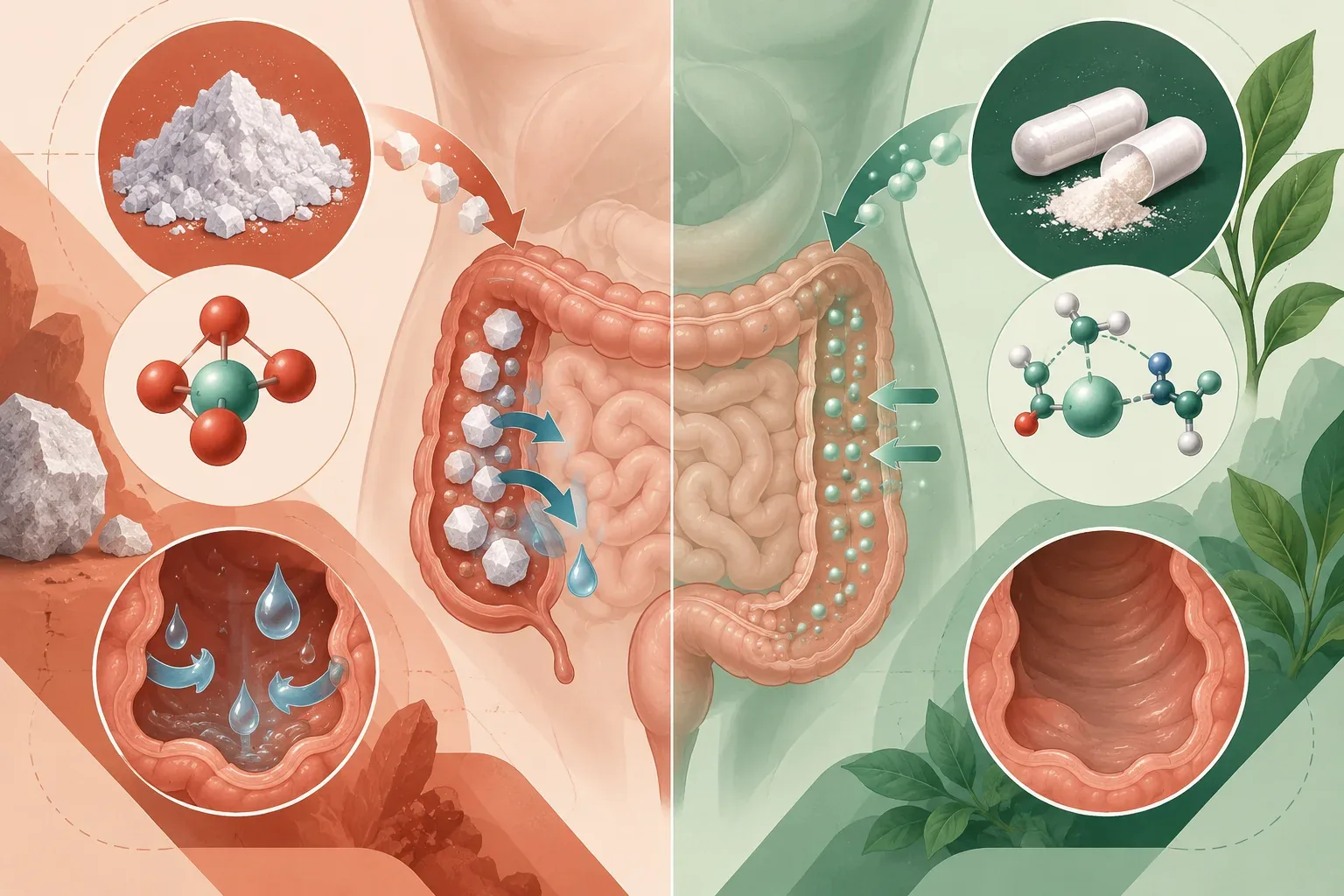
Citrate pulls water into the bowel, and its laxative effect grows with the dose. That can be useful when constipation is part of the reason you are choosing a form. If your stools are already loose, choose the form without citrate rather than assuming you need to tolerate that effect. Glycinate is often marketed as gentler, but no trial has directly compared the two forms for stomach or bowel side effects.
Absorption
The absorption evidence cannot name a winner. In a 1990 study, more magnesium appeared in urine after citrate than after the same amount of oxide, a sign that more was absorbed. A 2003 study found that citrate and an amino-acid chelate both beat oxide at 300 mg of magnesium a day, but the chelate was not identified as glycinate. A 2021 review did not rank glycinate against citrate, and we found no human trial that did.
Sleep
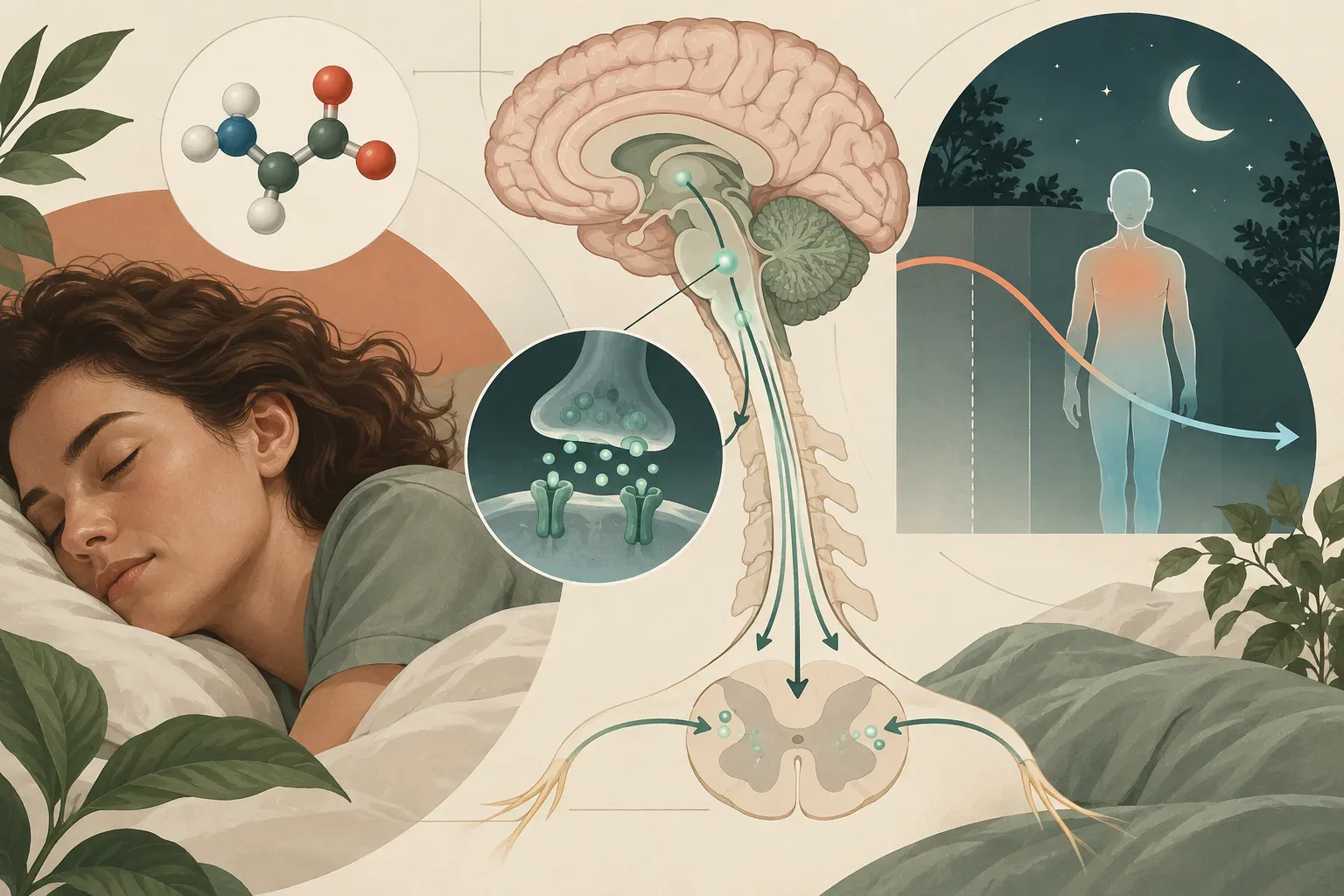
Bisglycinate may help sleep, but the one trial cannot show whether it works better than citrate or whether magnesium or glycine caused the result. The study gave 155 adults with poor sleep 250 mg of magnesium as bisglycinate or a placebo for four weeks. Scores on the 0-to-28 Insomnia Severity Index fell 3.9 points with bisglycinate and 2.3 points with placebo. Citrate was not included, and the bisglycinate supplied about 1,500 mg of glycine a day. No trial has compared the two forms for anxiety.
Does greater absorption mean better results?
A 24-week trial in 164 adults[1] compared citrate, oxide and sulfate at the same 450 mg elemental daily amount. Citrate increased urinary magnesium more, but none improved blood pressure or arterial stiffness compared with placebo. Glycinate was not tested.
Read the elemental number, not the compound weight
Labels list either the magnesium itself or the whole compound, and the two numbers differ a lot.
One glycinate powder lists 1,600 mg of magnesium bisglycinate monohydrate per serving and 200 mg of magnesium. The water held in the monohydrate helps explain why magnesium is 12.5 percent of the compound rather than about 14 percent for dry, pure bisglycinate. One citrate product lists 1,300 mg of magnesium citrate and 208 mg of magnesium. For your daily total, count 200 mg or 208 mg—not 1,600 mg or 1,300 mg.
Two official numbers apply to different totals. The recommended daily amount from the National Academies is 310 to 420 mg for adults depending on age and sex; that includes food and supplements. The official upper limit from the National Academies is 350 mg a day from supplements alone because larger supplemental amounts can cause diarrhea. One "Magnesium Glycinate 400" product lists 400 mg of magnesium per two-tablet serving, already above that supplement-only limit.
Label traps
- "Glycinate" that is not pure glycinate. Some products are "buffered," meaning the glycinate is mixed with another compound such as magnesium oxide. Others use lysinate-glycinate, which binds magnesium to two amino acids. Read every form listed after "as," then use the elemental magnesium line.
- Compound weight on the front. A front label saying "magnesium citrate 1,300 mg" is the salt, not the magnesium.
- "Best magnesium for sleep." No trial has compared glycinate with citrate for sleep.
Who should check before taking either form?
Ask a doctor before either form if you have advanced kidney disease, check with a pharmacist if you take one of the medicines below, and skip the extra magnesium when food already covers your target.
- People with advanced kidney disease. The kidneys clear extra magnesium, so when they work poorly it can build up to harmful levels; supplements need a doctor's approval.
- People taking certain antibiotics or osteoporosis drugs. Magnesium can reduce absorption of tetracycline and quinolone antibiotics and bisphosphonates; space them as your pharmacist advises.
- People with no identified gap. If food already covers your target and a clinician or test has not found a reason to add more, a supplement may add only side effects. Nuts, seeds, beans, whole grains, and leafy greens all supply magnesium.
The bottom line
Choose between these forms mainly around the elemental magnesium amount and the bowel effect you want. Citrate can fit when mild bowel loosening would help; it is less appealing if loose stools are already a problem. Glycinate is an alternative, but its reputation as the superior sleep or anxiety form runs ahead of direct comparison evidence.
Count elemental magnesium from all supplements and magnesium-containing medicines toward the adult 350 mg daily limit, unless a doctor advises otherwise.
If both products supply a suitable amount and you can tolerate both, the studies we looked at do not establish a clear winner.
Help us improve this article
Spotted an error or found a source we should consider? Tell us which part of this article needs another look and include a link if you have one. Please leave out personal health details and lab results; we can’t answer individual medical questions.
More about magnesium




Explore more in sleep




Nutrient connections worth understanding
 Nutrient balance
Potassium: Food, Supplement Amounts and When to Seek Advice
Connection details
Context: hypomagnesemia with low potassium
Hypomagnesemia makes low potassium hard to fix.
Source for this connection
 Nutrient use · Disputed pairing
Vitamin D: Daily Needs, Blood Tests and the Limits of Higher Doses
Connection details
Context: vitamin D enzymes
Vitamin D enzymes use magnesium.
Source for this connectionContext: D fails if magnesium is low
That is not the same sentence as D fails if magnesium is low. A D3 capsule can still raise 25-hydroxyvitamin D.
Source for this connection
References
- 24-week trial in 164 adults ↩
- Office of Dietary Supplements: Magnesium, health professional fact sheet
- Lindberg et al.: magnesium bioavailability from citrate and oxide, 1990
- Pardo et al.: bioavailability of magnesium food supplements, systematic review, 2021
- Schuchardt and Hahn: intestinal absorption of magnesium, review, 2017
- Schuster et al.: magnesium bisglycinate in adults with poor sleep, 2025
- NIH Dietary Supplement Label Database: a 400 mg magnesium glycinate label
- NIH Dietary Supplement Label Database: a magnesium bisglycinate powder label
- NIH Dietary Supplement Label Database: a magnesium citrate capsule label
- NIH Dietary Supplement Label Database: a magnesium citrate powder label
Corrections & updates
- Update
Updated the evidence discussion and practical guidance after editorial review.
- Update
Revised the article after editorial review, with clearer evidence explanations and practical guidance.