
What is ginkgo?
Ginkgo biloba is a tree whose leaf is sold as powder, tea, and a concentrated extract. Most labels list 120 mg of standardized leaf extract. The best-known named extract, the one used in the largest studies, is called EGb 761. People take ginkgo for memory, cognitive aging, circulation, ringing in the ears and dizziness. The seeds are a separate product and can be poisonous.
Historical use and modern supplements
Ginkgo has a long history in Chinese medicine for cough, diarrhea and other conditions, according to NCCIH[1]. That agency account does not specify which plant part was used for those purposes. Today, leaf extracts are the usual supplement form, and memory and circulation are prominent reasons people take them.
The seeds have a separate food history. Hong Kong's Centre for Food Safety[2] describes ginkgo seeds, also called Bai Guo, in congee, soups, main dishes and desserts in Asian cuisines, especially China, Japan and Korea. It also documents their poisoning risk. Their culinary use is not a reason to substitute seeds for a prepared leaf extract.
Modern trials ask about dementia, tinnitus, dizziness and walking symptoms using particular extracts. They do not directly test the cough and diarrhea uses described in the historical account.
What people take ginkgo for
| Claimed benefit | Dose / form studied | Research verdict | Evidence strength |
|---|---|---|---|
| Preventing dementia in older adults | EGb 761, 120 mg twice daily; adults ≥75 years, median 6.1 years | It did not prevent dementia or slow cognitive decline. | Review pending |
| Mild cognitive impairment | Leaf extracts across 12 studies; six-month results, no single established regimen | Probably little or no improvement in cognition or daily activities. | Limited |
| Symptoms of diagnosed dementia | Leaf extracts across 13 studies; six-month results, no single established regimen | Small-to-moderate improvements are possible, but results vary widely. | Limited |
| Tinnitus as the main complaint | LI 1370, 150 mg/day for 12 weeks; other preparations in reviews | No dependable symptom benefit; pooled estimates remain uncertain. | Limited |
| Tinnitus or dizziness accompanying dementia | Mainly EGb 761, 240 mg/day for about five to six months | Some symptom scores improved, with important limits on applying them to other patients. | Limited |
| Walking limited by peripheral arterial disease | Different extract doses over 4–24 weeks | Individual trials disagree; the pooled maximum-walking result was not statistically clear. | Limited |
Mild cognitive impairment means more memory or thinking difficulty than expected for age, while everyday activities are generally still manageable. Dementia involves memory or thinking problems severe enough to interfere with everyday life.
Nobody needs it as a nutrient. If you are healthy and want a dependable memory booster, the evidence suggests you will not find one in a Ginkgo supplement. If you have diagnosed dementia, a standardized extract is a question for the clinician treating it: a recent review found possible symptom benefits.
When to ask a doctor before taking it
Ask before taking it if you use warfarin or another medicine that affects bleeding, have a procedure coming up, or take regular prescription medicine. The US National Center for Complementary and Integrative Health warns that the herb may increase bleeding with warfarin and may interact with other drugs.
Common dosage
There is no recognized recommended daily amount or official upper limit for ginkgo. Amounts on labels are product directions, and trial doses are not established daily requirements.
A common label direction is 120 mg of standardized leaf extract once a day. Some products need two capsules to reach 120 mg; others hide ginkgo inside a blend.
Assessing memory changes
Memory changes still deserve a medical evaluation. A supplement label cannot tell whether poor sleep, a medicine, depression, a thyroid problem, a vitamin deficiency, or a neurological condition is contributing.
Ginkgo forms at a glance
“Standardized” means that the maker states measured percentages of selected marker compounds. Those percentages help describe an extract; they do not prove that a generic product is the same as EGb 761.
| Form | Amount you may see | What to check |
|---|---|---|
| EGb 761, a named standardized leaf extract | Often 120 mg per labeled serving | The label must actually name the extract; a similar number is not proof of equivalence |
| Generic standardized leaf extract | Commonly 120 mg, sometimes with 24% flavone glycosides | Look for both the extract amount and marker percentages |
| Whole leaf, tea, or a multi-herb blend | Variable or hidden | These do not inherit the evidence for a named extract |
Compare products by milligrams of leaf extract, then by the extract name and standardization. There is no default starting amount. A 120 mg serving is common on US labels, but the decision depends more on your medicines and your goal than on finding the smallest capsule. Skip seeds, whole-leaf powder or tea marketed as a studied extract, blends that hide the amount, and labels promising proven memory or dementia prevention.
What to pay attention to on the label
The useful number is the milligrams of leaf extract per serving, followed by the extract name or marker percentages. The front-panel number alone cannot tell you whether the product resembles EGb 761.
Which number is the amount?
The usual marker groups are called flavone glycosides and terpene lactones. EGb 761 is a named dry leaf extract with about 24% ginkgo-specific flavone glycosides and 6% terpene lactones. A US softgel label lists 120 mg of leaf extract standardized to 24% ginkgo flavone glycosides, equal to 28.8 mg of those glycosides. It does not name EGb 761 or list terpene lactones, so it has not shown that it matches the studied extract.
Check serving size too. Another label lists 120 mg only after two capsules and combines it with five other ingredients. “120 mg” can mean one softgel, two capsules, or one part of a larger formula.
Misleading labels
A hidden amount inside a proprietary blend
One circulation formula lists a 250 mg proprietary blend containing citrus bioflavonoids, grape ingredients, ginkgo, and bilberry. It never gives the ginkgo amount. You cannot compare that serving with a 120 mg extract or a trial amount.
One marker without the complete extract identity
A label may say “24% flavone glycosides” and still omit terpene lactones and the named extract. Standardization is useful, but one familiar percentage does not make every preparation interchangeable.
“Clinically proven memory” without the population
A memory claim may be borrowing from treatment studies in people with diagnosed dementia, a short test in healthy adults, or a prevention study that found no benefit. If the label does not name the extract, amount, population, and outcome, the claim is doing more work than the Supplement Facts line supports.
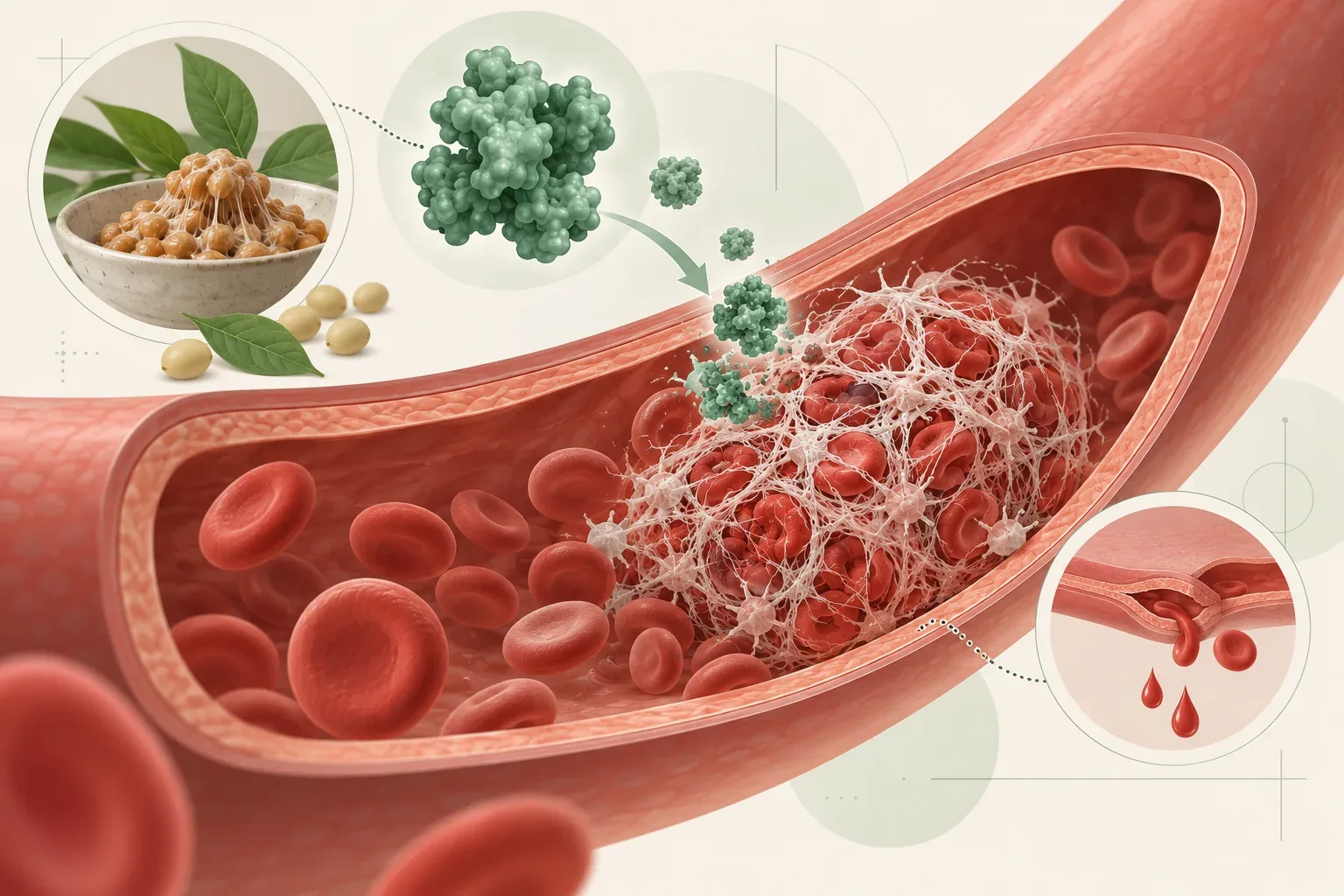
Ginkgo with nattokinase
Nattokinase is an enzyme supplement sold for clot-related claims. A reason to take either product separately does not establish a benefit from combining them.
| Supplement | What happens | When it matters |
|---|---|---|
| Nattokinase | No trial has tested bleeding safety when it is combined with ginkgo | Blood-thinning medicine, a bleeding disorder, or an upcoming procedure |
Common Myths about Ginkgo
Does ginkgo prevent dementia?
It has not been shown to prevent dementia or Alzheimer’s disease. A long randomized prevention trial found slightly more, not fewer, dementia cases in the extract group, but the difference could have been chance.
Does ginkgo improve memory in healthy adults?
Research in healthy adults has not shown a consistent cognitive benefit.
Are ginkgo seeds a natural version of the extract?
No. Fresh seeds are toxic, and serious effects have also followed roasted seeds and other forms of unprocessed ginkgo.
Drawbacks and side effects
| Potential drawback | When/who it affects | Research evidence | Practical implication |
|---|---|---|---|
| Dizziness, headache or stomach symptoms | Leaf-extract users; no known dose threshold | [1] | Reassess a product that causes symptoms. |
| Bleeding concerns with medicines | Especially warfarin or other blood-thinning products | Major bleeding did not clearly differ overall in the prevention trial, but warfarin users were excluded. | Have the prescriber review the combination; seek urgent care for serious bleeding. |
| Unsafe substitution with seeds | Eating seeds instead of using a studied leaf extract | Seeds can be toxic and are not the trial preparation. | Do not use seeds as a supplement substitute. |
When too much is dangerous
In practice, your medicine list and bleeding risk set the limit more than a milligram number does.
Leaf extracts were generally well tolerated in research, but that does not cover whole-leaf powder, tea, seeds, hidden-dose blends, or combinations with blood-thinning products. Seek urgent care for serious bleeding or a severe reaction.
Ginkgo during pregnancy and breastfeeding
NCCIH says ginkgo may be unsafe during pregnancy because it might cause early labor or extra bleeding near delivery. Little is known about safety while breastfeeding. There is no prenatal need or official pregnancy amount, so do not use it during either period without advice from the clinician overseeing your care.
The science behind ginkgo
The memory studies distinguish preventing dementia from treating symptoms after diagnosis. Research on tinnitus, dizziness and leg circulation adds another distinction: the same symptom can occur in people with quite different underlying conditions.
The dementia-prevention trial found no benefit
The Ginkgo Evaluation of Memory trial[3] analyzed 3,069 adults aged 75 or older who received EGb 761 at 120 mg twice daily (240 mg a day in total) or placebo.
- Over a median 6.1 years, 277 people in the extract group and 246 in the placebo group developed dementia. That works out to about 3.3 new cases per 100 people per year on the extract and 2.9 on placebo; the difference could have been chance.
- The follow-on cognition analysis[4] found no slower decline in memory, attention, language, understanding visual and spatial information, or skills such as planning and organizing.
- The findings do not support using that extract to prevent dementia in that older population.
Mild cognitive impairment and dementia trials: different findings
A 2026 Cochrane review[5] included 82 randomized studies with 10,613 participants; 72 studies supplied data the reviewers could extract, and only four were at low risk of bias in every assessed domain. The 82 studies did not all ask the same question. They enrolled people with subjective memory complaints, cognitive problems related to multiple sclerosis, mild cognitive impairment, or diagnosed dementia, used different extracts and measured different outcomes. The clearest six-month comparison for mild cognitive impairment drew on 12 studies of 1,913 people and found little or no difference in overall status, cognition or daily activities.
In 13 studies of 3,288 people who already had dementia, the same review found possible small-to-moderate six-month improvements in symptoms, cognition, and daily activities. The certainty was low and results varied widely between studies. A symptom benefit after diagnosis therefore remains possible, but more research is needed.
Two individual dementia trials show why a pooled estimate needs context. A 2008 community trial[6] analyzed 176 people given a standardized 120 mg daily extract or placebo for six months and found no clear improvement in cognition or patient- or carer-rated quality of life. A 24-week trial in 410 outpatients[7] with dementia and behavioral symptoms tested 240 mg/day of the named EGb 761 extract and found better behavioral-symptom scores than placebo. The latter trial's participants had a specific symptom profile and its authors included employees and consultants of the extract's manufacturer. These are treatment studies, not evidence that a retail ginkgo bottle prevents dementia in a healthy adult.
Tinnitus: no clear overall benefit, with better scores in dementia
A large trial of stable tinnitus[8] tested the leaf extract LI 1370, not EGb 761. It enrolled 1,121 adults aged 18–70 and used 50 mg three times daily or placebo for 12 weeks. Among the 360 matched pairs who answered the relevant question at 12 weeks, 34 people taking ginkgo and 35 taking placebo said their tinnitus was less troublesome. Loudness and the other main symptom measures also showed no clear benefit. The study used postal questionnaires without clinical contact to confirm diagnoses[9] and had fewer participants in its final paired analyses; it was funded jointly by the British Tinnitus Association and the extract manufacturer.
A 2022 Cochrane review[10] included 12 studies and 1,915 participants, but its pooled tinnitus-handicap score came from just two studies with 85 people. At three to six months, ginkgo's average advantage was about 1.4 points on a 100-point scale, with an uncertainty interval ranging from an 8.3-point advantage to a 5.6-point disadvantage. The reviewers judged that evidence very uncertain.
There is also a positive finding in a different population. A 2018 analysis of five dementia trials[11] found that EGb 761 at 240 mg/day for at least 20 weeks improved tinnitus scores by about one point more than placebo on a 0–10 scale. Its authors included employees of the extract manufacturer. These were people with dementia who also had tinnitus, so the result offers less guidance to someone seeking treatment for tinnitus alone.
Dizziness: mixed findings in neurological conditions
The same 2018 dementia analysis found a modest dizziness-score advantage with EGb 761. A 2026 review[12] examined nine trials in people with dementia or disorders affecting the brain's blood supply. Most participants had dementia. It included several ginkgo preparations, different comparison treatments and one injected preparation added to another medicine.
Three dementia trials favored ginkgo on dizziness severity, but their results varied greatly; removing one trial made the pooled difference statistically uncertain. The cerebrovascular trials were mixed: two studies favored ginkgo on symptom scales, while three studies' overall response rates did not clearly differ from their comparison treatments. The review was funded by SK chemicals, which the authors said had no role in its design, analysis or writing.
These reviews reuse some dementia-trial evidence, including the 24-week behavioral-symptom trial discussed above. They should not be counted as separate demonstrations of benefit. Their results also cannot establish how an oral supplement will work for an unexplained dizzy spell or another balance disorder.
Leg pain while walking: mixed trial results
Intermittent claudication is walking pain caused by reduced blood flow in peripheral arterial disease. In a 24-week trial[13] that recruited 111 patients, pain-free walking distance increased from about 109 to 153 meters with EGb 761, compared with 105 to 127 meters on placebo. That between-group difference favored the extract. The trial also found an improvement in maximum walking distance, but no change in its Doppler blood-flow measurements.
A later trial of 62 adults[14] tested EGb 761 at 300 mg/day against placebo for four months. Maximum treadmill walking time increased by an average of 91 seconds with the extract and 20 seconds with placebo, but the variability was large and the difference was not statistically clear. Pain-free walking time, vascular measurements and walking-related quality of life also showed no clear advantage.
A Cochrane review of 14 trials[15] included both studies. Its pooled maximum-walking analysis used 11 trials with 477 people and did not show a statistically clear benefit. The six trials lasting 24 weeks, with 321 participants, did favor ginkgo, while shorter-duration results remained uncertain. However, the reviewers warned that the smaller 24-week group was more susceptible to publication bias: missing negative studies could make the apparent benefit look larger. This comparison between studies cannot show that taking ginkgo longer works better. A dependable, clinically meaningful improvement in walking remains unestablished.
Bleeding: the trial result and the warfarin warning
The Ginkgo Evaluation of Memory prevention trial[3]:
- It found no statistically clear difference in major bleeding overall.
- It also recorded 16 hemorrhagic strokes in the extract group and 8 with placebo.
- Those were small numbers, and the difference was not statistically conclusive.
- The trial excluded current warfarin users and stopped the study extract when participants later started warfarin, so it could not clear that combination.
- NCCIH[1] still warns that the extract may increase bleeding in people taking warfarin. How large that combined risk is remains unknown.
The bottom line
Ginkgo did not prevent dementia in the large, long trial, so buying it to preserve a healthy memory is not supported by that result. Some symptom benefits in diagnosed dementia remain possible, but the results are inconsistent. Tinnitus alone has no dependable benefit, dizziness findings mostly concern selected neurological populations, and improvement in walking limited by arterial disease remains uncertain.
For dementia symptoms, tinnitus, dizziness or walking problems, the named leaf extract matters. We can't assume the evidence from the trials above applies equally to tea, whole-leaf capsules or generic blends. We would not choose it from a “memory support” perspective alone, particularly when medicines or bleeding concerns complicate the decision.
Help us improve this article
Spotted an error or found a source we should consider? Tell us which part of this article needs another look and include a link if you have one. Please leave out personal health details and lab results; we can’t answer individual medical questions.
Explore more in focus & memory


Nutrient connections worth understanding
 Combined risks
Nattokinase: Reading FU Labels and Weighing the Plaque Claims
Connection details
Context: bleed-or-clot map with the enzyme
Ginkgo sits on the same bleed-or-clot map as nattokinase. NCCIH maps ginkgo with anticoagulants.
Source for this connection
More in herbs
References
- NCCIH: Ginkgo—usefulness and safety ↩
- Centre for Food Safety: Ginkgo seeds, 2018 ↩
- DeKosky et al.: Ginkgo for prevention of dementia, 2008 ↩
- Snitz et al.: Ginkgo and cognitive decline, 2009 ↩
- Wieland et al.: Cochrane review of cognitive impairment and dementia, 2026 ↩
- 2008 community trial ↩
- 24-week trial in 410 outpatients ↩
- Drew and Davies: LI 1370 for tinnitus, 2001 ↩
- without clinical contact to confirm diagnoses ↩
- Sereda et al.: Cochrane tinnitus review, 2022 ↩
- Spiegel et al.: Tinnitus and dizziness in dementia trials, 2018 ↩
- Jeon et al.: Dizziness in central neurological disorders, 2026 ↩
- Peters et al.: EGb 761 for claudication, 1998 ↩
- Gardner et al.: Ginkgo and walking in PAD, 2008 ↩
- Nicolai et al.: Cochrane claudication review, 2013 ↩
- DSLD: 120 mg standardized leaf-extract label
- DSLD: 120 mg multi-ingredient label
- DSLD: hidden-dose proprietary blend
Corrections & updates
- Update
Updated the evidence discussion and practical guidance after editorial review.