
What is vitamin B2?
Vitamin B2, also called riboflavin, is a water-soluble vitamin found in foods such as milk, yogurt, eggs, meat, almonds, mushrooms, enriched grains, and fortified cereal.
Supplements usually provide free riboflavin or riboflavin-5'-phosphate, also called FMN and often supplied as its sodium salt. The recommended everyday nutrition amount is measured in low single-digit milligrams. People also take much larger amounts for migraine prevention.
The short version
- Unit: Riboflavin is measured in milligrams (mg), with no IU conversion. Count the declared riboflavin amount across food, fortified food, a multivitamin, a B-complex, and any standalone product.
- Reasonable starting point: For ordinary nutrition, use the recommended daily amount—1.3 mg for adult men and 1.1 mg for adult women—from food plus supplements. A meal is a reasonable time to take a supplement.
- Skip: Skip an "energy" blend that hides the B2 amount, an “activated” claim that promises superior absorption, or a 100 or 400 mg amount presented as if it was a daily dietary requirement.
| Form on the label | Common supplement dosage | What that number means |
|---|---|---|
| Riboflavin | 1.3 mg is common in multivitamins; higher B-complex and standalone listings also exist | Use the riboflavin milligrams on Supplement Facts |
| Riboflavin-5'-phosphate | Amounts vary; there is no separate official FMN target | Use the declared riboflavin milligrams, not an “activated” multiplier |
| Riboflavin-5'-phosphate sodium | Usually appears in parentheses as the source | “Riboflavin 10 mg (as riboflavin-5'-phosphate sodium)” means 10 mg of riboflavin |
What vitamin B2 does in your body
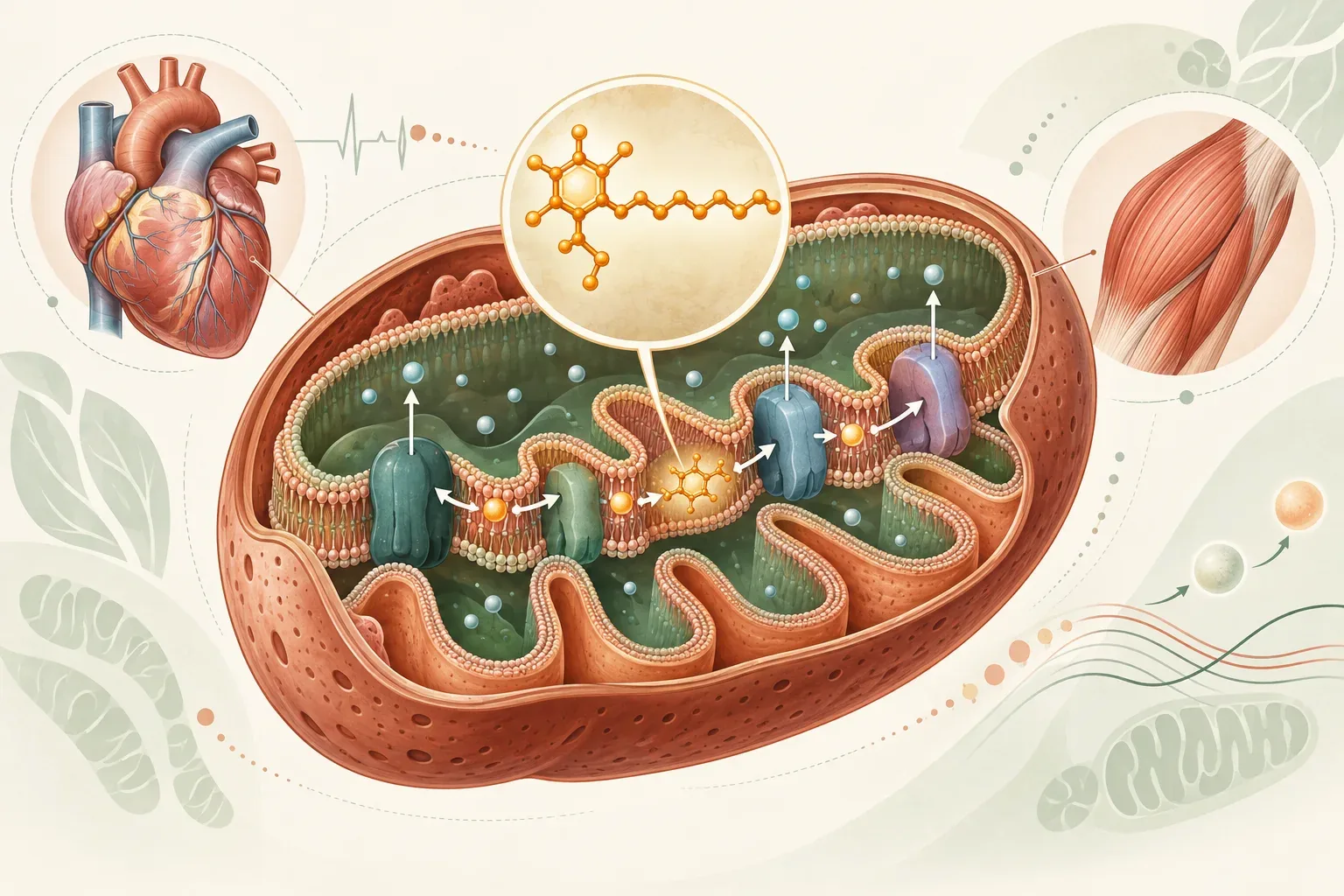
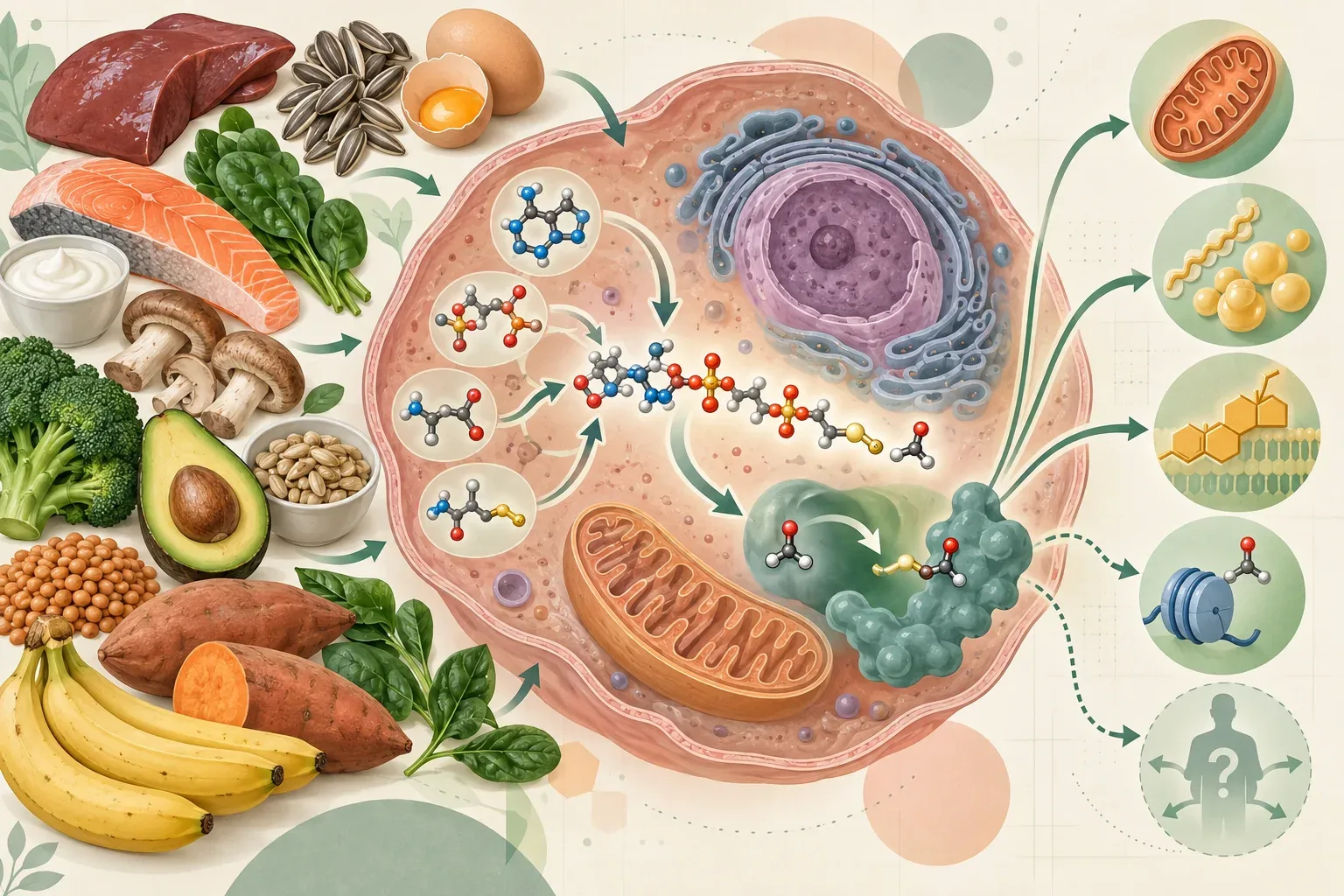
The body turns riboflavin into two helper molecules, FMN and FAD. These attach to enzymes and let them accept and pass on electrons during chemical reactions. In mitochondria, the cell structures that produce much of our usable energy, that transfer helps turn the energy in food into a form cells can use.
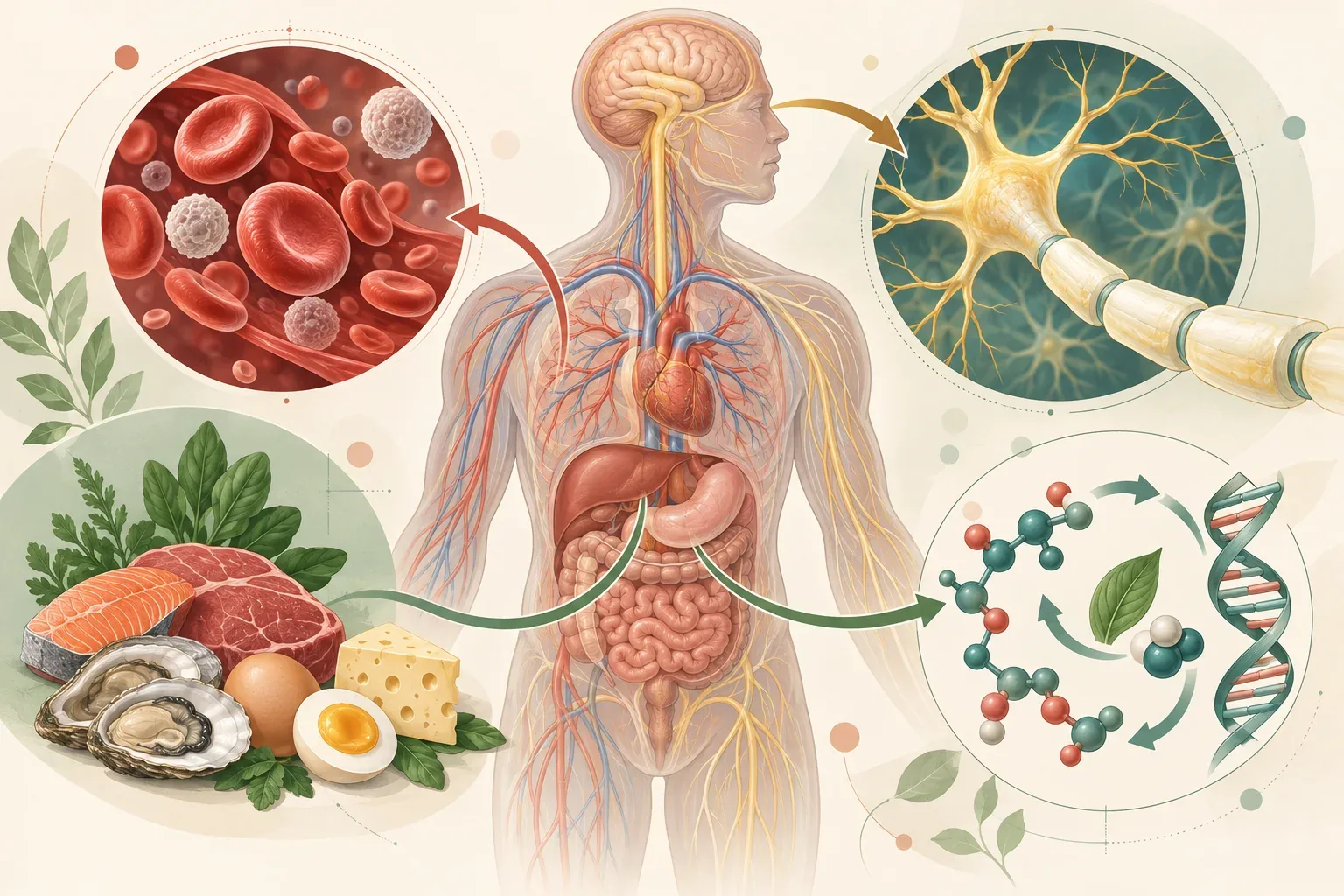
The same helpers have other jobs. They support the processing of fats and participate in reactions involving other vitamins. Riboflavin is needed when the body converts tryptophan into niacin and activates vitamin B6. This is one reason nutritional pathways cannot be reduced to a single “energy vitamin.”
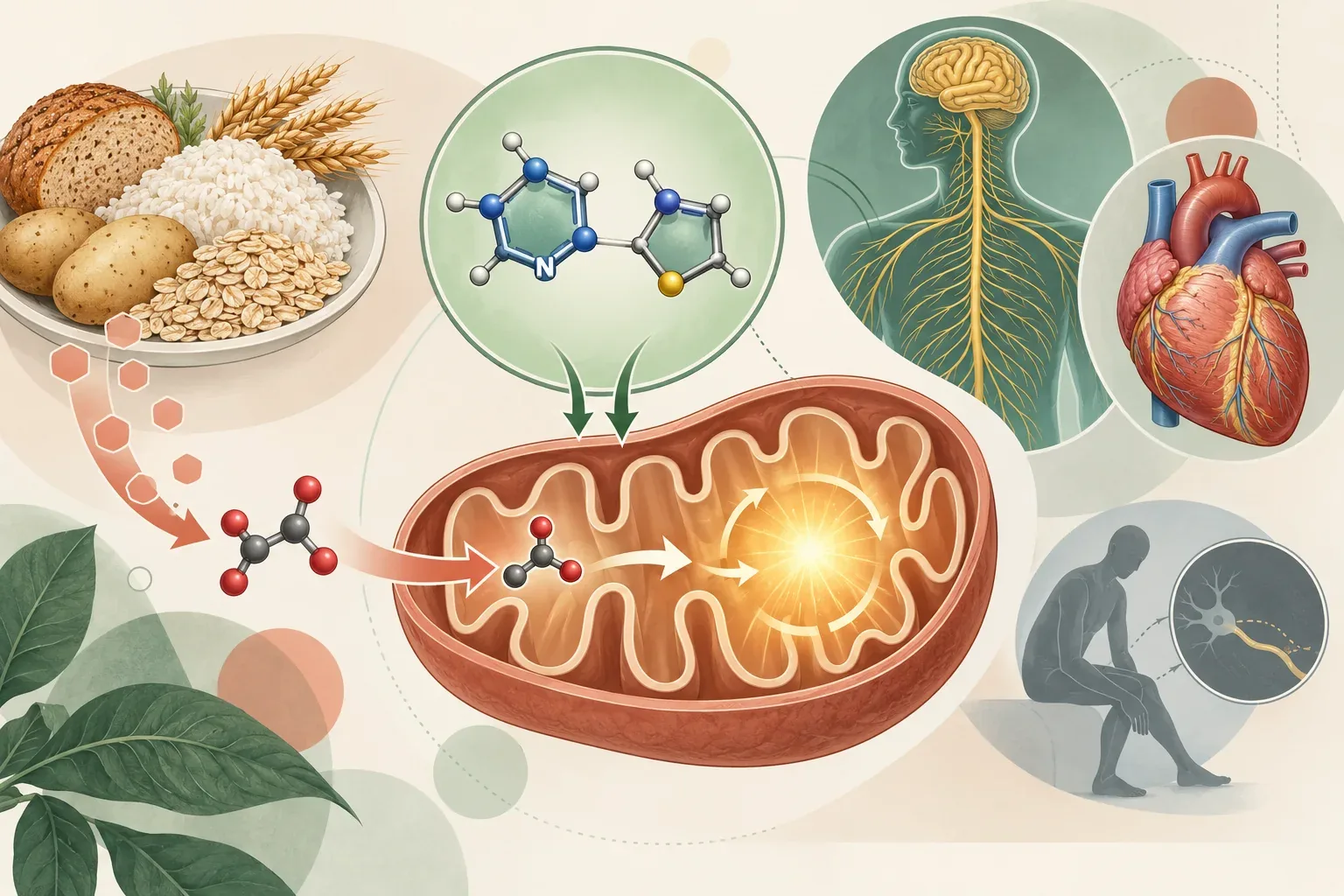
Those reactions happen continuously as cells maintain themselves. Riboflavin supports the machinery; the carbohydrate, fat and protein in food supply the fuel. [1]
What people take riboflavin for
| Claimed benefit | Dose / form studied | Research verdict | Evidence strength |
|---|---|---|---|
| Correcting low riboflavin status | 2 or 4 mg/day for eight weeks in young women with low B2. | Riboflavin status improved; the reported hemoglobin associations need to be distinguished from an effect versus placebo. | Review pending |
| Preventing migraine in adults | Riboflavin 400 mg/day for three months in a small placebo-controlled trial. | The trial reported fewer attacks and headache days; current Canadian guidance rates the evidence quality as low. | Review pending |
| Preventing migraine in children | Oral 50–200 mg/day in trials with differing schedules and populations. | Positive and null trials do not establish a dependable pediatric regimen. | Limited |
| Tension-pattern headaches accompanying childhood migraine | 50 mg/day; 16 weeks each of riboflavin and placebo in a crossover trial. | An exploratory frequency finding needs confirmation in a trial designed for this question. | Limited |
| Lowering blood pressure with the MTHFR 677TT genotype | 1.6 mg/day for 16 weeks in genotype-selected adults, usually alongside blood-pressure treatment. | Small trials suggest a systolic effect, but the overall evidence is very uncertain. | Insufficient |
Consider a riboflavin supplement when your usual diet repeatedly falls short, a clinician has identified low status after testing, or when the higher recommended amount during pregnancy or lactation is difficult to cover with food. Start by totaling the riboflavin in a normal weekly diet rather than judging one meal.
Migraine prevention is a separate decision. The main adult placebo-controlled trial used 400 mg a day, more than 300 times the 1.3 mg Daily Value. That amount was studied for migraine.
When to ask a doctor before taking it
Ask your doctor before giving a child the 50–200 mg daily amounts studied for migraine, using hundreds of milligrams during pregnancy, or trying to manage suspected riboflavin-transporter deficiency. The transporter disorders are rare medical conditions that need specialist treatment, not conditions to self-treat by choosing among over-the-counter B2 supplements.
The NIH fact sheet reports no known clinically relevant medication interactions with riboflavin, so it gives no official drug-spacing schedule.
Common dosage
The recommended daily amount from the National Academies is 1.3 mg for adult men and 1.1 mg for adult women. These are total daily amounts from food plus supplements, not pill-only targets. Pregnancy increases the recommendation to 1.4 mg and lactation increases it further to 1.6 mg.
Children’s recommended amounts vary by age. The FDA Daily Value is 1.3 mg for adults and children age 4 and older.
What changes how much you absorb
Taking it with food helps. In older human experiments, more of a dose of riboflavin-5'-phosphate was recovered in urine when it was taken after a meal than when it was taken fasting. Food probably moved it through the gut more slowly and gave the limited absorption process more time.
A single dose has an absorption ceiling. In a nine-person study[2] that compared 20, 40, and 60 mg in oral supplements with riboflavin given into a vein, researchers estimated that no more than about 27 mg was absorbed from one oral dose. Little more was absorbed from a larger single dose in that study; 27 mg is an estimate, not a precise limit for every person. The separate 400 mg migraine trial measured migraine outcomes, not the amount absorbed; this small absorption study cannot tell us whether that trial dose was necessary.
Below that ceiling, riboflavin from food and supplements is absorbed about equally. The NIH fact sheet says about 95% of riboflavin from food, which is mostly in the FAD and FMN forms, is absorbed up to that limit, and free riboflavin in supplements is absorbed similarly. The "activated" FMN form has not been shown to do better; see the form evidence.
Morning or night, with food or without?
Taking a nutrition-dose supplement with a meal is reasonable and may improve absorption. No morning-versus-night advantage has been established.
Am I getting enough from food?
Many diets can cover riboflavin without a standalone supplement. The NIH table lists 3 ounces of beef liver at 2.9 mg, a serving of fully fortified cereal at 1.3 mg, one cup of yogurt at 0.6 mg, and one cup of 2% milk at 0.5 mg. Eggs, mushrooms, almonds, clams, beef, oats, and enriched grains add smaller amounts across the day. In enriched flour, added riboflavin replaces some of what milling removes. [3]
Selected values from the NIH Office of Dietary Supplements food table[1] show the stated food and preparation. Amounts are per serving.
| Food and preparation | Source | Serving | Riboflavin (mg) |
|---|---|---|---|
| Beef liver, pan-fried | Meat | 3 oz (about 85 g) | 2.9 mg |
| Breakfast cereal, fortified to 100% DV | Fortified | 1 labeled serving | 1.3 mg |
| Yogurt, plain, fat-free | Dairy | 1 cup | 0.6 mg |
| Milk, 2% | Dairy | 1 cup | 0.5 mg |
| Almonds, dry-roasted | Plant | 1 oz (about 28 g) | 0.3 mg |
| Portabella mushrooms, grilled | Plant | ½ cup | 0.2 mg |
One fully fortified cereal serving can equal the 1.3 mg Daily Value, while yogurt plus milk supplies about 1.1 mg before other food is counted. Check the actual food label because fortification varies. Riboflavin breaks down in light, which is one reason milk is generally packaged to limit light exposure.
On a vegan diet without fortified grains or regular riboflavin-rich plant foods, you may get little B2 from food. For scale, the almond and mushroom portions in the table add up to 0.5 mg, compared with adult daily amounts of 1.1–1.3 mg. Fortified cereal can close the gap in one serving, but the amount varies by product. Total a normal day rather than guessing from one meal.
Plant drinks can also supply riboflavin when fortified. Finland recommends adding B2 to plant alternatives alongside calcium, B12, vitamin D and iodine to replace nutrients normally supplied by dairy. [4]
How can I tell if I'm low on vitamin B2?
Riboflavin deficiency often occurs alongside other nutrient deficiencies. Mouth, skin and eye changes are more useful clues than a general feeling of low energy.
Earlier signs
Cracks at the corners of the mouth, swollen or cracked lips, a sore throat, and red or itchy eyes can occur. Skin changes and hair loss are also reported. These findings overlap with other deficiencies and skin conditions.
Severe or prolonged deficiency
Anemia and cataracts can develop when deficiency is severe and prolonged. Earlier changes are more readily reversible; later structural eye damage may persist.
Testing and interpretation
For more information about testing for vitamin B2, see the lab tests and preparation details near the end of this article.
Absorption and form evidence
Free riboflavin
Plain riboflavin has the most direct nutrition and migraine research and is common in multivitamins, B-complex products, and standalone supplements. That is an evidence and availability advantage, not proof of a better clinical outcome than an equal declared amount of riboflavin-5'-phosphate. A clear facts line might read “Riboflavin 1.3 mg.”
Riboflavin-5'-phosphate and its sodium salt
Riboflavin-5'-phosphate is FMN, a legitimate B2 source. A label may name riboflavin-5'-phosphate sodium in parentheses while declaring the actual vitamin amount on the same line.
Choose it if the overall product is suitable, transparent, and sensibly priced at the amount you need. The current evidence does not give a reason to pay more solely for “activated,” “coenzymated,” “bypasses conversion,” or “superior absorption” language.
All riboflavin forms and where they fit
| Form or use | Amount to compare | When it fits | What remains open |
|---|---|---|---|
| Free riboflavin for nutrition | Gap toward 1.1 mg for adult women or 1.3 mg for adult men | Food and fortified foods do not cover the daily amount | No reason to assume more produces more energy |
| Riboflavin-5'-phosphate for nutrition | Same declared riboflavin target | Transparent product at a sensible price | Not shown to be better absorbed or improve health more |
| Free riboflavin for adult migraine prevention | 400 mg a day in the main trial | Discussing migraine prevention with a clinician | Small trial; current Canadian guidance rates the evidence quality as low |
| Riboflavin for pediatric migraine | 50–200 mg in placebo-controlled trials | Clinician-led only | Trials conflict, including two different results at 200 mg |
What to pay attention to on the label
The declared riboflavin milligrams are the amount to count. The chemical name in parentheses tells you the source.
Which number on the label is the amount?
If a Supplement Facts line says “Riboflavin 10 mg (as riboflavin-5'-phosphate sodium),” the product provides 10 mg of riboflavin as declared. The source-weight calculation was already done for the number on the label.
The Daily Value is 1.3 mg. A 100 mg product is about 7,692% Daily Value, and a 400 mg product is about 30,769% Daily Value.
Reading claims and dose directions
An energy blend with no riboflavin amount
If a blend hides the riboflavin milligrams, you cannot compare it with the 1.3 mg Daily Value, total it with other products, or determine whether a migraine claim refers to anything close to a studied amount.
“Activated” used as proof of better absorption
Riboflavin-5'-phosphate is a real coenzyme form. “Activated,” “coenzymated,” and “bypasses conversion” go further: they imply that the oral form avoids digestion or produces a better clinical result. The available evidence from research and human trials does not establish that advantage.
Daily directions versus daily nutritional needs
These amounts are sold: Solgar lists 100 mg of B2 per capsule[5], and Nature's Way lists 400 mg per tablet[6], each with once-daily directions. The directions give the frequency of use; they do not describe the daily nutritional requirement. Most adults need 1.1–1.3 mg a day in total; the 400 mg amount matches a separate adult migraine trial.
How long should I take vitamin B2 supplements for?
If your food does not reliably cover the recommended amount, a nutrition-dose supplement can continue while that gap remains. Migraine prevention has a different aim: the main adult trial tested 400 mg daily for three months. That trial duration does not establish how long a person should continue treatment. Discuss the response and any side effects with the clinician managing your migraine. [1]
Common Myths about Riboflavin
Does bright-yellow urine mean detox is working?
No. Riboflavin is yellow and fluorescent. When absorbed excess leaves in urine, the color can become bright yellow or yellow-orange. The color does not identify a toxin, prove that your tissues needed the dose, or show that migraine prevention is working.
If urine turns yellow, was the whole dose wasted?
No. The color does show excretion, but it does not measure exactly how much was absorbed or used. Some riboflavin was absorbed before the excess appeared in urine, and some of a large supplement amount may not have been absorbed at all.
Does the activated form bypass absorption limits?
No. Food FMN and FAD are broken down to free riboflavin in the upper gut before absorption. Cells later convert riboflavin back into FMN and FAD as needed. The one small human comparison of swallowed FMN and free riboflavin found no advantage for FMN; see the form evidence.
Must all B vitamins be taken in the same high amount?
No. Riboflavin helps enzymes involved in vitamin B6, niacin, folate, vitamin B12, and glutathione-related chemistry. Those connections do not make the daily requirement for each nutrient identical, and the National Academies review did not use them to raise the riboflavin requirement.
Does more riboflavin mean more energy?
Not once your need is covered. Riboflavin is required for energy metabolism, but an essential role is not evidence that extra B2 improves energy, exercise performance, or fatigue reduction once intake and overall levels are adequate.
Drawbacks and side effects
| Potential drawback | When/who it affects | Research evidence | Practical implication |
|---|---|---|---|
| Diarrhea or increased urination | High-dose adult migraine use. | Individual events occurred in the small 400 mg trial; it cannot establish reliable frequencies. | Discuss persistent symptoms with your clinician. |
| Unknown chronic safety ceiling | Long-term high-dose use. | Available studies were insufficient to set an official upper limit. | Do not interpret the missing limit as proof of unlimited safety. |
The expected urine-color change described above is not a toxicity syndrome.
In the small adult migraine trial, one riboflavin participant reported diarrhea and one reported unusually frequent or high-volume urination; no serious event occurred. Limited high-dose studies have not found a consistent pattern of harm in people, but they were too sparse and too short to define a chronic harm threshold.
Vitamin B2 during pregnancy and breastfeeding
Women need 1.4 mg of riboflavin a day during pregnancy and 1.6 mg during lactation, from food plus supplements. The pregnancy increase supports maternal and fetal growth, while the lactation amount replaces riboflavin transferred in milk.
Count the riboflavin milligrams on a prenatal Supplement Facts table together with food and any other B-complex or multivitamin if you're taking them.
Women considering a high-dose migraine plan during pregnancy should take that separate question to the clinicians treating the migraine and following the pregnancy.
The science behind riboflavin
Correcting low riboflavin status, preventing migraine and lowering blood pressure are different questions. The trials use different amounts and populations, and their results should be read separately. Riboflavin's essential role in metabolism does not establish that extra intake improves energy or these clinical outcomes.
Low riboflavin status improved with 2–4 mg a day
The RIBOFEM trial[7] assigned 123 women aged 19–25 with low riboflavin status to placebo, 2 mg or 4 mg a day for eight weeks; 119 completed it. Riboflavin status improved with dose. Among women receiving riboflavin, a greater improvement in status was associated with a greater rise in hemoglobin, the protein that carries oxygen in red blood cells. Women starting with the lowest status had larger hemoglobin increases than those starting higher.
Those are associations within the supplemented women and comparisons by starting status. The abstract does not quantify a hemoglobin benefit over placebo. This study concerns women selected for low B2 status; it does not establish an energy benefit for someone already getting enough.
Adult migraine results and guideline recommendations
The 1998 trial's published abstract[8] reports that 400 mg of riboflavin a day reduced migraine-attack frequency and headache days more than placebo over three months in 55 adults. Its responder figure refers specifically to headache days: 59% taking riboflavin and 15% taking placebo achieved a reduction of at least half. That is a 44-percentage-point difference in the proportion responding, not 44% fewer attacks. The NIH fact sheet separately describes the attack-frequency result as about two fewer attacks a month.
The trial is small. Our review has not yet covered its full methods or the later published comments; the account here is limited to the original abstract. Those gaps leave the assessment incomplete, even though the abstract reports a positive result.
Recommendations also need their date and evidence rating. The 2012 American Academy of Neurology/American Headache Society guideline[9] classified riboflavin as probably effective, Level B. The AAN retired that entire guideline in 2015[10] because of safety concerns about butterbur, another treatment it recommended. Its retirement is not a finding that riboflavin was harmful, but the old document is no longer a current AAN endorsement.
The updated Canadian Headache Society guideline[11], published online in 2024, retains a strong recommendation for riboflavin and lists 200–400 mg daily. Its corrigendum[12] clarifies that riboflavin's evidence quality is low, not moderate. The recommendation tells clinicians that the panel favors its use; the low evidence rating means confidence in the size and reliability of the benefit remains limited. This recommendation carries forward older evidence rather than a new riboflavin trial.
Migraine trials in children have mixed results
MacLennan and colleagues[13] compared 200 mg a day with placebo in 48 children. At least a 50% reduction in attacks per four weeks occurred in 12 of 27 children taking riboflavin and 14 of 21 taking placebo. The study found no significant advantage for riboflavin on its primary or secondary outcomes. The abstract does not specify the treatment duration.
Talebian and colleagues[14] compared placebo, 100 mg and 200 mg a day for 12 weeks in 90 children. At 200 mg, 80% had at least a 50% reduction in attack frequency, compared with 13.3% on placebo. The 100 mg group did not outperform placebo on that responder measure, and neither dose improved headache severity. This positive 200 mg result does not resolve the earlier null trial at the same daily amount.
Bruijn and colleagues[15] enrolled 42 children aged 6–13 with migraine in a crossover trial: each child was assigned 16 weeks of 50 mg/day riboflavin and 16 weeks of placebo, a matching capsule containing 100 mg of carotene, separated by a four-week washout. Migraine-attack frequency did not improve significantly more with riboflavin. Different ages, regimens and study designs limit any attempt to treat these trials as one pediatric dosing rule.
Tension-pattern headaches were a separate exploratory finding
The Bruijn trial also examined headaches with a tension-type pattern occurring alongside migraine. Fourteen of the 42 children had these headaches at baseline. Researchers counted these headaches during the last four weeks on each treatment and compared that count with the four weeks before the treatment began. The difference favored riboflavin and met the study's threshold for statistical significance (P = 0.04); the migraine result did not. This comparison used the 36 children with paired frequency records, rather than a separate trial of only those 14 children.
The authors noted that these headaches might include mild migraine attacks rather than a clearly separate disorder. The small sample, uneven baseline distribution and uncertainty about effects carrying over between treatment periods make this a preliminary finding. It does not establish a treatment for adults or children whose main diagnosis is tension-type headache. [15]
Blood pressure and the MTHFR 677TT genotype
Researchers have tested riboflavin in people with two copies of the T variant at position 677 of the MTHFR gene, written 677TT. This enzyme uses a riboflavin-derived helper molecule, which provided a reason to test the supplement. A genetic rationale alone does not establish a blood-pressure treatment.
In Horigan's trial[16], adults with premature cardiovascular disease received 1.6 mg/day or placebo for 16 weeks, with randomization within genotype groups. The blood-pressure change favored riboflavin in the TT group; comparable benefits were not demonstrated in the CC and CT groups. Most participants were already taking blood-pressure medicine.
A separate trial in 91 adults with hypertension and the TT genotype[17] also compared 1.6 mg/day with placebo for 16 weeks. Most participants were already taking blood-pressure medication. The trial reported a systolic treatment advantage of about 5.6 mmHg, while the diastolic comparison was not significant. These results concern selected patients and a specific regimen, not everyone with high blood pressure or any MTHFR variant.
The 2025 Cochrane review[18] judged the overall blood-pressure evidence very uncertain because of the small evidence base and study limitations. The promising genotype-specific results therefore do not establish riboflavin as a replacement for blood-pressure medication or justify routine genetic testing to choose a supplement. Larger, independently replicated trials would need to clarify who benefits and by how much.
Oral FMN has not shown a clinical advantage
The NIH describes food-bound FMN and FAD being broken down into free riboflavin before absorption. In Jusko and Levy's 1967 experiment[19], equimolar amounts of FMN and free riboflavin swallowed in solution produced similar urinary riboflavin recovery, according to the original abstract. Equimolar means matching the number of molecules, rather than simply giving the same weight of two different compounds.
Urinary recovery is a pharmacokinetic measurement, not a migraine, blood-pressure or other clinical outcome. This old solution experiment does not establish that today's tablets are clinically interchangeable or that an “activated” form works better. Direct clinical comparisons at equivalent vitamin amounts remain needed to establish a form advantage.
Labs
If symptoms, severe dietary restriction, malabsorption, dialysis, or a rare transporter disorder make deficiency plausible, your doctor can decide which tests and broader nutrient assessment fit the case.
Interpreting the results
The specialist functional test is the erythrocyte glutathione reductase activity coefficient, often shortened to EGRAC in research. An elevated result can suggest inadequate riboflavin status, but it does not reliably grade the severity of deficiency. A 24-hour urine measurement is a more common test that reflects recent intake and is weaker for long-term status. EGRAC cannot be interpreted normally in glucose-6-phosphate dehydrogenase deficiency, an inherited red-blood-cell enzyme condition. [1]
| Test | Value | What the NIH fact sheet says |
|---|---|---|
| EGRAC | 1.2 or less | Generally adequate |
| EGRAC | above 1.2 through 1.4 | Marginal |
| EGRAC | above 1.4 | Deficient; the best cutoffs are still uncertain |
| 24-hour urine riboflavin | under 40 mcg a day | Used as a deficiency signal |
Before the test if you already supplement
For a plasma riboflavin test, Mayo Clinic Laboratories[20] requires a 12-hour fast but does not specify a separate multi-day supplement pause. The red-cell EGRAC test and a 24-hour urine collection have different methods: get their own instructions rather than applying the plasma rule to them. If B2 is prescribed for a transporter disorder, agree on timing with your specialist before stopping it for the purpose of doing a test.
The bottom line
For everyday nutrition, count riboflavin from food, fortified foods and any multivitamin against the 1.1–1.3 mg adult daily amount. A 100 mg or 400 mg bottle is not needed to meet that requirement, and extra B2 has not been shown to boost energy when intake is already adequate. Free riboflavin and FMN both supply the vitamin; the “activated” label has not shown a practical advantage.
Migraine prevention is a separate use: Canadian guidance recommends riboflavin while rating its evidence quality as low, and the pediatric trials remain inconsistent. Tension-pattern headaches in children and genotype-specific blood-pressure effects are preliminary research questions, not established reasons to increase your dose.
Help us improve this article
Spotted an error or found a source we should consider? Tell us which part of this article needs another look and include a link if you have one. Please leave out personal health details and lab results; we can’t answer individual medical questions.
Explore more in migraine

More in vitamins

References
- NIH Office of Dietary Supplements: Riboflavin fact sheet for health professionals ↩
- Zempleni et al. 1996: single-dose riboflavin pharmacokinetics ↩
- US flour standard ↩
- Finnish recommendations ↩
- Solgar lists 100 mg of B2 per capsule ↩
- Nature's Way lists 400 mg per tablet ↩
- Powers et al. 2011: RIBOFEM low-status repletion trial ↩
- Schoenen et al. 1998: adult migraine placebo-controlled trial ↩
- 2012 American Academy of Neurology/American Headache Society guideline ↩
- AAN retirement notice for the 2012 complementary-treatment migraine guideline ↩
- Medrea et al. 2024: updated Canadian migraine prevention guideline ↩
- Canadian guideline corrigendum: low-quality evidence for riboflavin ↩
- MacLennan et al. 2008: pediatric 200 mg placebo-controlled trial ↩
- Talebian et al. 2018: pediatric 100 and 200 mg placebo-controlled trial ↩
- Bruijn et al. 2010: pediatric 50 mg placebo-controlled crossover trial ↩
- Horigan et al. 2010: riboflavin, MTHFR genotype and blood pressure ↩
- Wilson et al. 2013: riboflavin in hypertension with the MTHFR 677TT genotype ↩
- Cochrane 2025: riboflavin supplementation for blood-pressure reduction ↩
- Jusko and Levy 1967: oral FMN and riboflavin urinary recovery ↩
- Mayo Clinic Laboratories ↩
- National Academies: Dietary Reference Intakes, Riboflavin chapter
- FDA supplement-label rule, 21 CFR 101.36
- Thompson and Saluja 2017: systematic review of riboflavin for migraine
- Tepper and Tepper 2025: clinical review of nutraceuticals for headache
Corrections & updates
- Update
Clarified migraine trial results, repletion, supplement forms and guideline history.
- Update
Revised the article after editorial review, with clearer evidence explanations and practical guidance.