

What are magnesium threonate and glycinate?
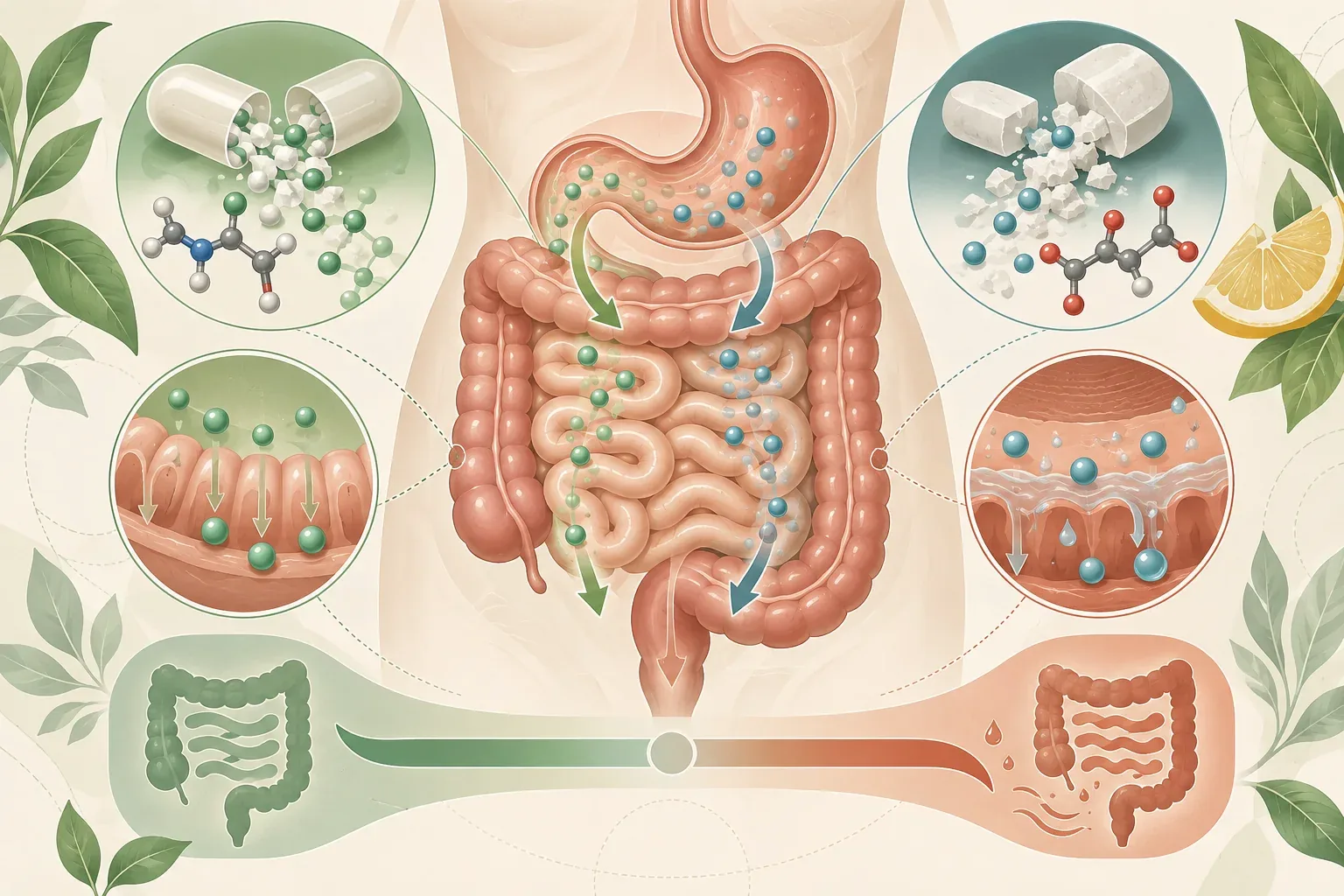
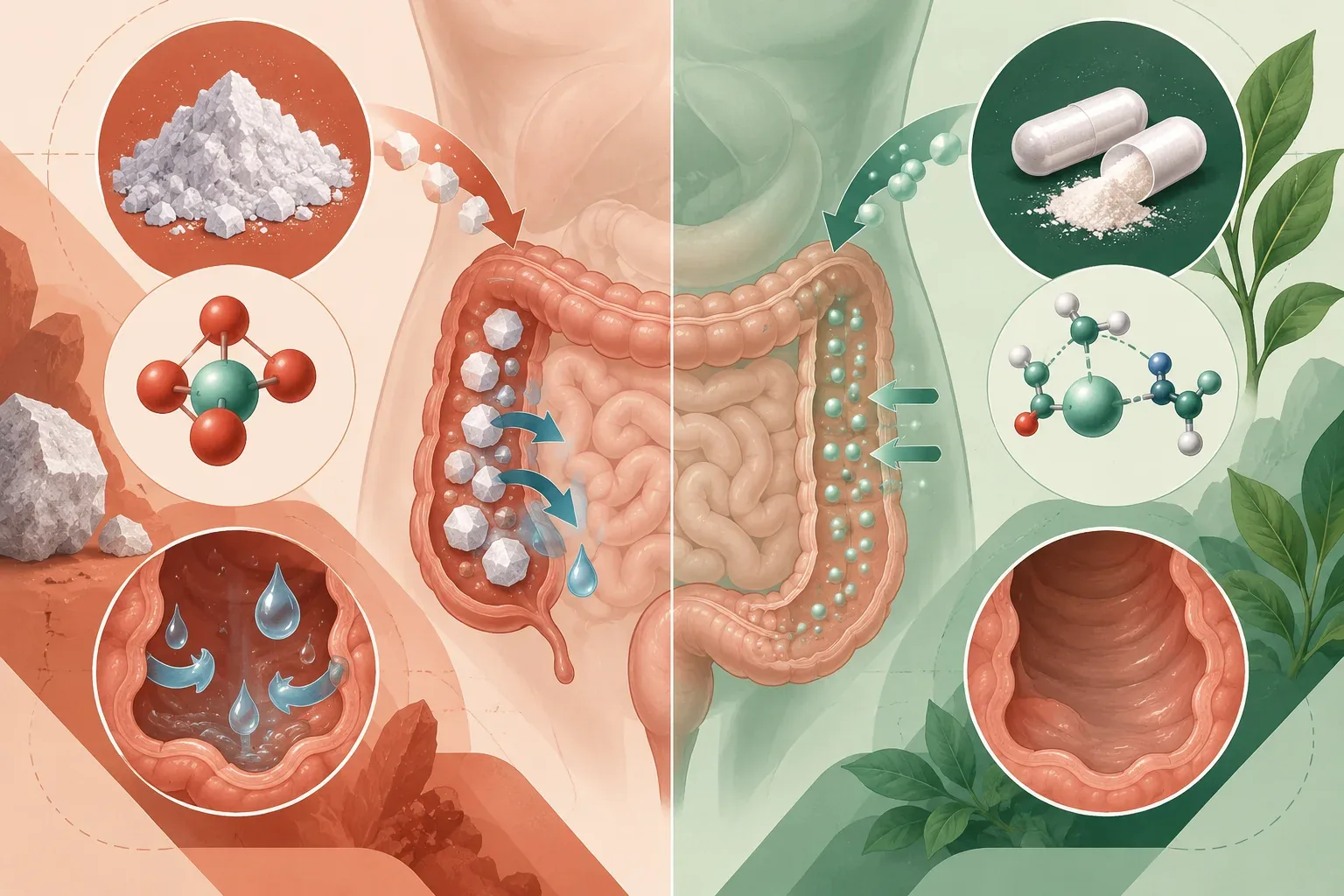
Magnesium L-threonate combines magnesium with L-threonic acid; Magtein is a branded version used in human trials. Magnesium glycinate attaches magnesium to glycine; the bisglycinate form has two glycine partners for each magnesium ion.
Both supply magnesium. The main practical difference on the label is how much of the compound's weight is magnesium. Threonate has also attracted cognition research, while bisglycinate has a recent poor-sleep trial. A head-to-head comparison is missing.
| Question | Magnesium L-threonate | Magnesium glycinate / bisglycinate |
|---|---|---|
| Which amount counts? | The elemental magnesium line; 2,000 mg Magtein commonly supplies about 144 mg magnesium | The elemental line; pure bisglycinate is about 14% magnesium by weight |
| What differs across products? | Whether the preparation is the branded salt and what the full serving supplies | Some contain bisglycinate alone; others include other amino acids or magnesium salts, such as oxide in a buffered product |
| Main evidence relevant to this choice | Small placebo-controlled sleep and cognition trials, with mixed outcomes | A short placebo-controlled trial with a small insomnia-score improvement |
| Proven better than the other? | No direct-form sleep comparison in the 2026 systematic review | The same limitation applies |
Why 2,000 mg threonate is not a huge magnesium dose
The 2,000 mg describes the whole Magtein compound. At approximately 7.2% magnesium, that is about 144 mg elemental magnesium. A glycinate product labeled Magnesium 200 mg supplies more magnesium than that threonate serving, even if its front-label number looks smaller.
Use the Supplement Facts magnesium line and full serving size for both products. Do not compare a compound weight on one with elemental magnesium on the other [1].
The distinction also matters when reading studies. The 2026 Magtein trial explicitly states 145 mg elemental magnesium in its 2 g daily preparation. The familiar 144 mg figure is an approximate retail conversion [2].
Which is better for sleep?
No direct comparison establishes that one is better. A 2026 systematic review [3] found inconsistent sleep results across oral magnesium trials, with low to very low certainty. Its form comparisons were descriptive because the included studies did not directly compare magnesium forms.
Bisglycinate: a small questionnaire improvement
In a 2025 trial, 155 adults aged 18–65 with poor sleep received placebo or a preparation supplying 250 mg elemental magnesium as bisglycinate plus 1,523 mg glycine daily for four weeks. The insomnia-severity score improved by an average of 1.6 points more with the active preparation. Other questionnaire outcomes were not significantly different between groups. It was institution-funded, with one coauthor disclosing nutraceutical research relationships [4].
This was a modest subjective benefit from the tested preparation. The trial studied the combination of magnesium and glycine against placebo.
Threonate: positive scores alongside null sleep results
A 2024 trial randomized 80 adults aged 35–55 with self-reported sleep problems to 1 g magnesium L-threonate daily or placebo for 21 days. Some morning-function and Oura sleep-stage scores favored threonate. However, the overall change in insomnia severity did not differ significantly between groups; total sleep minutes and deep-sleep minutes also lacked clear between-group benefits. Treat the score and the number of minutes as separate outcomes. The study was funded by AIDP and included company-affiliated authors [5].
The six-week 2026 trial in 100 adults aged 18–45 found an improvement in self-reported sleep-related impairment, but not in wearable sleep outcomes or several other sleep questionnaires. Threotech funded the trial, supplied Magtein and helped develop the design [2].
Bisglycinate produced a small average improvement on an insomnia questionnaire. Threonate improved some morning and sleep scores, but the wearable results did not consistently show more sleep.
Does threonate have a stronger memory case?
Threonate has been studied directly on cognitive tests. In the 2026 trial, the overall NIH cognition composite and a working-memory test improved more than with placebo, while the Raven's reasoning test did not. The paper calculated its “7.5 years” cognitive-age result from performance on tests [2].
An October 2026 correction [6] clarified that the statistical tests allowed for differences in either direction. The authors stated that this corrected the description of tests already performed; the analyses and results were unchanged.
That makes threonate the form with more directly relevant cognitive research in this comparison. Brain-entry claims based on animal experiments cannot settle that human choice either.
Can you take threonate and glycinate together?
Generally, yes, if the combined elemental magnesium amount fits your needs and stays within the daily supplement limit. A practical reason might be using threonate for the cognitive evidence while using a smaller glycinate serving to add magnesium. Taking both has not been shown to improve memory or sleep more than either one alone. If your only aim is to fill a dietary gap, one product may be simpler and cheaper. Kidney disease and medicine interactions still need the individual checks below.
For the two example servings, 144 mg plus 200 mg equals 344 mg elemental magnesium. That nearly reaches the adult 350 mg daily upper limit from supplements and magnesium medicines before counting any magnesium in a multivitamin, antacid or laxative. The limit covers supplemental and medicinal magnesium only [1].
You can split the products between morning and evening if that suits your routine, while still counting both toward your daily magnesium total. The sleep study gave bisglycinate at bedtime; the 2026 threonate study used morning and evening doses. Those schedules show how the products were tested, but the studies did not compare different dosing times to find the best one.
What about side effects and medicines?
Both forms can cause gastrointestinal symptoms and both require care in kidney disease, when magnesium may accumulate. A smaller elemental serving may be easier to tolerate. Comparing the forms fairly would require equal amounts. Certain antibiotics and oral osteoporosis medicines also need spacing from magnesium [1].
If you already obtain enough magnesium and have no separate reason to supplement, neither needs to be added just because its form has an appealing sleep or memory label.
The bottom line
For magnesium threonate vs glycinate, compare elemental magnesium and the reason for taking it first. Glycinate can supply a convenient nutritional amount and has a modest sleep finding. Threonate has more direct cognitive research, with mixed results and industry involvement. Neither has proved superior to the other for sleep or memory in a direct comparison.
Help us improve this article
Spotted an error or found a source we should consider? Tell us which part of this article needs another look and include a link if you have one. Please leave out personal health details and lab results; we can’t answer individual medical questions.
More about magnesium



Explore more in sleep




Nutrient connections worth understanding
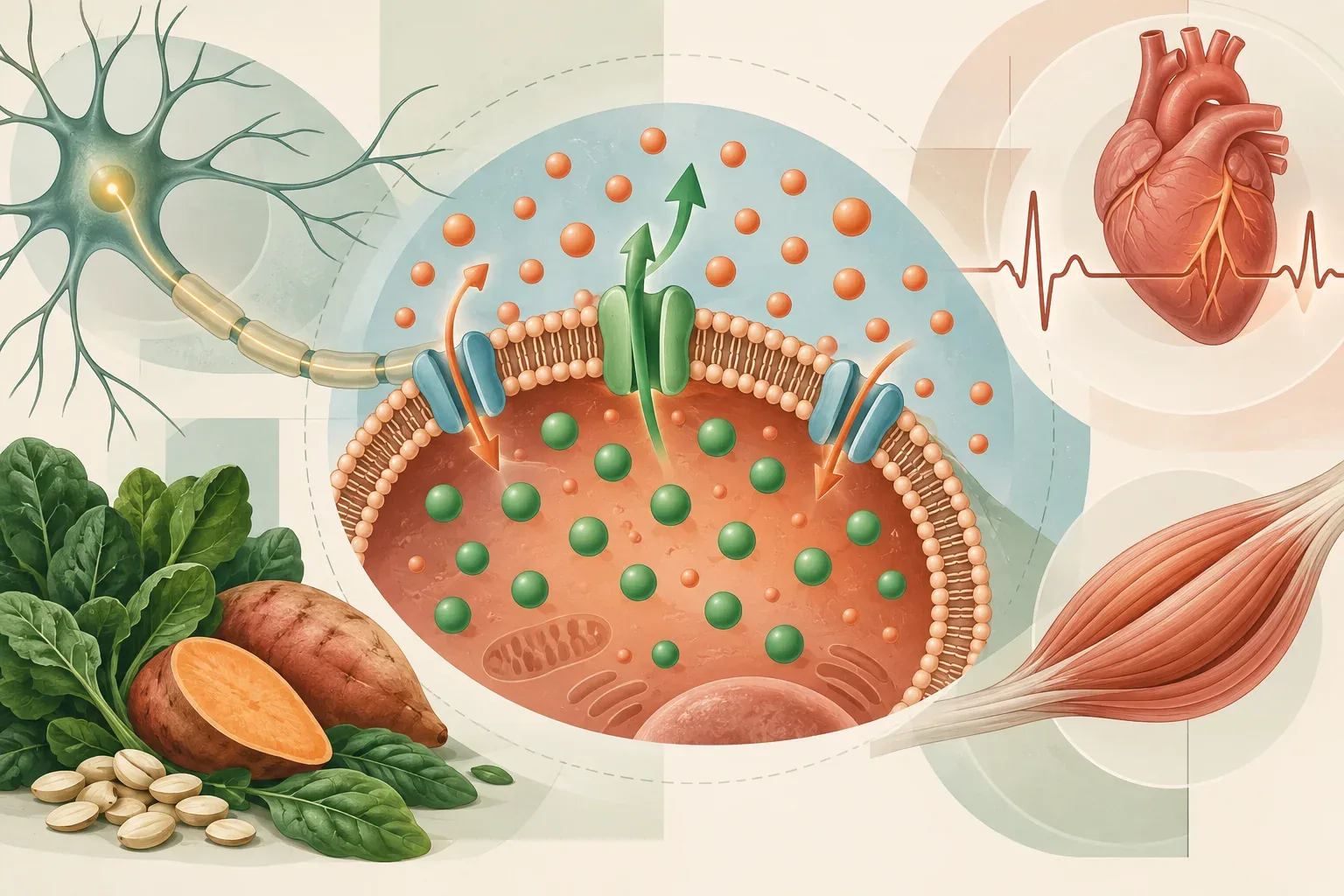 Nutrient balance
Potassium: Food, Supplement Amounts and When to Seek Advice
Connection details
Context: hypomagnesemia with low potassium
Hypomagnesemia makes low potassium hard to fix.
Source for this connection
 Nutrient use · Disputed pairing
Vitamin D
Connection details
Context: vitamin D enzymes
Vitamin D enzymes use magnesium.
Source for this connectionContext: D fails if magnesium is low
That is not the same sentence as D fails if magnesium is low. A D3 capsule can still raise 25-hydroxyvitamin D.
Source for this connection
References
- NIH Office of Dietary Supplements: magnesium ↩
- Lopresti and Smith, 2026: threonate cognition and sleep trial ↩
- Lopresti et al., 2026: systematic review of magnesium for sleep ↩
- Schuster et al., 2025: bisglycinate sleep trial ↩
- Hausenblas et al., 2024: threonate sleep trial ↩
- Correction to the threonate trial ↩