
What is L-serine?
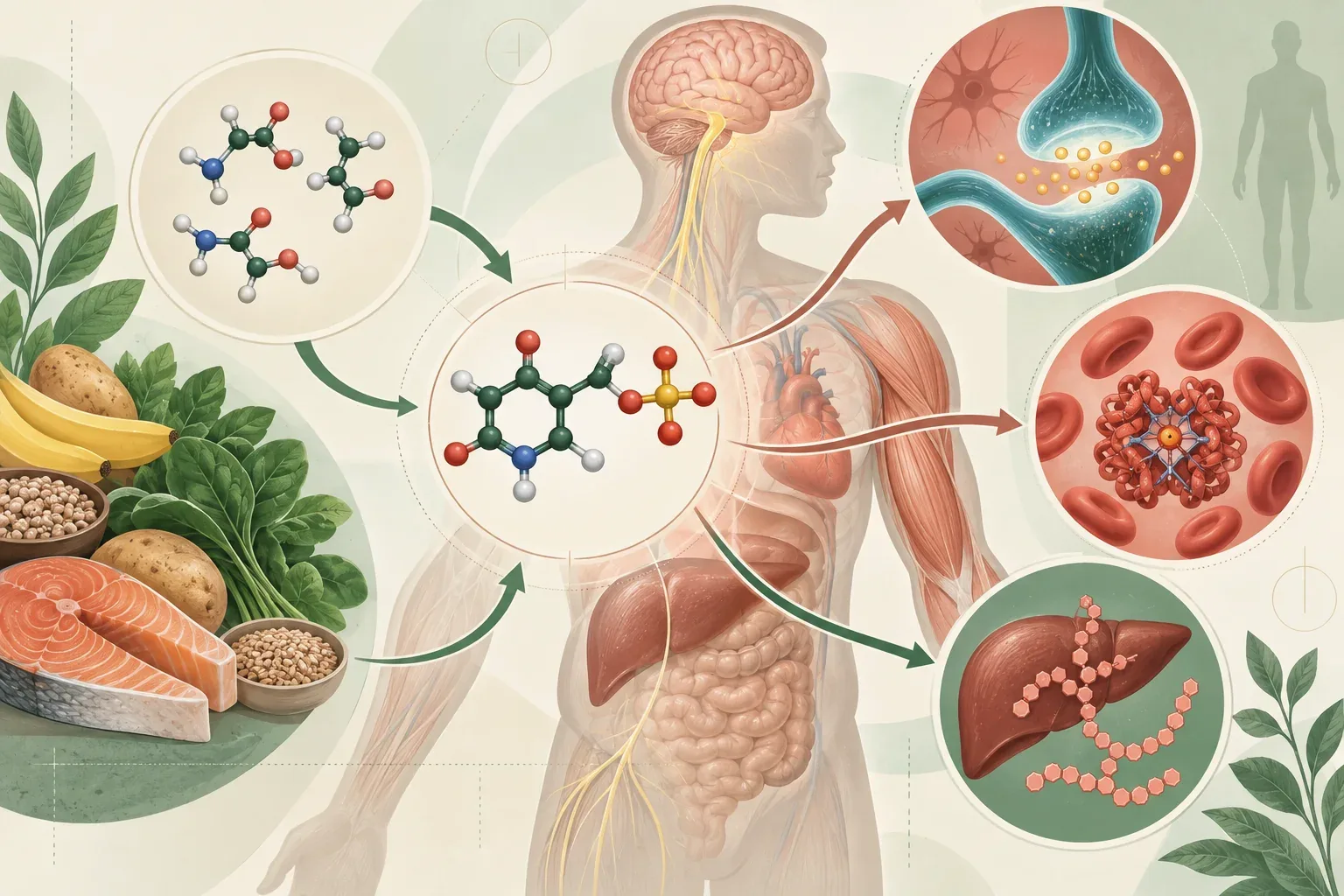
L-serine is an amino acid used to make protein and some of the fats in cell membranes. The body can make it, and protein foods supply it too. Most healthy adults do not need to seek out a particular amount of L-serine or take it as a supplement.
The products sold under similar names are easy to mix up. L-serine is the amino acid itself. D-serine is its mirror-image form and interacts with receptors involved in brain signaling. Phosphatidylserine is a fat molecule containing a serine component; it is part of cell membranes. Their names do not make the supplements interchangeable.
The body can turn some L-serine into glycine or D-serine. This explains a biochemical connection between the forms, but swallowing L-serine has not been shown to reproduce the results of studies using D-serine or phosphatidylserine.
The clearest clinical result for L-serine in this article concerns a rare inherited neuropathy treated with high amounts under specialist monitoring. The memory and schizophrenia studies discussed below tested other substances.
What L-serine does in your body
Some fats made using L-serine, called sphingolipids, are important in nervous tissue. In a rare inherited nerve disease, a faulty enzyme can use the wrong starting material and produce harmful fats. The L-serine trial targeted that specific problem. [1]
The short version
Unit: milligrams (mg) or grams (g) of L-serine; 1 g equals 1,000 mg.
Supplement dose: there is no established routine need or self-treatment dose, and no recommended daily amount or official upper limit.
Typical listings: 500 mg capsules, 2 g capsule or tablet servings, and 10 g powder scoops.
Skip: L-serine sold as if it were phosphatidylserine, hidden amounts in blends, and self-treatment of ALS or another neuropathy with high-dose supplements.
What people take L-serine for
| Claimed benefit | Dose / form studied | Research verdict | Evidence strength |
|---|---|---|---|
| Slow the rare inherited neuropathy HSAN1 | L-serine 400 mg/kg/day for 1 year; 18 adults under specialist monitoring (about 28 g/day at 70 kg) | A small trial favored L-serine on a disease scale; everyday benefit remains uncertain | Limited |
| Treat ALS | L-serine 0.5–15 g twice daily for 6 months in a monitored phase-1 study | A safety study with historical controls cannot establish treatment benefit | Insufficient |
| Improve sleep | L-serine 3 g, 30 minutes before bed; 2 or 4 nights per crossover period in small studies of dissatisfied sleepers | Self-rated sleep improved; objective awakenings did not clearly improve | Limited |
The disease evidence belongs to specialists. One randomized trial tested very high-dose L-serine in hereditary sensory and autonomic neuropathy type 1 (HSAN1), a rare inherited disorder that damages sensory nerves. An early amyotrophic lateral sclerosis (ALS) study, also at high doses, was designed mainly to assess safety and had no simultaneous placebo group.
Ask a neurologist before considering L-serine for ALS, HSAN1, neuropathy, or another nerve condition. Pregnancy and breastfeeding safety data are also missing.
Which foods supply serine?
These ordinary foods contain serine as part of their protein. The amounts are calculated from the USDA FoodData Central SR Legacy records[2] for the stated edible portions and rounded to 0.01 g.
| Food and preparation | Source | Serving | Serine (g) |
|---|---|---|---|
| [3] | Plant | ½ cup (about 126 g) | 1.28 |
| [4] | Meat | 3 oz (about 85 g) | 0.91 |
| [5] | Fish | 3 oz (about 85 g) | 0.90 |
| [6] | Meat | 3 oz (about 85 g) | 0.86 |
| [7] | Plant | 1 cup (about 198 g) | 0.82 |
| [8] | Plant | 1 oz (about 28 g) | 0.47 |
| [9] | Egg | 1 large (about 50 g) | 0.47 |
| [10] | Dairy | 1 cup (about 244 g) | 0.46 |
| [11] | Plant | 1 oz (about 28 g) | 0.26 |
A food's amino-acid content can vary by product and preparation.
What to pay attention to on the label
First confirm that the Supplement Facts line says L-serine. Then check the amount per serving and how many capsules, tablets, or scoops make that serving.
| Retail label example | L-serine per serving | Label math | Evidence boundary |
|---|---|---|---|
| One-capsule product | 500 mg | 2 capsules equal 1 g | Common shelf strength, not a proven dose |
| Four-capsule product | 2 g | 500 mg per capsule; one label caps directions at 12 capsules or 6 g/day | Manufacturer ceiling, not an official upper limit |
| Two-tablet product | 2 g | 1 g per tablet | Same amino acid, different serving count |
| Powder product | 10 g per scoop | One scoop equals twenty 500 mg capsules | High-concentration format; label directions allow up to three scoops |
A front label showing 2,000 mg may describe four capsules, not one. A 10 g scoop contains twenty times the L-serine in one 500 mg capsule. Those conversions help compare products; they do not select an amount.
“Supports memory” can borrow recognition from phosphatidylserine even though no healthy-adult memory trial of L-serine has found it effective. “Supports nerve health” may point to the HSAN1 study, whose rare disease mechanism and roughly 28 g/day exposure do not apply to routine neuropathy. “Supports restful sleep” might be based on small studies that used 3 g before bed.
Drawbacks and side effects
| Potential drawback | When/who it affects | Research evidence | Practical implication |
|---|---|---|---|
| Gastrointestinal symptoms | Participants in the high-dose ALS study | Two of the 20 enrolled participants stopped because of gastrointestinal problems | Stomach symptoms prevented some participants from continuing treatment |
| Large serving-size errors | Confusing a 500 mg capsule with a 10 g scoop | Labels use very different amounts | Check grams versus milligrams and the full serving |
| Uncertain long-term and special-population safety | Use outside supervised disease trials; pregnancy or breastfeeding | Small studies cannot rule out uncommon or long-term harms | Do not reconstruct a rare-disease research regimen from retail powder without specialist oversight |
A small HSAN1 trial found improvement on a nerve-function scale
HSAN1 can arise when a faulty enzyme leads to harmful fat-like molecules that injure sensory nerves. In a 2019 randomized trial, 18 adults received L-serine at 400 mg/kg/day or placebo for one year, after which everyone received L-serine for a second year; 16 completed the study.
At one year, the L-serine group was about 1.5 points better than placebo on a 36-point inherited-neuropathy scale, where a higher score means worse function. A disease-linked toxic molecule fell 59% with L-serine and rose 11% with placebo. No serious adverse event was attributed to L-serine. The numerical difference favored treatment, but this 18-person trial was too small to establish how much a 1.5-point change improves daily life.
This is evidence for a specific biochemical disorder, not proof that L-serine relieves diabetic neuropathy, nonspecific nerve pain, or tingling. For diabetic neuropathy, the cited research is limited to animal studies.
The ALS safety study cannot establish treatment benefit
The phase 1 study enrolled 20 people with ALS into four L-serine dose groups; one withdrew before dosing. Two participants stopped because of gastrointestinal problems, and three died during the study. The published abstract does not say whether the deaths were attributed to L-serine, so their cause cannot be inferred from this report. Investigators compared the group’s functional decline with historical placebo participants from earlier trials and did not find evidence of faster decline.
That design can describe short-term tolerability but cannot establish that L-serine slowed ALS. People treated at a different time may differ from the historical comparison in care, disease stage, or other ways. A later registered single-arm protocol also lacked a concurrent placebo group; a protocol is not a positive result.
Children with specific GRIN genetic disorders
GRIN genes provide instructions for parts of NMDA receptors[12], proteins involved in signaling between nerve cells. Some variants reduce receptor activity—called “loss of function”—and cause developmental disorders. Researchers are studying L-serine because the body converts some of it into D-serine, which helps activate these receptors. That is a treatment rationale for selected genetic variants, not proof of benefit.
A 52-week study[13] gave L-serine to 24 children aged 2–18 with GRIN gene variants that reduce receptor function; 23 completed it. Researchers observed improvements in selected adaptive-behavior, motor-function and quality-of-life scores, with some gains concentrated in children with milder impairment. One child stopped because of irritability and insomnia.
The trial had no placebo or untreated comparison, so development over the year, other care and expectations cannot be separated from a treatment effect. It was restricted to children whose genetic variants were confirmed to reduce receptor function. Its findings do not establish L-serine for other developmental conditions or general childhood cognition.
Does L-serine help sleep, memory or schizophrenia?
Sleep
The 2014 report[14] contained two double-blind crossover studies in adults dissatisfied with their sleep. Both used 3 g L-serine 30 minutes before bed, with the same participants taking placebo in another period.
In the first, 53 people entered and 45 were analyzed after four-night treatment periods. Self-rated sleep initiation and maintenance improved, but morning sleepiness, anxiety and satisfaction did not clearly improve.
The second study used two-night periods. Nine entered, seven contributed subjective results and only six contributed usable activity-monitor recordings. Overall sleep quality and satisfaction ratings favored L-serine, but objectively measured night awakenings did not reach statistical significance. The very small objective sample leaves considerable uncertainty. Several authors worked for FANCL; the paper declared no competing interests.
A 2022 trial[15] asked about body-clock timing. Thirty-three Japanese university students were allocated to 3 g L-serine before bed or placebo for two weeks; 32 were analyzed. The evening rise in melatonin shifted about five minutes earlier in the serine group and 25 minutes later with placebo, with a statistically significant difference in the changes. Sleep habits did not improve. Measuring a shift in the body's evening signal is different from showing that people sleep longer, feel better or recover from jet lag.
The studies therefore offer preliminary sleep-rating and body-clock findings, rather than a consistent demonstrated improvement across objective sleep outcomes.
Memory: phosphatidylserine studies
In a six-month trial of 78 older Japanese adults[16] with memory complaints, 100 or 300 mg a day of soybean-derived phosphatidylserine did not outperform placebo on the overall cognitive tests. Researchers reported a favorable result in a subgroup that started with lower memory scores, which needs separate confirmation. Another three-month trial[17] tested phosphatidylserine with phosphatidic acid in older people with memory concerns and reported improvement on some memory measures. Because that product contained both fats, the result cannot be assigned to phosphatidylserine alone. Neither trial tested L-serine powder.
Cognition: the form and comparator matter
An L-serine gummy trial in early Alzheimer's disease[18] planned 15 g twice daily after a dose-increase period. It was stopped because the investigators could not verify the product's stability. The registry warns that its data may be invalid. Posted cognitive scores therefore cannot establish whether L-serine helped or failed.
A separate 84-day trial[19] assigned 69 people with Alzheimer's disease to placebo or a powder containing four ingredients. Each dose supplied 12.35 g L-serine, 1 g nicotinamide riboside, 2.55 g N-acetylcysteine (NAC) and 3.73 g L-carnitine tartrate, taken once daily for 28 days and twice daily thereafter. Sixty completed day 84. Scores on the Alzheimer’s Disease Assessment Scale cognitive subscale (ADAS-Cog), a measure of cognitive impairment, improved within both groups. The comparison of all participants did not clearly favor the mixture over placebo. Researchers reported a favorable result in the subgroup with greater impairment at the start. But within that subgroup, the treatment and placebo groups already had different test scores before treatment, making the later difference hard to attribute to the mixture. The trial was partly funded by ScandiBio Therapeutics, and three authors were company founders and shareholders. It does not establish an isolated L-serine benefit.
A single-dose crossover study[20] tested D-serine, not L-serine, at 30 mg/kg in healthy older adults. Fifty of 57 recruited participants completed it. D-serine reduced errors on one maze-learning measure, while the other cognitive tests and mood did not clearly improve. Some statistical labels differ between the paper's table and figure caption, which adds uncertainty to a small, one-day signal.
Finally, serine measurements in kidney-disease cohorts[21] are associations, not supplementation experiments. The authors reported lower plasma L-serine in dialysis patients with cognitive decline, but describe the broader kidney-function comparison inconsistently. Neither finding shows that taking L-serine improves cognition.
Schizophrenia: D-serine study
In a 16-week trial of 195 people[22] with schizophrenia or schizoaffective disorder, 2 g a day of D-serine was added to their antipsychotic treatment. Negative symptoms, such as reduced motivation or emotional expression, and cognitive-test scores improved in both groups, with no clear difference between D-serine and placebo. This was a trial of D-serine as an add-on treatment, not of L-serine or a general brain-health supplement.
If a specialist orders an amino-acid test
If a specialist orders blood amino-acid testing, ARUP’s plasma amino-acid panel[23] prefers fasting in adults but specifies no supplement-stop interval. Report L-serine use and follow the specialist’s dose-timing instructions, especially for prescribed treatment.
The bottom line
L-serine has a small trial in a rare inherited neuropathy, but that result does not establish an everyday nerve-health supplement. The ALS work discussed here was an early safety study, and the sleep findings are too small to give a reliable general recommendation.
L-serine, D-serine and phosphatidylserine are different products; results for one do not establish a benefit for the others.
Help us improve this article
Spotted an error or found a source we should consider? Tell us which part of this article needs another look and include a link if you have one. Please leave out personal health details and lab results; we can’t answer individual medical questions.
Explore more in nerves

More in compounds




References
- Fridman et al.: randomized trial of L-serine in HSAN1, 2019 ↩
- USDA FoodData Central SR Legacy records ↩
- Firm tofu, calcium-set, raw ↩
- Chicken breast, roasted ↩
- Sockeye salmon, cooked ↩
- Ground beef patty, 90% lean, cooked ↩
- Lentils, boiled ↩
- Pumpkin seed kernels, dried ↩
- Egg, hard-boiled ↩
- Whole milk ↩
- Almonds ↩
- GRIN genes provide instructions for parts of NMDA receptors ↩
- 52-week study ↩
- 2014 report ↩
- Ohashi et al.: L-serine and circadian phase, 2022 ↩
- six-month trial of 78 older Japanese adults ↩
- three-month trial ↩
- L-serine gummy trial in early Alzheimer's disease ↩
- separate 84-day trial ↩
- single-dose crossover study ↩
- serine measurements in kidney-disease cohorts ↩
- 16-week trial of 195 people ↩
- ARUP’s plasma amino-acid panel ↩
- Levine et al.: phase I L-serine safety trial in ALS, 2017
- Ito et al.: effects of L-serine ingestion on human sleep, 2014
- Weiser et al.: add-on low-dose D-serine for schizophrenia, 2012
- NIH Dietary Supplement Label Database: a 500 mg L-serine capsule label
- NIH Dietary Supplement Label Database: a four-capsule L-serine label
- NIH Dietary Supplement Label Database: an L-serine tablet label
- NIH Dietary Supplement Label Database: a 10 g L-serine powder label
- Ohashi et al., L-serine, circadian timing and sleep habits, 2022
- Registered single-arm ALS protocol, NCT03580616
Corrections & updates
- Update
Updated the evidence discussion and practical guidance after editorial review.