What is the difference between selenium and selenite?
Selenium is the nutrient counted on a Supplement Facts panel. Selenite is one form that supplies it. On a label that reads “Selenium (as sodium selenite) 100 mcg,” the 100 micrograms are already the weight of the selenium. The same rule applies when the source in parentheses is L-selenomethionine.
| Example from a US label | Serving | Selenium in that serving |
|---|---|---|
| Allergy Research Group Selenium Solution, as sodium selenite [3] | ½ teaspoon (2.5 mL) | 100 mcg |
| Solgar Yeast-Free Selenium, as L-selenomethionine [4] | 1 tablet | 100 mcg |
If you switched from half a teaspoon of this liquid to one of these tablets, your selenium intake would stay at 100 mcg. A full teaspoon of the liquid would supply 200 mcg. For comparison, the US recommended intake for most adults is 55 mcg a day from food and supplements combined [1].
Which form of selenium does the body absorb better?
In a study of 31 healthy adults, researchers gave each person both forms with different tracers so they could follow them separately. They estimated that participants absorbed about 97% of the selenomethionine and 57% of the selenite. Selenomethionine can also take methionine’s place in ordinary body proteins, giving the body another place to retain it [2].
Does that extra absorption make a difference to how the body uses selenium? In a separate study, 12 New Zealand residents took 100 mcg of selenium a day as one form or the other. Blood selenium rose more with selenomethionine. Yet after 17 weeks, the increase in activity of glutathione peroxidase, an enzyme that uses selenium to protect cells from damage, did not differ significantly between the groups. If absorption is your reason for choosing a form, selenomethionine has the edge. For the enzyme these researchers measured, both forms worked [5].
Help us improve this article
Spotted an error or found a source we should consider? Tell us which part of this article needs another look and include a link if you have one. Please leave out personal health details and lab results; we can’t answer individual medical questions.
Keep exploring
 Nutrient connections worth understanding · Absorption & use
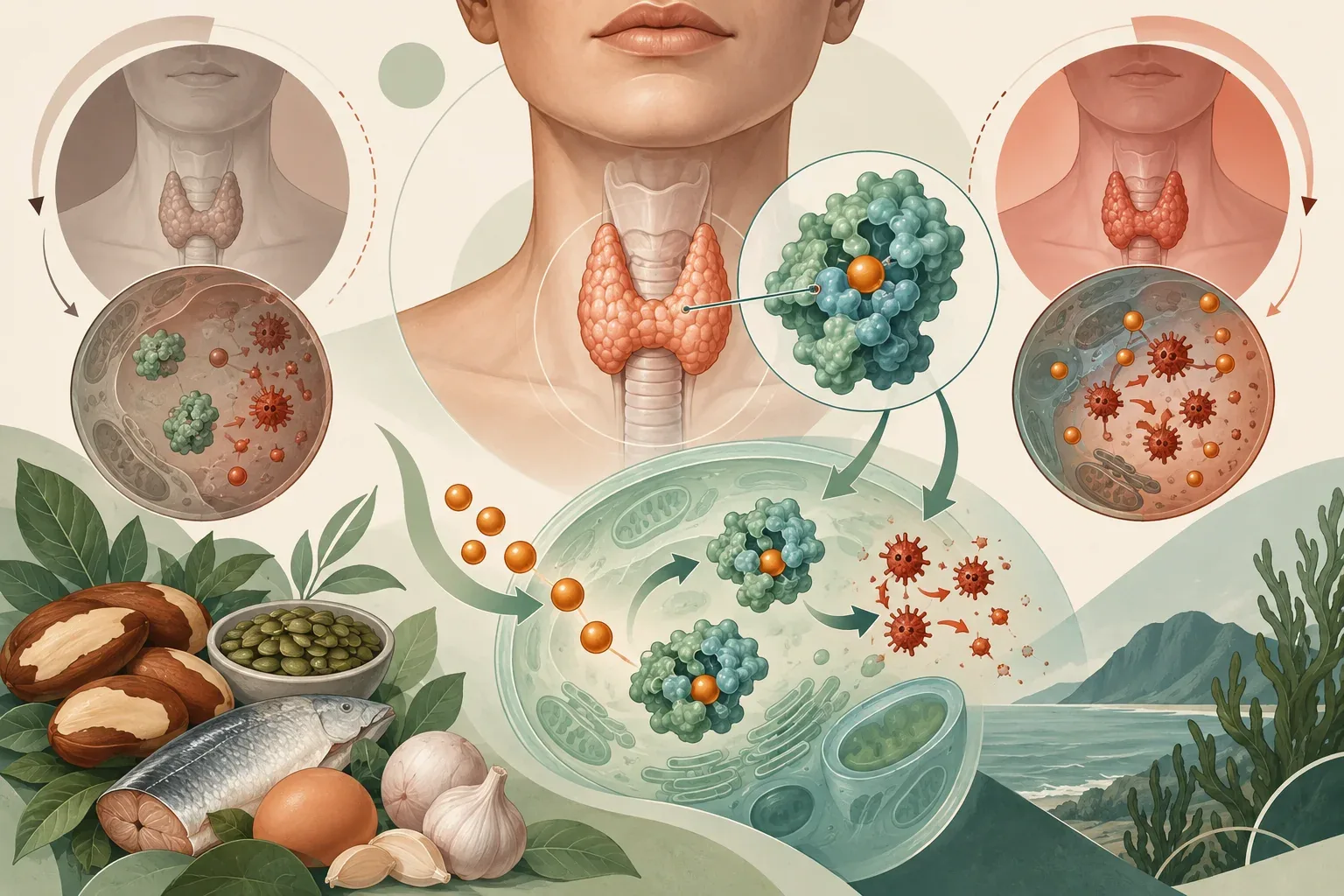
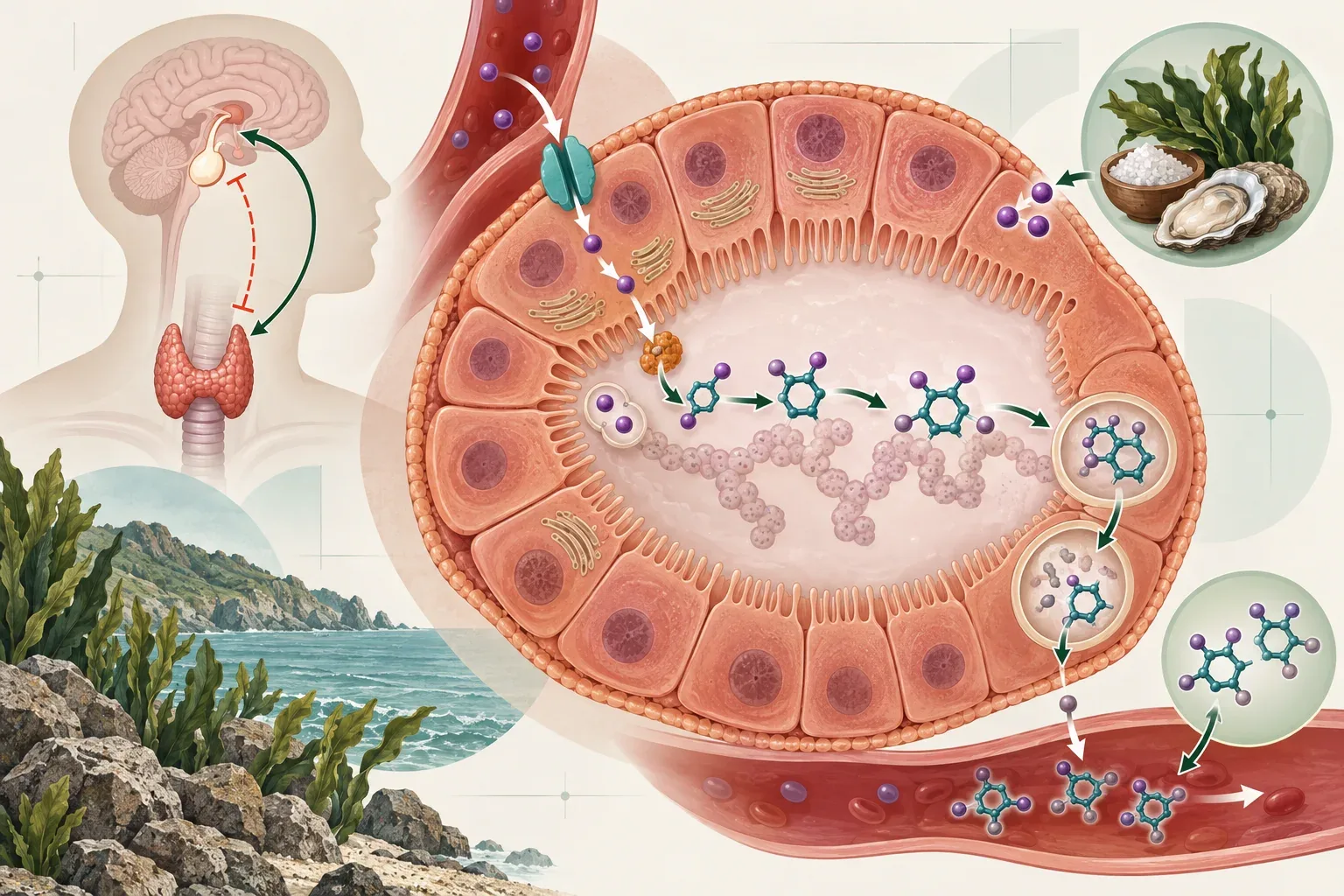
Iodine
Connection details
Context: recommended-daily-amount scale
Iodine at the iodine recommended daily amount; selenium at the selenium recommended daily amount — not milligram iodine plus 200 mcg selenium.
Source for this connection