What is calcium AEP?
Calcium AEP and calcium EAP are two names for the same manufactured compound. Its full name is calcium 2-aminoethyl phosphate, also written 2-aminoethanol phosphate. It is not a form of calcium found in food. Despite “calcium” in the name, it is not an ordinary calcium supplement.
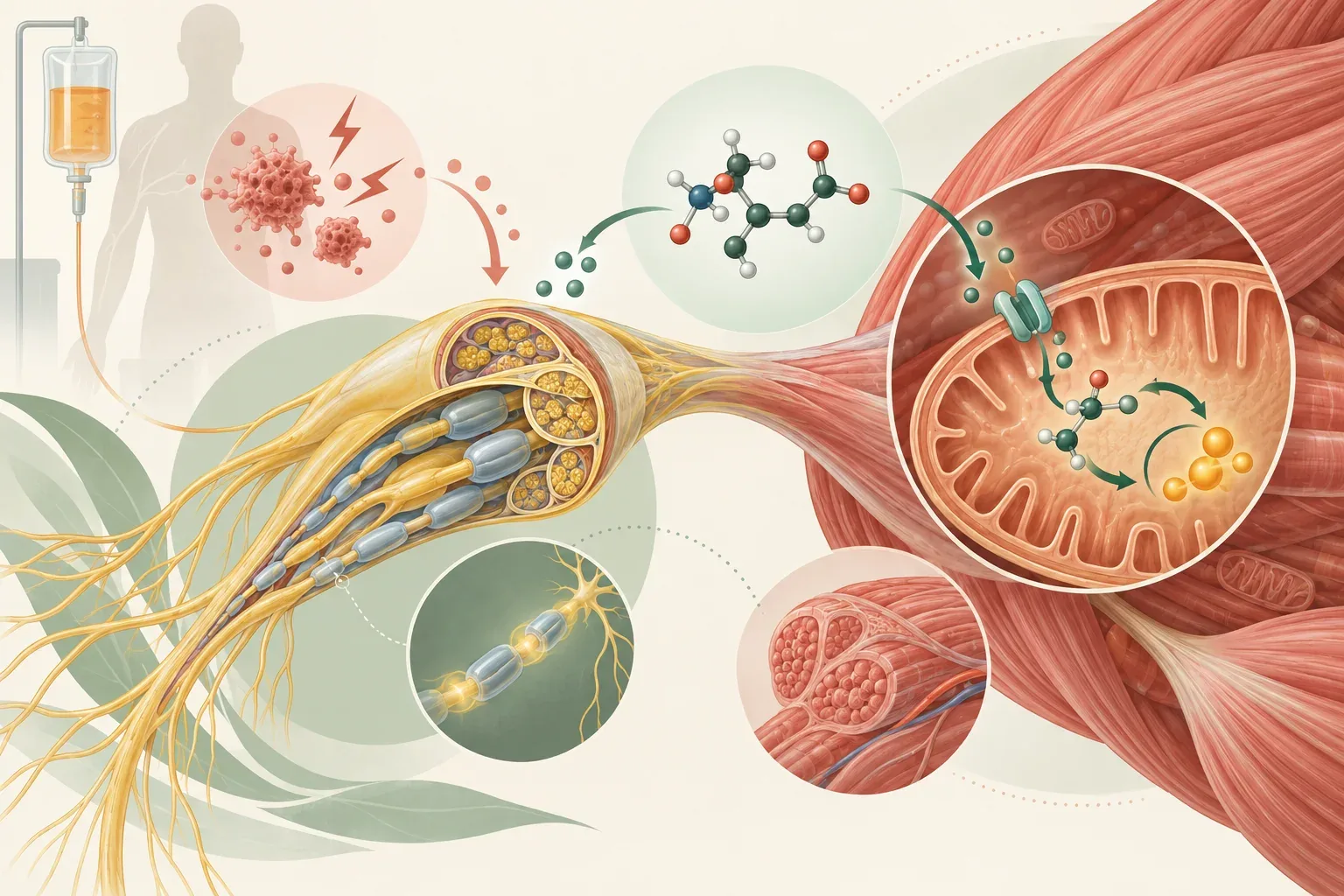
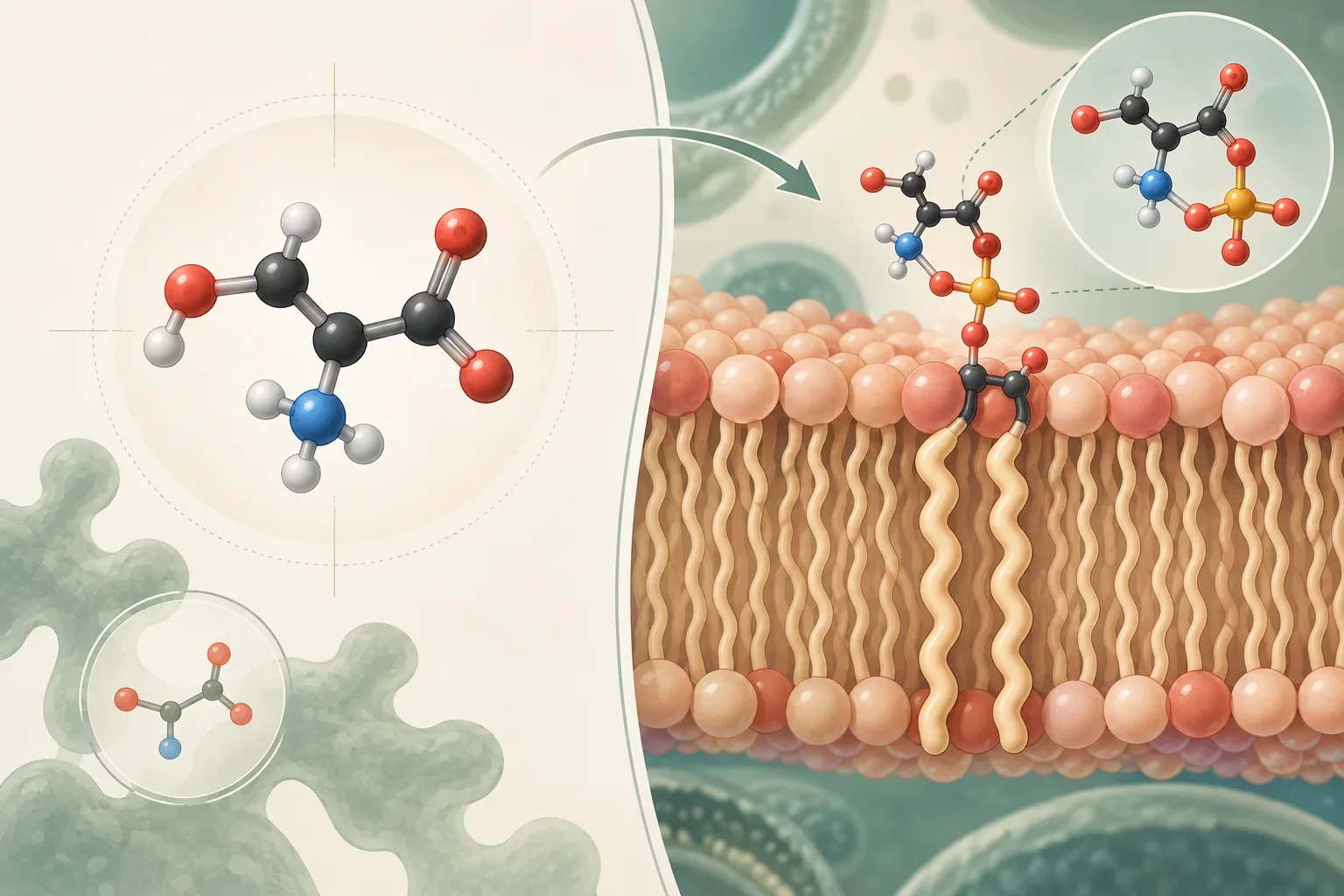
People seek calcium AEP mainly for multiple sclerosis (MS), and sometimes for general nerve or “cell membrane” support. Its inventor, the German physician Hans Nieper, called it a “membrane sealer” and proposed that it would protect nerve cells from immune attack.
Nieper developed it in the early 1960s, first used it in Europe in 1964, and it reached the United States in 1972. Most of what is written about it still comes from Nieper, who died in 1998, or from groups linked to him.
In his regimen for MS, calcium AEP was given first by vein and later by mouth, together with a steroid and several other supplements. No controlled human trial has tested whether calcium AEP helps people with MS.
What is the difference between calcium AEP and a calcium supplement?
A calcium supplement, such as calcium carbonate or citrate, is sold to supply calcium toward an adult target of 1,000 or 1,200 mg a day, depending on age and sex, and there is decades of research on it for bone health and other effects. Our calcium guide explains those targets and how to count elemental calcium. Calcium AEP is sold for unproven nerve-cell claims and is not studied as a calcium source. If you need calcium, it is the wrong product.
What people take calcium AEP for
| Claimed benefit | Dose / form studied | Research verdict | Evidence strength |
|---|---|---|---|
| Multiple sclerosis symptoms | No established effective dose or duration; historical regimens combined injected or oral AEP with steroids and other supplements. | Uncontrolled inventor reports cannot establish benefit. | Insufficient |
| General nerve or cell-membrane support | No established dose or duration. | The proposed mechanism has not become a demonstrated human health outcome. | Insufficient |
When to ask a doctor before taking calcium AEP
Ask your neurologist before trying it if you have MS, and do not stop or delay a prescribed treatment for it. Ask any doctor before trying it if you have kidney disease or a history of kidney stones, since the inventor reported kidney stones in treated animals. Medicine interactions have not been studied; report any use to your doctor and pharmacist.
What you can buy
Calcium AEP is sold under several names, but all point to the same unproven compound.
| Listing | Amount | Human trial behind it |
|---|---|---|
| Calcium AEP or calcium EAP capsules | Set by each seller | None |
| Calcium 2-aminoethyl phosphate | Set by each seller | None; this is the chemical name for the same compound |
The unit on these labels is milligrams of calcium AEP, not milligrams of elemental calcium for meeting a calcium requirement.
There is therefore no evidence-based way to choose among these listings. Do not use one in place of MS treatment prescribed by a neurologist.
What to pay attention to on the label
Which number on the label is the amount?
A line such as “Calcium AEP 500 mg” gives the weight of the whole compound. For the specific anhydrous 1:1 salt listed by PubChem[1], calcium is about 40.08 ÷ 179.13, or 22.4% of the compound's weight. On that chemical assumption, 500 mg would contain about 112 mg calcium. This is theoretical composition, not a measurement of a retail capsule or evidence that its calcium is absorbed like a standard calcium supplement. A differently formulated salt or a hydrated product changes the calculation. Use a separately declared elemental “Calcium” amount when counting dietary calcium; do not treat an unspecified AEP weight as a verified calcium dose.
Misleading labels
“Cell membrane sealer” or “nerve protection”
This is the inventor’s own idea of how it works, not a demonstrated mechanism in people. His 1967 and 1968 MS reports had no comparison group and combined AEP with other treatments, so they cannot show that this proposed action improved symptoms.
MS treatment or approval claims
Calcium AEP is not an approved MS treatment in the United States; a 1990 medical report noted it was not approved by the Food and Drug Administration, and MS specialists do not consider it established care. A “thousands treated” claim refers to clinic experience reported by its inventor, not thousands of people in a controlled trial.
Filed with calcium supplements
Some shops list it with calcium products. It is not sold or studied as a source of calcium. Most adults need 1,000 mg of calcium a day; women ages 51–70 and all adults over 70 need 1,200 mg a day. Calcium AEP is not how those targets are met.
Confusing servings and items per serving
Some manufacturers put 180 capsules on the front, and the back says 3 capsules per serving and 60 servings. The amount on the Supplement Facts panel is for the whole 3-capsule serving.
Common Myths about Calcium AEP
Does calcium AEP help multiple sclerosis?
No one knows, because it has never been tested properly. The only reports come from its inventor, without a placebo group, and they do not separate calcium AEP from the steroid and other supplements given with it.
Is it just a gentler form of calcium?
No. It is a phosphate compound sold for claimed effects on nerve cells, not a calcium supplement, and there is no research on it as a source of calcium or for bones.
Is it safe because it is sold as a supplement?
Its safety has never been studied. A serious reaction was reported during intravenous use, animal reports mention kidney stones, and no study has followed people taking it by mouth long term.
Drawbacks and side effects
| Potential drawback | When/who it affects | Research evidence | Practical implication |
|---|---|---|---|
| Serious reaction during intravenous use | A woman receiving calcium AEP by vein in the published case. | A cardiopulmonary-arrest case establishes a reported event, not its frequency or an oral-capsule risk estimate. | Do not infer oral safety from the lack of cases or treat the historical injection regimen as validated. |
| Unknown oral safety and interactions | People taking oral products, particularly alongside MS treatment. | Controlled safety and medicine-interaction studies are absent. | Discuss use with the treating neurologist; do not replace prescribed disease-modifying treatment. |
What the limited reports describe
There is no safety study, so no one can say what amount becomes harmful. By the inventor’s account, 1 in 10 treated animals developed kidney stones, females gained weight, and males became aggressive. The account does not identify the animal species, dose, route, duration, or group size, and cannot estimate human risk. The Rocky Mountain MS Center says those effects apparently have not been seen in people, although headaches and chills have been reported. No study documents the safety of long-term oral use.
The documented serious harm
The documented harm is a 1990 case report: a 53-year-old woman with MS had her heart and breathing stop during an intravenous dose of calcium AEP. She was resuscitated and then developed destruction of red blood cells, kidney failure, severe lung injury, liver damage, and a bleeding disorder.
The science behind calcium AEP
For calcium AEP as an MS treatment, the evidence consists of the inventor’s uncontrolled reports and one serious intravenous case report. The Rocky Mountain MS Center reports that no well-designed trial has been published. A November 2026 search for calcium AEP/EAP and MS found no later controlled MS trial. A 2026 review of phosphoethanolamine[2] discusses other preparations and research questions, including cancer, but does not supply the missing controlled calcium-AEP trial in MS.
The inventor’s reports
Nieper published accounts of calcium AEP in 1967 and 1968 in a French journal. According to the Rocky Mountain MS Center’s summary of his 1968 document, he treated 167 people with MS and reported benefit in 46 percent of those with mild disease, 33 percent with moderate disease, and 16 percent with severe disease—32 percent overall. There was no placebo group, and the patients also received a steroid and other supplements. His later writings claimed benefit in 85 to 90 percent without identifying the population, outcome, or time period behind that figure. None of these claims or effects have been reproduced by anyone else.
The 1990 case report
The 1990 case described in the safety section is the only documented serious reaction cited here. Its authors called it the first reported adverse reaction, noted that the compound was not FDA approved, and described it as brought from West Germany for use by some US practitioners treating MS.
What MS specialists say
The Rocky Mountain MS Center concludes that there is no rigorous published evidence of benefit, that safety has not been established, that it may be very costly (the center gives no figure), and that there is one report of serious complications with intravenous use. What is still open is whether calcium AEP does anything at all, because the controlled trial that would answer that has never been run.
Amounts and duration in the studies
Nieper’s historical, uncontrolled MS regimen began with 500 mg by vein five days a week. He later described either an oral product or 400 mg by vein every other day for long-term use. He also gave prednisone, a steroid, plus high-dose vitamins and minerals, so his reports could not separate calcium AEP’s effect. The documented serious harm occurred during intravenous use.
The bottom line
Calcium AEP has a historical multiple-sclerosis story, but no controlled human evidence establishes it actually has any advantages as a treatment. Its proposed effect on cell membranes remains unproved, and the calcium in its name does not mean it's interchangeable with a regular calcium supplement.
The serious reaction reported with intravenous use is another reason to keep route and preparation clear. We would avoid these forms of calcium unless we have a very good reason to try them.
Source notes
- NIH Office of Dietary Supplements: Calcium — Health Professional Fact Sheet[3]
- [1]
- [2]
- [4]
- [5]
- Nieper HA. A clinical study of the calcium transport substances Ca l-dl aspartate and Ca 2-aminoethanol phosphate. Agressologie. 1967;8:395–406.
- Nieper HA. A comparative study of the clinical effects of Ca l-dl aspartate, Ca 2-amino ethanol phosphate, and the cortisones. Agressologie. 1968;9:471–475.
Help us improve this article
Spotted an error or found a source we should consider? Tell us which part of this article needs another look and include a link if you have one. Please leave out personal health details and lab results; we can’t answer individual medical questions.