

What is citicoline?
Citicoline is cytidine diphosphate choline, also called CDP-choline. CDP-choline is an intermediate in the body's production of phosphatidylcholine, a major component of cell membranes. Oral citicoline is broken down and supplies components that can be used in metabolism.
Citicoline is sold for memory and attention, and has also been investigated as a medical treatment in neurological and eye conditions. Its memory evidence is mixed rather than uniformly positive. Several clinical claims rely on different routes, doses or patient populations from an everyday supplement.
For food intake, nutritional requirements and ordinary choline supplements, see the choline guide.
Does citicoline improve memory?
A 2021 trial studied 100 adults aged 50–85 with age-associated memory impairment. They took 500 mg of a branded citicoline preparation, Cognizin, or placebo daily for 12 weeks.
The main planned outcome, Spatial Span—a short-term spatial-memory test—did not improve significantly more with citicoline. A test involving paired associations and a composite memory score did improve. The manufacturer funded the study and participated in its design; several authors worked for the manufacturer or the research contractor [1].
For an older adult with memory complaints, this was a mixed result: one memory task favored citicoline while the main test did not. The participants were older adults with memory complaints. The study measured memory performance during follow-up.
If your concern is new or worsening memory difficulty, assessment matters because the cause determines what helps. A supplement decision should not replace finding out why your memory has changed.
Why do brain-injury claims give different answers?
The trials differ substantially, and the largest one was negative.
COBRIT randomized 1,213 patients with traumatic brain injury to citicoline, 2,000 mg daily for 90 days, or placebo. Citicoline did not improve the combined functional and cognitive outcome. The odds ratio was 0.98, close to no difference, with an uncertainty range spanning both benefit and harm [2].
A much smaller 2026 single-centre trial randomized 60 adults with mild to moderate traumatic brain injury to 1,000 mg citicoline daily or placebo for 90 days. The researchers reported better scores for cognition and daily function with citicoline [3].
Does it help recovery after a stroke?
The large ICTUS trial did not find better recovery. It randomized 2,298 patients with acute ischemic stroke to citicoline or placebo. Treatment began intravenously and continued orally, using 2,000 mg daily for six weeks. Recovery at 90 days was similar, and the trial stopped early for futility [4].
This matters because phrases such as “brain repair” can blur a plausible biological role with a proven recovery treatment. In this large clinical setting, the hoped-for benefit did not appear. Suspected stroke requires emergency medical care; a citicoline supplement has no role in delaying that response.
What about glaucoma and Parkinson disease?
These reports need especially careful attention to route and background treatment.
Glaucoma: a small oral study found improved electrical measurements
A small randomized study assigned 32 patients with open-angle glaucoma to an oral citicoline solution providing 500 mg daily or placebo while both groups continued pressure-lowering eye treatment. Twenty-nine were included in the reported analysis. After 12 months, the citicoline group had improvements in electrical measurements of retinal function and signal transmission through visual pathways [5].
Those measurements are promising, but they are different from demonstrating that a supplement prevents blindness. Citicoline eyedrops are also being studied; their results cannot be assumed to apply to an oral product. Glaucoma treatment still depends on the eye specialist's assessment and pressure-control plan.
Parkinson disease: the newer trial used injections
The 2026 CITIPARK trial reported some motor benefits when citicoline was added to stable Parkinson medicines. It used intramuscular injections, 1,000 mg daily in two six-week cycles during a 24-week study. Researchers studied an injection alongside other treatment [6].
Is 500 mg citicoline the same as 500 mg choline?
No. The choline component makes up about 21.3% of pure citicoline free-base mass. On that theoretical calculation, 500 mg citicoline contains about 107 mg of choline component. Sodium and hydrated forms have different molecular weights, so that percentage should not be silently applied to every material [7], [8].
If a product separately declares “Choline X mg,” that nutrient amount is the number to use for choline accounting. If it declares only citicoline milligrams, keep the compound amount distinct from nutrient choline. The calculation is not a finished-product assay and does not rank cognitive effectiveness. The parent choline guide explains the nutritional amounts.
Alpha-GPC has a higher choline fraction by weight. Memory outcomes require a clinical comparison. The compounds have different research records, and neither is an established universal winner.
Is the memory-study ingredient actually present at the studied amount?
The 12-week memory trial tested 500 mg of a named citicoline preparation daily. A “500 mg focus blend” containing that preparation alongside other ingredients supplies less than 500 mg of citicoline if 500 mg is the total for the blend. Look for a separate citicoline line before comparing products.
What side effects have been reported?
In the 12-week older-adult memory trial, possibly related mild effects included flatulence, burping, headache, increased appetite and weight gain. One participant taking citicoline withdrew because of headache. No serious adverse events were reported [1].
That gives useful information about the tested 500 mg preparation over three months. Higher clinical amounts, such as the 2,000 mg used in COBRIT, describe an investigation under medical supervision.
If your aim is dietary choline adequacy, use food intake and a declared choline amount rather than treating a trial's citicoline amount as a daily nutrient target.
Choosing citicoline
There is little evidence to support taking citicoline for everyday memory if you are healthy.
If you have age-associated memory difficulties
In a 12-week study in adults aged 50–85, some memory scores improved with citicoline. The main test of short-term spatial memory showed no clear benefit. The manufacturer funded the trial.
After a stroke or traumatic brain injury
The largest stroke trial found similar recovery with citicoline and placebo. A large traumatic brain injury trial also found similar outcomes, although a much smaller trial reported a benefit. These findings give limited support for adding citicoline to a recovery plan.
Source notes
- NIH Office of Dietary Supplements: choline [9].
- PubChem: citicoline [7] and choline [8] molecular weights.
- Nakazaki and colleagues: memory trial [1].
- COBRIT: traumatic brain injury [2].
- 2026 mild to moderate traumatic-brain-injury pilot [3].
- ICTUS: acute ischemic stroke [4].
- Citicoline oral solution in glaucoma [5].
- CITIPARK: injected citicoline added to Parkinson therapy [6].
Help us improve this article
Spotted an error or found a source we should consider? Tell us which part of this article needs another look and include a link if you have one. Please leave out personal health details and lab results; we can’t answer individual medical questions.
More about choline
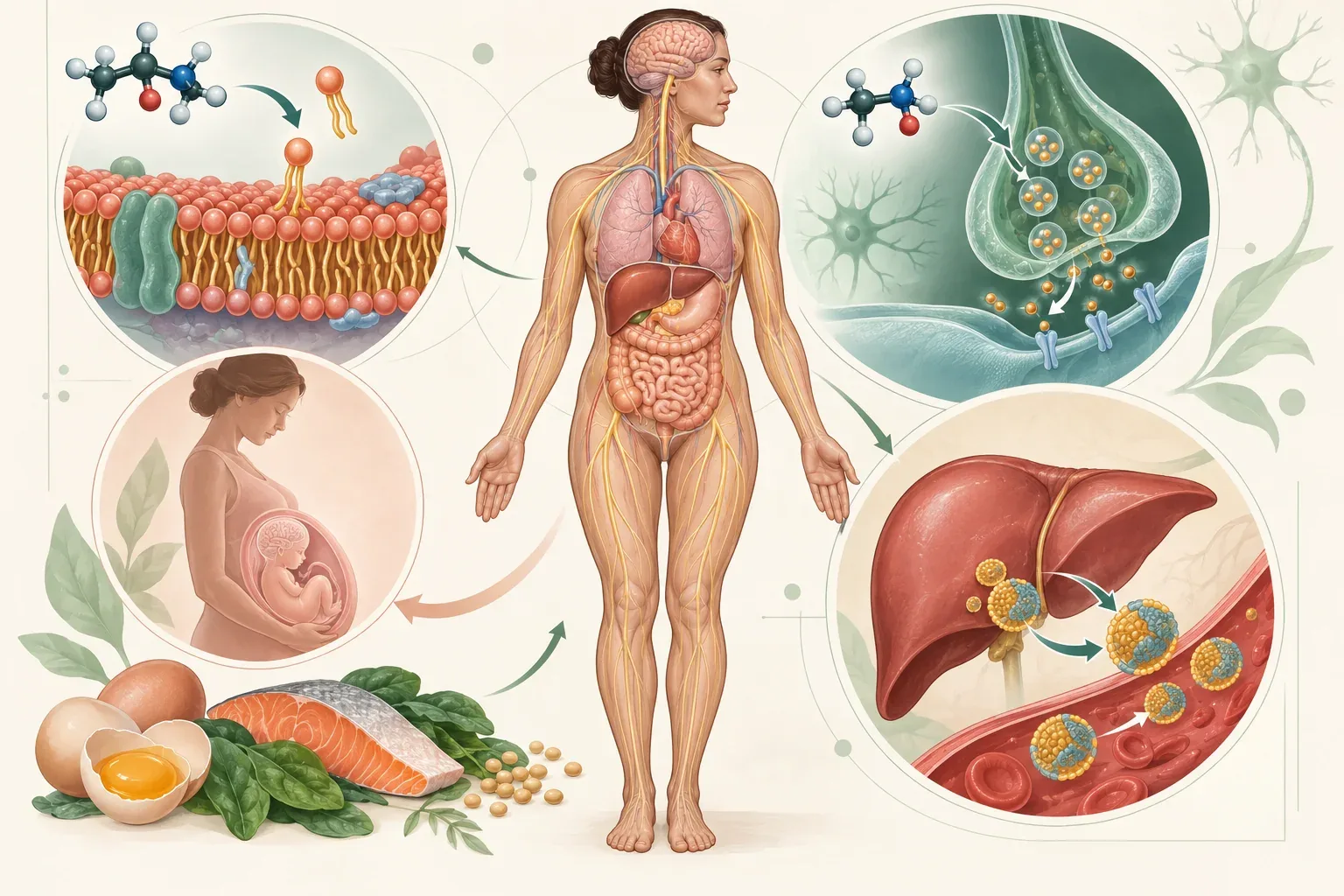

Food sources & dietary alternatives

Nutrient connections worth understanding
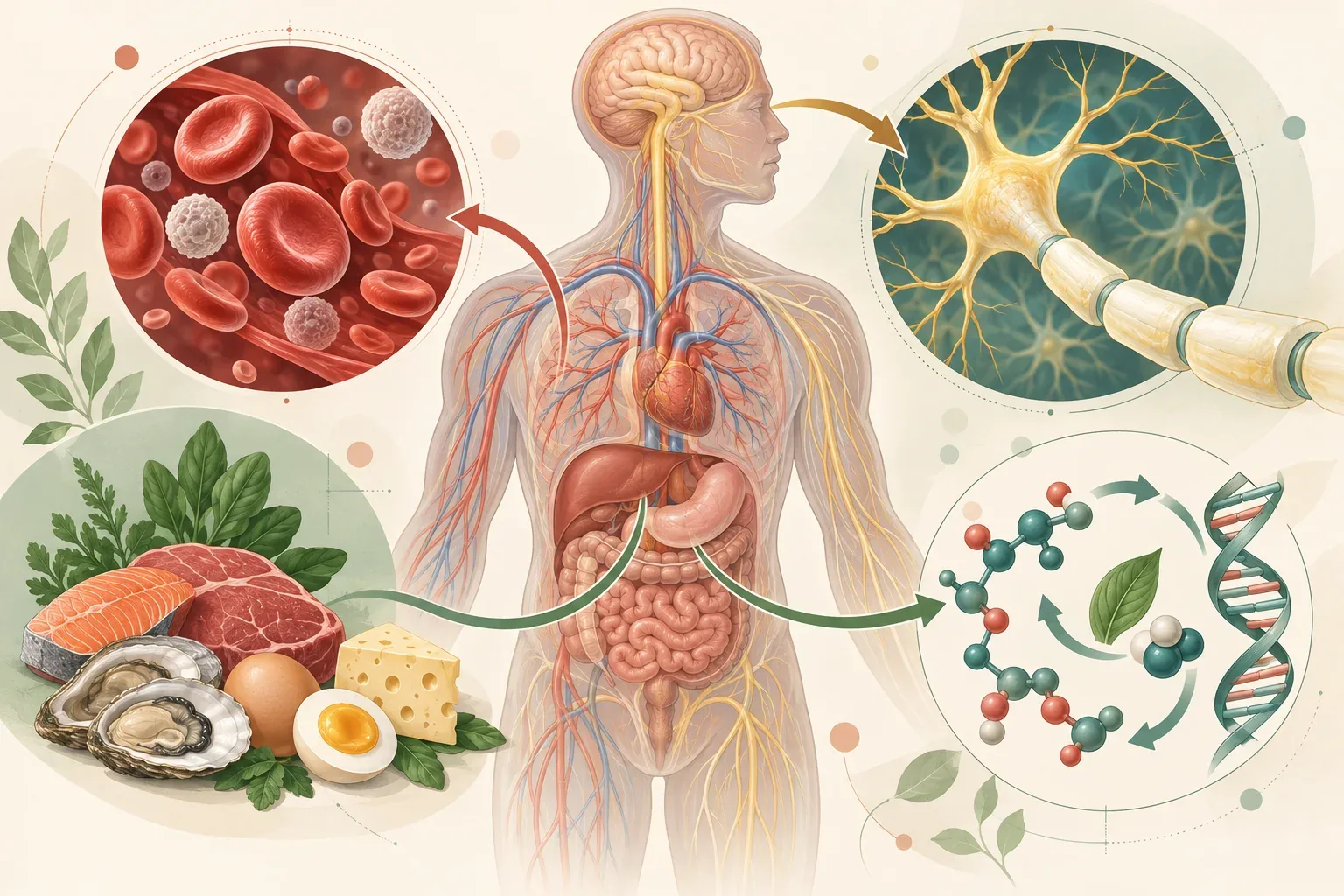 Disputed pairing
Vitamin B12 (Cobalamin)
Connection details
Context: megadose B12 with grams of choline
Choline and B12 share methyl metabolism, but that physiology does not justify milligram B12 with gram-dose choline compounds.
Source for this connection
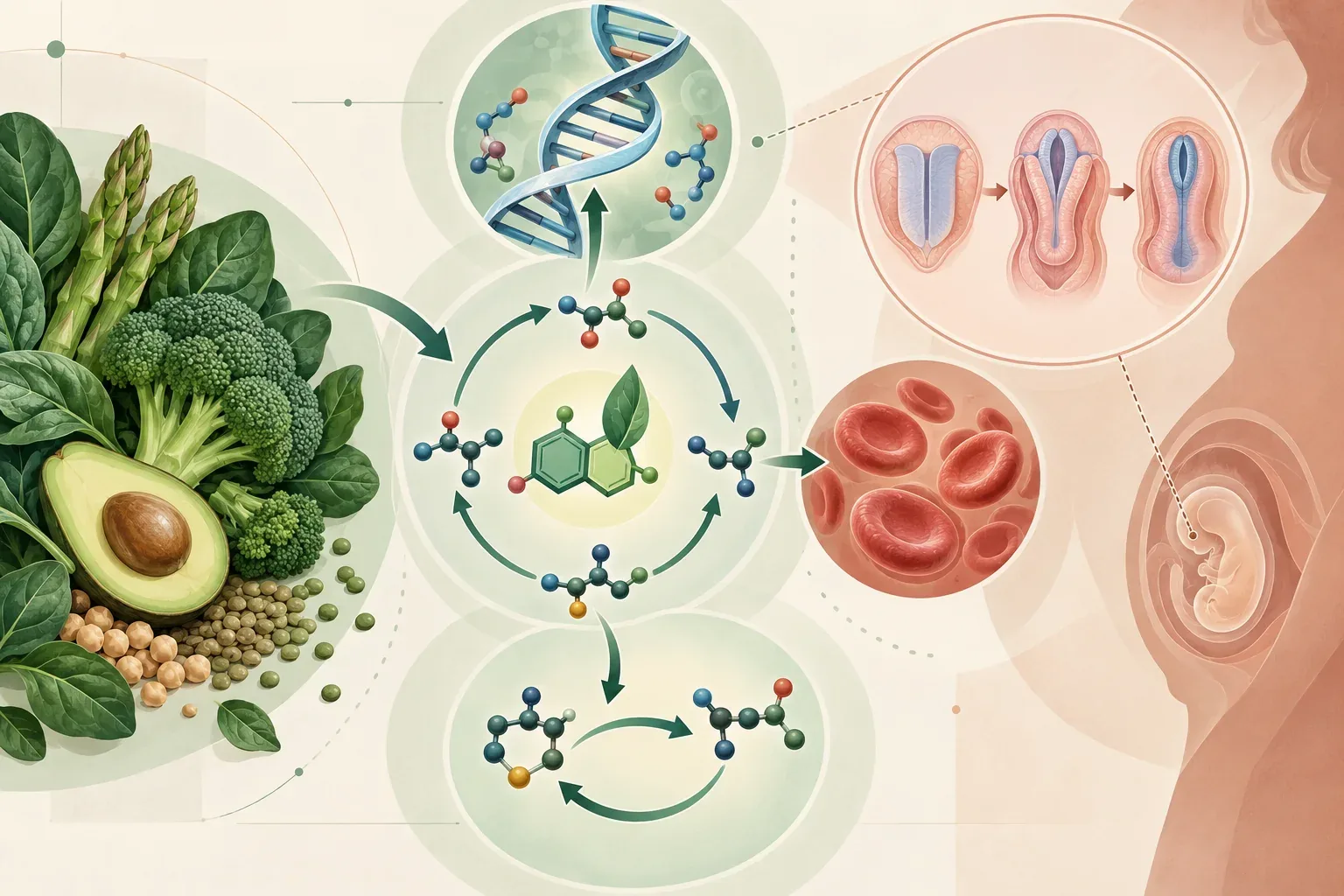 Disputed pairing
Vitamin B9 (Folate)
Connection details
Context: megadose folate with grams of choline
Choline and folate share methyl metabolism, but that physiology does not justify megadosing either nutrient.
Source for this connection