
Which nutrients need attention when you never eat fish and seafood?
Start with omega-3, vitamin D, iodine, B12 and selenium, then check the rest of your diet. Seafood contributes different amounts depending on what someone eats: replacing salmon, white fish or shellfish would create different changes.
These are possible replacements, each with a different thing to check.
| Nutrient | Sources that do not require fish or shellfish | What to check in your usual diet |
|---|---|---|
| Plant omega-3: alpha-linolenic acid (ALA) | Walnuts, flaxseed, chia and selected plant oils | Include a source you actually eat; conversion to the fats in the next row is limited |
| Eicosapentaenoic acid (EPA) and docosahexaenoic acid (DHA) | Algal-oil products, if acceptable to you | Check the separate EPA and DHA amounts; some products supply DHA alone |
| Vitamin D | Foods with added vitamin D, UV-exposed mushrooms with a stated vitamin D amount, or a supplement | Verify the product and the portion rather than assuming every milk or mushroom contains the same amount |
| Iodine | Dairy, eggs and iodized salt used within your existing salt allowance | Plant drinks and noniodized salt may contribute little |
| Vitamin B12 | Meat, poultry, dairy, eggs, B12-fortified foods or supplements | Check amounts and frequency, particularly if other animal foods are also excluded |
| Selenium | Meat, poultry, eggs, dairy and grains | The mix of foods matters; plant-food amounts vary with growing conditions |
The food-source basis is in the NIH fact sheets for omega-3[1], vitamin D[2], iodine[3], B12[4] and selenium[5].
What does a nutrient calculation with no seafood show?
It shows that one specified combination can reach the 23 selected vitamin and mineral targets without any fish or shellfish. It uses eggs, dairy and chicken, alongside plant foods and UV-exposed mushrooms.
The entire ingredient list below supplies about 2,045 calories and weighs 2.14 kg, including milk and yogurt. These are edible weights in the named preparation. Dry oats, cooked spinach and grilled mushrooms must be compared with the corresponding food records.
| Food, in the preparation counted | Amount for the whole day | Practical size |
|---|---|---|
| [6] | 50 g | 1 large egg |
| [7] | 495 g | About 2 cups |
| [8] | 300 g | About 1¼ cups |
| [9] | 70 g | About half a cup chopped |
| [10] | 100 g | About 1¼ cups dry, before adding water |
| [11] | 200 g | About 1.1 cups cooked |
| [12] | 220 g | About 1.4 cups chopped, cooked |
| [13] | 300 g | About 1 large potato |
| [14] | 195 g | About 1⅔ medium bananas |
| [15] | 22 g | 22 g kernels |
| [16] | 10 g | 10 g kernels |
| [17] | 150 g | About 1¼ cups sliced, grilled |
| [18] | 2.4 g | Weighed total added salt |
| [19] | 28 g | About 1 ounce kernels |
You could divide the oats, milk and banana across breakfast; the yogurt, nuts and seeds across snacks; and the remaining ingredients across lunch and dinner. Only the listed foods and salt enter the totals: oil, sauces and other additions would change them. No recipes or recurring menu were tested.
The calculation gives about 104 g protein, 43 g fiber and 78 g fat. Saturated fat is 22.6 g, just below 10% of the calculated energy. Eating these particular amounts of dairy, cooked vegetables and mushrooms repeatedly may be inconvenient; that matters when choosing replacements you can maintain.
How do the vitamin and mineral totals compare?
The table compares amounts eaten with adult intake references. It does not measure absorption or blood levels. Milligrams are abbreviated mg and micrograms mcg. Vitamin A uses retinol activity equivalents (RAE), and folate uses dietary folate equivalents (DFE), to compare their different food forms. Niacin equivalents (NE) include niacin made from dietary tryptophan as well as the niacin in food. Vitamin E is counted as alpha-tocopherol. Magnesium's two recommendations refer to ages 19–30 / 31–50.
| Nutrient and unit | Men 19–50 | Women 19–50 | Label Daily Value | Calculated day |
|---|---|---|---|---|
| Vitamin A, mcg RAE | 900 | 700 | 900 | 1,614.2 |
| Vitamin C, mg | 90 | 75 | 90 | 210.1 |
| Vitamin D, mcg | 15 | 15 | 20 | 21.6 |
| Vitamin E, mg alpha-tocopherol | 15 | 15 | 15 | 18.7 |
| Vitamin K (adequate intake), mcg | 120 | 90 | 120 | 1,309.8 |
| Thiamin (B1), mg | 1.2 | 1.1 | 1.2 | 1.83 |
| Riboflavin (B2), mg | 1.3 | 1.1 | 1.3 | 3.72 |
| Niacin (B3), mg NE | 16 | 14 | 16 | 50.7 |
| Pantothenic acid (B5) (adequate intake), mg | 5 | 5 | 5 | 11.2 |
| Vitamin B6, mg | 1.3 | 1.3 | 1.7 | 3.93 |
| Biotin (B7) (adequate intake), mcg | 30 | 30 | 30 | 82.0 |
| Folate (B9), mcg DFE | 400 | 400 | 400 | 815.0 |
| Vitamin B12, mcg | 2.4 | 2.4 | 2.4 | 4.13 |
| Calcium, mg | 1000 | 1000 | 1300 | 1,524.1 |
| Magnesium, mg | 400 / 420 | 310 / 320 | 420 | 761.3 |
| Phosphorus, mg | 700 | 700 | 1250 | 2,339.9 |
| Potassium (adequate intake), mg | 3400 | 2600 | 4700 | 6,607.2 |
| Sodium (adequate intake), mg | 1500 | 1500 | ≤2,300 | 1,681.2 |
| Chloride (adequate intake), mg | 2300 | 2300 | 2300 | 3,398.8 |
| Iron, mg | 8 | 18 | 18 | 21.0 |
| Zinc, mg | 11 | 8 | 11 | 15.4 |
| Iodine, mcg | 150 | 150 | 150 | 393.6 |
| Selenium, mcg | 55 | 55 | 55 | 138.6 |
Sodium's 2,300 mg Daily Value is a ceiling. The search also used its 1,500 mg adequate intake as an experimental planning floor; that choice is no reason to add salt to your meals. Adult reference values come from the vitamin tables[20], mineral tables[21] and FDA label values[22]
The linked USDA records are the main composition source. Biotin, iodine and chloride need matched foods from the UK composition tables[23] because the USDA records have major gaps. Those substitutions are estimates for similar foods. Other missing contributions stay unknown; USDA data alone cannot score this menu for those three nutrients.
Which food dependencies would matter if you kept eating this way?
Vitamin D depends heavily on the mushrooms: the selected grilled, UV-exposed portabella record contains 13.1 mcg per 100 g. The 150 g portion contributes 19.65 mcg of the total 21.62 mcg. Halving that contribution leaves 11.79 mcg, below both adult references used here. A dependable replacement therefore matters more than copying the food name from this list.
Milk and yogurt supply about 922 mg calcium between them. Changing them would affect several nutrients, including B12 and iodine, and would require a new calculation using the replacements' actual composition. The 393.6 mcg iodine total is particularly uncertain because it uses matched composition estimates; ordinary table salt receives no iodine credit.
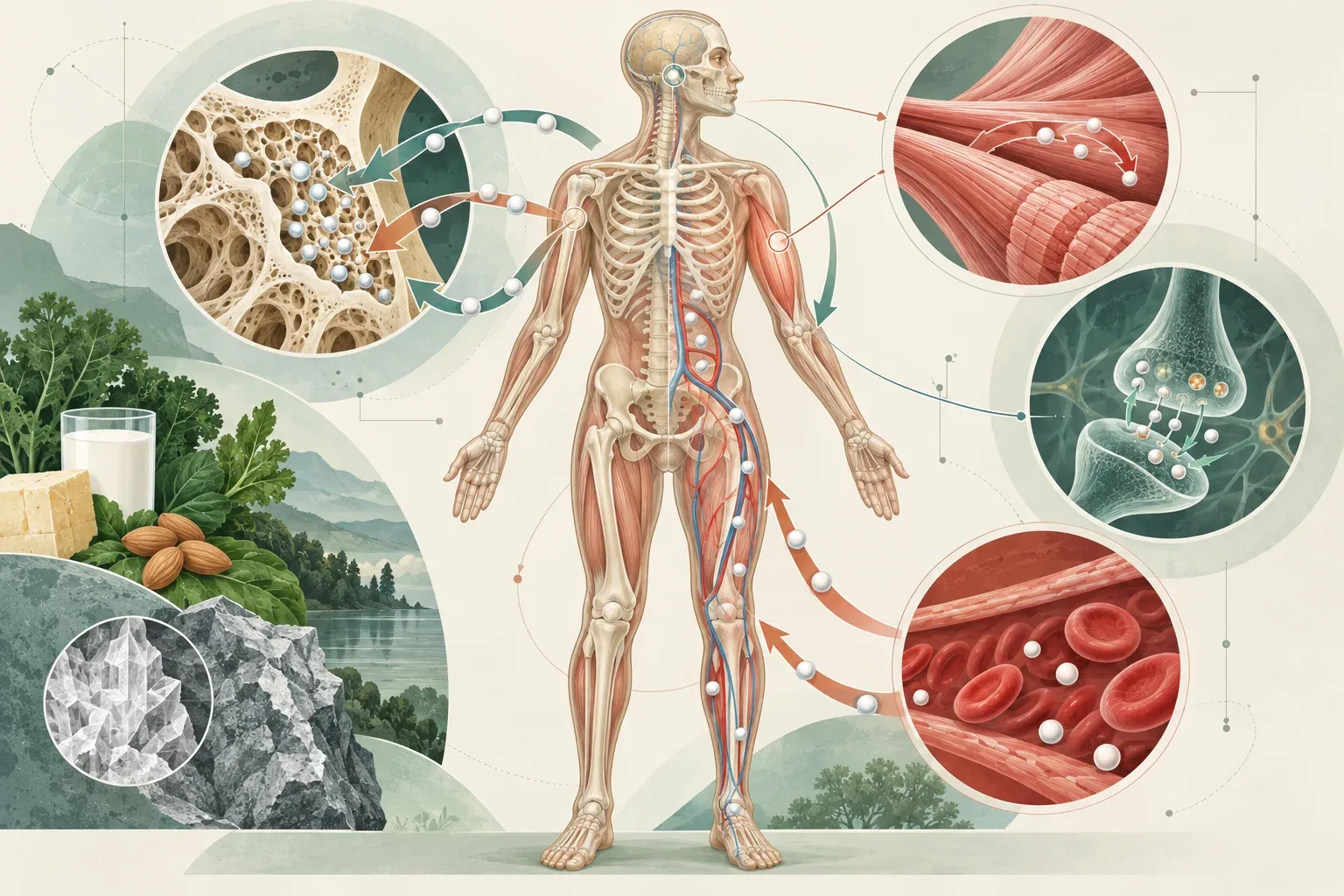
Calcium's 1,524 mg total also needs context. NIH reports much lower calcium absorption from spinach than from milk: about 5% versus 27%. Reducing the spinach calcium contribution to 5/27 of its listed amount lowered the calcium total to 1,302 mg, only about 2 mg above the label value. That adjustment is an analyst's sensitivity calculation, not a validated way to calculate your absorbed dose. Such a small margin is vulnerable to ordinary food variation. The same check separately removed almonds' biotin contribution and limited milk iodine to 20 mcg per 100 g; those changes tested the biotin and iodine totals and did not change calcium. [24]
The large vegetable and potato portions contribute to 6,607 mg potassium and 761 mg magnesium. If you have been told to restrict potassium, this is an unsuitable menu to copy. Kidney impairment and some medicines can affect potassium handling. [25]
What remains outside the result?
The 23-nutrient check does not cover every essential nutrient. Molybdenum was unmeasured, and chromium, fluoride and complete essential-fatty-acid coverage were not established. The walnut ALA estimate is separate from the vitamin/mineral totals; EPA and DHA were not established.
Copper, manganese and choline were checked afterward, with these results:
| Nutrient | Calculated day | Adult reference, men / women | Upper limit |
|---|---|---|---|
| Copper | 3.01 mg | 0.9 / 0.9 mg recommended allowance | 10 mg |
| Manganese | 8.90 mg | 2.3 / 1.8 mg adequate intake | 11 mg |
| Choline | 632 mg | 550 / 425 mg adequate intake | 3,500 mg |
The references are the mineral[21] and vitamin/choline[20] tables. Exceeding a reference does not make intake near an upper limit desirable.
Upper-limit assessment remains incomplete where food measurements are missing. Known chloride is already about 3,399 mg, near the 3,600 mg upper limit retained for this experiment, before unknown contributions. Together with the narrow calcium and saturated-fat margins, this is a reason to improve the menu before treating it as a recurring plan. Its cost, real product composition, recipes and acceptability over time have not been tested.
Can plant omega-3 replace the omega-3 in fish?
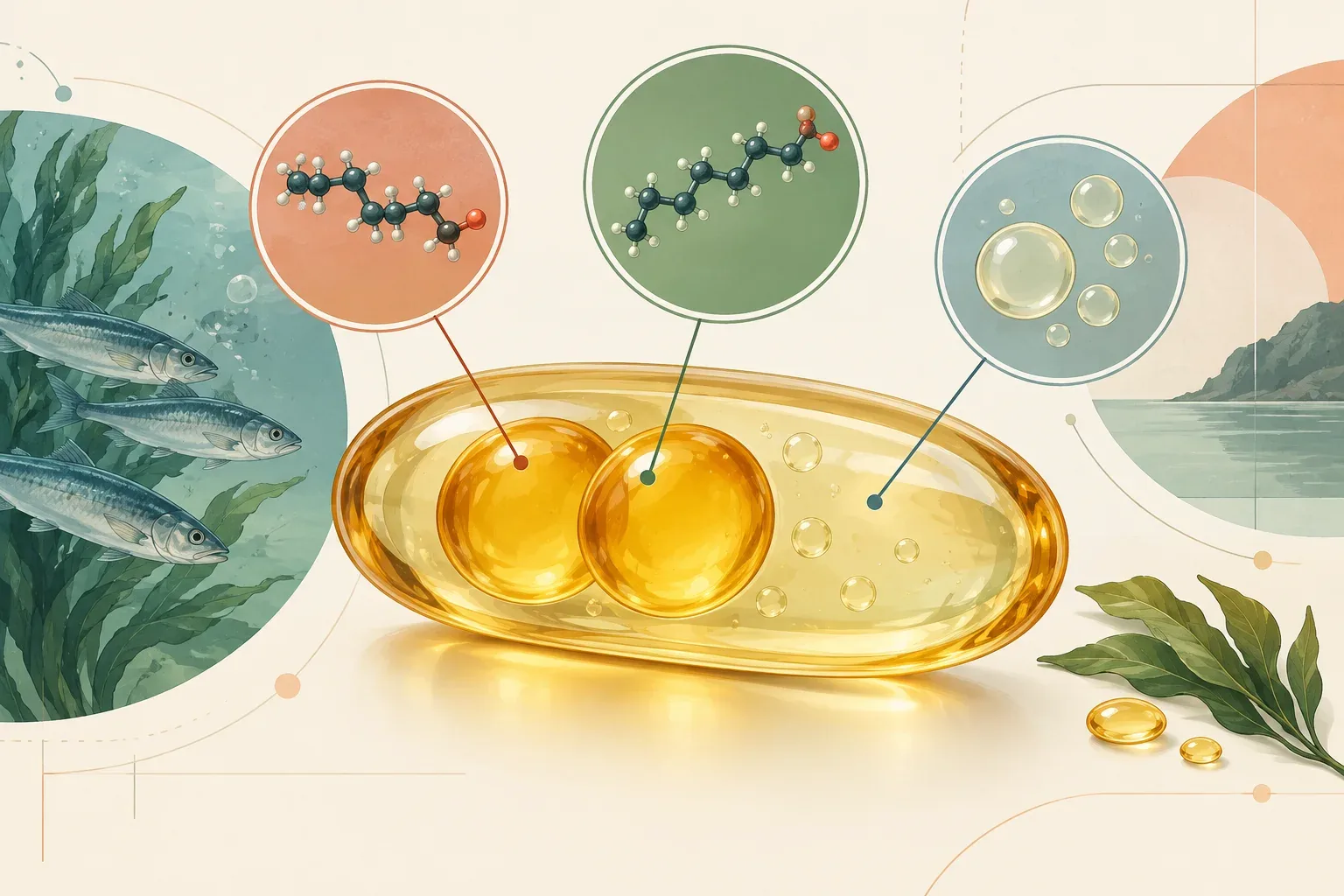
Plant foods supply ALA. Your body converts some ALA to EPA and DHA, but conversion is limited, so an ALA amount cannot be counted as an equal amount of EPA or DHA.
So the answer has two parts. You can meet the established need for the essential plant fat ALA without fish: the National Academies' adequate intake is 1.6 g daily for men and 1.1 g for women, and 28 g of English walnuts in the example above supplies an estimated 2.54 g ALA. An adequate intake is a planning reference, not a diagnosis threshold.
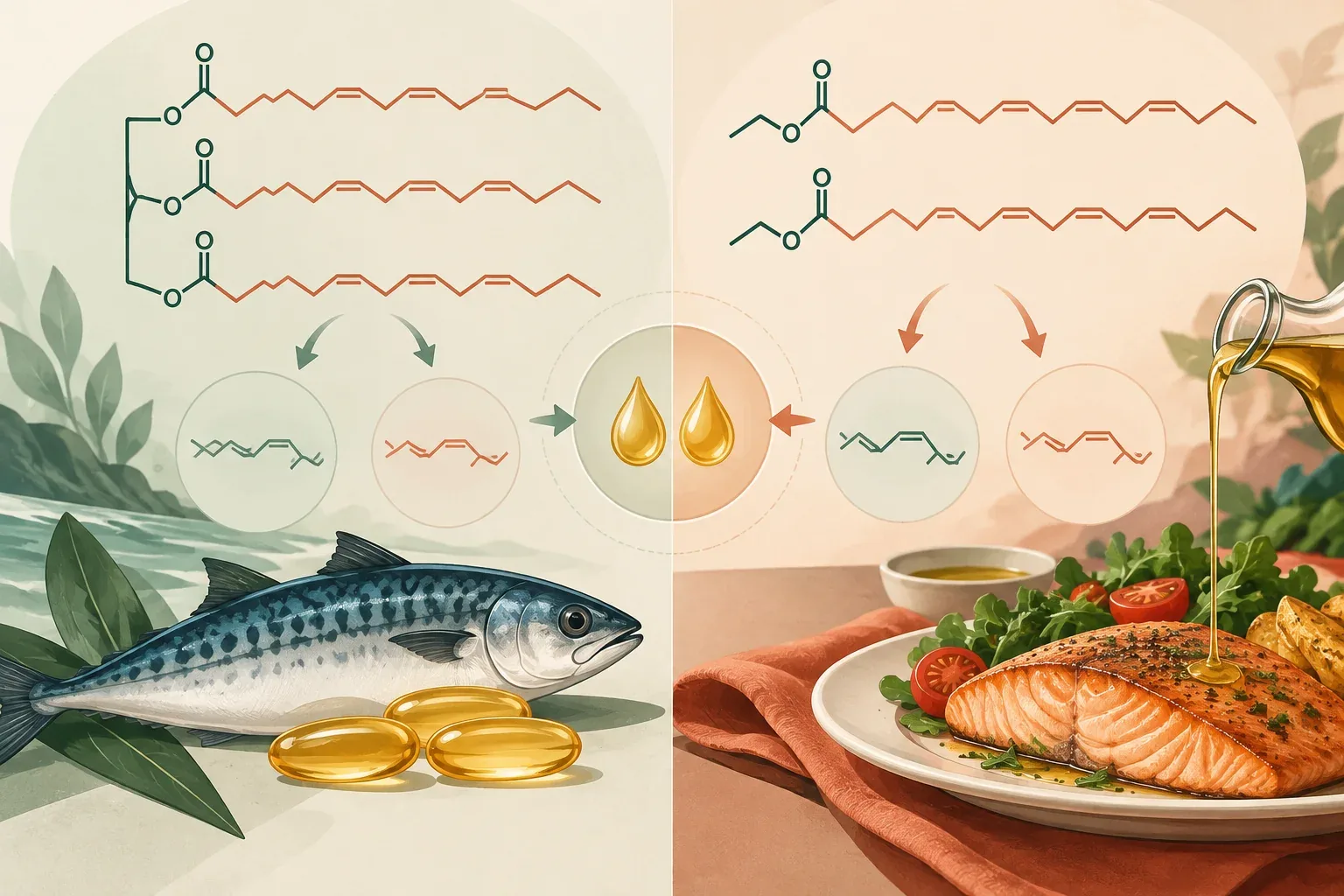
Walnuts do not supply the same amount of EPA and DHA as a fish serving. The NIH omega-3 fact sheet[1] says conversion of ALA into the longer-chain fats is limited, with reported rates below 15%, and that eating EPA and DHA directly is the practical way to raise their levels. It sets no general daily requirement for EPA or DHA. If you want a direct seafood-free source, an algal oil product can supply DHA, sometimes with EPA; check each amount on the label. Count the walnut ALA and the algal EPA/DHA separately rather than converting grams of walnuts into a promised fish-oil dose.
How can you get vitamin D without relying on fish?
Choose a source you can obtain and use consistently: a fortified food, UV-exposed mushrooms with a stated vitamin D amount, or a supplement.
The recommended daily amount from the National Academies is 15 mcg, or 600 IU, for adults through age 70, and 20 mcg, or 800 IU, after 70.
The food calculation above reaches 21.62 mcg vitamin D only because it includes 150 g of UV-exposed mushrooms, which contribute 19.65 mcg. Without those mushrooms, the other listed foods contribute about 1.97 mcg. Ordinary mushrooms and unfortified dairy cannot be assumed to replace that amount; check the actual vitamin D declaration or use another dependable source.
Where can iodine, B12, selenium and protein come from instead?
Eggs, dairy, meat, legumes, grains and nuts can contribute without seafood. Which replacements work depends on which of those foods you eat and in what amounts.
Iodine: check dairy and the salt you already use
For healthy adults who are not pregnant or breastfeeding, the iodine recommendation is 150 mcg daily. Milk, yogurt and eggs can contribute, but dairy iodine varies. A calcium-fortified plant drink may still contain little iodine; check iodine separately.
If you use salt, an iodized product can replace noniodized salt within the amount you already use. Sea salt, kosher salt and Himalayan salt are not dependable iodine sources unless labeled as iodized. Increasing salt to obtain iodine can create a sodium problem. Seaweed is unnecessary for this approach, and its iodine content can be highly variable.
If your recurring foods supply little iodine, discuss a measured replacement, particularly if you have thyroid disease. Excess iodine can also disrupt thyroid function. [3]
B12: count the animal foods or fortified foods you retain
The adult B12 recommendation is 2.4 mcg daily outside pregnancy and breastfeeding. Meat, poultry, milk, yogurt and eggs provide options without seafood. The combination matters: having an egg occasionally tells you less than the amounts supplied by your whole recurring diet.
If you also exclude animal foods, deliberately fortified foods or a supplement become relevant B12 sources. A separate absorption problem can require a different approach even when the food total looks sufficient. [4]
Selenium and protein: inspect the foods replacing seafood meals
Selenium's adult recommendation is 55 mcg daily outside pregnancy and breastfeeding. Meat, poultry, eggs, dairy and grains are alternatives. Plant-food selenium varies with soil conditions, so a database average is less dependable for some foods. [5]
For protein, look at what occupies the main part of your meals: meat, eggs, dairy, tofu or legumes, in portions that fit your needs. The calculated example combines chicken, dairy, an egg, oats and nuts and supplies about 104 g protein.
Did the calculation find other seafood-free combinations?
Yes, but the available foods changed the result. The archived experiment contains 288 cases excluding all fish and shellfish, covering men and women aged 19–30 and 31–50. For each group, it compared foods with or without added vitamins and minerals, a smaller or broader food list, and three goals: adult recommendations, label Daily Values, or both. It used either USDA composition data alone or USDA data supplemented with UK estimates. The calorie budgets were 1,600, 2,000 and 2,400, with a 5% allowance, alongside limits on individual foods and food groups.
For the 2,000-calorie searches using additional UK composition estimates, all four adult profiles had this pattern:
| Foods allowed in the calculation | Adult recommendations | Label Daily Values | Both sets together |
|---|---|---|---|
| Smaller ordinary-food list, no fortified food | No solution found | No solution found | No solution found |
| Same list, fortified foods allowed | Solution found | No solution found | No solution found |
| Broader list including UV mushrooms, no fortified food | Solution found | Solution found | Solution found |
| Broader list, fortified foods allowed | Solution found | Solution found | Solution found |
The smaller list contains eggs, dairy, meat, legumes, grains, vegetables, fruit, nuts, seeds, oils and salt. Fortification adds specific database records for fortified milk, soy drink, oats and iodized salt. The broader list additionally permits UV mushrooms, quinoa and small liver portions. No seafood enters any of the 288 cases reported here, and the displayed menu uses no liver.
In total, 168 cases found combinations meeting the targets they could calculate; 120 found none within their limits. Of the successes, 84 used USDA-only data and omitted unquantifiable targets. The other 84 used the extra composition estimates. These are outcomes of constrained calculations, not a success rate for real people or proof that the unsuccessful diets are impossible.
The displayed ingredient list was adjusted after the search and checked for protein, fiber, carbohydrate, fat, saturated fat, fruit and vegetable amounts. The archive also retains 288 finfish-only exclusions that permit shellfish; those are a different comparison and do not support the all-seafood exclusion discussed here.
How do you check the diet you actually eat?
Write down several representative days, including a weekend day if your meals change. Record portions, drinks, fortified foods and supplements. Use that record to identify recurring sources and gaps.
Start with the nutrients above. Check the vitamin D amount in the product you buy, the ALA source you eat, your iodine sources, and any DHA/EPA product separately. Then inspect the wider diet, including calcium, iron, zinc, vegetables, fruit and enough food overall.
Compare your intake with the recommendation for your age and sex. Label Daily Values are shared comparison numbers and sometimes differ: 1,000 mg calcium is the recommendation for adults 19–50, while the label Daily Value is 1,300 mg. Dietary reference tables[21] · FDA Daily Values[22]
A recommended allowance is intended to cover nearly all healthy adults in its stated group. An adequate intake, used for nutrients such as ALA and potassium, has a different evidence basis; falling below it does not by itself diagnose deficiency. Recommendations concern usual intake over time, so a single low day cannot settle whether your diet is inadequate. Equally, one unusually well-planned day cannot settle the question for the rest of the month.
The food calculation here uses healthy men and women aged 19–50, with separate age bands for magnesium. Children, older adults, pregnant or breastfeeding women and people with medical dietary restrictions need their own assessment.
How should you choose a supplement if a gap remains?
Choose the nutrient and amount that address the gap you found, then check that the product fits your dietary and food source preferences.
For an algal-oil product, compare EPA and DHA per full serving. Suppose a two-capsule serving contains 1,000 mg algal oil, including 250 mg DHA and 125 mg EPA. It supplies 375 mg combined EPA plus DHA. The total oil weight is a different number.
A 60-capsule bottle at two capsules per serving provides 30 servings. Divide the price by 30 to compare serving costs, while keeping the separate DHA/EPA amounts in view. A DHA-only product and one containing both fats supply different things. Check the oil source, capsule shell, other ingredients and serving size against your own exclusions.
If you have a fish or shellfish allergy, check manufacturing information and ingredients with the manufacturer and your allergy clinician. Discuss high-dose omega-3 or use alongside blood-thinning medicine with your clinician or pharmacist. NIH omega-3 supplement guidance[1] · NIAID food-allergy guidance[26]
The bottom line
If fish and seafood never appear in your diet, build around replacements you can keep eating: a plant ALA source, a dependable vitamin D source, and enough iodine, B12, selenium and protein from your other foods. Consider algal DHA/EPA separately if you want a direct source of those fats.
Help us improve this article
Spotted an error or found a source we should consider? Tell us which part of this article needs another look and include a link if you have one. Please leave out personal health details and lab results; we can’t answer individual medical questions.
More about these nutrients


Food sources & dietary alternatives
Nutrient connections worth understanding
 Disputed pairing
Calcium: Daily Needs, Elemental Milligrams, Forms, and What the Trials Found
Connection details
Context: calcium pills because you take D
Food calcium is reasonable; extra calcium pills are not automatic because you take D.
Source for this connection
 Combined risks · Disputed pairing
Vitamin A: Forms, RAE Math, Daily Amount, and What the High-Dose Trials Found
Connection details
Context: high-dose vitamin A with high-dose D
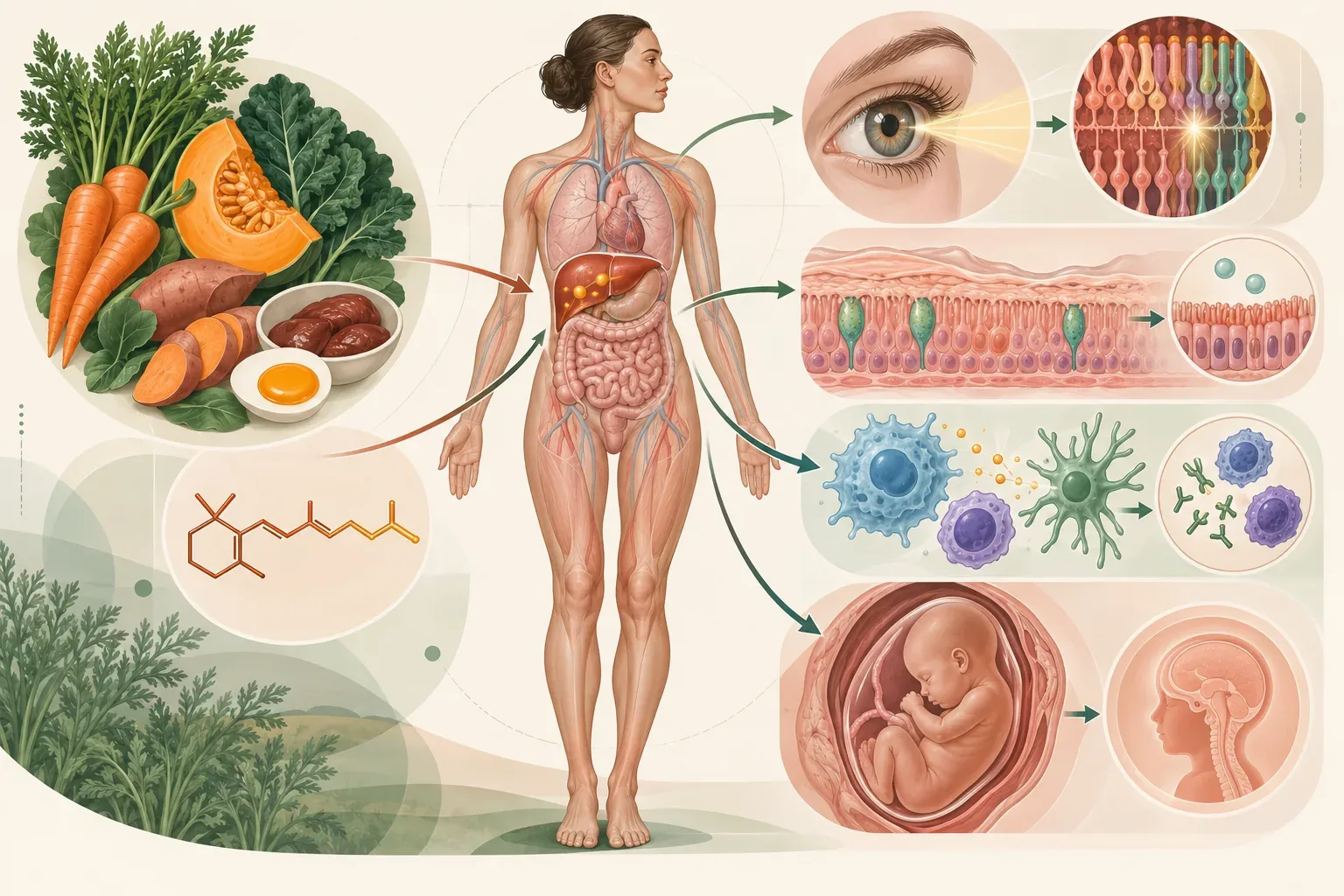
A nine-person acute crossover study found retinyl palmitate blunted the serum-calcium response to calcitriol; this does not establish that ordinary A intake cancels nutritional D3.
Source for this connectionContext: cod liver oil
Vitamins A and D from cod liver oil are not double-counted.
Source for this connection
 Disputed pairing
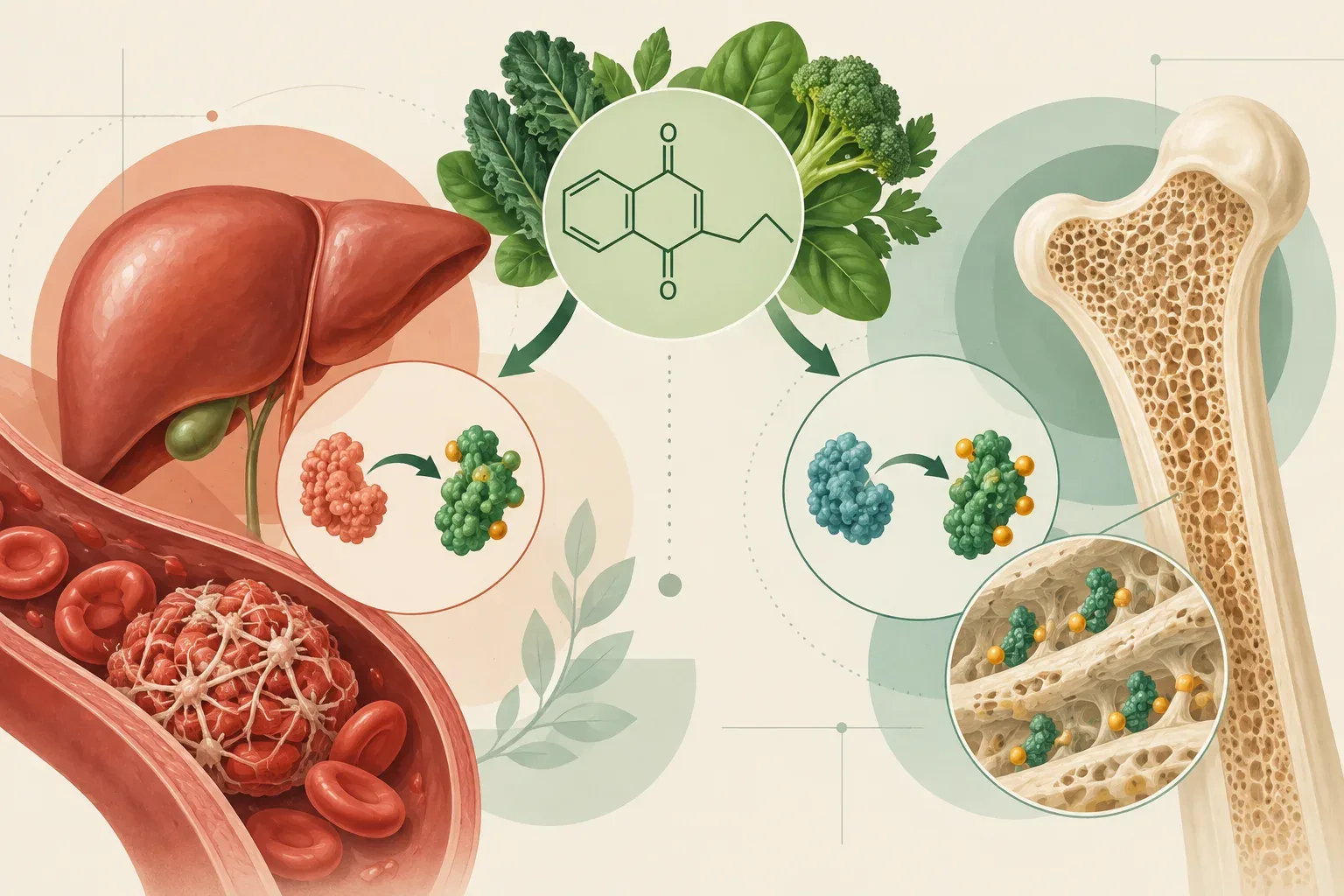
Vitamin K: Daily Needs, K2 Labels and What Bone Studies Really Show
Connection details
Context: must pair K2 or arteries calcify
K2 does not erase hypercalcemia and is not a guarantee that calcium stays in bone and out of arteries.
Source for this connection
References
- omega-3 ↩
- vitamin D ↩
- iodine ↩
- B12 ↩
- selenium ↩
- Egg, whole, cooked, hard-boiled ↩
- Milk, whole, 3.25% milkfat, without added vitamin A and vitamin D ↩
- Yogurt, plain, whole milk ↩
- Chicken, broilers or fryers, breast, meat only, cooked, roasted ↩
- Cereals, oats, regular and quick, not fortified, dry ↩
- Spinach, cooked, boiled, drained, without salt ↩
- Broccoli, cooked, boiled, drained, without salt ↩
- Potatoes, baked, flesh and skin, without salt ↩
- Bananas, raw ↩
- Nuts, almonds ↩
- Seeds, sunflower seed kernels, dried ↩
- Mushrooms, portabella, exposed to ultraviolet light, grilled ↩
- Salt, table ↩
- Nuts, walnuts, english ↩
- vitamin tables ↩
- mineral tables ↩
- FDA label values ↩
- UK composition tables ↩
- NIH calcium absorption ↩
- NIH potassium guidance ↩
- NIAID food-allergy guidance ↩