
Find your vitamin D amount
Use this table to read the amount on a label or prescription. The larger amounts help you identify high-strength products; they are not suggested daily doses.
| Vitamin D in IU | Same amount in mcg |
|---|---|
| 400 IU | 10 mcg |
| 600 IU | 15 mcg |
| 800 IU | 20 mcg |
| 1,000 IU | 25 mcg |
| 2,000 IU | 50 mcg |
| 4,000 IU | 100 mcg |
| 5,000 IU | 125 mcg |
| 10,000 IU | 250 mcg |
| 50,000 IU | 1,250 mcg |
A label showing 3,000 IU provides 75 mcg (3,000 ÷ 40). A label showing 30 mcg provides 1,200 IU (30 × 40).
A prescribed 50,000 IU dose may use a schedule other than daily. Converting it to 1,250 mcg does not change that schedule. Follow the prescription rather than treating the table as directions.
Read the serving before counting pills or drops
Before you count pills or drops, check what the label calls one serving.
Imagine a gummy label with a two-gummy serving containing 50 mcg, also shown as 2,000 IU. One gummy supplies 25 mcg, or 1,000 IU. The paired units are one dose written two ways; do not add them.
Liquid products need the same check. If an illustrative label gives 25 mcg per two drops, each drop supplies 12.5 mcg, or 500 IU. A different label might give its amount per milliliter or per full dropper. There is no universal vitamin D amount per drop.
Use the stated serving and supplied measuring device. If the web listing and the physical label disagree about drops, droppers, or milliliters, clarify the instructions before taking it. [2]
Add products in one unit
Convert each product to either mcg or IU, then add only the amounts you take.
For an illustrative combination, a multivitamin with 25 mcg and a separate vitamin D supplement with 2,000 IU give:
25 mcg + (2,000 ÷ 40) mcg = 75 mcg, equivalent to 3,000 IU.
That is a calculation of supplement intake, not advice to combine those products. Food and fortified drinks also contribute vitamin D.
Watch the difference between mg and mcg: 1 mg equals 1,000 mcg. A listing that says “25 mg” instead of “25 mcg” changes the amount a thousandfold. Use a product with an unambiguous dose declaration.
What does 125% Daily Value mean?
A 25 mcg serving is 125% Daily Value because the FDA label reference for vitamin D is 20 mcg: 25 ÷ 20 × 100 = 125%.
That percentage does not report absorption, establish a personal requirement, or identify the upper limit. The FDA's Daily Value table[3] and the NIH's age-specific intake guidance serve different purposes.
The National Academies sets both recommended amounts and upper limits, listed in the NIH fact sheet. For adults aged 19–70, the recommended daily amount is 15 mcg/600 IU from all sources; over age 70 it is 20 mcg/800 IU.
The official adult upper limit is 100 mcg/4,000 IU a day from all sources. That means a 5,000 IU daily supplement exceeds the limit before you count food. A clinician may prescribe higher treatment doses with monitoring. [1]
Keep the conversion within its scope
Use the factor of 40 for vitamin D2 or D3. Vitamin A and vitamin E have different IU conversions. Other vitamin D medicines require their own instructions; do not use this table to substitute them for ordinary D2 or D3.
For vitamin D IU to mcg, the arithmetic is fixed. Whether you need a supplement, which form fits, and how much to take are separate questions covered by our vitamin D guide, including its D3-versus-D2 section.
The bottom line
For ordinary vitamin D2 and D3, converting the label is straightforward: divide IU by 40 to get micrograms, or multiply micrograms by 40 to get IU. They are two ways of stating the same amount, so count overlapping products in one unit before adding them together.
Help us improve this article
Spotted an error or found a source we should consider? Tell us which part of this article needs another look and include a link if you have one. Please leave out personal health details and lab results; we can’t answer individual medical questions.
Keep exploring

Nutrient connections worth understanding
 Disputed pairing
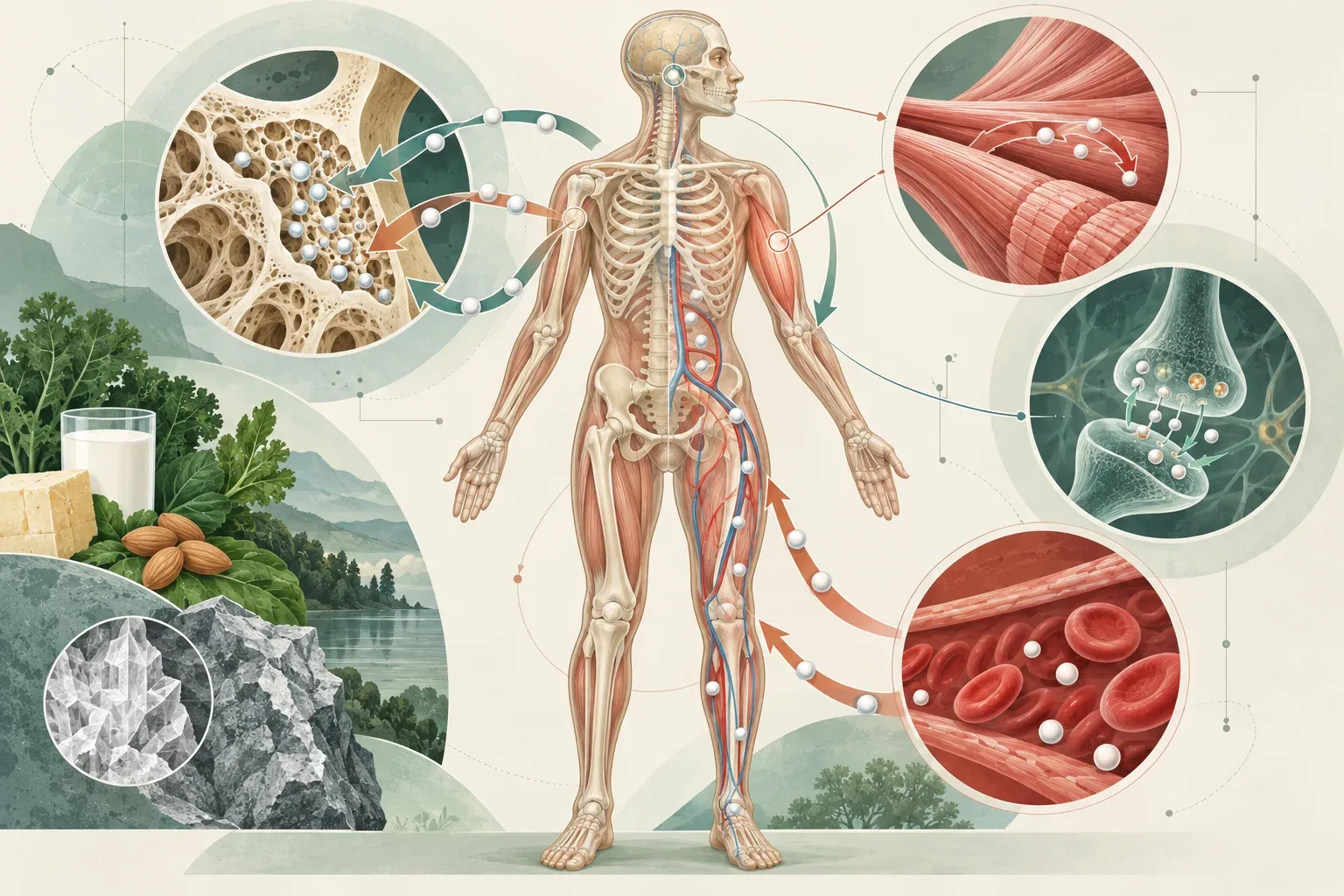
Calcium: Daily Needs, Elemental Milligrams, Forms, and What the Trials Found
Connection details
Context: calcium pills because you take D
Food calcium is reasonable; extra calcium pills are not automatic because you take D.
Source for this connection
 Combined risks
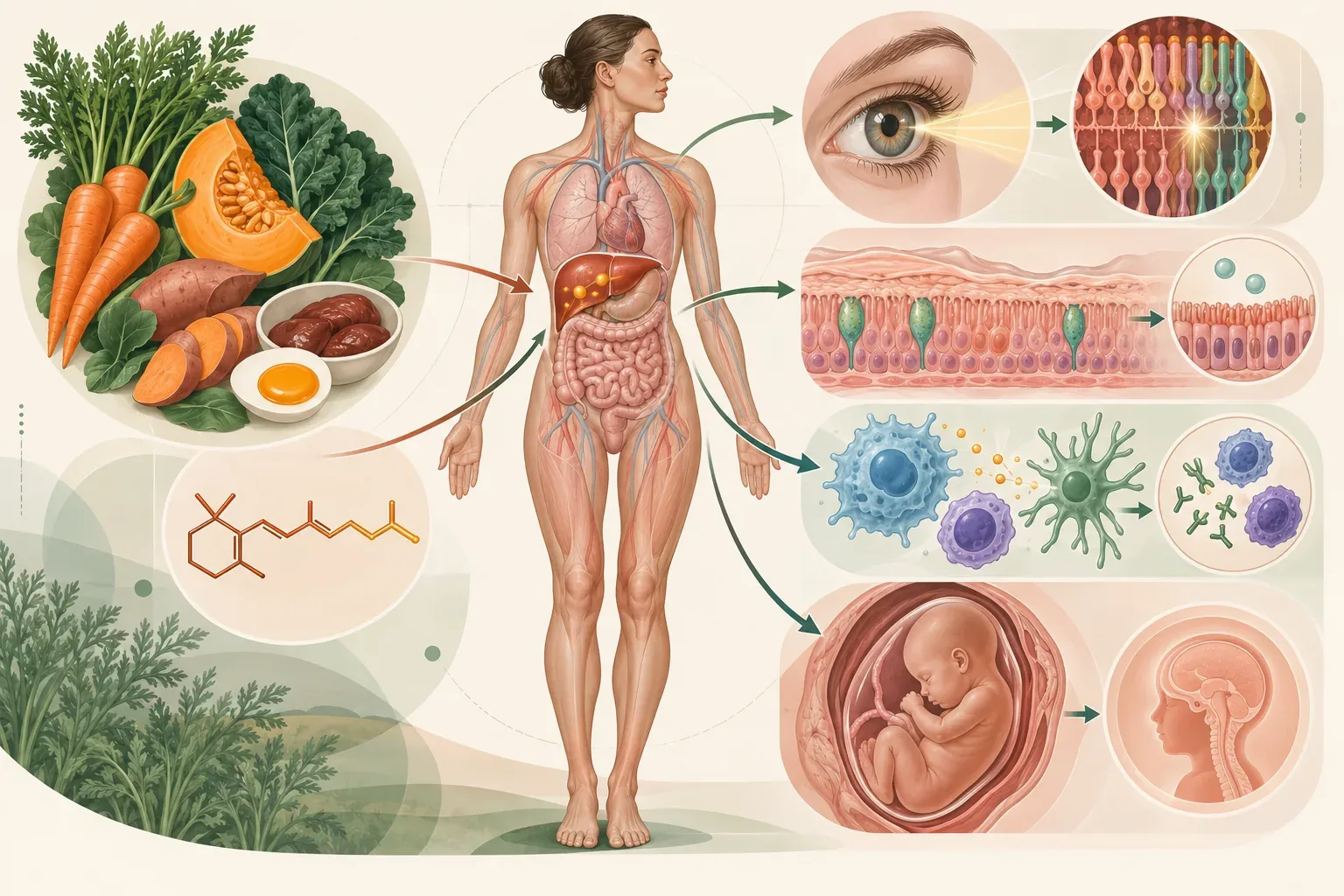
Vitamin A: Forms, RAE Math, Daily Amount, and What the High-Dose Trials Found
Connection details
Context: high-dose vitamin A with high-dose D
A nine-person acute crossover study found retinyl palmitate blunted the serum-calcium response to calcitriol; this does not establish that ordinary A intake cancels nutritional D3.
Source for this connection
 Disputed pairing
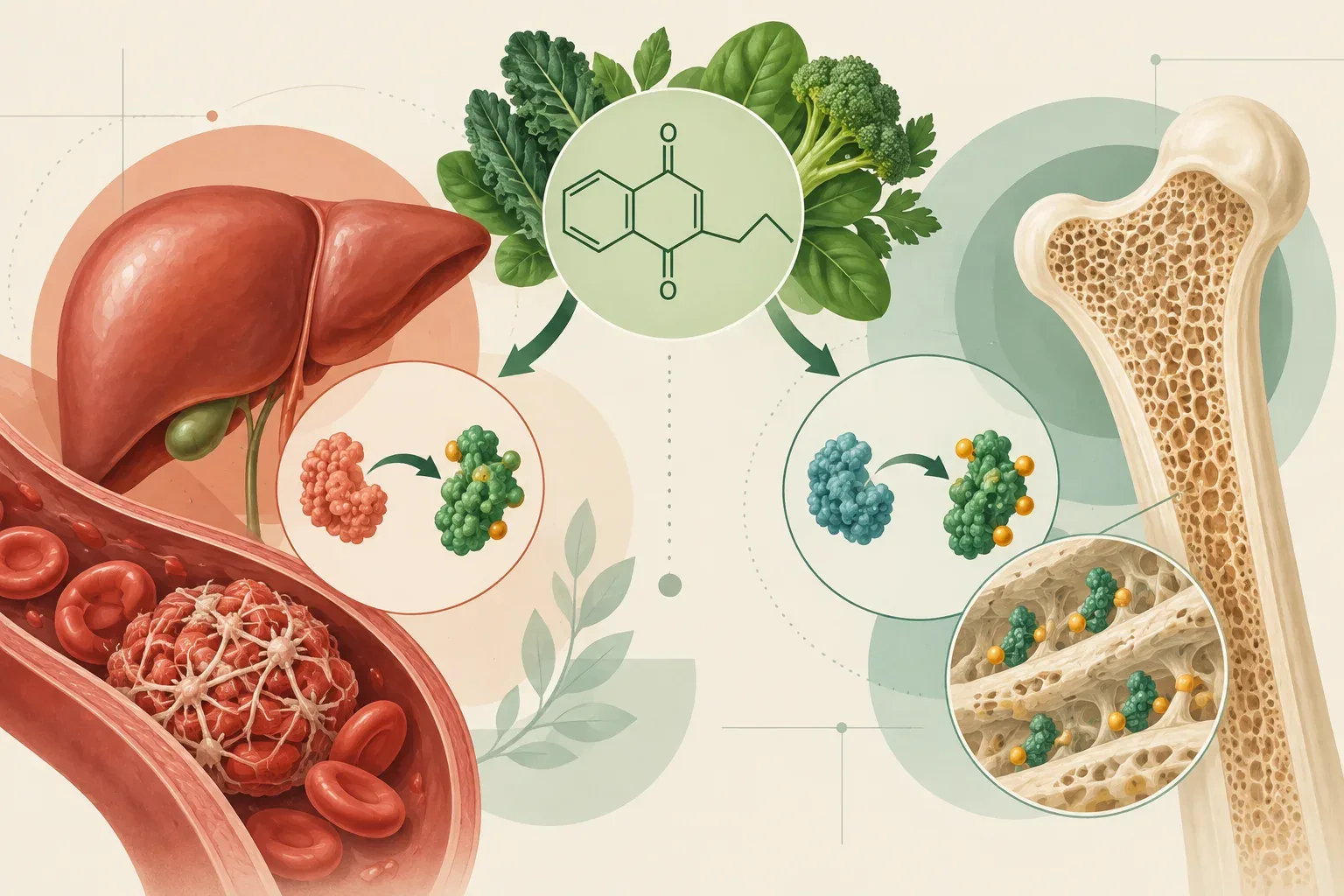
Vitamin K: Daily Needs, K2 Labels and What Bone Studies Really Show
Connection details
Context: must pair K2 or arteries calcify
K2 does not erase hypercalcemia and is not a guarantee that calcium stays in bone and out of arteries.
Source for this connection
References
Corrections & updates
- Update
Revised the article after editorial review, with clearer evidence explanations and practical guidance.