
What is urolithin A?
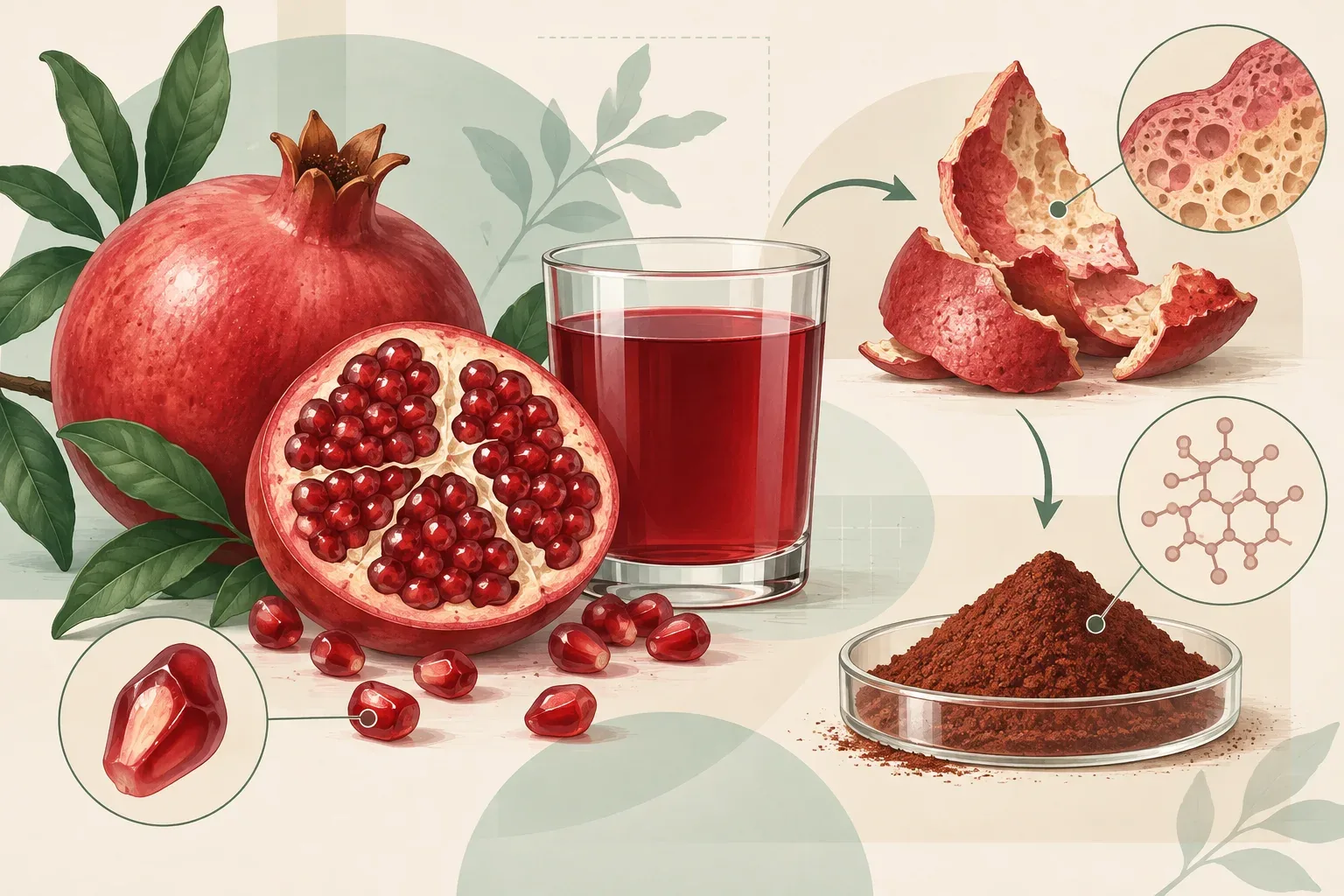
Urolithin A is a compound that some gut bacteria make from ellagitannins in foods such as pomegranates, walnuts, and berries. People differ in the gut microbes that perform the conversion and in how much urolithin A appears in blood afterward.
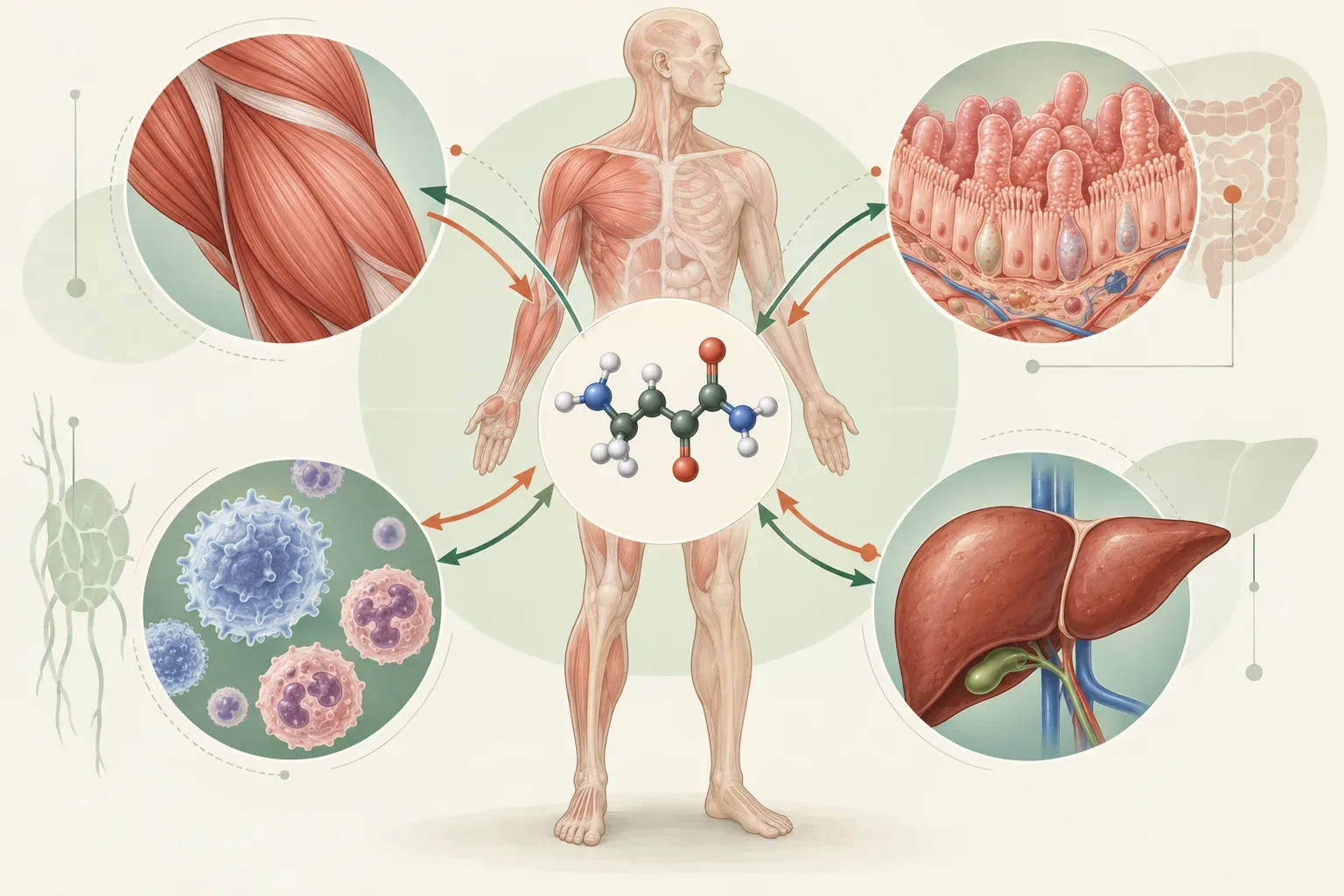
People take urolithin A for muscle strength and endurance as they age. Immune function is another research interest.
Direct supplements bypass the gut-bacterial conversion, usually with the branded ingredient Mitopure.
In one standardized pomegranate-juice challenge, about 40% reached the study's high-producer threshold after 24 hours; 27% were low producers and 33% had no detectable conversion at that time. Those categories describe a response to one challenge, not a permanent diagnosis or proof that the other 60% never produce any. Conversion study[1] Company-funded trials found changes in muscle, endurance, and immune measurements, but the two largest trials missed their main outcomes.
The short version
Unit: milligrams (mg) of urolithin A.
Dose decision: there is no official daily amount or established dietary need. The 500 mg and 1,000 mg trial amounts did not produce a clear main-outcome win.
Typical listings: 500 mg per serving, often two softgels, and blends with 250–500 mg plus resveratrol, CoQ10, or other ingredients.
Skip: pomegranate extract sold as direct urolithin A, lifespan claims, hidden urolithin A amounts, and using healthy-adult trials to treat muscle-wasting disease.
What people take urolithin A for
| Claimed benefit | Dose / form studied | Research verdict | Evidence strength |
|---|---|---|---|
| Improve strength or leg power in middle age | Direct urolithin A 500 or 1,000 mg/day for 4 months; 88 overweight middle-aged adults | Main leg-power outcome missed; strength improved as a secondary result | Limited |
| Improve walking or muscle endurance in older adults | Direct urolithin A 1,000 mg/day for 4 months; 66 older adults | Main walking and muscle-energy outcomes missed; endurance improved secondarily | Limited |
| Improve immune health | Direct urolithin A 1,000 mg/day for 4 weeks; 50 healthy middle-aged adults | Immune-cell markers changed; fewer infections were not demonstrated | Insufficient |
| Slow human aging | No established dose or duration | No human lifespan or validated slowing-of-aging result | Insufficient |
No group has a demonstrated nutritional need or a clear clinical reason to take urolithin A. A low blood level after eating pomegranate in a research study reflects conversion in that experiment, not a medical diagnosis.
A healthy adult may still consider it for muscle performance, but benefit is uncertain and the research base is dominated by the product maker. Interactions with medicines, pregnancy and breastfeeding safety, and use in muscle-wasting disease have not been established.
Is urolithin A the same as pomegranate extract or CoQ10?
They are different ingredients. Pomegranate contains ellagitannins that gut bacteria may turn into urolithin A; a pomegranate-extract amount does not tell you how much urolithin A you will make. A direct urolithin A supplement supplies the compound itself. CoQ10 is another molecule involved in cellular energy, with its own research and doses. If a product combines them, check the stated amount of each: a study of urolithin A alone does not test the combination. [1]
What to pay attention to on the label
Find urolithin A or Mitopure in milligrams per serving and count how many softgels or capsules make that serving. Then check whether other ingredients make it impossible to attribute an effect.
| Complete listing | Urolithin A per serving | What it contains |
|---|---|---|
| Direct urolithin A, often Mitopure | 500 mg, often two softgels | Urolithin A supplied directly |
| Blend with resveratrol, CoQ10, or other ingredients | 250–500 mg | Urolithin A plus the other listed ingredients |
| Pomegranate blend | Often no urolithin A stated | Pomegranate compounds from which some gut bacteria can produce urolithin A |
Pomegranate ellagitannins must be converted by gut bacteria. In a 2021 study, about 40% of participants had the study’s stronger blood urolithin A response after pomegranate juice, while direct supplementation produced detectable blood urolithin A in everyone. Those are different thresholds, so the percentages should not be read as an equal-outcome comparison. The research team included Amazentis founders and staff, and the study did not test clinical benefit.
Misleading labels
“Supports muscle strength”
In the ATLAS trial, leg power was the prespecified main outcome and did not improve clearly against placebo. A roughly 12% strength increase was a secondary result. A label that cites the strength figure without the main result makes the evidence look more settled than it is.
“Supports cellular energy”
Changes in muscle proteins or energy-related markers are measurable, but the larger trials did not clearly improve their main walking or leg-power outcomes. A marker result is not itself a measured improvement in daily function.
“Immune support”
The four-week trial found changes in immune-cell populations and metabolism. It did not measure whether users had fewer infections or recovered faster from illness; those are different outcomes from the ones on which the claim rests.
“Anti-aging”
The lifespan experiment was in worms. Human trials have not measured lifespan or established a slower rate of aging.
Drawbacks and side effects
| Potential drawback | When/who it affects | Research evidence | Practical implication |
|---|---|---|---|
| Uncertain long-term or repeated high-dose harms | Use beyond four months, or repeated 2,000 mg doses | Short trials had placebo-like adverse-event rates; 2,000 mg was tested as a single dose | Do not turn a one-time safety test into a daily ceiling |
| Missing pregnancy and interaction evidence | Pregnant or breastfeeding women; people taking medicines | The available trials do not settle these questions | Discuss the exact product and circumstances with a clinician |
Safety details
Four-month trials reported side effects at about the placebo rate, and a single-dose study found up to 2,000 mg well tolerated. There is no official upper limit.
Can urolithin A cause weight gain?
The trials reviewed here have not established weight gain as an effect of urolithin A. The studies were too small and short to prove that no individual can experience a weight change.
Trials found no clear improvement in walking distance or leg power
In the 2022 ENERGIZE trial, 66 older adults received 1,000 mg or placebo for four months. Walking distance rose by about 61 meters with urolithin A and 43 meters with placebo, a difference that could have been due to chance. The other main outcome, muscle energy measured with specialized imaging, also missed. Muscle endurance improved as a secondary outcome. Amazentis funded the trial, and several authors worked for or owned shares in the company.
In the 2022 ATLAS trial, 88 overweight middle-aged adults received 500 mg, 1,000 mg, or placebo for four months. Leg power, the main outcome, did not beat placebo. Muscle strength rose about 12% as a secondary result, reported across the active groups rather than as a clear dose comparison. All but one author had company ties.
Later studies remain mixed. A trial in 20 strength-trained men found no extra strength benefit; a 20-player soccer study reported better endurance. In a 2025 altitude trial, only 11 runners per group completed the 3,000-meter time test, which did not beat placebo. Perceived effort and a blood marker of muscle strain improved, while the rise in peak oxygen use was not clearly greater than placebo. Amazentis employees were among the authors.
A 2026 review of five trials could combine only the six-minute walking result. The estimate favored urolithin A by 17 meters, but the uncertainty was compatible with no benefit. The other outcomes were too different to pool. An independent trial that succeeds on its stated main outcome would change the conclusion.
One trial used the supplement on an empty stomach, but no study established a best time of day.
What the immune study shows
In a randomized 2025 trial, 50 healthy adults over 45 received 1,000 mg of direct urolithin A or placebo daily for four weeks. The planned outcomes concerned the type and metabolism of circulating immune cells. Compared with placebo, the urolithin A group had a 0.50-percentage-point greater change in a naive-like CD8 T-cell population and a 14.72-percentage-point greater change in the measured capacity of CD8 cells to use fatty acids and amino acids for energy. These are laboratory measures of immune-cell state, not a count of immune cells added to the body. Other T-cell subsets did not show the same changes. Exploratory blood-cell analyses also found changes in gene expression and metabolism. [2]
The trial gives evidence that supplementation can alter the measured immune-cell profile over four weeks. It did not test infection frequency, days ill or vaccine response, so it cannot tell us whether the cell changes translate into an everyday immune-health benefit. Amazentis funded the study and supplied the product; company researchers were among the authors.
Does urolithin A slow aging or improve fitness?
No human trial measured lifespan or a validated slowing of aging. A 2016 experiment extended lifespan in worms and improved muscle function in rodents. Worm lifespan is not human longevity.
Fitness results are also unsettled. The largest trials missed walking or leg-power main outcomes, smaller performance studies conflict, and the 2026 review found the walking estimate inconclusive.
What you may have heard on podcasts
On The Diary Of A CEO on March 30, 2026, Rhonda Patrick recommended urolithin A and described lifespan, immune, fitness, strength, and pomegranate findings. Several details need narrower wording.
The underlying lifespan study extended life in worms, not old mice. The immune study measured cell markers in middle-aged adults, not immune “rejuvenation” in older adults. The roughly 12% strength change was secondary after the trial missed leg power. The quoted 10% fitness gain was a change from the active group’s own starting point; the difference from placebo could have been due to chance. The juice study’s roughly 40% strong response is not the same as proving that everyone else can never make urolithin A. None of these studies tested human lifespan.
The bottom line
Urolithin A has interesting secondary muscle findings, but the main walking and leg-power outcomes in the trials were not clearly improved. Immune-cell changes also do not establish fewer infections, and human life extension remains unproven.
Direct urolithin A bypasses the gut-bacterial conversion required after eating pomegranate or taking a pomegranate extract. Whether the product is worth its cost depends on how much you value the still-uncertain functional effects.
Help us improve this article
Spotted an error or found a source we should consider? Tell us which part of this article needs another look and include a link if you have one. Please leave out personal health details and lab results; we can’t answer individual medical questions.
Explore more in healthy aging


Nutrient connections worth understanding
 Disputed pairing
Pomegranate Extract: Punicalagin Math, Juice vs Capsules, and What the Trials Found
Connection details
Context: UA bait on extract
Not the same as a pomegranate-extract row. Food is not 500 mg urolithin A.
Source for this connection
More in compounds



References
- Singh et al.: urolithin A producers after pomegranate juice versus direct supplementation, 2021 ↩
- Denk et al.: urolithin A and age-related immune decline, 2025 ↩
- Andreux et al.: urolithin A safety and first human study, 2019
- Liu et al.: urolithin A in older adults (ENERGIZE), 2022
- Singh et al.: urolithin A in middle-aged adults (ATLAS), 2022
- Dao et al.: urolithin A and muscle outcomes meta-analysis, 2026
- Whitfield et al.: urolithin A in highly trained runners, 2025
- Zhao et al.: urolithin A in resistance-trained men, 2024
- Monsalve Acevedo et al.: urolithin A in academy soccer players, 2025
- Ryu et al.: urolithin A in worms and rodents, 2016
- Cortés-Martín et al.: urolithin metabotypes, 2018
- The Diary Of A CEO: Rhonda Patrick, 30 March 2026
- NIH Dietary Supplement Label Database: a Mitopure label
- NIH Dietary Supplement Label Database: a pomegranate blend label