Is niacin the same as niacinamide?
On a U.S. Supplement Facts panel, the nutrient line can say Niacin on both bottles. The words in parentheses tell you which form supplies it. These two labels from the same manufacturer show the distinction.
| Product | Form named on the panel | Niacin per capsule |
|---|---|---|
| NOW Niacin [2] | Nicotinic acid | 500 mg |
| NOW Niacinamide [3] | Niacinamide | 500 mg |
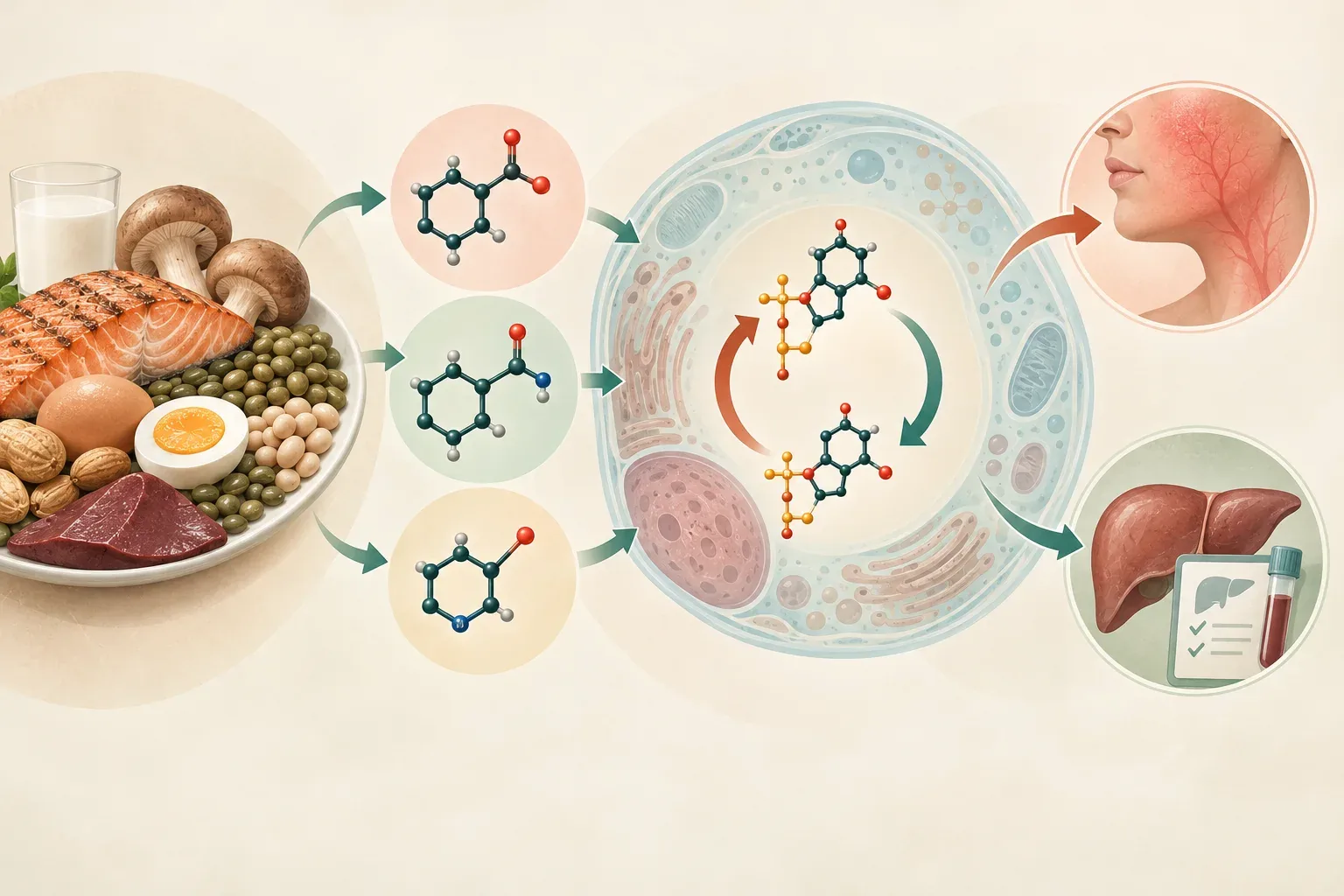
For nutrition, one milligram of either form counts as one milligram of niacin equivalents (mg NE). An adult man needs 16 mg NE a day and an adult woman who isn’t pregnant or breastfeeding needs 14 mg NE, including food. Either 500 mg capsule supplies more than 30 times those amounts. If you’re filling a small dietary gap, a lower-dose product is the closer fit. Daily niacin amounts and food sources
Which form of niacin causes flushing?
Nicotinic acid commonly causes a flush at doses of about 30–50 mg or more. Small blood vessels near the skin widen, which can leave your face, arms or chest warm, red, itchy or tingly. The 500 mg nicotinic acid capsule above is well over that range. Niacinamide avoids this particular effect [1].
Can I substitute niacinamide for nicotinic acid?
If you were prescribed nicotinic acid for high cholesterol or triglycerides, niacinamide won’t produce the same change in blood fats. High-dose nicotinic acid can lower triglycerides and raise HDL cholesterol. In the AIM-HIGH trial, adding prescription extended-release niacin to a statin improved those blood fats. Over about three years, the combined rate of serious cardiovascular problems, including heart attacks and strokes, was similar with and without niacin. If flushing makes it hard to take the prescription, ask your prescriber about other ways to treat your high cholesterol or triglycerides [1], [4].
The distinction also matters if a dermatologist recommended nicotinamide after repeated skin cancers. In one trial, 386 people who had already had at least two nonmelanoma skin cancers in five years took 500 mg of nicotinamide twice daily or a placebo. The rate of new nonmelanoma skin cancers was 23% lower during the year of treatment. For that use, the ingredient to look for on the bottle is niacinamide or nicotinamide [5].
Help us improve this article
Spotted an error or found a source we should consider? Tell us which part of this article needs another look and include a link if you have one. Please leave out personal health details and lab results; we can’t answer individual medical questions.