
What is sulforaphane?
Sulforaphane is an isothiocyanate, a sulfur-containing compound made from broccoli and its relatives. An intact plant mostly stores its precursor, glucoraphanin, separately from the enzyme myrosinase. Chewing, chopping or crushing breaks the cells, lets them meet, and forms sulforaphane. Gut microbes can convert some remaining glucoraphanin too, but the amount varies. This chemistry is why a weight of broccoli powder on a label is not the same as a delivered sulforaphane dose.
Three-day-old broccoli sprouts hold 10 to 100 times more glucoraphanin than mature broccoli.
Human studies measured markers, such as pollutant breakdown products in urine and glutathione in blood, and behavior scores in small autism trials. None measured disease prevention.
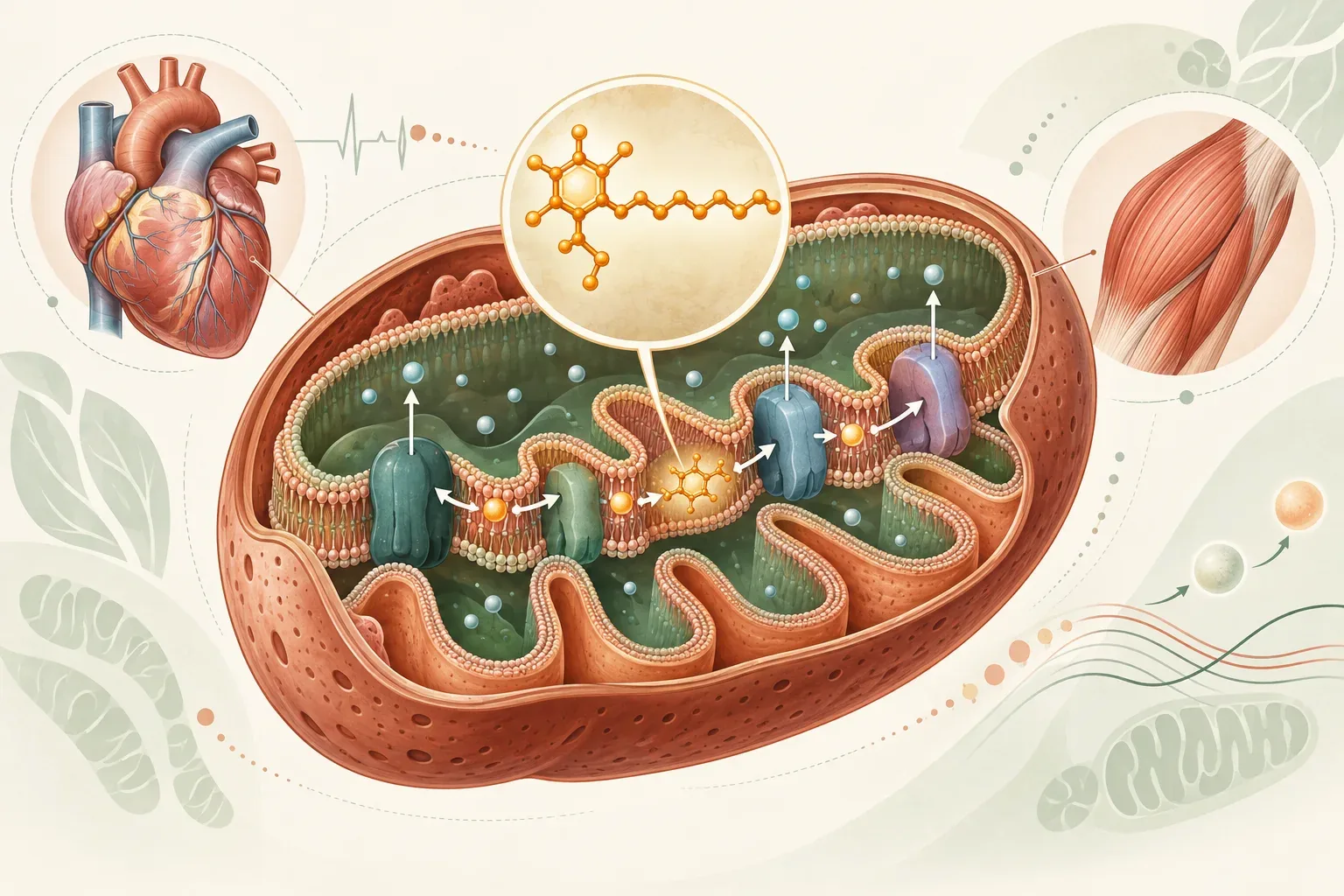
Sulforaphane activates enzymes involved in processing foreign compounds.
What people take sulforaphane for
| Claimed benefit | Dose / form studied | Research verdict | Evidence strength |
|---|---|---|---|
| Increase elimination of certain air pollutants | Sprout beverage: 40 µmol sulforaphane + 600 µmol glucoraphanin/day for 12 weeks; 291 adults in a polluted region | Urinary benzene and acrolein metabolites increased; disease prevention was not tested | Moderate |
| Improve autism-related symptoms | Study extract supplying 50–150 µmol sulforaphane/day for 18 weeks; males aged 13–27 under clinical study | An early trial was positive; a later child trial missed its main outcome | Limited |
| Remove BPA or prevent disease through “detox” | No established dose or duration for these claims | The pollutant-marker trial does not establish these benefits | Insufficient |
| Improve glucose control | Concentrated broccoli sprout extracts in people with type 2 diabetes or prediabetes | A subgroup signal in one diabetes trial was not a consistent result across later trials | Limited |
The evidence does not identify a general group who should take it. In a 12-week trial in a polluted region of China, a broccoli sprout drink increased how much of two air pollutants (benzene and acrolein) people passed in their urine. Small trials in autism found improvements in behavior scores: large in one early trial, small when trials were pooled. A 7-day pilot study raised glutathione, an antioxidant the body makes, in blood.
When to ask a doctor before taking sulforaphane
- You take a drug where small changes in blood level matter (for example, warfarin, some seizure drugs, or transplant drugs). By changing enzymes that process foreign chemicals, sulforaphane could change how quickly the body clears a drug and therefore its blood level. That possibility has not been tested in interaction studies.
- You want to use it for autism. The trials were small and tested specific extracts under a doctor's care; see the autism section below.
- You are pregnant or breastfeeding. No safety studies cover these periods.
How food and preparation change the amount
Broccoli sprouts, mature broccoli, Brussels sprouts, cabbage and kale can supply glucosinolates, but their glucoraphanin concentrations differ widely by plant, cultivar and growing conditions. Young broccoli sprouts are particularly concentrated. The important steps are the amount of glucoraphanin present and how much active myrosinase reaches it.
Raw chopped broccoli brings its own enzyme. Heating can inactivate it, so cooked broccoli often yields less sulforaphane from the same precursor; a human raw-versus-cooked study[1] found faster and greater exposure after raw broccoli. In another human food study[2], adding powdered mustard seed, a source of active myrosinase, to cooked broccoli increased sulforaphane exposure. These are preparation effects, not proof that raw sprouts are the safest choice: raw sprouts also carry a foodborne-infection risk for vulnerable groups.
All forms at a glance
| Listing | Amount per serving | How sulforaphane is supplied | Compared with trials |
|---|---|---|---|
| Glucoraphanin plus enzyme tablets | 30 mg glucoraphanin per 2 tablets | The precursor and a named myrosinase source react after use | Not the same product as any trial on this page; conversion varies |
| Example 20 mg sulforaphane capsule label | 20 mg sulforaphane (about 113 µmol) | Claims an amount of formed sulforaphane | Within the autism trial's range on paper; stability and formulation still matter |
| Example 400 mcg sulforaphane capsule label | 400 mcg sulforaphane (about 2 µmol) | Claims an amount of formed sulforaphane | Far below any trial amount |
| Fresh broccoli sprouts | No fixed amount per handful | Glucoraphanin plus the plant's myrosinase; chopping or chewing activates it | Plant content and handling vary; raw sprouts have a food-safety trade-off |
| Broccoli sprout extract or powder | 1,000 mg plant material, no active amount | Unknown precursor, enzyme and sulforaphane amounts | Cannot be compared |
Studies use micromoles (µmol), while labels use milligrams (mg) or micrograms (mcg, one-thousandth of a mg). One µmol of sulforaphane is about 0.18 mg; one µmol of the heavier precursor glucoraphanin is about 0.44 mg. For a precursor product, also look for an enzyme source such as mustard seed or wasabi. Skip products with no glucoraphanin or sulforaphane amount, “detox” or autism claims, and raw sprouts for children, older adults, pregnant women, and people with weakened immune systems.
Amounts used on labels and in trials
There is no recognized recommended daily amount or official upper limit for sulforaphane.
The autism amounts were studied under clinical supervision and should not be transferred to a retail product.
| Source | Amount a day | Who and how long | What it shows, and what it does not |
|---|---|---|---|
| Label amount (one glucoraphanin tablet product) | 30 mg glucoraphanin (about 69 µmol) with an enzyme source, in 2 tablets | Directions on the label | How much becomes sulforaphane varies; it has not been tested against the trial preparations |
| Rhonda Patrick, a scientist and podcast guest, 28 July 2025 | No amount; chewed raw kale and broccoli | Food, not a supplement | Her mechanism claims; see the podcast section |
For the benefit studies, 600 µmol glucoraphanin is about 260 mg, while 40 µmol sulforaphane is about 7 mg. The autism trial’s 50–150 µmol sulforaphane is about 9–27 mg, assigned by body weight. That trial included 44 males aged 13–27: 29 received sulforaphane and 15 placebo.
The label tablet holds about a ninth of the glucoraphanin in the polluted-region drink. If it converted at the 19 to 40 percent seen in one enzyme study (described below), it would make roughly 13 to 28 µmol (2 to 5 mg) of sulforaphane, below the autism trial's lowest amount. Daily use for 12 to 18 weeks in these trials did not cause serious side effects.
What to pay attention to on the label
The number to find is sulforaphane in milligrams, or glucoraphanin in milligrams plus an enzyme source; the thing to check is that the label gives an amount at all.
Which number on the label is the amount?
Labels list one of two compounds. One tablet product lists 30 mg glucoraphanin per 2 tablets, with broccoli seed and sprout extract plus wasabi as the enzyme source. Glucoraphanin is the precursor, so 30 mg of it is not 30 mg of sulforaphane. Another product lists 20 mg sulforaphane per 2 capsules, about 113 µmol, within the autism trial's range. A third lists 400 mcg sulforaphane per capsule, about 2 µmol, far below any trial amount.
Misleading labels
Broccoli extract with no amount
One "Broccoli Sprout Extract 1000 mg" capsule product lists 1,000 mg of broccoli per 2 capsules. Glucosinolates (the plant compound family glucoraphanin belongs to) and sulforaphane appear on the label with no amount. The 1,000 mg is the weight of the plant material, not of sulforaphane.
Glucoraphanin without an enzyme
Without myrosinase, only gut bacteria convert glucoraphanin, and they convert less. In a 16-person study, adding mustard seed (an enzyme source) to a broccoli seed extract doubled how much became sulforaphane, from about 19 percent to about 40 percent. A glucoraphanin product with no enzyme source listed relies on your gut bacteria.
Confusing servings and items per serving
Some manufacturers put 180 capsules on the front, and the back says 3 capsules per serving and 60 servings. The amount on the Supplement Facts panel is for the whole 3-capsule serving.
Common Myths about Sulforaphane
Are broccoli sprouts better than a supplement?
Sprouts hold far more glucoraphanin than mature broccoli and bring their own enzyme, so chewing raw sprouts makes sulforaphane without a pill. The trade-off is food safety: raw sprouts are a known source of food poisoning (see below). No trial has compared sprouts with a supplement on a health outcome.
Does cooking destroy sulforaphane?
Cooking destroys the enzyme. In a study of 8 men eating 200 g of crushed broccoli, people absorbed about 37 percent of the possible sulforaphane from raw broccoli and about 3 percent from cooked. The US Centers for Disease Control and Prevention (CDC) advises cooking sprouts thoroughly to kill bacteria. Both are true: cooking makes sprouts safer and leaves less sulforaphane, and you have to weigh the two.
Does sulforaphane detox the body or remove BPA?
The one pollutant trial found more benzene and acrolein breakdown products in urine, a sign the body was clearing more of them; it found no change for a third pollutant. No human trial has tested whether sulforaphane removes BPA (bisphenol A, a chemical in some plastics).
This is the trial often behind “supports detoxification” on a label. It measured chemicals in urine, not whether participants became healthier or whether heavy metals or BPA left their bodies faster.
Does sulforaphane help autism?
Small trials found modest improvements in caregiver-rated behavior. In 2014, 29 young men taking sulforaphane improved about 34 percent on one behavior scale, compared with about 3 percent on placebo, and scores slipped back after stopping. A 2021 trial in 57 children did not meet its main goal; caregiver ratings improved. A 2025 review of 6 trials found a small overall improvement and advised caution about how symptoms were rated. Talk to the child's or adult's doctor before trying it.
“Supports healthy behavior” or brain claims may refer to these small trials; the results do not establish what an ordinary retail capsule will do.
Drawbacks and side effects
| Potential drawback | When/who it affects | Research evidence | Practical implication |
|---|---|---|---|
| Taste, sleep or behavior-related adverse effects | Some participants in the child trial | Rare insomnia, irritability and taste/smell complaints were reported | Discuss adverse changes with the treating clinician |
| Foodborne infection from raw sprouts | Especially children, older adults, pregnant women and immunocompromised people | CDC advice concerns raw or lightly cooked sprouts, not all sulforaphane capsules | Follow sprout food-safety guidance; cooking changes exposure |
| Uncertain long-term high-dose safety | Concentrated extracts beyond studied amounts or durations | No official upper limit; mixed products cannot be compared by extract weight alone | Check actual sulforaphane versus its glucoraphanin precursor |
| Vomiting, abdominal pain, gas, constipation or diarrhea | Reported in an autism trial, without a clear excess over placebo | [3] | Reassess a poorly tolerated product; an event during use does not establish its cause. |
| Unresolved seizure reports | Two participants with seizure histories, during or after the same trial | [3] | Discuss concentrated use with the treating clinician when a seizure disorder is present. |
Safety details
There is no official upper limit. In the children's autism trial, side effects were rare and mild: trouble sleeping, irritability, and dislike of the taste or smell. In the 2025 review, side effects were about as common as on placebo.
Who should skip raw sprouts: the CDC says children, older adults, pregnant women, and people with weakened immune systems should avoid raw or lightly cooked sprouts of any kind, because of Salmonella and E. coli.
The 2014 autism trial[3] also recorded vomiting, abdominal pain, gas, constipation and diarrhea, without a clear excess over placebo. Two participants with seizure histories had seizures during treatment or after the trial; the authors could not rule out a connection. These observations do not establish a general seizure risk, but a person with a seizure disorder should discuss concentrated sulforaphane with their treating clinician. The researchers disclosed interests in sulforaphane-related intellectual property.
A 12-week randomized study of 45 women[4] found no adverse change in measured thyroid hormones or thyroid autoimmunity from its broccoli-sprout beverage. That is more useful than a blanket claim that every cruciferous food or extract blocks thyroid function; it also does not establish safety for every thyroid condition or concentrated product. Drug-enzyme effects reported in liver-cell experiments have not yielded a reliable human interaction amount, so a list of CYP numbers cannot predict a particular person's medicine level.
The science behind sulforaphane
The evidence is a set of marker and small clinical studies, with no trial of disease outcomes.
In experimental systems, sulforaphane alters the Keap1–Nrf2 signaling pathway, which regulates genes involved in antioxidant defense and processing foreign compounds. Some human trials have measured changes in downstream markers, but findings vary by population and preparation: one kidney-disease trial[5] found changes in NRF2-related gene expression, while a hemodialysis trial[6] did not. Nrf2 activation is a mechanism to test, not a measured shield from cancer or every pollutant.
Pollutants
In 2014, 291 adults in Qidong, China, an area with heavy air pollution, drank a broccoli sprout beverage or a placebo daily for 12 weeks.
- Urinary breakdown products of benzene rose 61 percent compared with placebo.
- Urinary breakdown products of acrolein rose 23 percent compared with placebo.
- a third pollutant, crotonaldehyde, had no statistically clear difference in this trial; that does not establish no effect
The trial did not measure lung disease or cancer.
The marker change is specific to the pollutants measured here. It does not demonstrate faster elimination of heavy metals, which the trial did not test.
Glucose and inflammation
A 2017 diabetes study[7] linked concentrated broccoli sprout extract to lower fasting glucose and HbA1c in an obese subgroup with poorly controlled type 2 diabetes. That is narrower than a claim of general “metabolic optimization.” A later prediabetes trial[8] examined whether baseline gut microbes distinguished responders, and a 2026 trial[9] in people with type 2 diabetes and chronic kidney disease found no statistically clear overall difference in glucose, insulin or HbA1c after 13 weeks. These products and populations differ; a dose for routine glucose treatment has not emerged.
Cell experiments propose effects on inflammatory signaling, including NF-κB. In a 12-person randomized challenge study[10], 16 g broccoli sprouts did not clearly improve several individual inflammatory markers over control sprouts. Claims of a reliable reduction in CRP, IL-6 and TNF-α therefore go beyond the human evidence assembled here.
Glutathione
In a 2018 pilot study, 7 days of oral sulforaphane raised glutathione in the blood of healthy adults. Exploratory scans also suggested higher brain glutathione, but that was not the main test and did not establish a health benefit.
Autism
Results of the autism trials are described in the myths section above: a large improvement in one 2014 trial, a missed main goal in 2021, and a small pooled effect in 2025.
What is still open
Whether sulforaphane prevents any disease, whether it changes BPA levels, and whether retail tablets match the trial extracts are all untested.
What you may have heard on podcasts
Rhonda Patrick (The Diary Of A CEO, 28 July 2025) named kale and broccoli as foods for sulforaphane and explained that chewing activates an enzyme that makes it. She said sulforaphane raises glutathione in the brain and helps the body detoxify benzene and BPA. She did not name a supplement or an amount.
The chewing chemistry matches the research. The benzene point matches the Qidong trial, which measured urinary breakdown products, not health outcomes. The glutathione point rests on a 7-day pilot, with brain results treated as a hint, not a main finding. No human trial has tested BPA.
The bottom line
Sulforaphane has interesting human findings, including greater urinary elimination of two measured pollutant breakdown products and a glucose signal in one diabetes subgroup. Neither establishes broad “detox,” routine diabetes treatment or disease prevention. The autism studies are mixed and concern specific preparations and populations. Nrf2 is a plausible pathway, but human marker studies have not all moved in the same direction.
For a product comparison, the important number is the sulforaphane supplied or reliably generated, not just the weight of broccoli powder. The precursor, enzyme and preparation can change that exposure. Once those details are clear, the remaining question is whether the particular outcome studied is useful enough to justify the product for your goal.
Help us improve this article
Spotted an error or found a source we should consider? Tell us which part of this article needs another look and include a link if you have one. Please leave out personal health details and lab results; we can’t answer individual medical questions.
Explore more in detox claims
More in compounds

References
- human raw-versus-cooked study ↩
- human food study ↩
- The original trial recorded these symptoms ↩
- 12-week randomized study of 45 women ↩
- kidney-disease trial ↩
- hemodialysis trial ↩
- 2017 diabetes study ↩
- prediabetes trial ↩
- 2026 trial ↩
- 12-person randomized challenge study ↩
- Fahey et al.: broccoli sprouts as a rich source of protective-enzyme inducers, 1997
- Egner et al.: broccoli sprout beverage and airborne pollutants in China, 2014
- Singh et al.: sulforaphane in young men with autism, 2014
- Zimmerman et al.: sulforaphane in children with autism, 2021
- Wang et al.: sulforaphane and autism, meta-analysis, 2025
- Vermeulen et al.: sulforaphane from raw versus cooked broccoli, 2008
- Mastaloudis et al.: mustard seed enzyme and sulforaphane from broccoli seed extract, 2026
- Sedlak et al.: sulforaphane and glutathione, pilot study, 2018
- CDC: advice to consumers on raw sprouts, 2018 Salmonella outbreak
- The Diary Of A CEO: Rhonda Patrick, 28 July 2025
- NIH Dietary Supplement Label Database: a glucoraphanin plus enzyme tablet label
- NIH Dietary Supplement Label Database: a 400 mcg sulforaphane capsule label
- NIH Dietary Supplement Label Database: a 20 mg sulforaphane capsule label
- NIH Dietary Supplement Label Database: a broccoli sprout extract label with no amount