What is isoleucine?
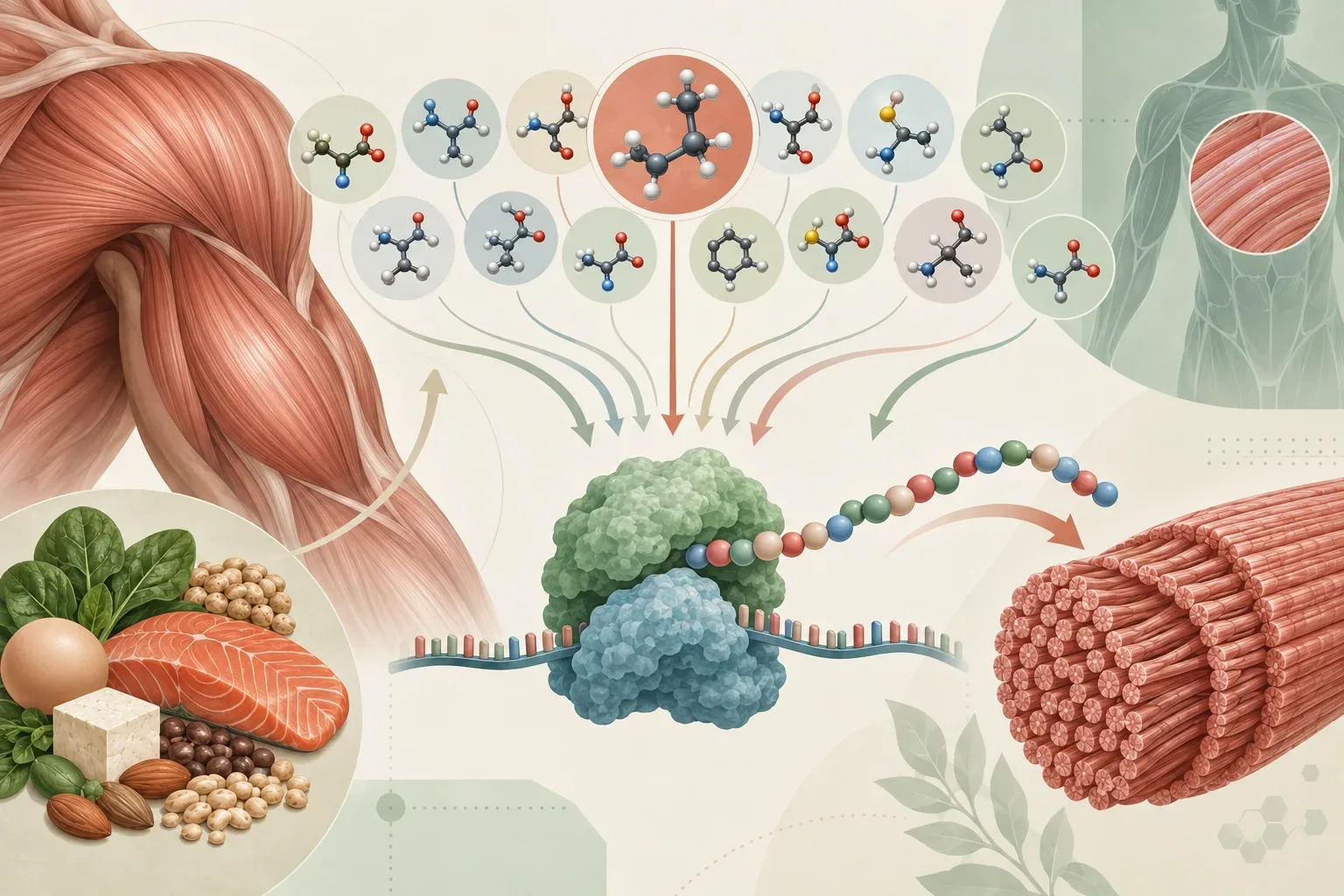
Isoleucine is one of the nine essential amino acids: your body cannot make enough of it, so food must supply it. It is also one of the three branched-chain amino acids, or BCAAs, with leucine and valine. Protein foods contain all three in different amounts.
What isoleucine does in your body
Cells use isoleucine to build and repair proteins, including muscle proteins. Muscle can also break it down for energy, particularly during sustained exercise. BCAA metabolism research[1] describes how much of their initial breakdown happens outside the liver, including in muscle. Leucine can trigger a signal to start muscle-protein building, but the process still needs isoleucine and the other essential amino acids as building material.
Isoleucine can affect hormones involved in handling a meal. Short human experiments have tested whether a large dose changes the blood-glucose rise after a nutrient drink; their results differed between healthy men and men with type 2 diabetes.
The short version
From food: The National Academies[2] sets an adult recommended amount of 19 mg per kilogram of body weight a day. At 70 kg (about 154 lb), that is about 1.33 g a day from the whole diet.
As a supplement: No separate isoleucine amount has been established for building muscle. Large experimental doses changed a short-term glucose reading in healthy men but did not lower it in a small type 2 diabetes trial. A BCAA label states the combined amount of three amino acids; it is not an isoleucine amount.
Practical check: Count protein food first. If you are comparing powders, look for the isoleucine line per serving and keep in mind that different BCAA blends have different amino acid ratios.
What people take isoleucine for
| Claimed benefit | Dose / form studied | Research verdict | Evidence strength |
|---|---|---|---|
| More muscle or better exercise performance | Mostly BCAA blends containing leucine, isoleucine and valine | The blend results do not establish an isoleucine-only gain | Insufficient for isolated isoleucine |
| Reduce the rise in blood glucose after eating | Single 5–10 g doses delivered into the stomach before test drinks; a later meal study increased isoleucine in a BCAA mixture | Ten grams lowered glucose in healthy men; the diabetes and later meal studies found no overall reduction | Review pending |
The common reason to buy isoleucine is a muscle or recovery claim. Food already provides it together with the other essential amino acids.
Can food cover the isoleucine requirement?
Yes, a range of animal and plant protein foods can contribute. These are values calculated from the USDA FoodData Central SR Legacy records[3] for the stated edible servings and rounded to 0.01 g.
| Food and preparation | Source | Serving | Isoleucine |
|---|---|---|---|
| [4] | Meat | 3 oz (about 85 g) | 1.39 g |
| [5] | Fish | 3 oz (about 85 g) | 1.08 g |
| [6] | Plant | ½ cup (about 126 g) | 1.07 g |
| [7] | Meat | 3 oz (about 85 g) | 0.95 g |
| [8] | Plant | 1 cup (about 198 g) | 0.77 g |
| [9] | Dairy | 1 cup (about 244 g) | 0.40 g |
| [10] | Plant | 1 oz (about 28 g) | 0.36 g |
| [11] | Egg | 1 large (about 50 g) | 0.34 g |
| [12] | Plant | 1 oz (about 28 g) | 0.21 g |
For a 70 kg adult, a half cup of this tofu plus a cup of these lentils adds about 1.84 g of isoleucine, before the rest of the day's food. A vegan menu with little soy, legumes, seeds or other protein may provide less; the diet's total pattern matters more than one food row.
Does my food supply enough isoleucine?
Record the protein foods and portions you eat on a few ordinary days. Compare the pattern with the food table and the 19 mg/kg/day reference above. A low-protein or very restricted diet can leave several essential amino acids scarce together. If illness or a prescribed diet makes the intake hard to judge, bring the record to your clinician or dietitian.
What should I check on a supplement label?
A product labeled BCAA 2:1:1 has two parts leucine to one part isoleucine and one part valine. Isoleucine is therefore one quarter of the stated BCAA total if those are the only amino acids counted. A 6 g 2:1:1 blend contains about 1.5 g isoleucine, not 6 g. One archived NIH label example[13] lists 2.3 g leucine and 1.1 g each isoleucine and valine per scoop; its exact listed lines matter more than rounding it to a ratio.
An essential-amino-acid (EAA) product supplies all nine, although the proportions differ by product. A single isoleucine capsule supplies just one. Compare the amount per serving and how many capsules make that serving.
Drawbacks and side effects
No official upper limit or general supplement dose has been set for isolated isoleucine. NIH's statement that divided BCAA mixtures up to 20 g/day appeared safe in short studies concerns the blend, not a 20 g isoleucine dose or indefinite us.
If you have an inherited disorder of BCAA metabolism, including maple syrup urine disease, isoleucine intake may be part of a prescribed nutrition plan. Check any amino-acid product against that plan. If you have a prescribed protein limit for another condition, include the supplement's amino acids when reviewing your total intake with your clinician or dietitian.
Does isoleucine build more muscle?
In one trial of 10 resistance-trained men[14], a 5.6 g BCAA drink after exercise raised a four-hour muscle-protein-building measure by 22% versus placebo; it contained 1.4 g isoleucine alongside leucine and valine. Another trial in resistance-trained men[15] found less soreness after a BCAA regimen around a damaging workout. Neither tested isoleucine alone or measured long-term muscle gain.
The NIH exercise-supplement review[16] describes limited and inconsistent findings for BCAA blends. It also says studies have not consistently shown that the three amino acids taken singly improve performance or build muscle.
What happened in the glucose studies?
In a 2021 study[17], 15 healthy men received 10 g isoleucine, leucine, valine or a control directly into the stomach, then drank 350 mL of a mixed-nutrient test drink 30 minutes later. Isoleucine and leucine lowered the peak blood-glucose reading compared with control and valine. Valine did not. The researchers followed blood measurements for two hours after the drink.
In a separate study of 14 men with type 2 diabetes[18], the researchers gave 10 g isoleucine or leucine directly into the stomach before a 500 kcal mixed-nutrient drink. Neither amino acid lowered blood glucose over the following two hours. These doses were delivered through a tube before a test drink, rather than swallowed with an ordinary meal.
Dose and appetite in an earlier study
An earlier experiment[19] tested 5 g and 10 g isoleucine before a 400 kcal nutrient drink in healthy men. The 10 g amount lowered peak glucose and the overall glucose response; the 5 g amount did not show the same clear effect. Ten grams also slowed stomach emptying, although that change was not correlated with the glucose response. The isoleucine experiment included 12 men.
Neither dose reduced food eaten at a later buffet meal. That distinction matters if the claim is appetite control or weight loss: a lower glucose curve during one experiment is not evidence that people subsequently eat less or lose weight.
What happened when isoleucine was taken with a meal?
A 2025 study[20] moved closer to ordinary eating. Eighteen adults completed two test visits involving a meal containing 113 g carbohydrate. One preparation supplied 5 g BCAAs, including 1.25 g isoleucine; the other raised isoleucine to 7.5 g while keeping leucine and valine the same. The enriched preparation therefore supplied more total amino acids too.
There was no significant difference in the overall glucose or insulin response across the two-hour test, although one insulin reading at 60 minutes was lower with the enriched mixture. Among the 13 men, glucose was lower at selected time points but not across the whole test. Among the five women, glucose was higher at selected times and across the test. These small subgroup findings do not establish that men and women respond differently to the supplement; that difference between the groups was not demonstrated. This was still a short meal experiment, with isoleucine changed inside a mixture. It does not show lasting improvements in glucose control, diabetes complications or body weight.
Low blood BCAAs during illness
A secondary analysis of a hospital nutrition trial[21] measured amino acids in 238 malnourished patients with multiple illnesses. Lower blood leucine, isoleucine and valine were associated with a higher risk of death over 180 days. .
Patients with lower levels did not show a clearly greater response to the trial’s nutritional support.
A clinical comparison in liver disease
A Brazilian trial registration[22] describes comparing 30 g/day isoleucine with 30 g/day leucine for a year in people with cirrhosis, a condition involving permanent liver scarring, and hepatic encephalopathy, which can cause confusion and difficulty thinking as a complication of liver disease. The National Institutes of Health explains these conditions[23]. The registry marks recruitment complete but supplies planned outcomes rather than comparative results.
The bottom line
Isoleucine belongs in the diet: the adult reference works out to about 1.33 g a day for a 70 kg (154 lb) person, and foods such as soy and lentils can supply it. If you are considering a supplement, check the isoleucine amount rather than the BCAA total. BCAA blends have shown some short-term muscle and soreness effects, but those results do not identify a benefit from isoleucine alone. The tube-delivered glucose experiments gave different results in healthy men and men with type 2 diabetes. A later meal study found no significant overall glucose or insulin benefit across its two-hour test from extra isoleucine in a BCAA mixture.
Help us improve this article
Spotted an error or found a source we should consider? Tell us which part of this article needs another look and include a link if you have one. Please leave out personal health details and lab results; we can’t answer individual medical questions.
Explore more in exercise & muscle



More in compounds


References
- BCAA metabolism research ↩
- National Academies: adult amino-acid dietary requirements ↩
- USDA FoodData Central: SR Legacy data ↩
- Chicken breast, roasted ↩
- Sockeye salmon, cooked ↩
- Firm tofu, calcium-set, raw ↩
- Ground beef patty, 90% lean, cooked ↩
- Lentils, boiled ↩
- Whole milk ↩
- Pumpkin seed kernels, dried ↩
- Egg, hard-boiled ↩
- Almonds ↩
- NIH Dietary Supplement Label Database: archived BCAA powder label ↩
- Jackman et al.: BCAA drink after resistance exercise ↩
- Howatson et al.: BCAA regimen and post-exercise soreness ↩
- National Institutes of Health: dietary supplements for exercise and athletic performance ↩
- Elovaris et al.: direct comparison of the three BCAAs, 2021 ↩
- Ullrich et al.: isoleucine and leucine before a mixed drink in type 2 diabetes, 2021 ↩
- Ullrich et al.: 5 g and 10 g leucine or isoleucine, glucose and subsequent food intake, 2016 ↩
- Dellogono et al.: isoleucine-enriched BCAA preparations with a meal, 2025 ↩
- secondary analysis of a hospital nutrition trial ↩
- Brazilian trial registration ↩
- The National Institutes of Health explains these conditions ↩
Corrections & updates
- Update
Updated the evidence discussion and practical guidance after editorial review.