
What is maca?
Maca (Lepidium meyenii) is a root vegetable from the high Andes of Peru, related to radishes and broccoli. It has long been eaten there as food.
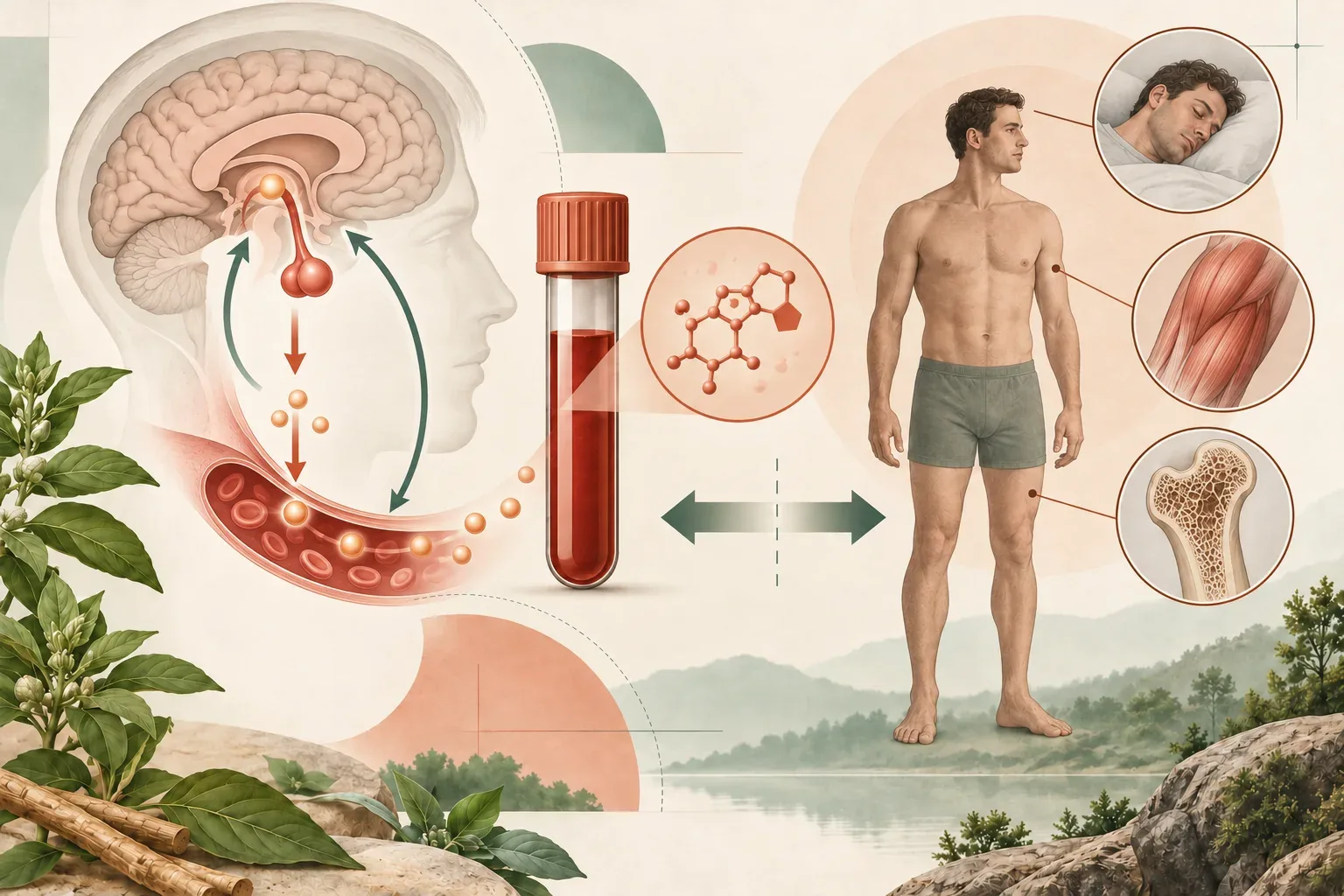
People take maca for libido, energy, fertility, and testosterone.
It is sold as ordinary root powder, “gelatinized” powder made by cooking or extruding the material so its starch changes structure, capsules, and concentrated extracts. One gelatinized powder lists about 3.4 g per teaspoon.
How was maca used historically?
In Peru’s central highlands, maca grows where cold, wind and altitude restrict other crops. A Food and Agriculture Organization account places its early domestication near San Blas in Junín and estimates that it goes back at least 2,000 years. Such an estimate is less precise than the later written record. A 1572 account from Huánuco describes the Chinchaycocha people bartering maca since the time of the Incas. In a separate 1549 account, a Spanish colonial official reportedly received maca as tribute and used it for his livestock. That tribute was a payment in kind under colonial rule. [1]
Botanist Jorge León described what people bought and ate around Lake Junín and in the Chupaca market in the mid-twentieth century. Growers dried the roots in the sun for storage. Cooks simmered dried maca in water or milk to make a sweet porridge called mazamorra. León also recorded a fertility tradition. Women seeking to conceive bought maca, and stories linked the crop with feeding livestock that reproduced poorly at altitude. These accounts help explain maca’s reputation as a fertility food. [2]
The familiar legend about Inca warriors eating maca before battle and being denied it afterward is harder to trace. The dated agricultural accounts document food, trade and reproductive reputation. They give us much firmer ground for those uses than for claims about soldiers’ strength, sexual conduct or a royal ban. Modern trials measure sexual desire, semen parameters or performance directly, and each has yielded a different answer.
What people take maca for
| Claimed benefit | Dose / form studied | Research verdict | Evidence strength |
|---|---|---|---|
| Sexual desire in healthy men | Gelatinized maca tablets, 1.5 or 3 g/day for 12 weeks; men aged 21–56 | Desire improved from week 8 in one small trial. | Limited |
| Sexual problems while taking antidepressants | Maca root 3 g/day for 12 weeks in 45 women | Mean scores did not clearly beat placebo; selected score cutoffs favored maca. | Limited |
| Higher testosterone | Gelatinized maca, 1.5–3 g/day in healthy men or about 5 g/day in symptomatic men over 40; 12 weeks | Two trials found no testosterone advantage over placebo. | Moderate |
| Fertility | No established dose or duration | Five small trials found unclear effects on semen quality. | Insufficient |
Maca is not required as a nutrient. Someone considering it for libido should know that small trials found modest improvements in self-reported desire in healthy men and uncertain results in women with problems caused by antidepressants. It did not raise testosterone in the two men’s trials summarized here, and evidence on fertility is unclear. It is not a treatment for low testosterone, infertility, or depression.
When to ask a doctor before taking maca
- You have low testosterone, fertility problems, or sexual problems. These need a medical evaluation; maca did not change testosterone versus placebo in the two men’s trials summarized here.
- You take an antidepressant and have sexual side effects. A doctor can review your medicine; maca trials in this group were small.
- You have a hormone-sensitive condition. Safety during treatment for hormone-sensitive disease remains uncertain.
- You are pregnant or breastfeeding. No trial we found covers these periods.
Common dosage
There is no recognized recommended daily amount or official upper limit for maca.
Healthy men who took 1.5 or 3 g daily reported more sexual desire by week eight. In a separate 12-week trial of men over 40, about 5 g daily improved symptom scores without raising testosterone relative to placebo.
Forms of maca: red, black and yellow roots, powders and extracts
Root color and processing are separate choices. Red maca can be sold as a powder or an extract. The colors include shades beyond the three found most often on labels. Farmers interviewed around Lake Chinchaycocha described sowing mixed seeds and sorting the dried harvest by color and size to fetch different prices. The proportion of yellow roots in a market or field does not give a fixed percentage for all of Peru. [3]
| Form | What the amount means | What was actually tested |
|---|---|---|
| Ordinary or gelatinized root powder | Grams of the processed root. One label gives 3.4 g per teaspoon. | Gelatinized root tablets were used in the healthy-men’s desire trial. |
| Capsules or tablets | Check whether the contents are root powder, extract or a mixture. | One women’s trial used 3 g of root powder daily. |
| Concentrated extract | The actual extract weight and any stated starting-root equivalent are distinct. | Human studies have tested specific extracts, including spray-dried red and black maca. Their results do not establish a universal powder-to-extract conversion. |
Black maca. In rats, black maca has affected sperm-production measures, with results depending on the length of treatment and the measure used. Researchers have also tested black maca in mouse memory experiments. There is some direct sport research: eight female handball athletes completed four-week periods with black maca and placebo, with two weeks between periods. They performed better on a shuttle run and selected strength tests after black maca. Eight athletes completing many tests leave substantial uncertainty about a general performance benefit. Rat comparison[4] · Mouse memory study[5] · Handball study[6]
Red maca. Its prostate reputation comes partly from a comparison in male rats. Red maca reduced the weight of the ventral prostate, while yellow and black maca showed no such effect in that experiment. A separate study in rats whose ovaries had been removed found that both red and black maca improved measures of bone structure. Prostate symptoms in men and fractures in women are different outcomes, and trials in those populations would be needed to establish a clinical use. Prostate experiment[7] · Bone experiment[8]
Yellow maca. Yellow roots are an established food and supplement form. One clinical study used gelatinized yellow maca in men with infertility and found no clear improvement in semen quality over placebo. [9]
Researchers have compared red and black preparations directly in people. In Peru, adults in Lima and at high altitude in Cerro de Pasco received 3 g daily of spray-dried red maca, black maca or placebo for 12 weeks. In Lima, more participants on either extract reported increased energy than on placebo from week two onward. At several visits in Lima, a larger proportion of people taking red maca reported increased energy than those taking black maca. At high altitude, perceived energy also improved with placebo. Sexual desire showed no clear advantage over placebo in Lima. At high altitude more people taking red maca reported greater desire than on placebo at week 12, one of many comparisons across sites and visits. [10]
What gelatinization changes. One studied preparation was made by rehydrating dried maca, briefly applying pressure under moist conditions, then drying and grinding it. This process changes the structure of the starch. A person can prefer its texture or tolerate a particular powder better. [11]
What to pay attention to on the label
The number to find is grams of maca root per day; for concentrated extracts, note the extract weight, not just the "equivalent to" number.
Which number on the label is the amount?
One gelatinized powder lists 3.4 g per teaspoon and suggests starting at a quarter teaspoon and working up to one. One capsule product lists 1,000 mg of maca root per two capsules, taken once or twice a day: 1 to 2 g.
Misleading labels
Front milligrams vs the milligrams that count
One extract capsule lists 250 mg of a 4:1 maca extract, "equivalent to 1,000 mg" of maca. The 1,000 mg is the amount of root used to make the extract (250 mg × 4), not what is in the capsule. An extraction ratio describes the starting material.
Blends with a large front number
One "Ashwagandha Maca" product lists a "Maca Blend 4,000 mg," which the label explains is 200 mg of a 20:1 extract (200 mg × 20 = 4,000 mg of root used to make it), along with ashwagandha, rhodiola, and theanine. The 4,000 mg is not in the capsules, and no trial tested this combination.
Confusing servings and items per serving
Some manufacturers put 180 capsules on the front, and the back says 3 capsules per serving and 60 servings. The amount on the Supplement Facts panel is for the whole 3-capsule serving.
Libido and hormone claims
A “libido support” claim has some support from a study of gelatinized maca in healthy men. A “testosterone booster” claim goes further: testosterone did not rise more on maca than on placebo in that study or the separate trial in men over 40.
Common Myths about Maca
Does maca increase testosterone?
Sexual desire can improve without a rise in testosterone. That is what the healthy-men’s trial found. A second trial enrolled men over 40 with symptoms sometimes associated with low testosterone. It excluded men with very low morning testosterone or recent prescribed testosterone use, so it cannot tell us whether maca helps treat diagnosed testosterone deficiency.
Drawbacks and side effects
| Potential drawback | When/who it affects | Research evidence | Practical implication |
|---|---|---|---|
| Digestive complaints | About 5 g/day for 12 weeks in a trial in men over 40 | [12] | Reassess use if symptoms persist. |
| Limited safety evidence | Pregnancy, breastfeeding, hormone-sensitive conditions or long-term use | The short trials do not settle these questions. | Discuss use before starting in these situations. |
Most safety observations cover only a few weeks or months. A long culinary history is informative about food use, while concentrated supplements during pregnancy and long-term use raise separate questions.
Thyroid conditions and processing
Maca belongs to the mustard family and contains glucosinolates, compounds that can change when a root is cut, dried or heated. In one laboratory comparison, gelatinized roots contained less of the main measured glucosinolate than the corresponding untreated samples, with some still present. The thyroid needs iodine to make hormones. Some substances in mustard-family vegetables can interfere with iodine uptake, chiefly when iodine intake is already low. NIH iodine fact sheet[13] If you take thyroid medicine or have Hashimoto’s disease, discuss the actual product and amount with the clinician managing your care. [14]
Hormone-sensitive conditions
The blood hormone measurements in small studies leave safety during treatment for a hormone-sensitive cancer uncertain. Memorial Sloan Kettering advises discussing maca with the treating team in that setting. [15]
Sleep
Memorial Sloan Kettering[15] lists insomnia among subjective reports from maca users. It gives no frequency, and the reports do not show that maca caused every episode. There is also no tested morning-versus-evening schedule that prevents sleep problems. If your sleep worsens after starting maca, check whether the product contains other ingredients and whether the change improves when you stop taking it. Persistent sleep problems deserve a separate assessment.
The science behind maca
Studies have measured desire, erectile function, semen quality and symptoms during menopause. A change in one of these measures has a different meaning from an increase in testosterone or a pregnancy.
Sexual desire in men
The 2002 trial, at 1.5 and 3 g a day:
- It found higher desire from week 8.
- It found no change in testosterone, estradiol, or mood scores.
A 2023 trial in 80 men over 40 with symptoms but without confirmed low testosterone used about 5 g of gelatinized maca daily.
- Symptom and sexual-function scores improved versus placebo.
- Total and free testosterone changes did not.
- Several authors worked for product companies, so the symptom result needs independent replication before it is treated as a general rule.
Mild erectile dysfunction and proposed mechanisms
Fifty men with mild erectile dysfunction were assigned 2.4 g daily of a maca preparation or placebo for 12 weeks. Scores on a five-question erection scale rose in both groups. The average gain was 1.6 points on maca and 0.5 on placebo. A roughly one-point difference on a 25-point scale puts the size of this positive finding in perspective. The authors describe the product as dry extract in the abstract and as pulverized, dehydrated root tablets in the methods; matching it to a modern extract ratio is uncertain. [16]
One proposed explanation involves macamides, fatty compounds found in maca. Researchers made versions of these molecules in a laboratory and found that several inhibited a human enzyme that breaks down endocannabinoids, the body’s own signaling molecules. The erectile-function trial measured symptoms, with no measurement of that enzyme, nitric oxide production or pelvic blood flow. How maca might affect desire or erections in people remains open. [17]
Antidepressant-related sexual problems
The 2008 pilot of 20 people compared 1.5 and 3 g daily. The group taking 3 g improved from its starting score, but the study had no placebo group. In a 12-week placebo-controlled trial of 45 women[18], 3 g daily gave no clear advantage on average sexual-function scores. A less stringent cutoff for near-normal function was reached by 30% on maca and 20% on placebo. About 9.5% and 5%, respectively, reached a stricter normal-function cutoff. The postmenopausal comparison involved only seven women on maca and five on placebo, so the apparent difference was uncertain.
Menopausal symptoms
In a small crossover study[19], 14 postmenopausal women completed six weeks each of 3.5 g/day powdered maca and placebo. Anxiety, depression and sexual-dysfunction scores improved with maca, while measured hormone levels did not differ significantly. The women switched directly from one treatment to the other. Any effect from the first period could have continued into the second.
A second crossover pilot involved 29 postmenopausal women in Hong Kong who took 3.3 g daily of maca and placebo for six weeks each. Average diastolic blood pressure was 81.8 mmHg at baseline, 73.8 after maca and 77.7 after placebo. The authors describe an advantage over placebo in their discussion, but their results table marks changes from baseline and gives no direct statistical comparison of maca with placebo. A blood-pressure benefit remains uncertain. Estradiol, follicle-stimulating hormone and thyroid-stimulating hormone showed no clear differences between treatments. These small studies give a more specific picture than a “hormone balance” claim. [20]
Fertility
A study in men with infertility assigned 50 participants equally to gelatinized yellow maca or placebo for 16 weeks. Participants took 2.8 g of maca daily. Eleven men dropped out, leaving 19 in the maca group and 20 in the placebo group. Sperm counts fluctuated in both groups and the study found no clear advantage with maca. Free testosterone decreased within the maca group. [9]
A review identified five randomized trials in healthy men or men with infertility. Some individual studies reported improvements on selected semen measures, but the pooled sperm-concentration result in infertile men was statistically inconclusive. Trials differed in product, starting semen quality and method. Sperm concentration, semen volume and the proportion of moving sperm are different measurements. [21]
Fatigue and physical performance
Feeling more energetic and completing an exercise test faster are different outcomes. In a crossover study, eight trained male cyclists took a particular maca extract and placebo for 14 days each. They rode 40 km faster after maca than at their own starting test, but their final times on maca and placebo did not clearly differ. [22]
In a separate four-week trial of women with day-to-day fatigue, symptoms eased in both the extract and placebo groups. The authors reported a greater improvement with the extract among women under 45 in a subgroup analysis. The apparent advantage in that age group needs confirmation in another trial. [23]
What is still open
Larger trials could show whether a particular preparation consistently improves sexual symptoms. Couples still lack a reliable estimate of their chance of pregnancy with maca, and long-term supplement safety remains uncertain.
What you may have heard on podcasts
Andrew Huberman (Huberman Lab, 9 January 2023) said maca root can increase libido, and that it seems particularly effective in women, but also in men and in anyone with low libido from SSRI antidepressants (the most common type, such as sertraline). He described reports that maca raises testosterone as “somewhat scant and a little bit weak”.
His testosterone point matches the 2002 trial, which found no change. The antidepressant evidence is smaller than his description suggests: the placebo-controlled trial did not show a clear mean-score advantage, and its postmenopausal estimates were imprecise.
The bottom line
If you are considering maca for sexual desire, decide whether a modest, uncertain benefit is worth the price of trying it. Choose a product that states the actual amount of maca root or extract in the full daily serving. A bigger “root equivalent” number, a particular color or a more concentrated extract has not been shown to work better. If you notice no benefit, there is no evidence-based reason to keep paying for it.
Maca is a poor purchase if the promise is higher testosterone or improved fertility: the trials that tested those outcomes have not established any positive results. Sexual difficulties can have other causes, including medication side-effects, so discuss persistent problems with a clinician.
Help us improve this article
Spotted an error or found a source we should consider? Tell us which part of this article needs another look and include a link if you have one. Please leave out personal health details and lab results; we can’t answer individual medical questions.
Explore more in hormones & libido

More in herbs



References
- FAO, Neglected Crops, chapter on Andean roots ↩
- León’s 1964 account ↩
- Junín farmer study ↩
- Rat comparison ↩
- Mouse memory study ↩
- Handball study ↩
- Prostate experiment ↩
- Bone experiment ↩
- Yellow-maca trial ↩
- Peruvian color comparison ↩
- Preparation methods ↩
- Shin et al.: maca, symptoms, and testosterone in older men, 2023 ↩
- NIH iodine fact sheet ↩
- Processing study ↩
- Memorial Sloan Kettering maca guidance ↩
- Zenico trial ↩
- Macamide enzyme experiment ↩
- 12-week placebo-controlled trial of 45 women ↩
- small crossover study ↩
- Hong Kong pilot ↩
- Lee and colleagues’ review ↩
- Cycling study ↩
- Fatigue trial ↩
- Gonzales et al.: maca and sexual desire in healthy men, with testosterone, 2002
- Dording et al.: dose-finding pilot of maca for antidepressant-related sexual dysfunction, 2008
- Dording et al.: placebo-controlled trial of maca for antidepressant-related sexual dysfunction in women, 2015
- Lee et al.: maca and semen quality, meta-analysis, 2022
- Huberman Lab: developing a rational approach to supplementation, 9 January 2023
- NIH Dietary Supplement Label Database: a gelatinized maca powder label
- NIH Dietary Supplement Label Database: a maca capsule label
- NIH Dietary Supplement Label Database: a 4:1 maca extract label
- NIH Dietary Supplement Label Database: an ashwagandha and maca blend label