What are KSM-66 and Sensoril?
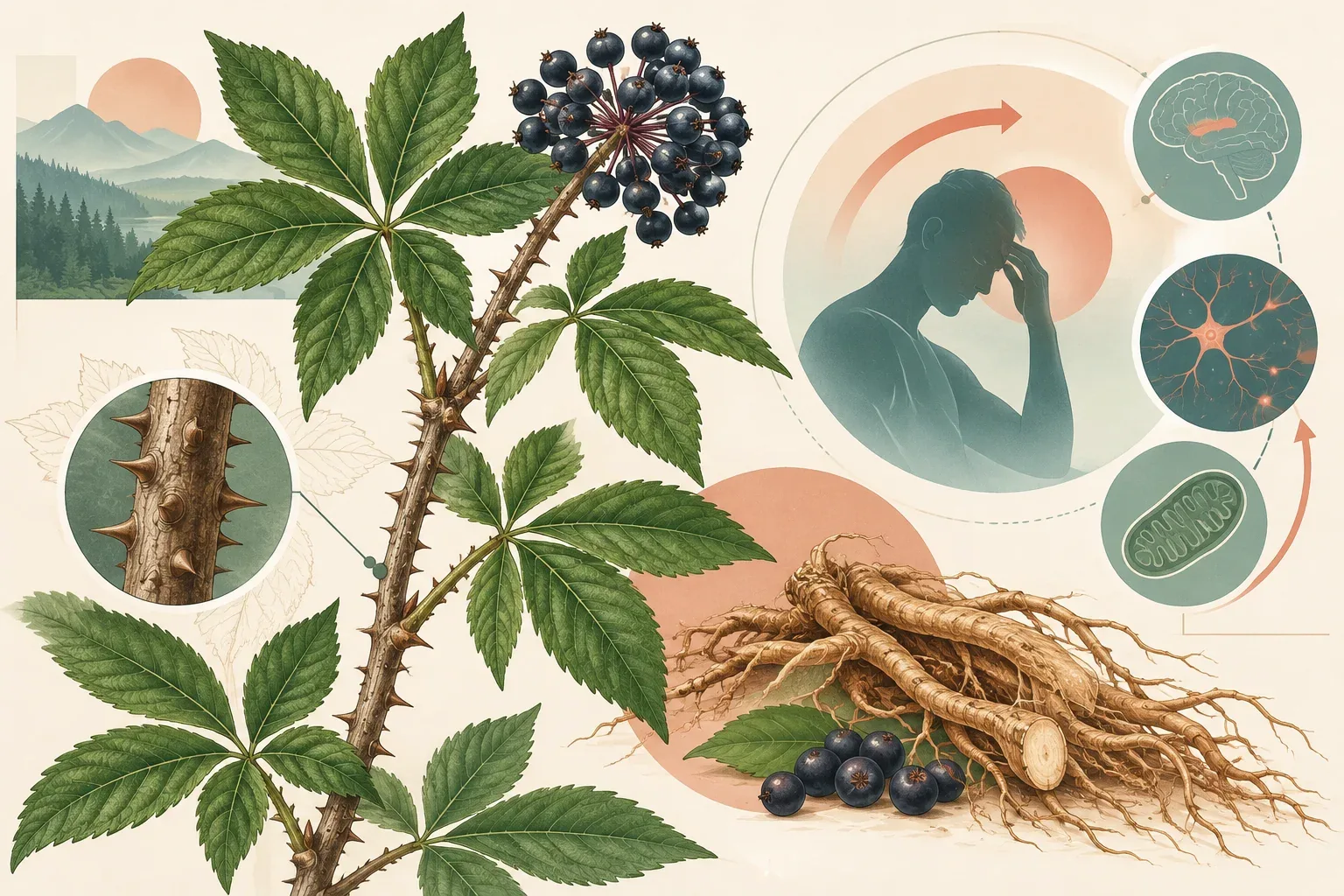
KSM-66 and Sensoril are different branded extracts of ashwagandha. KSM-66 uses root; Sensoril uses root and leaf. Both have placebo-controlled human studies, including studies of stress and strength.
The extract name matters because “ashwagandha 300 mg” can describe different preparations. Plant parts, extraction and chemical specifications can differ even when the capsule weight is identical.
| Feature | KSM-66 | Sensoril |
|---|---|---|
| Plant parts | Root only | Root and leaf |
| Specification in the sources checked | The 2012 trial specifies at least 5% withanolides; an Ixoreal brochure describes more than 5% | Kerry describes an aqueous extract; one finished-product label, Nutrisan, specifies at least 10% withanolide glycosides |
| Examples of studied daily amounts below | 600 mg in the selected stress, insomnia and training trials | 125, 250 or 500 mg in the stress trial; 500 mg in the training trial |
Sources: [1], [2], Kerry Sensoril brochure[3] and Nutrisan label[4]
Does 10% mean twice as strong as 5%?
No. These percentages measure selected chemical constituents of the extract, not a percentage improvement in health. The labels do not name exactly the same marker category: withanolides and withanolide glycosides should not be treated as interchangeable measurements of effectiveness.
The arithmetic can look deceptively similar. A 300 mg extract at 5% supplies 15 mg of its declared marker; a 150 mg extract at 10% also supplies 15 mg of its stated marker. But the different extracts do not supply the same chemical mixture, absorption, clinical effect or dose.
Nutrisan's particular Sensoril product declares 150 mg per capsule, at least 10% withanolide glycosides. Its directions are one capsule twice daily: 300 mg extract per day.
For comparison, the 2024 Sensoril study characterized its extract using a laboratory method measuring several constituents.
What have the stress trials found?
Both extracts have positive findings, but the study designs and analyses differ.
| Trial | Population and daily regimen | Findings and limits |
|---|---|---|
| Chandrasekhar, KSM-66 | 64 stressed adults randomized; 61 completed efficacy assessment. 300 mg twice daily for 60 days | Perceived Stress Scale scores fell 44.0% versus 5.5% with placebo; cortisol fell 27.9% versus 7.9%. Small, short, single-center trial |
| Pandit, Sensoril | 131 stressed adults randomized; 98 included in the final efficacy analysis. 125, 250 or 500 mg nightly for eight weeks | Several stress and anxiety measures favored treatment, but the lowest dose did not beat placebo in every analysis. About one-quarter did not complete the study |
Sources: KSM-66 stress trial[1] and Sensoril dose-ranging trial[5].
The Perceived Stress Scale is a questionnaire about how stressful people find their lives. The 44% result is a change in score, not the proportion of participants “cured.” Cortisol is a hormone measurement, rather than a direct measure of feeling better.
Sensoril's results deserve a closer look. The trial used the 14-item Perceived Stress Scale, ranging from 0 to 56; lower scores mean less perceived stress. At eight weeks, mean scores were 31.50 with placebo, 30.04 with 125 mg, 26.27 with 250 mg and 23.73 with 500 mg. The endpoint comparison did not clearly separate 125 mg from placebo, while 250 and 500 mg did differ. A separate model using measurements over time reported benefit at all doses. Presenting only that model would hide the less convincing low-dose endpoint result.
The Sensoril study analyzed people who completed the protocol, with substantial dropout and numerous outcomes. It was funded by Natreon, now part of Kerry. The KSM-66 trial received extract from Ixoreal; its declarations listed no financial support or conflicts.
Which has better sleep evidence?
There is no direct winner from these studies. The KSM-66 insomnia trial and the Sensoril stress trial studied different people and used different sleep assessments.
In the KSM-66 trial, 60 adults with insomnia were randomized and 58 completed ten weeks of 300 mg twice daily or placebo. At week ten, average time to fall asleep was 29.00 versus 33.95 minutes, and sleep efficiency was 83.49% versus 79.68%. Sleep efficiency means the proportion of time in bed spent asleep. Sleep-quality questionnaire scores also favored the extract. [6]
However, total sleep duration, wakefulness after falling asleep and morning alertness did not show clear between-group improvements. The study was small and short, and the report contains inconsistent participant counts in some headings; its outcome tables identify 39 treated and 19 placebo completers. Ixoreal supplied the extract, and the authors declared no competing interests.
In the Sensoril stress trial, the sleep-quality model favored 250 and 500 mg, but not 125 mg. The eight-week comparison favored all three doses, including 125 mg; the model using measurements over time did not find a clear benefit for 125 mg. The findings also did not produce a simple higher-dose-is-better pattern. Participants were selected for persistent stress.
These results do not support a dependable rule that KSM-66 is an energizing daytime extract while Sensoril is a sedating nighttime extract. The selected Sensoril stress trial dosed at night, but its strength trial below used morning dosing. Timing in a study is part of its regimen and study design.
What about strength and training?
Both extracts have placebo-controlled strength trials. The larger number in one trial cannot rank the brands because participants and training programs differed.
| Trial | Regimen and participants | Positive findings | Findings without a clear between-group benefit |
|---|---|---|---|
| Wankhede, KSM-66 | 600 mg/day with eight weeks of training; 57 mostly novice men randomized, 50 completed | Bench-press gain 46.05 versus 26.42 kg; leg-extension gain 14.50 versus 9.77 kg. Arm and chest size measures also favored extract | Estimated thigh-size change |
| STAR, Sensoril | 500 mg each morning with twelve weeks of training; 40 men recruited, 38 analyzed | Squat gain 19.1 versus 10.0 kg; bench-press gain 12.8 versus 8.0 kg | Cycling performance, power, repetition endurance, perceived recovery and most body-composition comparisons |
Sources: Wankhede trial[7] and Sensoril STAR trial[8]
The KSM-66 study estimated muscle size using girth and skinfold measurements rather than direct imaging. The Sensoril study used training logs and calls rather than investigator-supervised sessions; reported supplement adherence was 81% and training adherence 86%. Both studies were small, short and limited to men.
Ixoreal supplied the KSM-66 extract. Natreon funded STAR and owned its data; the researchers reported that the sponsor did not conduct, interpret or write the study, while several authors disclosed broader supplement-industry relationships. These details do not erase the positive results, but they matter when deciding how much confidence to place in small proprietary-extract studies.
Is one extract safer?
In the 2024 Sensoril trial, the authors reported adverse events in 48% of participants across the study groups, including placebo, mainly minor heartburn, abdominal discomfort and trouble sleeping. They did not state the exact count behind that percentage. The safety analysis included 99 completers. No serious events or obvious difference in the pattern of events between treatment and placebo were reported. STAR recorded three adverse events with Sensoril and two with placebo. The selected KSM-66 stress trial reported comparable mild events, while the insomnia trial reported none.
Those studies were too small and short to estimate rare risks. NCCIH describes possible drowsiness and gastrointestinal effects, with long-term safety uncertain. It advises avoiding ashwagandha during pregnancy and breastfeeding and identifies concerns with thyroid or autoimmune disorders, surgery and several medicines, including sedatives, thyroid hormone and immunosuppressants. [9]
Liver injury has also been reported, often beginning two to twelve weeks after exposure, with jaundice and itching. Most reported cases resolved, sometimes slowly; rare severe outcomes occurred, particularly with pre-existing liver disease. Mixed products and labeling problems complicate some reports, but they do not explain every case. LiverTox advises avoiding it in cirrhosis or advanced chronic liver disease. No brand-specific safe dose or comparative injury rate is established. [10]
How should you compare an actual product?
Nutrisan's 300 mg daily Sensoril serving falls between the 250 and 500 mg amounts in the stress trial. Its declared 10% marker content also cannot translate the serving into an equivalent KSM-66 dose.
If it adds melatonin, stimulants or other herbs, the combined product introduces further effects and interactions; results from an extract-only trial cannot account for how your body would react to that mix.
KSM-66 has the selected insomnia and training studies at 600 mg/day; Sensoril has dose-ranging stress results and a training study at 500 mg/day. These are research exposures, not a personal dose recommendation. The trials discussed here support some benefits for each extract and leave meaningful uncertainties. They do not establish an overall winner or make the products interchangeable milligram for milligram.
Help us improve this article
Spotted an error or found a source we should consider? Tell us which part of this article needs another look and include a link if you have one. Please leave out personal health details and lab results; we can’t answer individual medical questions.