
What is tremella?
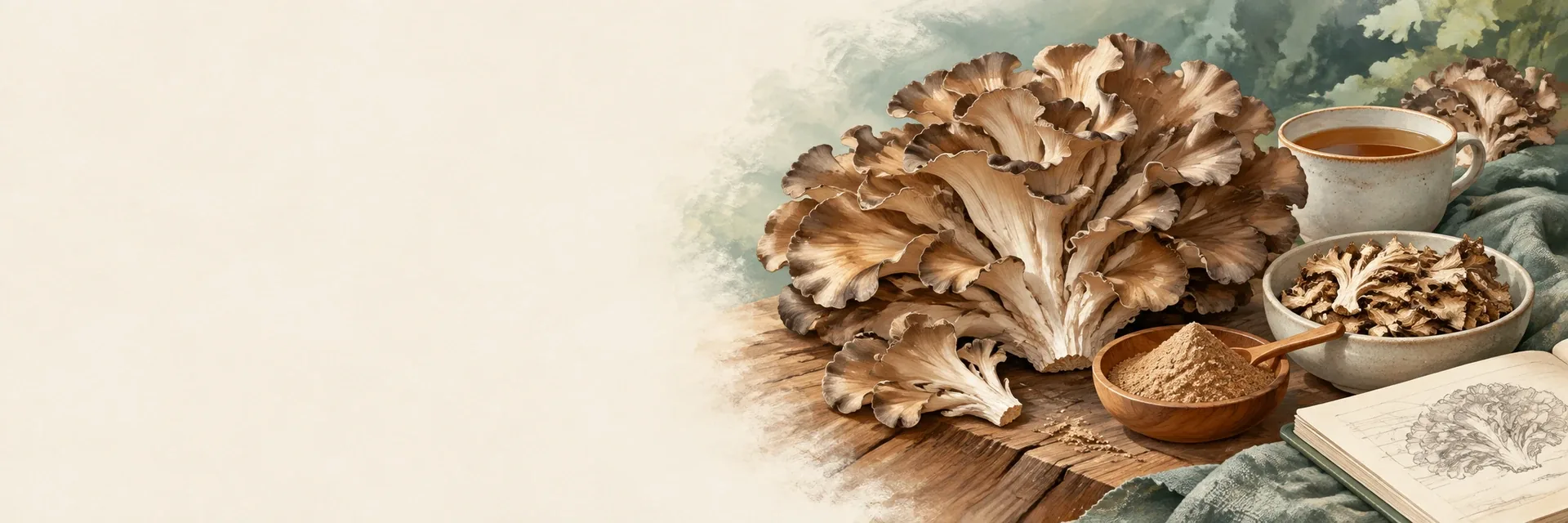
Tremella, or snow fungus, usually refers to Tremella fuciformis. It is eaten as food and sold as powders, extracts and skincare ingredients. A material applied to skin is a different intervention from one swallowed in a capsule.
Food traditions and modern preparations
Snow fungus has a longstanding role as an edible and medicinal fungus in Asia. A 2025 research review[1] describes this history alongside modern work on isolated polysaccharides. Food, purified fractions, capsules and cosmetic formulations are different preparations.
Hong Kong Baptist University's Chinese Medicine Dietary Images Database[2] describes snow fungus as sweet and neutral in traditional Chinese medicine, with uses framed as nourishing yin, moistening the lungs and supporting qi. These are traditional concepts, not measured clinical effects. Its sweet-soup recipe combines soaked snow fungus with lotus seeds, wolfberries and red dates, then boils the ingredients for an hour. This illustrates its culinary use, distinct from the extracts tested in modern trials.
Food preparation is part of that context. A white-fungus dessert recipe hosted by Singapore’s HealthXchange[3] soaks the fungus, then boils it until soft with ingredients including red dates, pear and rock sugar.
A 1992 UNIDO report[4] describes cultivation developing from logs exposed to naturally spreading spores to prepared cultures and artificial logs. Growers cultivated snow fungus with another fungus that helped break down wood and supply nutrition.
Why do people take tremella?
| Claimed benefit | Dose / form studied | Research verdict | Evidence strength |
|---|---|---|---|
| Improve memory complaints | Trial preparation at 600 or 1,200 mg/day for eight weeks | One small controlled trial was favorable. | Limited |
| Hydrate skin with topical cosmetics | Formulations applied to skin | Small studies report water-loss or moisture findings; the available abstracts leave participant details or between-group effects unclear. | Review pending |
| Hydrate skin through an oral supplement | No established effective oral dose in the reviewed sources | Topical and preclinical findings do not establish this claim. | Insufficient |
| Improve blood sugar or waist circumference | A beverage for 12 weeks in people with prediabetes | Within-group changes did not establish an advantage over placebo. | Insufficient |
| Improve gut or immune function | Mainly preclinical preparations in the assessed research | Animal gut research and separate medicinal preparations answer different questions. | Review pending |
| Prevent dementia or reverse aging | No established regimen | The reviewed studies did not establish these outcomes. | Insufficient |
What should the label tell you?
The label should identify Tremella fuciformis and the amount supplied per full daily serving. A blend’s total weight includes its other ingredients.
A polysaccharide percentage measures the proportion of complex carbohydrate compounds in the tested material. It cannot independently establish memory or skin effects. A stated percentage alone does not show that a retail product matches the preparation used in a clinical trial.
What are the drawbacks and safety gaps?
| Potential drawback | When / who it affects | Research evidence | Practical implication |
|---|---|---|---|
| Uncertain long-term safety | Concentrated use beyond the short trial | Long-term safety and medicine compatibility remain unresolved. | Review prolonged use and medicines with a pharmacist. |
| Product or route mismatch | People buying capsules based on topical claims | The relevant preparations differ. | Topical findings cannot establish the effects of an oral capsule. |
| Limited reassurance from a short trial | Anyone interpreting the cognition study | The trial reported no statistically significant difference in unwanted-event frequencies. | Treat that as short-term information, not a guarantee for every product. |
What did the cognition trial find?
The 2018 trial[5] enrolled 75 adults with subjective cognitive impairment—self-reported memory concerns. Participants received 600 or 1,200 mg daily of the trial’s tremella preparation, or placebo, for eight weeks.
Participants taking tremella reported fewer memory complaints and did better on short-term memory and executive-function tests—tasks involving planning and managing information—than placebo recipients. The reviewed abstract does not establish how noticeable those changes were in everyday life or that 1,200 mg was better than 600 mg.
The placebo group was small, and this trial does not establish that an unrelated retail extract performs the same way. Persistent or worsening memory difficulties still deserve clinical assessment.
Combination drinks are a separate finding
A 2023 trial[6] assigned 64 healthy adults to a daily drink or placebo for eight weeks. The drink contained salmon roe, yeast and 56 mg of snow fungus. Some memory and task-completion results favored the drink, while processing speed did not differ. TCI funded the research. Because several ingredients were given together, this does not confirm a benefit from tremella alone.
What about skin hydration?
A 2023 dermatology review[7] describes mostly laboratory and animal evidence and calls for clinical research. A topical formulation study[8] examined a formulation containing tremella extract applied to skin. Its deposited abstract reports 12.4% less water loss through the skin than with a formulation without the extract. It does not give the volunteer count or uncertainty around that estimate.
A 2026 Korean study[9] divided 24 people into groups of 12 using cosmetics with 0.5% tremella extract or without it. Participants applied the toner, emulsion and cream morning and evening for six weeks. Roughness and moisture improved within the extract group; wrinkle and pigmentation changes were not statistically significant. The abstract does not establish random allocation or a numerical difference in improvement between groups, so it remains preliminary topical evidence.
Water-binding properties help explain why formulators use tremella polysaccharides in skincare. These complex carbohydrates can differ in molecular size and composition depending on how they are extracted.
Medicinal polysaccharides and gut research
Isolated tremella polysaccharides also have a medicinal history. A 2019 research chapter[10] describes capsules designed to release their contents in the intestine, used in China for low white-blood-cell counts associated with cancer treatment and alongside other treatment for hepatitis, or liver inflammation. These medicinal preparations differ from retail snow-fungus powder.
The chapter describes the polysaccharides as branching chains built largely from a sugar called mannose. Extraction produces fractions with different sizes and composition, which helps explain why medicinal and cosmetic preparations need their own study results.
A 2022 experiment[11] tested oral and topical tremella polysaccharides in mice with chemically induced dermatitis. Both routes improved skin-barrier measurements; oral treatment also changed gut microbes and immune-cell measures. The experiment links gut and immune changes with skin-barrier measurements in mice; it does not establish a treatment effect in people.
What did the blood-sugar study find?
Human metabolic research includes a 2024 placebo-controlled beverage study[12] in 56 people with prediabetes and overweight or obesity. Participants drank 180 mL daily for 12 weeks. The drink contained tremella, monk fruit and licorice; the placebo also contained monk fruit. HbA1c[13] is the percentage of the blood’s hemoglobin with glucose attached; it reflects average blood sugar over about three months. The average in the tremella group fell from 6.03% to 5.96%, and waist circumference also fell. The reported significance tests compared each group's final measurements with its own baseline; they did not establish that the changes were greater than placebo. Lipids and several other metabolic measures did not improve within the tremella group. The manufacturer funded the study and supplied the drinks.
Those results are preliminary, rather than evidence that a tremella supplement reliably improves cholesterol levels or controls blood sugar after meals. The drink also differs from the preparation used in the memory trial.
Bottom line
Tremella has food and medicinal traditions, a preliminary cognition trial and separate research on topical skin products. Combination drinks, an exploratory prediabetes study and animal gut–immune experiments broaden the research without establishing benefits for oral supplements or topical applications.
Help us improve this article
Spotted an error or found a source we should consider? Tell us which part of this article needs another look and include a link if you have one. Please leave out personal health details and lab results; we can’t answer individual medical questions.
Explore more in focus & memory


More in fungi
References
- 2025 research review ↩
- Chinese Medicine Dietary Images Database ↩
- white-fungus dessert recipe hosted by Singapore’s HealthXchange ↩
- 1992 UNIDO report ↩
- Ban 2018 randomized cognition trial ↩
- 2023 trial ↩
- 2023 dermatology review ↩
- 2023 topical formulation study ↩
- 2026 Korean study ↩
- 2019 research chapter ↩
- 2022 experiment ↩
- 2024 placebo-controlled beverage study ↩
- HbA1c ↩