
What is oat beta-glucan?
Oats are a cereal grain from Avena sativa. Their soluble fiber includes beta-glucan, the fraction relevant to the established oat cholesterol claim. Oatmeal, oat bran, concentrated fiber, oat straw and green-oat extracts are not one interchangeable supplement. Alongside cholesterol-focused foods, oat herb has traditional stress and sleep uses, and specific green-oat extracts have been tested for memory and attention.
How have oats been used as herbal medicines?
European herbal medicine distinguishes the grain from the green aerial parts. The European Medicines Agency's oat-herb assessment[1] concerns parts harvested before flowering, used in teas, juices and extracts taken by mouth for mild mental stress and sleep. Its traditional-use conclusion rests on documented longstanding use and plausibility, with insufficient clinical trial evidence. That history explains why oat products are sold for more than dietary fiber; it does not give every green-oat extract the same effect.
Oat grain also has a separate history of use on the skin. The EMA's grain assessment[2] covers colloidal oatmeal in skin preparations and baths for minor inflammation and as an aid to healing minor wounds. It judged the clinical studies too varied to support a firm overall conclusion and based its conclusion on traditional use. This is a topical preparation, alongside the oral grain-fiber and herb preparations.
What does the fiber do in your body?
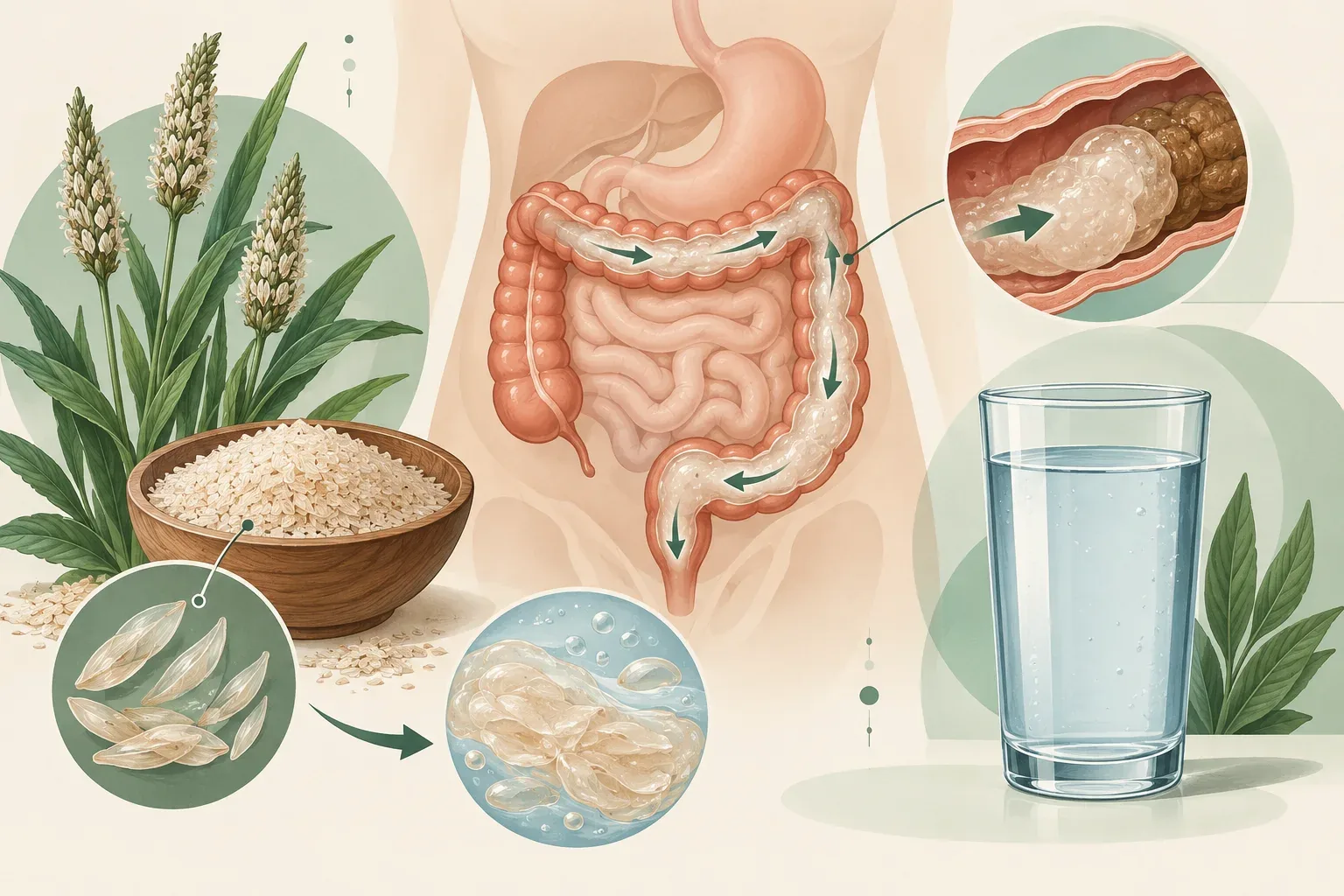
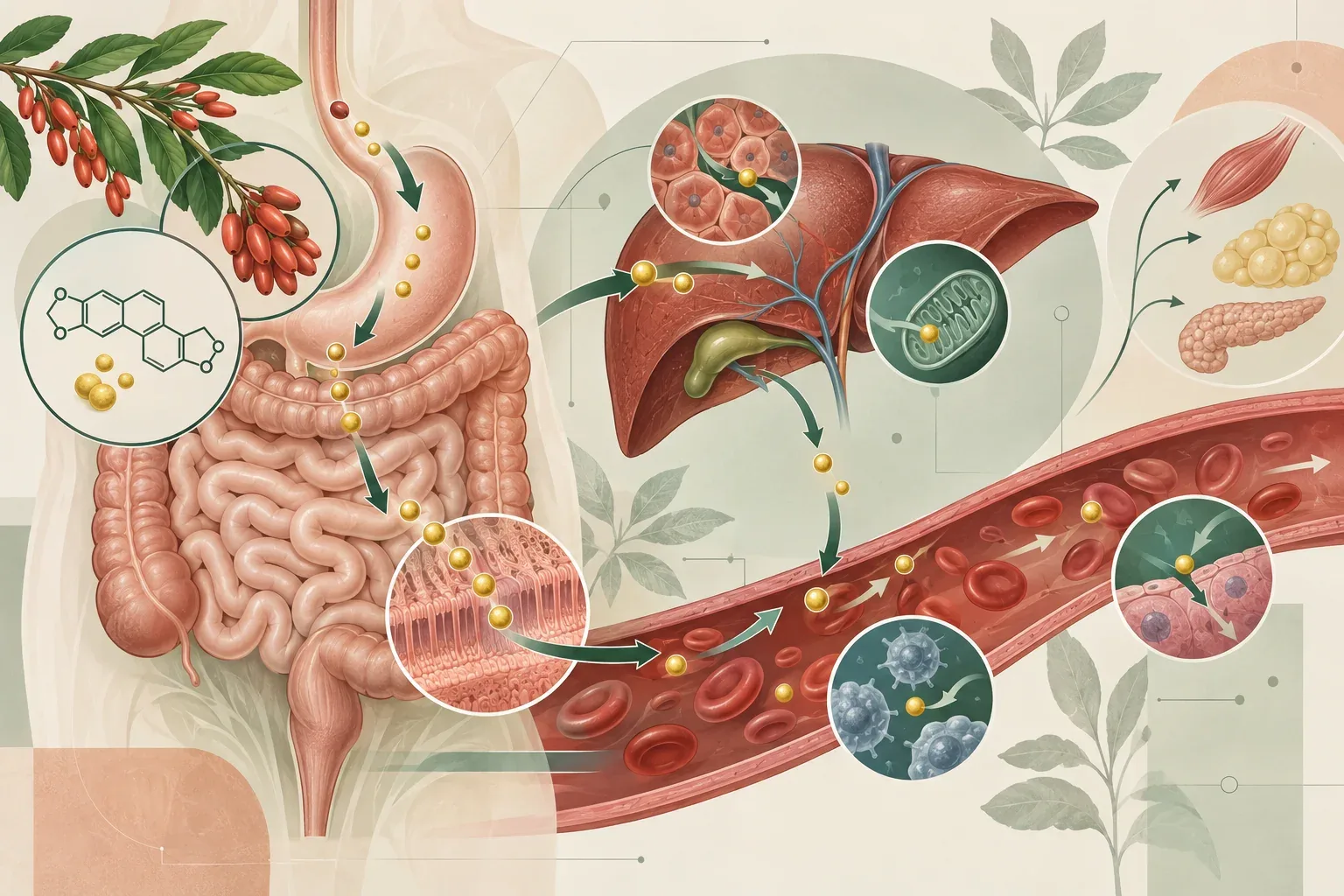
Soluble oat fiber forms a viscous mixture in the digestive tract. “Viscous” means thick or gel-like. Human studies support increased loss of bile acids through the intestine with oat beta-glucan. The liver uses cholesterol to replace bile acids, helping explain the cholesterol effect. A small controlled human study[3] found an increase in a marker of bile-acid production after oat bran. The FDA's evidence basis[4] concerns soluble fiber from qualifying oat sources, not a general medicinal property shared by every part of the plant.
Why do people take oats or oat fiber?
| Claimed benefit | Dose / form studied | Research verdict | Evidence strength |
|---|---|---|---|
| Help lower cholesterol | Qualifying oat/barley foods providing at least 3 g beta-glucan daily | Oat beta-glucan helps lower cholesterol; FDA permits a related heart-disease risk-reduction claim under defined dietary conditions. | Strong for the qualifying fiber claim |
| Reduce the glucose rise after a meal | Oatmeal with added oat-bran beta-glucan | A small crossover meal study found a smaller two-hour glucose response than carbohydrate-matched cream of rice. | Review pending |
| Support wellbeing while reducing smoking | 900 mg/day Neuravena for eight weeks | Some quality-of-life measures improved; quitting and craving did not. | Review pending |
| Supply dietary fiber | Oat foods or quantified fiber products | Depends on actual fiber grams, not the word oat. | Established fiber content; no treatment effect graded in this row |
| Improve memory or attention | Specific green-oat extracts, from a single dose to twelve weeks | Selected task improvements with cognitaven contrast with a null twelve-week Neuravena trial. | Limited |
| Relieve mild stress or aid sleep | Oat herb preparations covered by the European herbal monograph | Traditional medicinal use; clinical support remains insufficient. | Insufficient clinical evidence in the EMA assessment |
| Obtain the same cholesterol effect from oat straw | No established equivalent regimen | The qualifying grain-fiber evidence does not establish this use. | Insufficient |
Someone looking for a food-based addition to a cholesterol plan has a clearer reason to consider oat beta-glucan.
How much oat beta-glucan is used for cholesterol?
The FDA's authorized heart-disease risk claim[5] is based on at least 3 g of beta-glucan soluble fiber a day from qualifying oat or barley sources, as part of a diet low in saturated fat and cholesterol. The 3 g refers to beta-glucan itself, not to 3 g of oatmeal or an oat extract.
A serving may supply only part of that amount. Add the declared beta-glucan from the oat foods or products you use: 750 mg is 0.75 g, so four such servings would total 3 g. A total-fiber number alone cannot tell you how much beta-glucan is present.
This is a dietary addition to a cholesterol plan; continue any prescribed treatment and lipid follow-up.
Which label details matter?
For a cholesterol-oriented product, look for quantified beta-glucan grams per full serving and a clear oat source. “Oat extract 500 mg” does not provide this information. The FDA sets composition and serving requirements for foods carrying its cholesterol-related claim. For example, rolled oats used for that claim must contain at least 4% beta-glucan and 10% total fiber by dry weight. Those are claim-eligibility conditions; for comparing products, the useful label figure is beta-glucan per full serving. Barley beta-glucan is covered by the same rule, but is not suitable for a gluten-free diet.
Oat straw refers to different plant material. Green-oat extracts sold for focus should identify the extract and its amount; their milligrams measure a different preparation from the beta-glucan grams used for cholesterol.
What are the drawbacks?
| Potential drawback | When / who it affects | Research evidence | Practical implication |
|---|---|---|---|
| Gluten cross-contact | People with celiac disease | NIDDK says contamination with gluten-containing grains is common. | Choose gluten-free oats and discuss inclusion with your clinician or dietitian. |
What do cholesterol trials actually show?
A 2014 review of 28 trials[6] found that foods supplying at least 3 g/day of oat beta-glucan lowered LDL cholesterol, commonly called “bad” cholesterol, by an average of 0.25 mmol/L compared with control foods or diets. The 95% confidence interval was 0.20–0.30 mmol/L lower. Trials lasted two to twelve weeks and included adults with normal or high cholesterol and some with type 2 diabetes. Differences in HDL, commonly called “good” cholesterol, and triglycerides, another type of blood fat, were small and not statistically significant.
Processing matters because it can change the size of the beta-glucan molecules and the thickness of the mixture they form. In a four-week cereal trial[7], 3 g/day of high-molecular-weight beta-glucan lowered LDL by 0.21 mmol/L versus wheat fiber, a 5.5% reduction in that comparison. A 4 g/day preparation with lower molecular weight produced a smaller, nonsignificant difference. Taking more grams did not overcome that preparation difference. This trial was already included in the review, so it is an illustration of the pooled evidence, not another independent confirmation.
The review had commercial funding and author industry relationships, and its trials were short. These results measure cholesterol; they do not count reductions in heart attacks or strokes.
What about blood sugar after a meal?
Oat beta-glucan has also been tested for slowing the rise in blood sugar after eating. In a randomized crossover study of forty participants[8], researchers compared instant oatmeal and milk, with different amounts of added oat-bran beta-glucan, against cream of rice and milk containing the same available carbohydrate.
Adding 1.6 g of beta-glucan to oatmeal that already supplied 1.2 g reduced the total two-hour glucose response by at least 20% compared with cream of rice: 74 versus 93 mmol·min/L, the study's measure of glucose exposure above baseline. Smaller additions affected the peak rise more readily than the total response. This was a single-meal experiment, so its result answers a different question from long-term diabetes control.
Can green-oat extracts improve memory or attention?
Some tests improved in one green-oat study, while a longer trial of another extract found no cognitive benefit. The preparation, age group and timing of testing matter to this comparison.
Selected improvements with cognitaven
Kennedy and colleagues' 2020 trial[9] randomized 132 healthy adults aged 35–65 to placebo or 430, 860 or 1,290 mg/day of the cognitaven product for 29 days. Those product amounts contained 300, 600 or 900 mg of the green-oat extract itself, excluding added maltodextrin and silicon dioxide. Tests were given before dosing and two and four hours afterward, on the first and final study days.
The highest dose improved a task that asks you to remember a sequence of spatial locations four hours after the first dose. After 29 days, the low and high doses improved that working-memory measure compared with placebo; the middle dose did not. Tracking accuracy also improved after the highest single dose. Mood and most other cognitive tests showed no treatment effect. There were 126 participants in the final per-protocol analysis, which excluded participants who did not complete the visit or meet compliance requirements.
These selective findings leave uncertainty about how much everyday concentration would improve. Anklam Extrakt sponsored the trial, and two authors worked for the company.
No lasting benefit in an older-adult trial
Wong and colleagues' 2012 study[10] enrolled 42 healthy older adults with normal cognition, with an average age of 67. They received 1,500 mg/day of Neuravena and placebo in a crossover design, spending twelve weeks on each treatment. Thirty-seven completed both assessments. Testing took place at least eighteen hours after the last dose, rather than in the hours immediately after taking it.
The main outcome was errors on a color-naming attention task. Participants averaged 2.2 errors on the extract and 2.1 on placebo, with no significant difference. Other cognitive tests showed no significant benefit. The table showed significantly worse performance with the extract on the Stroop interference measure, which tests handling conflicting word and color information (P = 0.04). The authors’ text nevertheless described the other measures as nonsignificant. Frutarom supplied the capsules and financial support.
Within this two-study comparison, the results support a narrow possibility of improvement on selected tests with one extract, alongside a null result for sustained effects with another. They do not establish a consistent memory or attention benefit across green-oat supplements.
Has green oat been studied during smoking reduction?
A 2024 trial[11] randomized 162 smokers who wanted to reduce or quit to 900 mg/day Neuravena or placebo for eight weeks. Physical and psychological quality-of-life scores improved more with the extract. The overall quality-of-life rating favored the extract at four weeks but did not differ significantly at eight weeks. Perceived stress also improved, but anxiety, depression, craving, withdrawal symptoms and cognitive performance showed no significant between-group benefit.
The paper's reduction table reported that 48 of 72 versus 36 of 73 participants cut cigarette use by over 20% at eight weeks. Average daily cigarette consumption did not differ significantly, and only one person in each group quit. These findings describe mixed wellbeing and reduction outcomes, not an established smoking-cessation treatment. IFF funded the trial; several authors worked for the company selling Neuravena.
Bottom line
For cholesterol, choose an oat food or product that states its beta-glucan amount per full serving. The FDA's 3 g daily figure concerns this soluble fiber within a diet low in saturated fat and cholesterol. Green-oat cognition research is mixed, with selected positive tests and a longer null trial. Traditional herb use for stress and sleep has a different evidence basis from the established grain-fiber cholesterol claim.
Help us improve this article
Spotted an error or found a source we should consider? Tell us which part of this article needs another look and include a link if you have one. Please leave out personal health details and lab results; we can’t answer individual medical questions.
Explore more in cholesterol & blood fats

More in plants






References
- EMA: oat herb ↩
- EMA: topical oat grain ↩
- small controlled human study ↩
- FDA original evidence and amount basis ↩
- FDA regulation: qualifying soluble-fiber claim ↩
- 2014 review of 28 trials ↩
- four-week cereal trial ↩
- randomized crossover study of forty participants ↩
- Kennedy 2020 green-oat cognition trial ↩
- Wong 2012 chronic green-oat trial ↩
- 2024 trial ↩
- NIDDK: oats and celiac disease
Corrections & updates
- Update
Updated the evidence discussion and practical guidance after editorial review.
- Update
Revised the article after editorial review, with clearer evidence explanations and practical guidance.